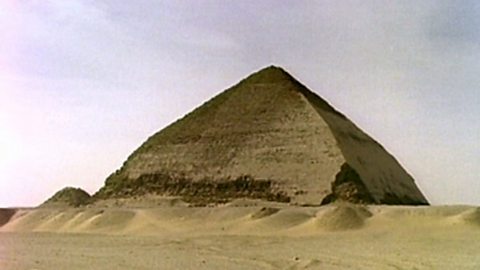
NAKHT: Five years after Deba died, my life changed again. I became a master stone mover. It was my job to guide into position the great granite blocks to make the roof of the king's burial chamber.
This holy chamber was the centre of the pyramid - its purpose. And it was my honour to guide in the stones to protect it. When the chamber roof was completed, the work of building the pyramid continued, layer on layer, year after year, until finally, more than 20 long years after the pyramid was begun, we reached the very top.
My gang laid the final block - the capstone. What a day that was! Once the capstone was in place, the outside stones were carved into a smooth slope down each face of the pyramid, and our job was over.
The Great Pyramid of Khufu was complete.
Video summary
This reconstruction shows how the Great Pyramid of Khufu was built.
At the centre of the pyramid was the king’s burial chamber. It took hundreds of manual workers about 20 years to construct it.
This clip is from the BBC Primary History series, Pyramid - In the Name of the King.
Teacher Notes
Pupils could imagine the moment the cap stone was laid. How would the workers have felt? What would they have said?
Pupils could recreate this moment through art, role-play or creative writing, keeping in mind that the workers may have been working on this pyramid for nearly 20 years.
What important stages of their lives would these men and boys have gone through, or missed, whilst working on the pyramid?
This video is relevant for teaching KS2 History in England, Wales and Northern Ireland and second level in Scotland.
Building the pyramids - part 1 of 5. video
How were the mighty pyramids built? This reconstruction shows how a young Egyptian boy is recruited to leave his family and work on an incredible project.
Building the pyramids - part 2 of 5. video
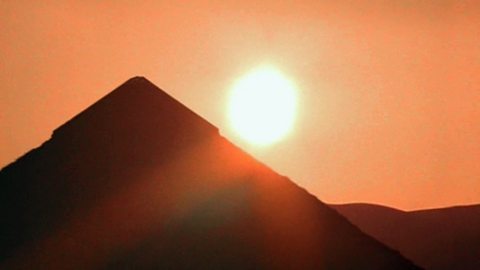
In this reconstruction, Nakht and Deba take a boat up the River Nile with other slave workers to start work on the building of the pyramid.

Building the pyramids - part 3 of 5. video
This reconstruction shows the young enslaved workers join an army of haulers dragging blocks of stone into position as the building of the pyramid begins.

Building the pyramids - part 4 of 5. video
This clip presents an explanation of the kind of tools the ancient Egyptians used in fashioning stone blocks for the pyramids as the workers get a first glimpse of the huge project they are working on.
Ancient Egyptian beliefs and the construction of the pyramids. video
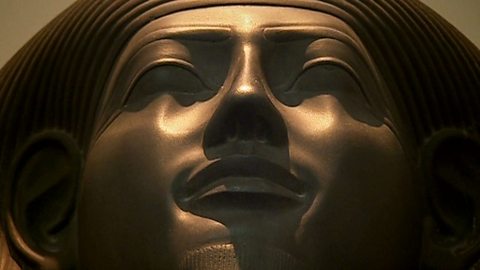
The ancient Egyptians believed in a God of the Sun who could be reborn in the afterlife. They also believed the position of the stars pointed the way to the afterlife.
Building the pyramids accurately - part 1 of 2. video
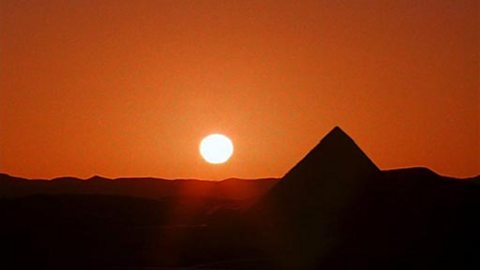
To build the pyramids, the ancient Egyptians had to use incredible precision and exact measurements. In this clip, Miranda Krestovnikoff explains how they did this.
Building the pyramids accurately - part 2 of 2. video
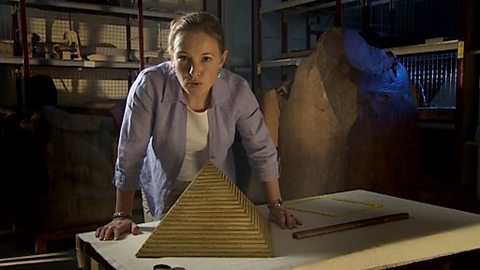
The Egyptians needed to be precise in their calculations to build the pyramids. Miranda Krestovnikoff uses the example of the 'bent pyramid' in Egypt to show what happens when those calculations go wrong.