Hello! I am very pleased to meet you! My name is Wangari Maathai.
In my country of Kenya, I became famous for helping groups of local people, and protecting the environment.
That’s not how everybody saw it, oh no! Many people in the government said I got famous just for causing trouble!
That’s why they threw me in prison,
After people asked me – ‘Wangari, weren’t you scared?’ You know… I was scared. All the time!
But I couldn’t just give up… because what we were doing was far too important!
I was born in the mountains of Kenya in the year 1940. When I was 11 years old, I went to a Catholic boarding school. The teachers there taught me two truly important things. They taught me to study hard and always keep learning about the world! And they taught me their belief - that to serve God, you must serve your fellow human beings.
After school, I had the chance to go to the USA, and study biology and chemistry.
Then I came back to Kenya. I was a qualified scientist, specialising in animals! But I hadn’t forgotten the lessons the nuns had taught to me.
I started working with charities, and talking to people who lived in the countryside.
All the women I talked to had the same problems – not enough fuel to cook with, not enough food, and no good way to make money. Their lives were hard!
And I saw the land had changed.
Big companies who sell wood had chopped down so many trees that the land was drying out and the soil was getting poorer.
And I thought, there’s only one thing to do here - we must plant trees!
You see, in the climate of Kenya, trees grow quickly. In just ten years, a tree can be giving families valuable food and firewood.
But just planting a few trees here, and a few there, was not going to make much difference… We needed trees all around!
And so I became very busy, helping to set up growing spaces for saplings, and helping people to organise giving them out, planting them, and looking after them.
But not everybody liked what we were doing… Oh no!
Many people in the government wanted to sell the land, and they certainly didn’t want me telling them that things should be done differently!
In Kenya, the 1980s were a difficult time.
The government was trying to control everything. But many ordinary people protested against them. And I helped organise a lot of protests! And I set up a whole organisation for tree planting, called the Green Belt Movement.
The government tried to stop me. And they put me in prison many times!
But I wouldn’t give up! And things started changing for the better.
I tried to get elected to parliament - and people voted for me! I became a Member of Parliament!
People outside Kenya started hearing about me too. I even got awarded a Nobel Peace Prize!
But do you know the real prize for me? The trees that we started planting when I was younger… I got to see them grow, and become mature trees. Now life is so much better for the people who live here!
So remember – it’s amazing what you can do just by having an idea… and, yes - making some noise!
Video summary
This animated film explores the life and achievements of Wangari Maathai, an environmental activist from Kenya who founded the Green Belt movement. Her courage and dedication was recognised in 2004, when she won a Nobel Peace Prize.
Wangari Maathai was born in Kenya in 1940. Having studied biology and chemistry as a scholarship student in the USA, she returned to Kenya and saw the detrimental effects of deforestation on the land and people.
She founded the Green Belt Movement, a community-focused group that organised the mass planting of trees. She led protests against the government and helped mobilise local communities to conserve and regenerate their local landscape.
Despite government resistance and multiple imprisonments, she persisted and even became a Member of Parliament.
Ultimately, her passion and dedication led to positive changes, transforming the lives of the people and the environment around her until she died in 2011.
Teacher Notes
Additional notes
- Resistance
Wangari had several issues she was passionate about, including the environment, government reform and the rights of women. She saw these issues as linked and wanted to address a community’s practical needs (like firewood, food, and the opportunity to earn money) through her environmental work.
She herself faced sexism and discrimination. The government perceived her as a challenge to their policies and she was subjected to harassment and imprisonment, in an attempt to silence her voice.
- Nobel Peace Prize
The Nobel Peace Prize is a prestigious award given annually to individuals or groups that have made outstanding contributions to promoting peace and resolving conflicts. It consists of a medal, a diploma, and a monetary prize, and is designed to recognise and encourage international efforts towards global peace, human rights, and positive change. Wangari was the first African woman to win a Nobel Peace Prize.
This film can be used to discuss social, environmental and political activism and how a significant individual can make positive change.
Before the video
- What is an activist?
- Can you name an environmental activist from the present day?
- Why are activists important in society?
During the video
- Why did Wangari decide to plant trees?
- Why do you think Wangari continued her work even though she went to prison?
- Why did Wangari want to become a member of parliament?
After the video
- Why do some people sacrifice their freedom for their beliefs?
- Wangari said the government didn’t want her in particular telling them what to do. Why do you think that is?
- A Nobel Peace Prize is an award given to a person or group who has helped the world become more peaceful. Why do you think Wangari received a Nobel Peace Prize?
- What does ‘making some noise’ mean?
BBC News article from 2011: 'Wangari Maathai: Death of a visionary'
This film will be suitable for teaching History at KS2 in England and Wales and KS2 in Northern Ireland. Also 2nd Level in Scotland.
More from this series:
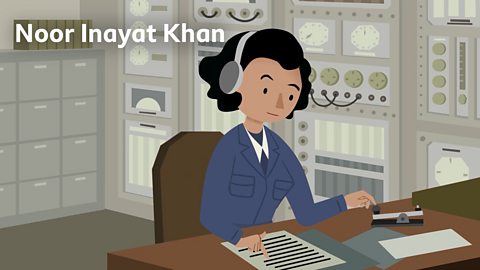
Noor Inayat Khan. video
This film follows Noor Inayat Khan, a radio operator and secret agent during WW2, who transmitted messages against the German occupation as part of the French resistance.
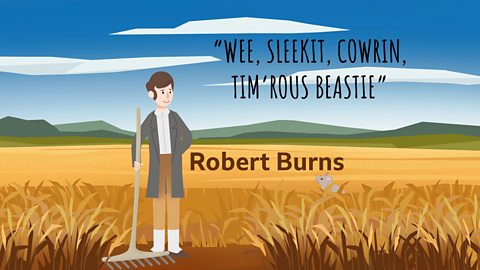
Robert Burns. video
This animated film explores the life of Robert Burns, a poet renowned for his celebration of his Scottish identity.
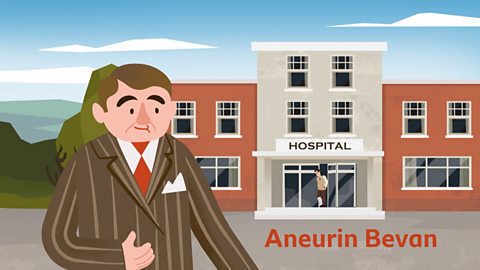
Aneurin Bevan. video
This animated film explores the life of Aneurin Bevan, the Member of Parliament from Wales who successfully established the National Health Service (NHS) in 1948.
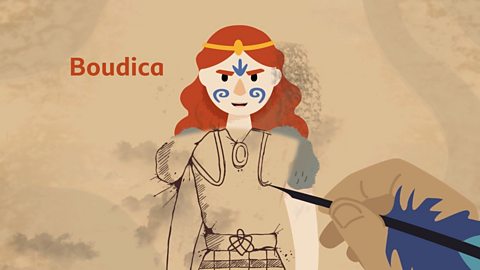
Boudica. video
This film explores the life of Boudica, the Queen of the Iceni tribe whose rebellion against the Romans led to the destruction of Colchester.
Katherine Johnson. video
This animated film tells the story of Katherine Johnson, a mathematician who joined NASA's space program in the 1950s and played a crucial role in calculating the trajectories for their space missions.