Oh my word, would you look at this! This changes everything! I cannae believe it!
I’ve got no money! And I was gonnae leave Scotland, and go find a job far away…
But the poems I wrote have been published! I didnae think anybody would read them!But people – important people, mind – are saying… that they’re great!
You know, I have a feeling everyone’s going to hear my name - Robert Burns! Or Rabbie Burns, if you prefer!
Let me tell you my story…
I was born in Ayrshire in Scotland in the year 1759.We weren’t a grand family – we were farmers, and my father built our wee house with his own hands. He taught me to read and write… and to think for myself!
I was sent off to school sometimes, when we could afford it. But mostly I grew up helping with work on the farm. And it was often when I was working, that I composed my poems.
‘Wee, sleekit, cowrin, tim’rous beastie’
I liked to write about everyday things – simple things.Like, how I felt when I destroyed a mouse’s nest, by accident.
‘The best laid schemes of mice and men’
Or about how delicious it is to eat a good haggis…
‘But if you wish her grateful prayer, give her a haggis!’
And I wrote about falling in love.
‘My love is like a red, red rose’
And yes … I did fall in love rather a lot!
My poems just came to me, mostly. I wasnae trying to sound like some fancy English poet.
‘The moorcock springs on whirring wings amang the blooming heather’‘
I was proud of who I was, so I wrote in Scots, the way people spoke where I was from!
When I sent my work to a publisher, I didnae think anything would come of it.I really liked my poems – but I didnae think they’d make me any money! That’s why I was all ready to sail away to another country!
But when they were published, people thought they were brilliant!They were excited that somebody was using our language in a creative way – and celebrating Scottishness!
So, off I went to Edinburgh - the capital city of Scotland! My poems came out in a new edition, and I got four hundred pounds! For a while, I was a bit of a celebrity, I suppose.
When the money ran out, it was back to the countryside with me. I got married to my girlfriend…
I carried on with my poetry, and wrote songs.And we had a lot of bairns!But I wasn’t well… I died when I was still quite young.But even today, people still love to hear my voice through my poems!
My birthday is celebrated every year – it’s called Burns Night. People have a special dinner, and read out the poem I wrote about a haggis!And every New Years Eve, people join hands and sing Auld Lang Syne – aye, that’s one of mine!People all around the world still know the name of Rabbie Burns, a’right!
Video summary
This animated film explores the life of Robert Burns, a poet renowned for his celebration of his Scottish identity.
Robert Burns, also known as Rabbie, was born to a farming family in 1759 in Ayrshire, Scotland. He composed poetry while on the farm, and found inspiration in simple, everyday experiences.
He purposefully used both the Scots language and the Scottish English dialect in defiance of what was considered ‘proper’ literature at the time. His work was confident and joyous, designed to celebrate his cultural heritage and feel authentic.
People celebrate his work on Burns Night (25 January - Robert Burns' birthday) annually, and sing Auld Lang Syne at New Year’s Eve.
Teacher Notes
Additional notes
- “Wee Sleekit Cowrin Timrous Beastie”
One of Burns' most famous poems is ‘To a Mouse, on Turning Her Up in Her Nest with the Plough.’ Robert Burns wrote the poem in 1785 about his encounter with a mouse whose nest he accidentally destroyed while ploughing a field. He describes being sorry for disrupting the mouse and draws on bigger themes like the unpredictability of life. A famous saying - “The best laid schemes of mice and men often go awry” - originates from the poem and was used as inspiration for the title of Steinbeck’s novel, ‘Of Mice and Men’.
Other poems quoted in the film include: 'A Red, Red Rose', 'Address to a Haggis', and 'Composed in August'.
- Burns Night and Hogmanay
Burns Night occurs on 25 January, Robert Burns' birthday, to celebrate his life and poetry. The night typically involves traditional Scottish dishes like haggis, neeps (turnips), and tatties (potatoes) being served, and the recitation of Burns’ poem "Address to a Haggis". The evening often ends with everyone joining hands to sing "Auld Lang Syne," one of Burns' most famous works.
Auld Lang Syne is also traditionally sung on New Year’s Eve, also known as Hogmanay in Scotland.
This film can be used to discuss regional history, and the importance of national and self-identity.
Before the video
- What does it mean to be proud of your identity?
- Why might poets be remembered for years after their death?
- Can we learn about history from reading poems?
- Which country celebrates Burns Night?
During the video
- Which everyday things did Robert Burns like to write about in his poems?
- Why didn’t Robert regularly attend school?
- Why did Robert decide not to move abroad?
After the video
- What clues are there that Robert Burns was proud to be Scottish?
- How do people show that they are proud of where they come from?
- How can we celebrate and appreciate our own cultures and traditions? What traditions or celebrations are important to you and your family?
- Why do you think people celebrate Robert Burns' poems, especially in Scotland?
Activity Suggestion:
Ask pupils to write a poem about an everyday object in their life, but it also has to say something about who they are/their identity. For example, a favourite book can be about how they like reading.
Additional BBC programmes featuring Robert Burns
This film will be suitable for teaching History at KS1 and KS2 in England and Wales and KS1 and KS2 in Northern Ireland.Also Early 1st and 2nd Level in Scotland.
More from this series:
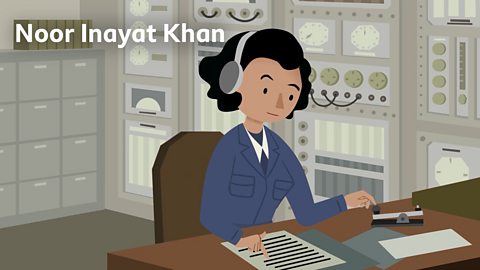
Noor Inayat Khan. video
This film follows Noor Inayat Khan, a radio operator and secret agent during WW2, who transmitted messages against the German occupation as part of the French resistance.
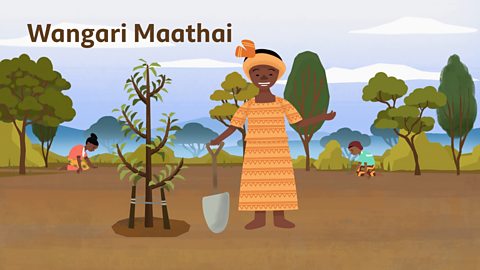
Wangari Maathai. video
This animated film explores the life and achievements of Wangari Maathai, an environmental activist from Kenya who founded the Green Belt movement.
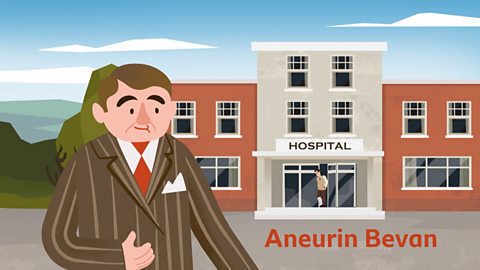
Aneurin Bevan. video
This animated film explores the life of Aneurin Bevan, the Member of Parliament from Wales who successfully established the National Health Service (NHS) in 1948.
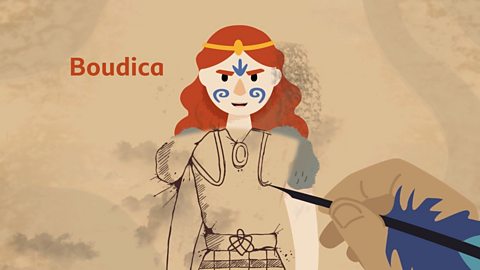
Boudica. video
This film explores the life of Boudica, the Queen of the Iceni tribe whose rebellion against the Romans led to the destruction of Colchester.
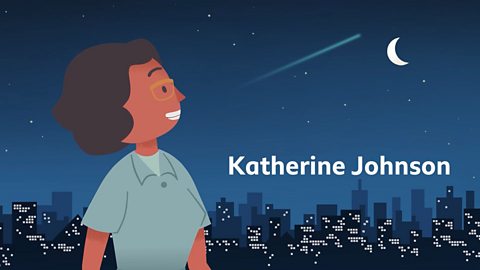
Katherine Johnson. video
This animated film tells the story of Katherine Johnson, a mathematician who joined NASA's space program in the 1950s and played a crucial role in calculating the trajectories for their space missions.