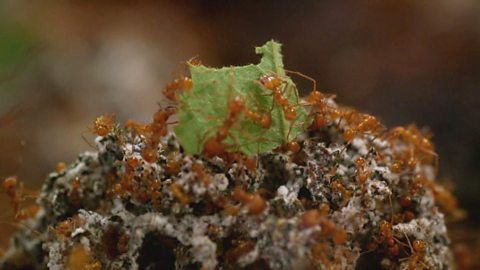
NARRATOR:'Do you know what these tiny little creatures are? Yes, they're ants!
NARRATOR:'There are lots of different types of ant,
NARRATOR:'and they live all over the world. These ones are from Trinidad,
NARRATOR:'and they're called leafcutter ants. Ants are insects.
NARRATOR:'Insects have six legs and three different parts to their body. A head at the top, a thorax in the middle, and an abdomen at the end.
NARRATOR:'Can you think of any other insects?
NARRATOR:'Some people call ants mini-beasts, but their real name is invertebrates. Invertebrates are animals with no spine, or backbone.
NARRATOR:'Just like us, ants need certain things to stay alive. They need air, water, food and somewhere to live. In the wild, ants build their homes underground. And they live together in groups called colonies, like we live together in families and cities.
NARRATOR:'Inside their colony, the ants are very busy. Everyone has a job to do. If they don't do their job, then other things in the colony don't work properly.
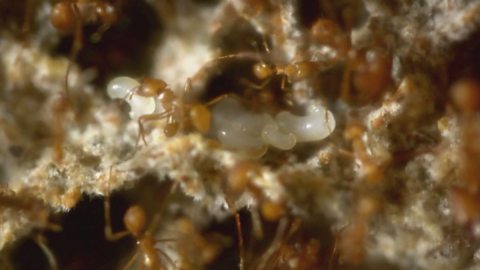
NARRATOR:'In a leafcutter colony there is a queen ant, and she is much bigger than the other ants. And her job is to lay eggs.
NARRATOR:'Then there are lots of different types of worker ant. Soldier ants guard the colony. They are very strong and will try to stop anything that attacks. Small worker ants collect the leaves and bring them back to the nest. And even smaller workers use the leaves to help grow food for the colony.
NARRATOR:'There are lots of different shapes and sizes of ant in the colony. And that means that all the different jobs can be done, from the big to the small. They all work together as a group, to help each other keep the colony alive.'
Detailed, close up images of leafcutter ants clearly show three different parts to their body, the head, thorax and abdomen and six legs demonstrating that an ant is an insect.
Ants are invertebrates - we have a spine or backbone but invertebrates do not. Like humans though, they do need certain things to stay alive, namely water, food, air and somewhere to live.
Ants live underground in colonies rather like humans live in families.
Each ant has a different job in the colony.
The most important ant is the queen whose job it is to lay the eggs that hatch into the next generation of ants and there are many different types of worker ants.
All the different kinds of ant work together as a group to keep the colony alive.
This clip is from the series Life on Planet Ant.
Teacher Notes
Could be used for children researching what defines an insect.
The clip could be paused after asking "Can you think of any more insects?" before gathering children’s responses.
The class could try working on a task collectively to see if they can be as organised and work as well together as the ants.
Pictures showing the different types of ants from the clip could be gathered and pupils could make masks for different ant roles and perform drama for each of their tasks.
Curriculum Notes
This clip will be relevant for teaching Science/Biology at KS2 in England, Wales and Northern Ireland and 2nd Level in Scotland.
More from Life on Planet Ant
How ants communicate. video
The young scientists learn how ants communicate using chirping sounds called stridulation.
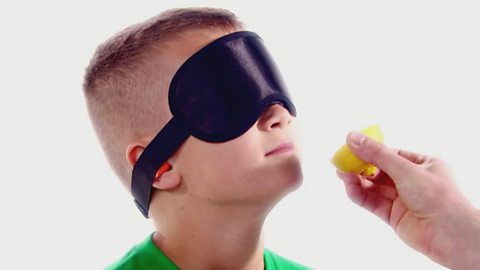
Why are ants different sizes? video
Dr George McGavin explains to the young scientists how the ant colony is organised into different types of ants, known as castes.
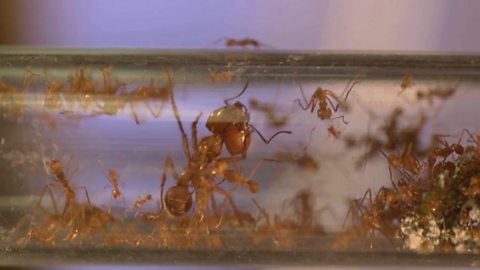
How to build a mini ant nest. video
The young scientists create their own small ant colony using plastic cups and make a pooter to collect the ants.
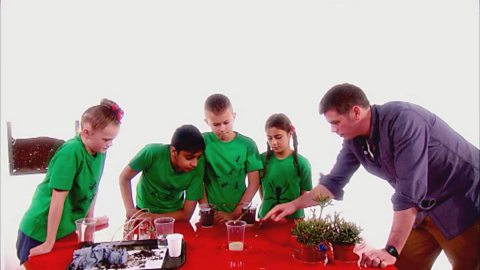
Life cycle of an ant. video
The young scientists learn about the life cycle of an ant, including how the eggs hatch into larvae.
What ants eat and what eats ants. video
Young scientists draw lines connecting photos of different animals, according to whether they eat or are eaten by another animal.