Overview of Planet Planners on Roblox
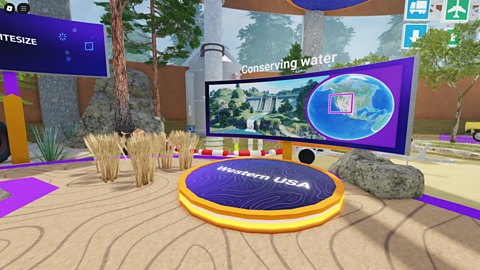
Planet Planners on Roblox is an engaging way for students to learn about some of the world's most pressing challenges – from preparing for natural disasters to managing large cities.
A decision-making exercise game with geographical thinking at its core, it also builds key skills such as teamwork, time management, resilience, problem-solving and decision-making.
It is accessed via Roblox – an immersive platform for 3D experiences. To learn more about Roblox and how it can be used in education, visit Get started with Roblox Education.
For more detailed information about the game, visit How to teach using Planet Planners on Roblox.
Scenario description
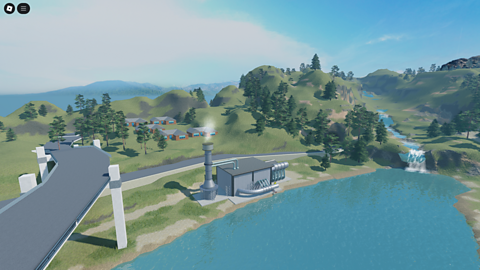
In this scenario, players take on the role of decision-makers in a region facing increasing water stress.
They must gather data, make decisions and build infrastructure to secure a sustainable water supply.
As water demand rises and natural sources dwindle, players must think critically about the environmental, economic and ethical implications of each decision.
Approximate location: Western USA
Teacher notes
Download/print the teacher notes for this scenario (PDF).
Teacher notes prepared in partnership with the Geographical Association.
Learning objectives
- To identify short-term and long-term variability of water sources in high-income countries (HICs).
- To make decisions about securing water supplies for domestic, agricultural and industrial uses.
- To examine the causes, effects and solutions to water pollution in HICs.
Key decisions
- How should we monitor our water sources more effectively?
- Should we invest in large infrastructure projects, such as dams and aqueducts?
- Should we prioritise clean water for farming, industry, or local use?
- How should we deal with and treat sewage?
- How should we treat and reuse wastewater?
- Should we use fossil fuels or renewable energy to power water facilities?
Key geographical terminology
Water security: Having access to a safe, reliable and affordable supply of water.
Dam: Strong walls built to hold back water, usually a river.
Aqueduct: A structure for carrying water across land.
Desalination: The removal of salt from sea water. This enables sea water to be turned into safe drinking water.
Reservoir: A large natural or artificial lake used as a source of water supply.
Think, work and apply like a geographer
Encourage students to explore the links between gameplay and real-world job roles, such as:
- civil engineer
- environmental scientist
- hydrologist
- public health officer
- renewable energy technician
Questions to explore
- Why is it important to monitor water levels and track demand?
- What are the advantages and disadvantages of dams and aqueducts?
- How do droughts and farming practices affect water availability?
- How does water pollution impact ecosystems and human health?
- How can wastewater be safely reused?
- What are the ethical dilemmas around access to water and pollution clean-up?
- How can we make water systems more resilient to climate change?
Emotional and ethical considerations
Ethical decision-making: Who gets water first when there’s not enough to go around? How can we make choices now that ensure safe water for future generations? Are big projects like dams worth it if they damage ecosystems?
Fear and uncertainty: The threat of water shortages may cause anxiety.
Resources
Teacher notes
Download/print a copy of the teacher notes for this scenario (PDF).

Student worksheet
Download/print a copy of the student worksheet (PDF).
Explore more
Support classroom learning with BBC Bitesize resources.
Note: Some video content may only be available in the UK.
Water resources
Learn about water supplies and the impacts of water insecurity in this geography guide for students aged 11 to 14 from BBC Bitesize.
Increasing water supply
We can increase water supplies by building reservoirs, recharging underground storage, creating water transfer schemes and using desalination.
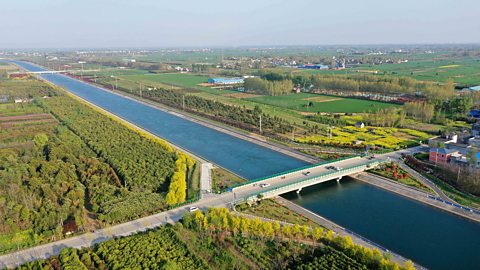
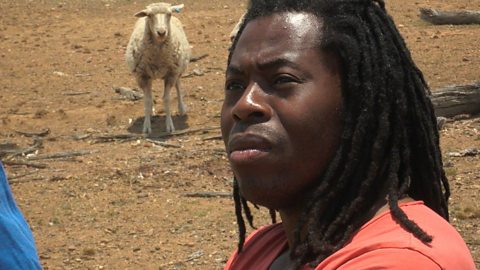
Drought in Queensland, Australia
Ade Adepitan visits Queensland, where drought has had a devastating effect on the landscape.
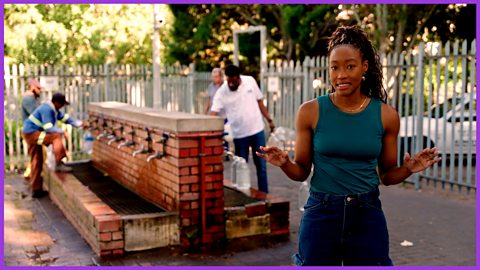
Africa - Achieving water security in Southern Africa
Exploring the hydrology of Africa, including water shortages and the effects of climate change.
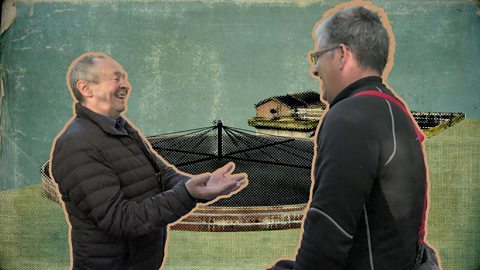
River Wharfe and wastewater systems in the UK
Paul visits the River Wharfe in Ilkley, West Yorkshire to see how it is affected by pollution from sewage.
Intensive chicken farming and the River Wye
Paul looks at how agricultural pollution is affecting the River Wye.