Ropes Riggers
This Guideline describes the competence criteria for the various professional Ropes Riggers - the one you need will depend largely on the environment in which the rigging is required.
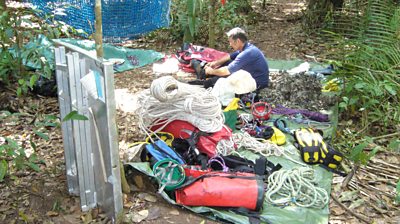
Rigger profile
Someone able to provide rigging services to protect persons at, or close to, exposed drops (using a harness and techniques for work restraint, work in suspension or fall arrest), to rescue persons stuck at height, or to haul / lower relatively light production equipment.
The range of rigging services involved includes industrial rope access, tree work, caving, rock climbing, mountaineering, canyoneering, etc. each having their own specialist equipment and techniques, and therefore differing skillsets and experience.
Competency criteria
BBC Safety currently does not maintain a list of pre-vetted Ropes Riggers, so productions should contact their Safety Adviser to support them in getting these contractors safety vetted. The following competency criteria should be used for the relevant discipline required:
For rope access rigging, the Industrial Rope Access Trade Association (IRATA) provide an internationally recognised grading scheme for rope access technicians (SPRAT in USA). The scheme is based on training, experience and independent assessment, with the following competency levels:
- Level 1 Rope Access Technician – able to perform simple rigging techniques under supervision of a Level 3 Supervisor
- Level 2 Rope Access Technician – as for Level 1, although is able to perform more complex rigging and rescue tasks
- Level 3 Rope Access Supervisor – able to perform a wide range of complex rigging and rescue tasks, and to plan and manage rigging jobs.
For rock climbing and mountaineering rigging, the various UK Mountain Training Associations, under the BMC, train and assess the following Instructor qualifications / awards:
- Climbing Wall Award (CWA) – capable of instructing on fully equipped indoor climbing walls
- Single Pitch Award (SPA) – as CWA, plus capable of instructing on single pitch rock climbs outdoors
- Mountain Instructors Award (MIA) – capable of instructing in all forms of climbing and mountaineering in summer conditions in UK
- Mountain Instructors Certificate (MIC) – as MIA, but includes all forms of climbing in winter conditions in UK
- International Federation of Mountain Guides Association (IFMGA) – internationally recognised professional mountain Guide, capable of instructing in all forms of climbing / mountaineering.
For caving rigging, the British Caving Association train and assess the following Instructor qualifications / awards:
- Cave Instructors Certificate (CIC) – capable of instructing groups in all forms of cave exploration, including through sections requiring use of ropes.
For tree / arborist rigging, City & Guilds award the following tree climbing / rescue qualification:
- CS38/39 – Tree Climbing & Ariel Rescue.
Recommended links
Working at Height topics
General
Guidance to assist planning, conducting or managing staff who are working at height
Gantries & High Level Platforms
Guidance on media positions within stadiums and arenas
Ladders
Guidance on ladders to work up to approx. 6m high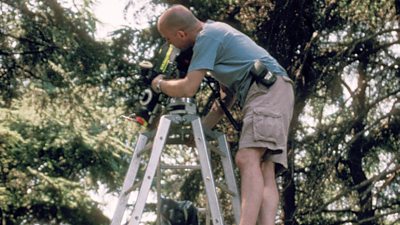
Ladder Pods
Guidance on ladder pods to work up to 5m high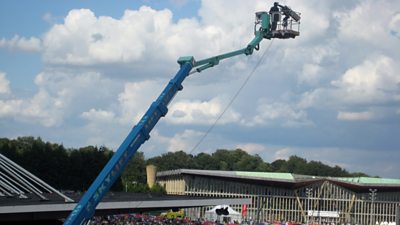
Mobile Elevating Work Platforms
Guidance on mobile elevating work platforms (MEWP) such as cherry pickers and scissor lifts.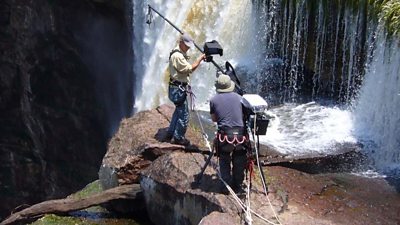
Rope Access Techniques
The equipment and techniques required to protect those working at or near exposed drops.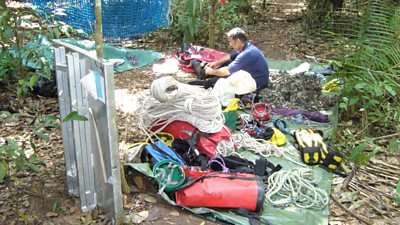
Ropes Riggers: Selection of
Competence criteria for the various professional Ropes Riggers.
Tower Scaffolds
Guidance on tower scaffolds to work up to approx 8m high
More from SSR
Safety Hub
Your platform to record accidents, risk assessments, assurance monitoring and inspectionsSafety Equipment Stores
Just one number to call: 020 3614 5155BBC Safety Guidelines
An A-Z of BBC's Safety GuidelinesContact your Safety Team
Safety Advice Line: 0370 411 0464 Email: [email protected]
- A-Z of BBC Safety Guidelines
- Find my Safety Adviser (BBC Network only)
- Accident Reporting and Investigation
- BBC Health & Safety Policy
- Contractors (incl. vetted lists)
- Contributors
- Fire Safety
- Freelancers
- Independent Production Companies
- Risk Assessment
- Safety Alerts
- Safety Responsibilities
- Safety Training
- Sets & Premises Safety Guide
Events guidance - key links:
Health topics - key links:
- Access Services (BBC network only)
- Contributors Fitness to Participate
- Display Screen Equipment (DSE)
- Employee Assistance Programme (BBC network only)
- First Aid and Welfare on Location
- International Travel - Risks & Health
- Manual Handling
- Mental Health: Homepage
- Occupational Health Referrals & Advice (BBC network only)
- Personal Health and Wellbeing
- Pregnancy
- Psychological Trauma Support & Trauma Risk Management (TRiM)
- Tiredness and Fatigue
- Travel Health Contacts
BBC High Risk - key links:
BBC Journalism - key links:
- Broadcast Vehicles
- CBRN and Industrial Spills
- Courts of Law
- Covert Filming (via Security on Location)
- COVID: Managing COVID risks is News Deployments
- Demonstrations, Protests and Crowds (via Security on Location)
- Disaster Coverage
- Disaster Coverage - Health Aspects
- Door Stepping (via Security on Location)
- Press Conferences
- Psychological Trauma and PTSD
- Terrorist Bomb Incidents
BBC Productions - key links:
- Aerial Filming and Airfields
- Animals: Displaying and handling for performance
- Boats: Working on
- Children and Young People
- Driving
- Electrical Equipment and Systems
- First Aid and Welfare on Location
- Food Safety (Cooking and Catering)
- Remote Location Working
- Roads and Streets: Working by
- Security of Productions on Location
- Stunts
- Tiredness and Fatigue
- Unmanned Aerial Systems (UAS aka Drones)
- Vehicles: Recording in, from and around
- Working at Height: Mobile Elevating Work Platforms
- Working at Height: Tower Scaffolds
BBC Radio - key links:
- Corporate Security Home (BBC Network only)
BBC Security - key links:
BBC Sport - key links:
- Broadcast: Presentation and Linking Positions
- Broadcast Vehicles
- Buildings used for ...temporary studios (HSE)
- Electrical Equipment and Systems
- Guide to Safety at Sports Grounds (DCMS)
- Managing H&S at Motorsport Events (HSE)
- Safety in Broadcasting Sports Events (HSE)
- Sports Events: Recording or Filming
- Vehicles used in Sports Coverage
About this site
This site describes what the BBC does in relation to managing its health, safety and security risks and is intended for those who work directly for the BBC.
It is not intended to provide instruction or guidance on how third parties should manage their risks. The BBC cannot be held liable for how this information is interpreted or used by third parties, nor provide any assurance that adopting it would provide any measure of legal compliance. More information
Some links on this site are only accessible when connected to the BBC network
