International Travel - Risks & Health
This is a guide for BBC staff planning to travel overseas. It covers the basic precautions needed when travelling to countries usually deemed to be of low health risk, for example, most of Europe, Scandinavia, North America, Canada, Japan, Australia and New Zealand.

This is however not exclusive and circumstances can change depending on current events and the activities you are planning to undertake.
Travel to other countries may require a specific written risk assessment.
Please check the High Risk Country Pages and Foreign and Commonwealth Office (FCO) pages before you travel for latest advice.
What Can Go Wrong?
- Accidents.
- Health related problems related to travel (e.g. Deep Vein Thrombosis (DVT)) and pre-existing conditions.
- Poor standards of health, hygiene, and hospital care if help is needed.
- Accidents or incidents when driving or travelling in hired or contracted vehicles.
- Some airlines are banned by the EU, risk assess before use.
- Crime and threats to individuals.
Legal/BBC Requirements
- When the only travel option is on EU banned airlines you must produce a risk assessment and get senior manager authorisation/sign-off.
Control Measures
Before Travelling - General
- Contact BBC Insurance to check what you are covered for and ensure your own personal travel insurance is valid and sufficient.
- Book any travel via BBC Procurement travel site on Gateway using preferred suppliers. If not, use reputable travel providers wherever possible.
- Check information on local weather, power supply and adaptors required, transport, visa requirements, culture, language and attitudes to help you plan.
- Download travel, map, currency, sat nav and translation apps and ensure phones will work abroad.
- Ensure your Line Manager and/or deployer has your contact details, next of kin and hotel/travel plans – keep them up to date and arrange how you will stay in contact whilst you are away.
- Inform the nearest local BBC bureau (see link) of your visit and the local embassy where appropriate.
- Ensure you have sufficient funds and resources for all likely outgoings including emergencies before departure.
- Ideally plan schedule including working hours accordingly taking into consideration travel and time differences.
- Ensure you have relevant permissions from relevant authorities to film/record before you travel.
Before Travelling - Health
- Ensure you are fit to travel. People with pre-existing medical conditions or at risk from DVT, should discuss any concerns with their GP or the BBC Occupational Health (OH) and take sufficient medications for pre-existing conditions.
- Contact OH in good time before travel for latest advice on health risks, malaria prevention and for any inoculations required. Take advantage of the online travel health assessment, details of which will be sent to you when you book in for travel advice and vaccinations.
- See links in r/h margin on risks from malaria and zika fever if you are travelling to areas where these are endemic.
- The biggest infection risk is from food, water and insect bites. BBC Safety Stores offer a wide range of equipment, including mosquito nets & first aid kits.
- Read Passport to Health: A guide for International Travellers.
- If you are travelling within Europe (and are an EU citizen) ensure you have completed an European Health Insurance Card (EHIC).
- If you are travelling to remote locations you should prepare an emergency medical evacuation plan, read the Medical Emergency Evacuation page for more information.
- Select an aisle seat for long distance flights; make regular movements to reduce risk of DVT.
During Trip
- When flying drink plenty of water and move about to reduce risk of DVT.
- Ensure you observe good personal hygiene, drink only bottled water and avoid high risk foods.
- Arrange to be met by local BBC driver organised via local bureau, fixer or maybe arrange airport pick-up from hotel. This also applies when travelling locally.
- If hiring local car and driver make some basic checks like driver’s licence, seat belts and vehicle maintenance.
- If driving yourself, ensure you're not overly tired from the travel and the time difference. Ensure you have correct paperwork and book the car via a reputable company, via BBC travel site.
- Check vehicle before setting off for its condition, correct equipment provided, adequate fuel. eg, hazard triangle, hi-viz jacket as required locally and for any vignette/motorway passes required.
- Where possible, only carry essential equipment, valuables and money and be inconspicuous where possible.
- Use hotel safe where available to secure valuable information and kit.
- Tuck a small amount of currency in your wash bag or body belt as an emergency backup.
- Keep a photocopy of your passport/visa and any valuable contact details in case of loss of phone; and local addresses for BBC and British Consulates.
- If hiring or purchasing equipment locally ensure you get it from a reputable supplier and undertake some basic visual checks.
- Be aware of and discuss with team the local security issues including attitude to the BBC, hostility to journalists and general crime levels.
- Report any incidents or near misses to your line manager or contact back at the office.
On Return
- Should you suffer any ill health please seek urgent medical advice via your local GP or A&E Department if required.
- If you get a temperature on your return tell the person treating you where and when you travelled. Malaria can occur up to 12 months after you leave the last malaria area visited – even if you have taken your tablets.
- Report any incidents or accidents on the Safety Hub.
Division Specific Issues
News
- If you are a very regular international traveller and your job involves travelling at short notice (usually in News) then you can have your core vaccinations (tetanus, Polio, Diphtheria, Yellow Fever, Hepatitis A) kept up to date. This offers advantages over a trip by trip approach but you must always seek advice prior to any international trip.
Radio and Education
- Incorporating Radio OB MS M022-09 Working Overseas.
Prior to undertaking any work abroad, it is BBC Radio Operations departmental policy that permission to work abroad is obtained from your line manager.
The BBC’s safety requirements apply wherever staff are working. Many countries will have their own safety legislation (some with widely differing standards), which may require specific things to be carried out. Any preview must take into account the suitability and safety of the mains power supply. Alternatives must be considered if the supply is deemed not to be safe, e.g. using a generator.
Checks must be carried out with the site or venue manager and competent local staff, national broadcaster, reputable local broadcaster or the local BBC office if there is one, to determine the situation and to ensure work is be carried out safely and without contravening local laws. If applicable the local authorities should also be consulted.
The BBC rules about the use of approved contractors may be relaxed for work overseas, but the
OB Sound Supervisor/Engineering Manager on site must ensure that the contractors are competent to undertake the tasks involved and all work must be assessed. Factors to consider when carrying out a risk assessment include:
- Manual handling.
- Electrical safety.
- Location.
- Security arrangements. This includes the venue, accommodation and all routes travelled.
- Transport, public liability insurance, fitness to travel.
- Communication.
- Medication, prevention of illness, first aid and evacuation.
- Local custom and laws.
- Weather, personal protective equipment.
The need for special first aid training and equipment, and for routine check-ins with the UK base, must be considered.
FAQs/Did You Know?
- The ‘Know before You Go’ website offers some invaluable information to stay safe and healthy for those travelling.
- In country British embassies may provide a list of lawyers, translators and doctors but their staff do not take any responsibility for their competence or ability or, the consequence of any legal action initiated or advice given.
- Call the BBC’s emergency health assistance provider if you require urgent medical help whilst abroad (credit card style info is available).
- For non-emergency situations you can still call the emergency health assistance provider who may be able to direct you to appropriate local medical or hospital facilities.
- The BBC Safety app available for Android, iPhone and iPads contains some useful relevant links and essential key contacts.
- There is always someone on-call in BBC Safety 24-7-365. Please can Duty Facilities Manager at New Broadcasting House for contact details.
Useful documents
- Travel / Deployment Planning Form (Nov 19)[BBC Network only]
- BBC Insurance Overseas Emergency Medical Expenses form[BBC Network only]
Recommended links
- Filming Advice Unit[BBC Network only]
- BBC Insurance[BBC network only]
- BBC HR[BBC network only]
- International News Safety Institute (INSI)Dedicated to the safety of news media staff working in dangerous environments.
- International Labour Organisation - Country profilesProgramme on Occupational Safety and Health
Flying topics
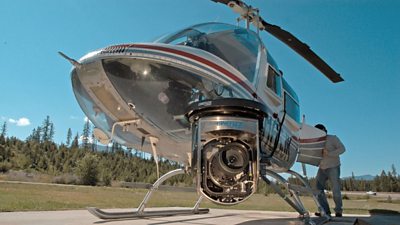
Aerial Filming and Airfields
Aerial filming may be from helicopters, fixed wing aeroplanes, hot air balloons, microlights or gliders, both in the UK and internationally.
Airfields - Small
A guide to recording activities and travel from small airfields, as opposed to a commercial airport.
Adventure Activities & High Risk Sports
This Safety Guide provides H&S guidance to those who wish to set-up and film adventure activities / 'high risk' sports involving talent or contributors under our direction.
Banned Airlines
EU Banned Airlines whose safety standards do not reach internationally recognised levels.
International Travel - Health and Safety
Health considerations when undertaking international travel.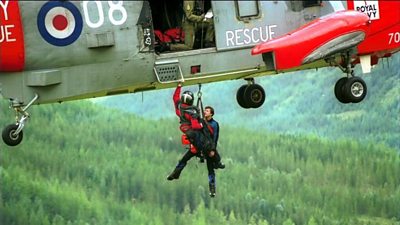
Medical Emergency Evacuation
Guidance in the event of staff becoming seriously ill or injured in countries and locations remote from emergency medical services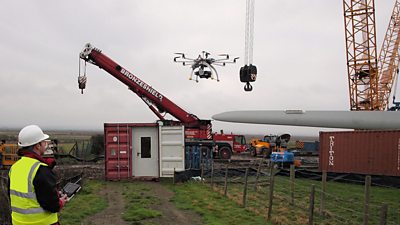
Unmanned Aerial Systems (UAS) AKA Drones
Guidance on safe use of drones

Dangerous deployment topics
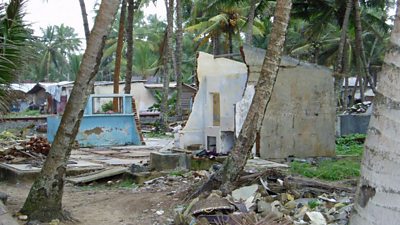
Disaster Coverage
A guide to covering disasters.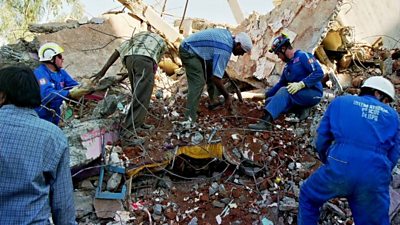
Disaster Coverage - Health Aspects
A guide to health risks when visiting areas subject to natural or man-made disasters.
Earthquakes
A guide to working in areas affected by earthquakes.
Fires - Buildings and Bushfires
A guide to deployments of journalists and crew to large building fires and bushfires.
Hostile Environments
Hostile Environments and Travel Advisory information and Country List
Industrial Spills and Chemical, Biological, Radiation Hazards
A guide to chemical, biological and radiation related hazards.
Trauma and PTSD
A guide to dealing with trauma or a traumatic event.
Safety Equipment Stores
Our safety equipment store details
Terrorist Bomb Incidents
A guide to covering bomb story threats
Disease-specific topics
Bird Flu
Advice for staff covering the outbreak of avian 'flu in Yorkshire in 2014
Living with Coronavirus (Covid-19) – advice for staff
Advice for staff about travel and/or interviewing guests
Disease and Contact with Viruses and Bacteria
A guide for anyone deployed to areas where there is risk from infectious disease from human, animal, insect or parasite sources, including zoonoses. These controls can also apply to harmful bacteria found in incidents such as sewage spills.
Ebola Virus Disease (EVD)
Ebola is a contagious and often fatal illness which has had periodic outbreaks in the DRC and Sudan.
Influenza ('Flu)
A guide to influenza, or 'flu', for individuals seeking general advice or during an epidemic or pandemic situation.
MERS: Middle East Respiratory Syndrome
This is a virus that is new to humans and was first identified in Saudi Arabia in 2012.
Mpox (monkeypox)
Requirements to be met for Mpox (2024) outbreak coverage and/or travelling to work in areas where there are high reported cases of Mpox.
Zika Viral Disease
Zika Viral Disease is a mosquito-borne disease caused by the Zika virus. In 2015, the World Health Organisation declared it a global public health emergency.
More from SSR
Safety Hub
Your platform to record accidents, risk assessments, assurance monitoring and inspectionsSafety Equipment Stores
Just one number to call: 020 3614 5155BBC Safety Guidelines
An A-Z of BBC's Safety GuidelinesContact your Safety Team
Safety Advice Line: 0370 411 0464 Email: [email protected]
- A-Z of BBC Safety Guidelines
- Find my Safety Adviser (BBC Network only)
- Accident Reporting and Investigation
- BBC Health & Safety Policy
- Contractors (incl. vetted lists)
- Contributors
- Fire Safety
- Freelancers
- Independent Production Companies
- Risk Assessment
- Safety Alerts
- Safety Responsibilities
- Safety Training
- Sets & Premises Safety Guide
Events guidance - key links:
Health topics - key links:
- Access Services (BBC network only)
- Contributors Fitness to Participate
- Display Screen Equipment (DSE)
- Employee Assistance Programme (BBC network only)
- First Aid and Welfare on Location
- International Travel - Risks & Health
- Manual Handling
- Mental Health: Homepage
- Occupational Health Referrals & Advice (BBC network only)
- Personal Health and Wellbeing
- Pregnancy
- Psychological Trauma Support & Trauma Risk Management (TRiM)
- Tiredness and Fatigue
- Travel Health Contacts
BBC High Risk - key links:
BBC Journalism - key links:
- Broadcast Vehicles
- CBRN and Industrial Spills
- Courts of Law
- Covert Filming (via Security on Location)
- COVID: Managing COVID risks is News Deployments
- Demonstrations, Protests and Crowds (via Security on Location)
- Disaster Coverage
- Disaster Coverage - Health Aspects
- Door Stepping (via Security on Location)
- Press Conferences
- Psychological Trauma and PTSD
- Terrorist Bomb Incidents
BBC Productions - key links:
- Aerial Filming and Airfields
- Animals: Displaying and handling for performance
- Boats: Working on
- Children and Young People
- Driving
- Electrical Equipment and Systems
- First Aid and Welfare on Location
- Food Safety (Cooking and Catering)
- Remote Location Working
- Roads and Streets: Working by
- Security of Productions on Location
- Stunts
- Tiredness and Fatigue
- Unmanned Aerial Systems (UAS aka Drones)
- Vehicles: Recording in, from and around
- Working at Height: Mobile Elevating Work Platforms
- Working at Height: Tower Scaffolds
BBC Radio - key links:
- Corporate Security Home (BBC Network only)
BBC Security - key links:
BBC Sport - key links:
- Broadcast: Presentation and Linking Positions
- Broadcast Vehicles
- Buildings used for ...temporary studios (HSE)
- Electrical Equipment and Systems
- Guide to Safety at Sports Grounds (DCMS)
- Managing H&S at Motorsport Events (HSE)
- Safety in Broadcasting Sports Events (HSE)
- Sports Events: Recording or Filming
- Vehicles used in Sports Coverage
About this site
This site describes what the BBC does in relation to managing its health, safety and security risks and is intended for those who work directly for the BBC.
It is not intended to provide instruction or guidance on how third parties should manage their risks. The BBC cannot be held liable for how this information is interpreted or used by third parties, nor provide any assurance that adopting it would provide any measure of legal compliance. More information
Some links on this site are only accessible when connected to the BBC network
