

16:30 - 17:30
Sean Rafferty presents a selection of music and guests from the arts world.
 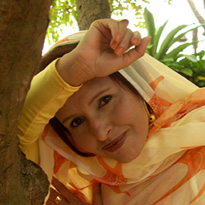  MALOUMA (Mauritania) Nour  Largely desert and little known to the outside world, Mauritania is that vast but sparsely populated country between Senegal and Morocco. Its traditional music is dominated by the Moorish iggawen caste (the local equivalent of griots or jelis) and it's from this background that Mauritania's most successful musician Malouma Mint Moktar Ould Meïddah comes. Malouma for short. Malouma grew up in the rural Trarza region of South West Mauritania, and at the age of six began learning to sing and play the ardin (the ten-stringed Mauritanian harp) under the tuition of her father, a prominent musician/poet. Despite being steeped in tradition, he encouraged her to have a broad, outward-looking approach to music, and she thus discovered other African and Arab music as well as Western pop in particular the blues. All these styles would later inform her song writing, which began when she was 16. Her lyrics dealt with subjects like love and divorce from a woman's perspective something unheard of in such a conservative Muslim country so she attracted controversy. However, her artistic career faltered when she disappeared into a marriage. Add to that the fact that her music was banned by Mauritania's military government during the early 1990s, partly because of her public support for reconciliation between Mauritania's long-divided black and Moorish communities. Fast forward to 2007. In January, Malouma becomes one of a handful of Mauritania's female senators, and in March the first fully democratic elections in her lifetime are held. In May, her third internationally released album Nour gets a mixed critical response. There are grumblings from some about an intrusive French rock guitarist and a foray into reggae. But Malouma is used to criticism and is determined to use her newly raised profile to continue to fight for what she thinks is right, which includes raising the profile of Mauritania's vanishing traditional music. As she told journalist Rose Skelton in a recent interview: 'I waged my fight as an artist, using music, and today I feel that I must continue my combat. But it's going to be an official fight; now I have a stronger position with the authorities, this is a chance for me to have a stronger position in the fight.' Jon Lusk www.malouma.com/ www.marabi.net/ Read other people's comments then  Tell us what you think: Tell us what you think:Norma tenbury Wells Mohamed Yahya/ Mauritania | | |
| | |
 Listen to 'Nebine'


BBC iD
BBC iDBBC navigation
BBC links

BBC © 2014The BBC is not responsible for the content of external sites. Read more.
This page is best viewed in an up-to-date web browser with style sheets (CSS) enabled. While you will be able to view the content of this page in your current browser, you will not be able to get the full visual experience. Please consider upgrading your browser software or enabling style sheets (CSS) if you are able to do so.
