The short life of South London's first purpose-built theatre
The first purpose-built theatre south of the Thames was located on a main road running south from London to Portsmouth and through historic Surrey.
Although today it lies under the notoriously busy Elephant and Castle road junction, at the time it appeared to prove too off the beaten track for London’s leading actors.
![]()
Much ado near me
Hear more Shakespeare stories on BBC Radio London
![]()
Shakespeare Festival 2016
The BBC celebrates the genius of the bard

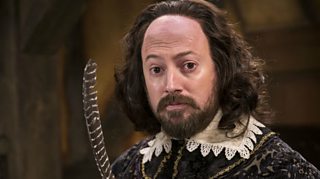
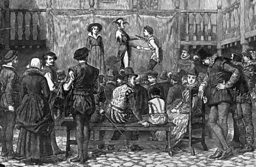
Newington Butts Playhouse on Lurklane
Newington Butts playhouse stood for a couple of decades on the east side of the high street of Newington on a property known as Lurklane, approximately 1 mile from Bankside in the capital. (The site now lies under the busy Elephant & Castle junction where New Kent Road and Newington Causeway meet and for obvious reasons has not been excavated.)
Around 1576, Jerome Savage, a player with the Earl of Warwick's men, was granted a sublease on the property (originally part of the manor of Walworth belonging to the Archbishop of Canterbury) where he converted the tenement as a playhouse. Little is known about the playhouse itself or for that matter, which companies performed there in the 1570s and ‘80s.
However, in or around 1590, one of the top performing groups, the Lord Strange's Men were ordered to play for 3 days at Newington Butts while performance at the Rose Theatre in Southwark was prohibited (for unknown reasons). They complained at the time about ‘the tediousnes of the waie’ for playgoers – this was undoubtedly one of the reasons why Newington Butts ceased to function as a competitive theatre by the 1590s.
More interesting is a note of playhouse receipts made in June 1594, when the Lord Admiral's Men played there for 10 days, joining up – or alternating with - the newly formed Lord Chamberlain's Men because other, better-positioned, playhouses were apparently closed.
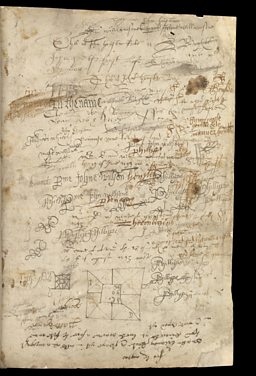
Henslowe's Diary
Thanks to the unique manuscript known as ‘Henslowe’s Diary’, we even know the 7 plays mounted during this brief period before the Admiral’s Men returned to the Rose Theatre and Chamberlain’s (Shakespeare’s) moved north of the river to Richard Burbage’s Theatre (the Globe was not built until 1599).
What’s notable in the theatre manager Philip Henslowe’s list of receipts from the performances between 3 and 13 June, 1594, are two of Shakespeare’s plays including Titus Andronicus (performed twice for a fee of 12 and 7 shillings respectively) and Taming of the Shrew (9 shillings). The plays were to become part of the repertory of Chamberlain’s Men, but another popular play also mounted at the time, Marlowe’s The Jew of Malta, remained with the Admiral’s Men and their star player, Edward Alleyn.
Although we have no actual record that Shakespeare himself was a member of Chamberlain’s Men when the company was first formed in late spring 1594, it is very likely that he was indeed one of their actors, as well as a contributing playwright, possibly recruited from the remnants of Pembroke’s Men, a company known to have hit hard times the previous year.
We do find Shakespeare’s name listed as one of the primary recipients (with Will Kemp and Richard Burbage) of payment at court for the Chamberlain’s Men performance of 2 comedies on 26 and 28 December later the same year.
These performances managed by Henslowe in June while his Rose playhouse was temporarily closed may have been the last at Newington Butts. When Paul Buck was granted the lease of the property in early July the same year, it was on condition that he convert the playhouse to some other use and not to allow any plays there after Michaelmas 1594.
Shakespeare on Tour
From the moment they were written through to the present day, Shakespeare’s plays have continued to enthral and inspire audiences. They’ve been performed in venues big and small – including inns, private houses and emerging provincial theatres.

BBC English Regions is building a digital picture which tracks some of the many iconic moments across the country as we follow the ‘explosion’ in the performance of The Bard’s plays, from his own lifetime to recent times.
Drawing on fascinating new research from Records of Early English Drama (REED), plus the British Library's extensive collection of playbills, as well as expertise from De Montfort University and the Arts and Humanities Research Council, Shakespeare on Tour is a unique timeline of iconic moments of those performances, starting with his own troupe of actors, to highlights from more recent times. Listen out for stories on Shakespeare’s legacy on your BBC Local Radio station from Monday 21 March, 2016.
You never know - you might find evidence of Shakespeare’s footsteps close to home…
Craig Henderson, BBC English Regions
More fun to be had on the South Bank
Extracts from this lecture by Sally-Bath Maclean, Editor of REED, may explain why theatres like Newington failed because of the growing distraction of entertainment bang on the South Bank of the Thames. This ranged from drinking, to brothels to baiting bears… an environment in which future theatre entrepreneur Philip Henslowe was to thrive.
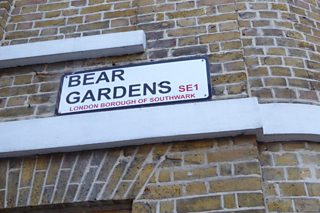
"Some may have rallied against bear-baitings but when Henslowe arrived on the scene, that was the main game on the south bank and likely a lucrative one too.
Much of the audience may have come across the river by boat or on foot, and there was also a long string of inns along the high street of Southwark leading to London Bridge – including the famous Tabard where Chaucer’s pilgrims gathered before their trek to Canterbury.
When Henslowe arrived the area was therefore already established for rough sports with audience appeal, but there was no theatre yet.
One of the most significant investments that we know of from this period followed in March 1585 when Henslowe purchased the lease of a Bankside property known as the ‘Little Rose’ because of its rose gardens.
There were already houses and shops on the property, so Henslowe could therefore count on steady income from rentals for at least 20 more years, when the lease had to be renewed.
But he may have had more on his mind than rental income. Within three years he negotiated an entirely new venture on the same property – the first, purpose-built theatre on the south bank of the Thames, predictably named, The Rose.
Related Links
Shakespeare on Tour: Around London
![]()
The King's Men
When Shakespeare's players became the King's men and join the 1604 Coronation procession
![]()
The 1809 ticket price riots
The most famous riots in the history of theatre
![]()
The Lyceum Theatre performed Shakespeare in 1883
But which famous gothic writer worked here?
![]()
Charles Kean
The London theatre manager not lost for words
![]()
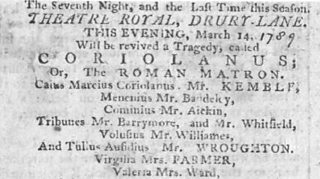
A historic performance of Coriolanus in London
The last performance of Coriolanus before the French Revolution
![]()
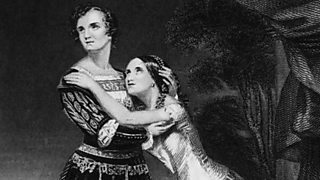
London's Female Romeo
Charlotte Cushman, who took Victorian London by storm

![]()
Shakespeare's Players turned away at Kingston
The actors paid not to perform
![]()
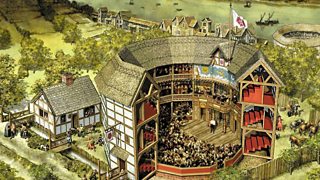
Blossoming at the Rose theatre
The history of the Rose playhouse
![]()
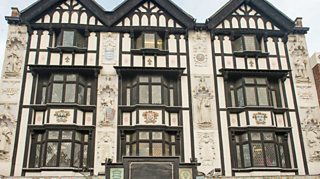
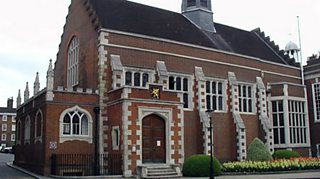
Shakespeare and the 'Night of Errors'
A series of unfortunate incidents at Gray Hall
Shakespeare on Tour: Around the country
![]()
The 'Young Roscius' storms Manchester
Boy actor William Betty treads boards at ten
![]()
Will Kemp dances to Norwich
The journey of Shakespeare's former clown
![]()
Domestic Calamity postpones performance
Did the 'curse of Macbeth' strike?
![]()
Jonathan Miller and the Cambridge Footlights
Much ado about Jonathan Miller's Shakespeare