Kean is keen
Can a playbill say too much?
Actor and manager Charles Kean certainly didn’t think so and was keen to demonstrate his erudition on his packed playbills, which contain every single detail about his lavish productions.
![]()
Much ado near me
Hear more Shakespeare stories on BBC Radio London
![]()
Shakespeare Festival 2016
The BBC celebrates the genius of the bard

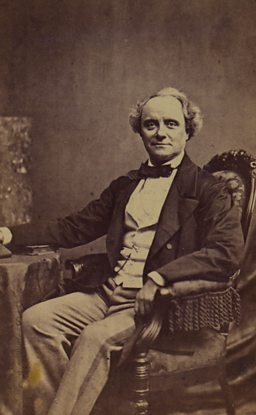
The son of the famous actor Edmund Kean, he was a well-known and successful actor in his own right.
But his time at the Princess theatre between 1850 – 1859 was when he earned the most professional acclaim.
Although this era was not known for its fine Shakespearean acting, Kean was known for his densely packed playbills.
Neither Shakespeare’s comedies nor his tragedies escaped his merciless pen.
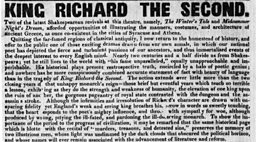
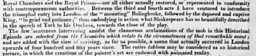
Didactic in style, the playbill below is a good example of his “oeuvre”.
“A recreation wherein instruction is blended with amusement…”
Fired up with the Victorian quest for self-improvement Kean is keen to tell us every single detail about his lavish production.
He name checks Chaucer and Wickcliffe and in the same paragraph offers his own version of medieval history.
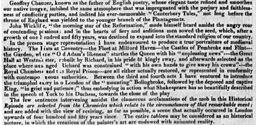
His eye for detail extends to listing the composition, adaptation and source of the music including the information about where it is published and so on, and on.
Other playbills for productions are written in a similar fashion.
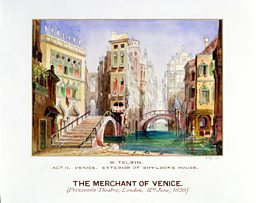
Kean also offered theatre on a spectacular scale. A production of “The Tempest” in 1857 needed over 140 operatives.
He also used scenic panoramas to give an effect of moving from one location to another.
In this production of “Richard the Second” he used between 500 and 600 performers for the entry of Bolingbroke into London with the shamed King Richard.
When it came to the text of Shakespeare he was, like many at the time, less concerned with authenticity and happy with adaptations that introduced singing witches or tableaux.
His productions were possibly the first to be recorded with photographs of individual actors or small groups.
About Shakespeare on Tour
From the moment they were written through to the present day, Shakespeare’s plays have continued to enthral and inspire audiences. They’ve been performed in venues big and small – including inns, private houses and emerging provincial theatres.
BBC English Regions is building a digital picture which tracks some of the many iconic moments across the country as we follow the ‘explosion’ in the performance of The Bard’s plays, from his own lifetime to recent times.
Drawing on fascinating new research from Records of Early English Drama (REED), plus the British Library's extensive collection of playbills, as well as expertise from De Montfort University and the Arts and Humanities Research Council, Shakespeare on Tour is a unique timeline of iconic moments of those performances, starting with his own troupe of actors, to highlights from more recent times. Listen out for stories on Shakespeare’s legacy on your BBC Local Radio station from Monday 21 March, 2016.
You never know - you might find evidence of Shakespeare’s footsteps close to home…
Craig Henderson, BBC English Regions
![]()
Shakespeare Lives
The nation’s greatest performing arts institutions mark 400 years since the Bard's death

Related Links
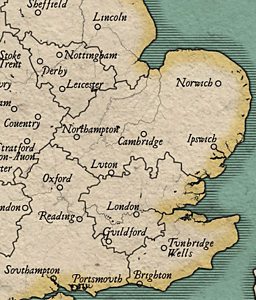
Shakespeare on Tour: Around London
![]()
The King's Men
When Shakespeare's players became the King's men and join the 1604 Coronation procession
![]()
The 1809 ticket price riots
The most famous riots in the history of theatre
![]()
The Lyceum Theatre performed Shakespeare in 1883
But which famous gothic writer worked here?
![]()
Shakespeare's Players turned away in Kingston
The actors paid not to perform
![]()
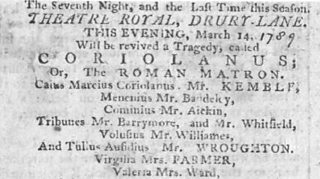
A historic performance of Coriolanus in London
The last performance of Coriolanus before the French Revolution
![]()
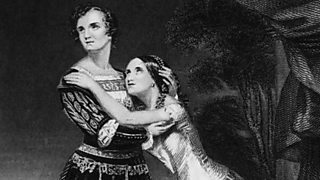
London's Female Romeo
Charlotte Cushman, who took Victorian London by storm
![]()
Curtains for London's Newington Theatre
The closure of London's first purpose built theatre south of the Thames
![]()
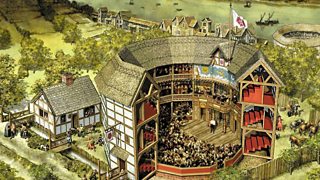
Blossoming at the Rose theatre
The history of the Rose playhouse
![]()
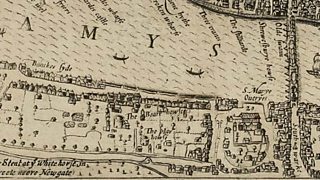
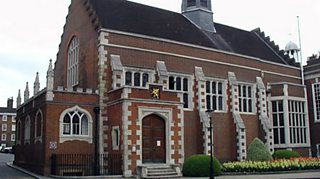
Shakespeare and the 'Night of Errors'
A series of unfortunate incidents at Gray's Hall
Shakespeare on Tour: Around the country
![]()
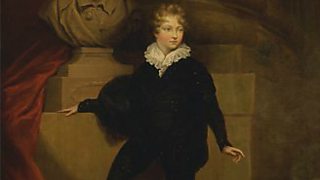
The 'Young Roscius' storms Manchester
Boy actor William Betty treads boards at ten
![]()
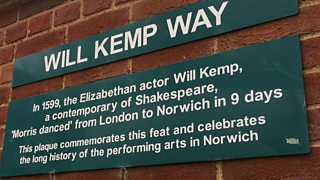
Will Kemp dances to Norwich
The journey of Shakespeare's former clown
![]()
Domestic Calamity postpones performance
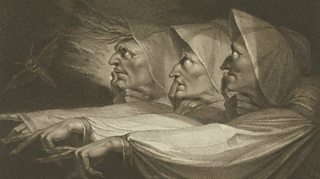
Did the 'curse of Macbeth' strike?
![]()
Jonathan Miller and the Cambridge Footlights
Much ado about Jonathan Miller's Shakespeare