Child star Master Betty plays Macbeth in Manchester
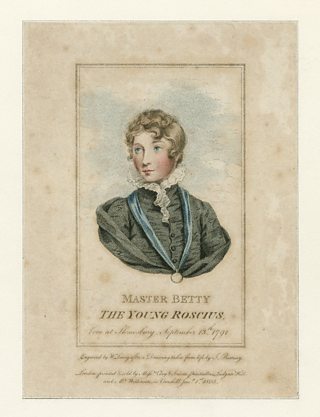
The boy actor William Henry West Betty (1791 – 1874) was a sensation when he first trod the boards at the age of ten. Yes, ten!
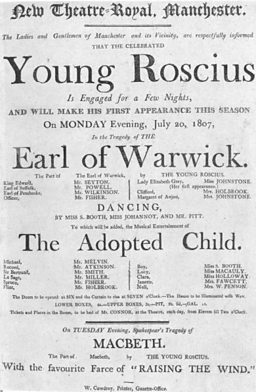
Here we see Master Betty playing the very challenging Shakespearean part of Macbeth, among other roles, before a Manchester audience.
![]()
Much ado near me
Hear more Shakespeare stories on BBC Radio Manchester
![]()
Shakespeare Festival 2016
The BBC celebrates the genius of the bard

Born in Shrewsbury he was inspired by a visit to the theatre where he saw the celebrated actress, Mrs Siddons in action – though not as one of Shakespeare’s tragic heroines.
“Bettymania” affected everyone: even the King had to meet the young Master Betty as well as the Queen and the Royal Princesses.
What he saw, won him over and, so the story goes, he was so stirred by the dramatic muse that he proclaimed he would expire if he did not become an actor.
He immediately set about putting his prophesy into practice. Not only did he make appearances in a number of leading roles, it is believed that he learned the part of Hamlet, Shakespeare’s wordiest protagonist, in just three hours!
He was a sensation in theatres in Ireland, Scotland and across England and word of the boy wonder spread to London where he appeared at Covent Garden and Drury Lane for inflated fees, the two theatres having fought over him. Everywhere he went he was mobbed and on December 1st 1804 huge crowds gathered to see him perform at Covent Garden. The armed forces had to be called out to keep the peace and people were injured in the crush for admittance. “Bettymania” affected everyone: even the king had to meet the young Master Betty, as well as the queen and the royal princesses.
The Prime Minister of the time, William Pitt, succumbed and suspended Parliament in order for members to see his Hamlet. Medals were struck bearing the words “Not yet mature but matchless”, a volume of “Memoirs” appeared, and a critique of the characters he played.
Cartoons appeared in the press suggesting that the established actors of the day were threatened by the young prodigy. One shows Master Betty leap-frogging over a famous, more mature Shakespearean actor.
Another caricatures the theatre manager and playwright Richard Brinsley Sheridan “puffing” on the pipe of “Bettymania”.
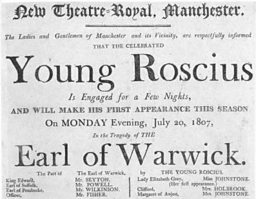
In a bubble of smoke there is a picture of the young upstart walking over the bodies of famous adult actors with blithe disregard. At the ripe old age of 14 he played Richard the Third and Macbeth – and his appearance as the latter is advertised on this playbill. But it isn’t the first time he’s bestrode the stage in Manchester. He appeared on Nov 12, 1804, filled the theatre and was the talk of the town.
The wave of excitement his appearance caused was reported in the local newspaper. The Mercury carried the story that a gentleman who possessed eight tickets for a box refused an offer of sixteen guineas for them. For his “benefit” performance prices were doubled and the young actor was said to have left Manchester £600 better off than when he arrived.
Master Betty made less impact in 1805 when he performed again in Manchester. Although he was well received, spectators were noticeably less enthusiastic. His star was fading. His abilities, the critics noted, were as great, but his talent failed to excite. Astonishment had turned to appreciation – and quite simply the novelty had worn off.
Betty wasn’t successful as an adult but was able to retire in his thirties and live on the fortune he’d made. The craze for infant prodigies continued and other young Shakespeareans include Clara Fisher, the Infant Kean, and the Caelham Brothers. There was also a local youngster - the ‘Ormskirk Roscius’ aka 11-year-old Master Frederick Brown, but sadly there are no British Library playbills that connect this wunderkind with the Bard.
About Shakespeare on Tour
From the moment they were written through to the present day, Shakespeare’s plays have continued to enthral and inspire audiences. They’ve been performed in venues big and small – including inns, private houses and emerging provincial theatres.
BBC English Regions is building a digital picture which tracks some of the many iconic moments across the country as we follow the ‘explosion’ in the performance of The Bard’s plays, from his own lifetime to recent times.
Drawing on fascinating new research from Records of Early English Drama (REED), plus the British Library's extensive collection of playbills, as well as expertise from De Montfort University and the Arts and Humanities Research Council, Shakespeare on Tour is a unique timeline of iconic moments of those performances, starting with his own troupe of actors, to highlights from more recent times. Listen out for stories on Shakespeare’s legacy on your BBC Local Radio station from Monday 21 March, 2016.
You never know - you might find evidence of Shakespeare’s footsteps close to home…
Craig Henderson, BBC English Regions
The full playbill
![]()
Shakespeare Lives
The nation’s greatest performing arts institutions mark 400 years since the Bard's death

Related Links
Shakespeare on Tour: Around Manchester
![]()
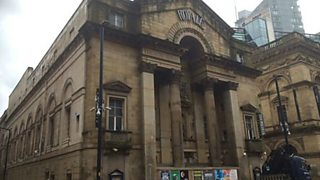
Manchester gets a Theatre Royal
Manchester finally got its own Theatre Royal by royal patent in 1775
![]()
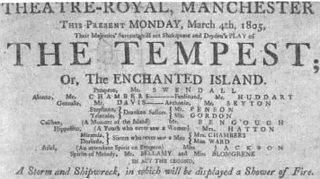
The Tempest adapted in Manchester
Turbulent times in the early 1800s as The Tempest hits Manchester
![]()
Small Cheshire town attracts Shakespeare's players
Shakespeare's Players often visited Congleton
Shakespeare on Tour: Around the country
![]()
Ira Aldridge
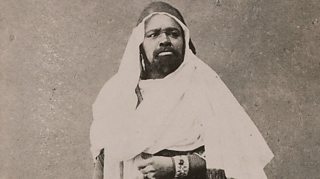
Ira Aldridge - the first black Shakespearean actor
![]()
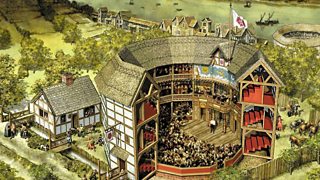
Blossoming at the Rose Theatre
Shakespeare, budding playwright and actor, at the Rose Theatre from the spring of 1592
![]()
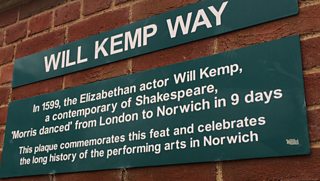
Will Kemp dance finished in Norwich
Why did Will Kemp, Shakespeare's former clown, dance from London to Norwich?
![]()
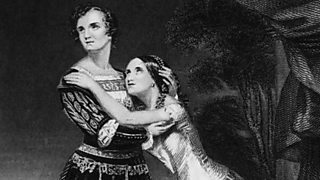
London's Female Romeo
Charlotte Cushman, the American actress who took Victorian London by storm