Could 'Coriolanus' have caused a revolution?
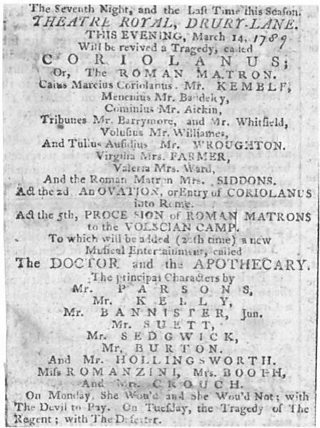
As far as we know, this playbill (inset below), with its date of March 14 1789, is the last time Shakespeare’s Coriolanus was performed before the French Revolution. It was to be three years before the play was staged again.
Coriolanus is one of Shakespeare’s most political works, a tragedy written when the playwright was at his creative peak.
![]()
Much ado near me
Hear more Shakespeare stories on BBC Radio London
![]()
Shakespeare Festival 2016
The BBC celebrates the genius of the bard

A symbol of control
The victorious and lauded warrior Coriolanus is a military leader of ancient Rome, a member of the aristocratic “patrician” class.
But he despises the people and will not bend to their will to advance his political career.
To some, Coriolanus was a symbol of control, whereas others thought the crowd scenes sparked fears that a revolution could take place in England.
At its core, the play is a battle between aristocratic and plebeian factions.
After this production the play was withdrawn and not staged again till 1792.
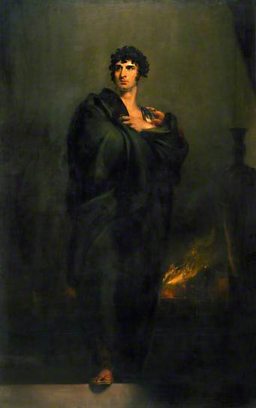
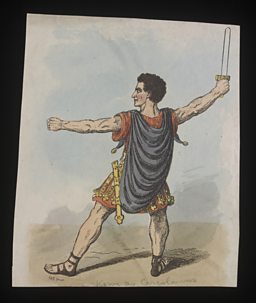
In this playbill Coriolanus is played by famous 18th century Shakespearean actor John Philip Kemble, a role to which the tall, handsome and patrician actor was well suited.
Years later the critic and essayist William Hazlitt saw Kemble in this role and was less convinced of the actor’s mastery of the role, “the unaccountable abstracted air, the contracted eyebrows and suspended chin of a man who is just going to sneeze”.
The role of the Roman matron, was performed by his sister, the celebrated tragic actress Sarah Siddons.
It was staged again in 1792 when the actor Edmund Kean offered a different interpretation: a plebeian Coriolanus, a man of the people.
About Shakespeare on Tour
From the moment they were written through to the present day, Shakespeare’s plays have continued to enthral and inspire audiences. They’ve been performed in venues big and small – including inns, private houses and emerging provincial theatres.
BBC English Regions is building a digital picture which tracks some of the many iconic moments across the country as we follow the ‘explosion’ in the performance of The Bard’s plays, from his own lifetime to recent times.
Drawing on fascinating new research from Records of Early English Drama (REED), plus the British Library's extensive collection of playbills, as well as expertise from De Montfort University and the Arts and Humanities Research Council, Shakespeare on Tour is a unique timeline of iconic moments of those performances, starting with his own troupe of actors, to highlights from more recent times. Listen out for stories on Shakespeare’s legacy on your BBC Local Radio station from Monday 21 March, 2016.
You never know - you might find evidence of Shakespeare’s footsteps close to home…
Craig Henderson, BBC English Regions
Why was Coriolanus so controversial?
"Coriolanus is a tragic play about conflict, the power of the people and revenge," says the RSC website.
One of the themes of the play is about a famine in Rome that causes unrest between the ordinary people and the Roman aristocrats - whom they suspect of hoarding corn.
[Enter a company of mutinous Citizens, with staves,] [p]clubs, and other weapons]
First Citizen. Before we proceed any further, hear me speak.
All. Speak, speak.
First Citizen. You are all resolved rather to die than to famish?
All. Resolved. resolved.
First Citizen. First, you know Caius CORIOLANUS is chief enemy to the people.
All. We know't, we know't.
First Citizen. Let us kill him, and we'll have corn at our own price.
Is't a verdict?
All. No more talking on't; let it be done: away, away!
In Britain the anti-Corn Law league seized on such lines.
It echoed the unrest in France, and the play was withdrawn from performance as the revolution across the Channel looked to overthrow the monarchy.
Modern day director Josie Rourke who directed the play with the actor Tom Hiddleston in the lead role describes it as “a play about the bloody birth of democracy”. “When is that not timely? “ she says.
It was certainly timely in 1789 when Britain watched riots and revolution sweep through France.
Best of The Bard

Related Links
Shakespeare on Tour: Around London
![]()
The King's Men
When Shakespeare's players became the King's men and join the 1604 Coronation procession
![]()
The 1809 ticket price riots
The most famous riots in the history of theatre
![]()
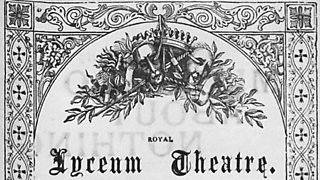
The Lyceum Theatre performed Shakespeare in 1883
But which famous gothic writer worked here?
![]()
Charles Kean
The London Theatre manager not lost for words
![]()
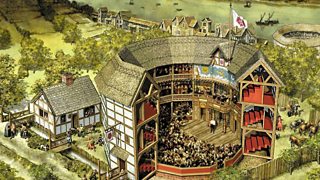
Blossoming at the Rose theatre
The history of the Rose playhouse
![]()
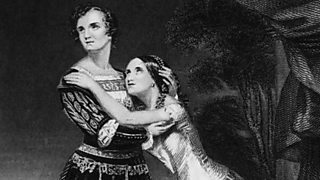
London's Female Romeo
Charlotte Cushman, who took Victorian London by storm

![]()
Curtains for London's Newington Theatre
The closure of London's first purpose built theatre south of the Thames
![]()
Shakespeare's Players turned away from Kingston
The actors paid not to perform
![]()
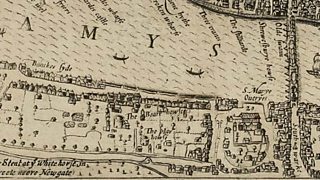
Shakespeare and the 'Night of Errors'
A series of unfortunate incidents at Gray Hall
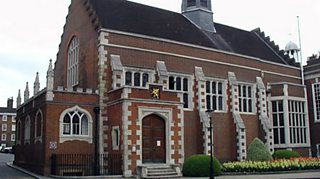
Shakespeare on Tour: Around the country
![]()
Ipswich: a magnet for Shakespeare?
Why did Shakespeare's company visit Ipswich ten times?
![]()
Sarah Siddons visits Norwich
Putting the Theatre Royal, Norwich, on the map
![]()
Madame Tussaud's exhibiton in Nottingham
Including a model of William Shakespeare
![]()
Touring Kent to avoid the plague
In 1592, the plague forced touring theatre companies out of London