Famous theatre impresario bows out in Scarborough
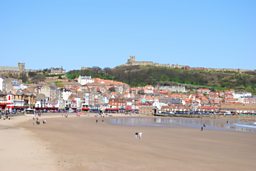
Today Scarborough is perhaps best known for its association with the master of the middle-class comedy of manners, writer and director Alan Ayckbourn.
But in 1815 it was a different comic farce on the bill for spectators, staged by an actor manager who was just as famous in his day. Stephen Kemble had a circuit of theatres across the country, but particularly in the North.
![]()
Much ado near me
Hear more Shakespeare stories on BBC Radio York
![]()
Shakespeare Festival 2016
The BBC celebrates the genius of the bard
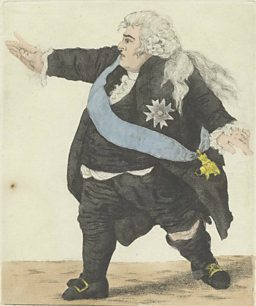
He was a large man, famously rotund and was known for the role of Falstaff, Shakespeare’s enormous anti-hero who romps through “Henry VI” and “The Merry Wives of Windsor”. It was a role in which he was described as the "optimum balance between comedy and gravity”.
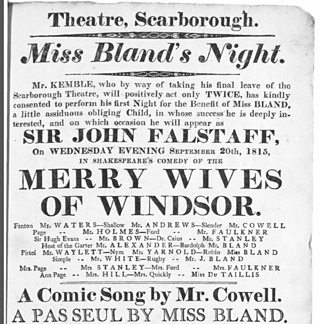
According to this playbill, on the night in question he is taking his final leave playing the role he’s made famous, and it’s to support a young fresh talent, a child actress called Miss Bland who is scheduled for later in the bill when spectators will be treated to her “Pas Seul”.
It is a bit like an aspiring young star getting the Simon Cowell stamp of approval these days - a manager like Kemble can make or break a young talent and he’s gone all out to promote this youngster.
A Mr Bland and a Mr J Bland appear in the Merry Wives, which suggests that she is part of this acting family.
It is not usual for the children of adult performers to tread the boards – the novelty of a youthful performer was always a big draw,
It is how Kemble and his famous siblings, brothers John and Charles Kemble, and most celebrated of them all - his sister Sarah Siddons were inspired.
The family continued to raise a theatrical dynasty. Kemble married actress Elizabeth Satchell – praised for her Ophelia in Hamlet - and their son Henry was also an actor as well as his niece, the abolitionist, Fanny Kemble.
At this time in the 19th century Scarborough was established as a genteel seaside resort.
In 1801 Scarborough had a population of about 6,000 which is that of a reasonably sized town and enough to make up an audience supplemented by visitors to the town.
The town's Theatre Royal was built in 1771 for Thomas Bates, who was a well-known comedian who managed for venue for around forty years, when Stephen Kemble purchased it.
Although some were opposed to the theatre, interestingly it was built by the Reverend Thomas Haggit, a clergyman of the Church of England.
About Shakespeare on Tour
From the moment they were written through to the present day, Shakespeare’s plays have continued to enthral and inspire audiences. They’ve been performed in venues big and small – including inns, private houses and emerging provincial theatres.
BBC English Regions is building a digital picture which tracks some of the many iconic moments across the country as we follow the ‘explosion’ in the performance of The Bard’s plays, from his own lifetime to recent times.
Drawing on fascinating new research from Records of Early English Drama (REED), plus the British Library's extensive collection of playbills, as well as expertise from De Montfort University and the Arts and Humanities Research Council, Shakespeare on Tour is a unique timeline of iconic moments of those performances, starting with his own troupe of actors, to highlights from more recent times. Listen out for stories on Shakespeare’s legacy on your BBC Local Radio station from Monday 21 March, 2016.
You never know - you might find evidence of Shakespeare’s footsteps close to home…
Craig Henderson, BBC English Regions
Kemble's huge contribution to northern theatres
Stephen Kemble was a member of the Shakespearean acting dynasty the Kembles - which included his sister Sarah Siddons – who went on to become a highly successful Northern theatre manager of the eighteenth century English stage.
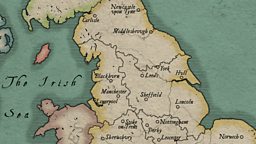
His most famous acting role was in the part of the rotund Falstaff – a part for which he reportedly needed no padding…he apparently weighed 30 stone! He received acclaim in the role from the main London theatres of the day, but his heart lay in the Northern theatres, and he ran a Northern circuit of theatres from Newcastle’s Theatre Royal for a good 15 years (1791-1806).
These theatres included Alnwick, Stockton, Sunderland and North Shields, and from these he supported the careers of many rising stars of the time, many of whom had made their name acting Shakespeare, such as Master Betty, his wife Elizabeth Satchell, and Edmund Kean.
Related Links
Shakespeare on Tour: Around York
![]()
The 18th century impersonator who was 'the Jon Culshaw of his day'
The city gets its prestigious Theatre Royal
![]()
Interval show lands pair in jail
'Seditious' performance led to court case
![]()
Clamoring crowds wreak havoc at Guildhall
The King's Men return to the popular performance destination
Shakespeare on Tour: Around the country
![]()
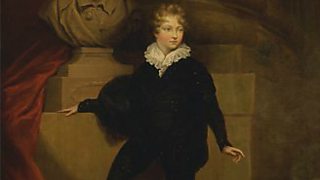
The 'Young Roscius' storms Manchester
Boy actor William Betty treads boards at ten
![]()
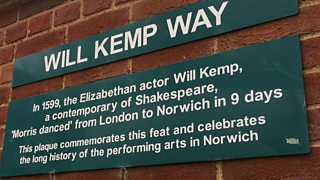
Will Kemp dances to Norwich
The journey of Shakespeare's former clown
![]()
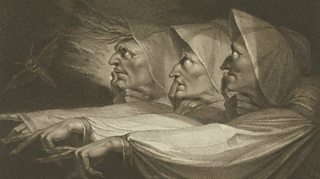
Domestic Calamity postpones performance
Did the 'curse of Macbeth' strike?
![]()
Jonathan Miller and the Cambridge Footlights
Much ado about Jonathan Miller's Shakespeare