Clamouring crowds wreak havoc at Guildhall
As the largest of early modern England’s northern cities, with a population of around 10,000 people, York had long been a popular destination for Shakespearean players and contemporary evidence suggests that the city was famous for its taste for theatre.
York had continued to stage its traditional cycle of biblical plays long into the Elizabethan era.
![]()
Much ado near me
Hear more Shakespeare stories on BBC Radio York
![]()
Shakespeare Festival 2016
The BBC celebrates the genius of the bard
There were also moves to create one of the first theatres outside London in the city in 1609, although the city authorities eventually prevented its opening, worried that the builders had attracted strangers ‘and likewise some of manuell occupacions in this Cittie who do intend to give over ther occupacions and fall to … an idle Course of life’.
The city corporation rewarded the royal players generously, as a mark of its esteem for the players’ royal patron
After Shakespeare’s death in 1616, his company, the King’s Men, performed in York several times during the reign of Charles I, including in 1631-2, 1632-3 and 1633-4.
As was usual on these occasions, the city corporation rewarded the royal players generously, as a mark of its esteem for the players’ patron, paying them between 20 and 40 shillings at each visit. The city authorities may have been especially generous in 1633 as the city was visited that year by Charles I himself, on his royal progress to Scotland for his delayed Scottish coronation in Edinburgh.
We have no record of which plays the King’s Men performed for the people of Caroline York but there’s a good chance that it included Shakespeare’s dramas as these continued to be part of the company’s repertory in London.
In 1630, for example, we know that the troupe performed A Midsummer Night’s Dream at court; and in 1633-4 the company’s court performances included productions of Richard III, The Taming of the Shrew and A Winter’s Tale. York audiences might have been offered similar choices, as Shakespeare’s plays continued to enjoy a life on stage beyond (as well as within) London after his death.
On arriving in York, Shakespeare’s company would probably have gone to see the mayor to present their touring licence and to seek his permission to perform locally. Having secured such permission it was traditional for the players to stage a performance before the mayor and council, often at the town hall, before going on to perform in other local venues such as inns. In at least some cities, including York, it was customary for local people to be invited to see the so-called ‘mayor’s play’.
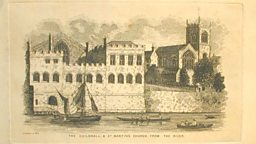
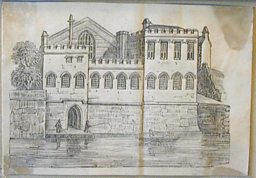
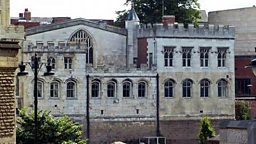
In York the usual venue for civic-sponsored play performances was the Common Hall, which survives today, little altered, as the city’s Guildhall. The crowds drawn to the performances at the Hall could be very large. Indeed, the corporation complained in 1592 that the ‘doores, lockes, keyes, wyndowes, bordes, benches & other buildinges’ of the Common Hall had been ‘greatlye impared and hurte and diverse of the same broken, shakne, Lowes and Ryven vp by people repairing thither to se and heare plays’!
Shakespeare on Tour
From the moment they were written through to the present day, Shakespeare’s plays have continued to enthral and inspire audiences. They’ve been performed in venues big and small – including inns, private houses and emerging provincial theatres.

BBC English Regions is building a digital picture which tracks some of the many iconic moments across the country as we follow the ‘explosion’ in the performance of The Bard’s plays, from his own lifetime to recent times.
Drawing on fascinating new research from Records of Early English Drama (REED), plus the British Library's extensive collection of playbills, as well as expertise from De Montfort University and the Arts and Humanities Research Council, Shakespeare on Tour is a unique timeline of iconic moments of those performances, starting with his own troupe of actors, to highlights from more recent times. Listen out for stories on Shakespeare’s legacy on your BBC Local Radio station from Monday 21 March, 2016.
You never know - you might find evidence of Shakespeare’s footsteps close to home…
Craig Henderson, BBC English Regions
Just who were The King's Men?
The King’s Men were the acting company in which Shakespeare was a member for most of his writing and acting career.
They were known as the Lord Chamberlain’s Men during the reign of Elizabeth I and become the King’s Men by the royal decree of King James I when he came to power in 1603.
In the royal patent of 1603, the King’s Men were named as – Lawrence Fletcher, William Shakespeare, Richard Burbage, Augustine Phillips, John Heminges, Henry Condell, William Sly, Robert Armin, Richard Cowley…”and the rest of their associates…”.
By the time of the troupe’s visit to York in and around 1631, we know that several of the actors named in the patent had already died, including lead actor Richard Burbage, who played Shakespeare’s demanding male parts – Richard III, Othello, King Lear, Antony and Macbeth – never retired from the stage and continued acting until his death in 1619.
Two of the original members of the King’s Men, Henry Condell and John Heminges, were the most recent to pass away. Condell and Heminges have since become most famous for compiling Shakespeare’s works into the famous First Folio edition of 1623 which lists the 26 principal actors in his plays over the years.
Related Links
Shakespeare on Tour: Around York
![]()
The 18th century impersonator who was 'the Jon Culshaw of his day'
The city gets its prestigious Theatre Royal
![]()
Interval show lands pair in jail
'Seditious' performance led to court case
![]()
Famous theatre impresario bows out in Scarborough
Stephen Kemble says goodbye to the theatre
Shakespeare on Tour: Around the country
![]()
The 1809 ticket price riots
The most famous riots in the history of theatre
![]()
Cambridge students put on a Christmas satire
Shakespearean style 'Footlights'
![]()
North West's influence on Shakespeare's success
Plus, the small Cheshire town that attracted Shakespeare's players
![]()
Salisbury shadows play Shakespeare
A dreamy performance of Shakespeare