The growth of Western classical music in India
By Petroc Trelawny
Classical music has always been global. A century ago America was the land of opportunity: Dvorak went there to run a New York conservatoire; celebrated virtuosi like violinist Fritz Kreisler and pianist/composer Sergei Rachmaninov were mobbed.
The latter had a private railway carriage to ferry him between dates in dozens of American cities. The London Symphony Orchestra only missed sailing on the Titanic by a matter of days when it embarked on its first American tour in 1912.
Finding new international audiences is now more important than ever
The hunger for new lands where the missionaries of music can proselytise on behalf of high European art has not been sated.
A perceived reduction of interest in classical music and a tough financial climate at home has made finding new international audiences more important than ever.
The quality of students emerging from our conservatoires and colleges has never been higher; now to find a home for their rich talents.
China is the big hope: 160 cities that have a population of more than a million, a dozen symphony orchestras launched in recent years, and new concert halls needing music to fill them. The piano craze been widely reported - maybe as many as 50 million young people are studying the instrument.
The international agencies have opened up branch offices, a sophisticated touring network has been established. Posters for British orchestras and ensembles are to be seen on the billboards of Shanghai and Beijing.
But for now at least the Chinese market is saturated. Hence the current interest in another country with a population north of a billion, and a rapidly growing middle class: India.
Western classical music here is nothing new - in the late 19th century, soloists en route to Australia by sea would give recitals during shore leave in Bombay (now Mumbai).
The music school in Calcutta has just celebrated its centenary. In Chennai (Madras) I visited a classical music shop that has been selling instruments and scores since the 1840s. Tuning the Governor’s pianos was once one of its regular concerns.
But classical music was essentially an art form of the Raj, and came close to dying out after independence in 1947.
And yet there was genuine enthusiasm around the BBC SSO’s tour – an excitement I have rarely seen before.
"Thank you for ending the drought," one of the players was told in Delhi, a reference to the fact that a professional Western orchestra has not visited the capital for a decade.
The excitement of such a pioneering event was not restricted to the concert hall: All India Radio broadcast the performance live to a vast potential audience; a few weeks later Doordarshan, Indian state television, screened it to tens of millions more.
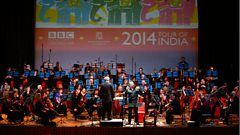
In Chennai the local press described a crowd dressed to the nines at what was the social event of the year – Bengal cotton saris and Nehru jackets side-by-side with black tie and designer handbags.
In all, 12,000 young people experienced live Western classical music
The correspondent of The Hindi saw the event as marking "the beginning of the coming together of an appreciative audience for this genre".
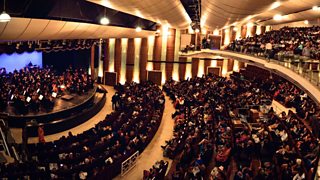
If the Mumbai crowds seemed, well, a little cooler, perhaps that’s because they are more used to hearing visiting Western musicians - the city is home to the National Centre for the Performing Arts, India’s only proper concert hall complex.
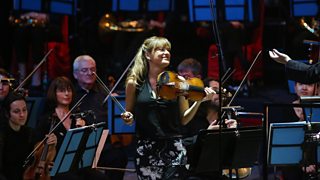
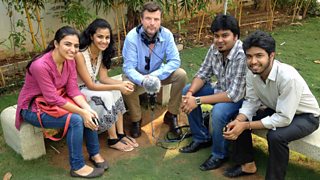
But almost more important than the formal concerts was the educational element of the trip - Nicola Benedetti leading workshops and school performances, James MacMillan working closely with composition students at the KM Music Conservatory in Chennai.
In all, 12,000 children and young people were exposed to live Western classical music. A dozen students from the Royal Conservatoire of Scotland were playing with the BBC SSO, and were immediately offered jobs with the Symphony Orchestra of India.
It currently plays just two months a year, but is ambitious - it aims to become full-time, with Western players training a new generation of Indian musicians who will eventually take over.
I’m not sure India will ever take to European classical music in the way China has. The indigenous Hindi and Carnatic traditions are so dominant that there is less opportunity for another complex art form to grow, while the power of Bollywood (and the Tamil and Bangali film industries) exerts ever more power over more mainstream music entertainment. And for some, classical music is still too associated with colonial times.
But as the films and performances on this website show, there is clearly now an opportunity to increase interest in western classical music in India.
The BBC Scottish Symphony Orchestra’s tour was a genuinely pioneering event, encouraging a community that, if nurtured, will slowly mature, and provide exciting opportunities for classical musicians from both India and the west.
Petroc Trelawny presents Breakfast on BBC Radio 3, and travelled with the BBC SSO to Mumbai on their recent Indian tour.
![]()
The orchestra in India
Explore all coverage of the BBC SSO tour of India from BBC Arts.
![]()
Indian Serenade
Violinist Nicola Benedetti's personal experience of her first ever tour of India
![]()
A dream come true
BBC SSO Director Gavin Reid on why he brought the orchestra to the country he visited 25 years earlier
![]()
Classical ambitions
Radio 3's Petroc Trelawny writes about the growth of Western classical music in India
![]()
Capturing the heart of India
Broadcaster Sir Mark Tully writes about the impact of the BBC SSO tour on Indian audiences