The human story
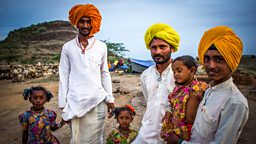
As the monsoon story directly affects over half of the world’s population, the human side to the story was essential to portray for the series and in each episode there is at least one story of how people are affected by and adapt to the monsoon.
The human side to the story was essential to portray for the seriesPaul Bradshaw, series producer
In episode 1 there’s a scene, in which priests sit in steel vessels filled with water praying to Varuna for the monsoon; in episode 2, we follow the fate of Cambodian fishermen, using their knowledge of the monsoon floods to bring home a vital bounty; and in episode 4 there’s the extraordinary spectacle of Tenggerese people in Java offering live sacrifices to a volcano god. It’s the combination of volcanoes and the monsoon that makes their farms so fertile.
Perhaps the most remarkable people story of all is in episode 5. This whole film is devoted to telling the story of the relationship between people and wildlife, from the arrival of the first hunter-gatherers, through the development of agriculture, civilization and the European traders and empires, to the present day.
It’s a surprising story, profound in the way some cultures have found effective ways to live side by side with nature, but alarming in the extent of the impact of the industrialised world on the nature of the monsoon region. Bearing the brunt of these developments are animals such as the Bengal tiger, Siamese crocodile and the orangutan.
We are all connected to the monsoon regionPaul Bradshaw, series producer
At its heart it’s an empowering story. Now more than ever we are all connected to the lands of the monsoon. Even if we’ve never taken advantage of a holiday there, we most certainly use it’s products: timber, palm oil, rice, tea. Simply through the consumer choices we make we are all connected to the monsoon region. We can’t help but all play a part in its future.