Making the impossible possible
There were a couple of occasions in the series where the team managed to discover ways of filming key stories that under normal conditions just wouldn’t have been possible.
Hidden nature displaying itself in front of us and giving us a window on a worldPaul Bradshaw, series producer
On the banks of the Mekong,a group of conservationists have been working to save the frog-faced soft-shell turtle from extinction. It’s a creature that is rarely seen. This is partly because it’s endangered but also because it spends its life hidden in the sand of the riverbed, ready to strike out at passing fish.
We discovered that the conservationists were rearing young turtles to be released when they were big enough to survive in the wild. It was an amazing opportunity: hidden nature displaying itself in front of us and giving us a window on a world that would be virtually impossible to see in the Mekong itself. The sequence helped us to tell the story of the flooding of the Mekong in episode 2.
There was also one sequence that was filmed outside our monsoon region: mosquitoes being bombarded by raindrops.
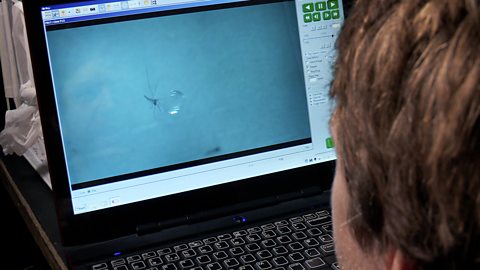
Making of: Mosquitoes in rain
A glimpse into how the team filmed a single raindrop splashing onto a mosquito.
The laws of physics – lighting requirements and macro lenses with incredibly narrow depth of field – can make filming the behaviour of small and fast creatures an almost impossible task, which is why this sequence had to be filmed under laboratory conditions.
The mosquito was a perfect creature for us to include in the series.Paul Bradshaw, series producer
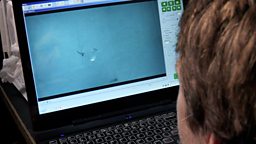
The mosquito was a perfect creature for us to include in the series. They hatch out just after the rains and their very presence characterizes the experience of living in a monsoonal country. Our team had heard of recent research into how mosquitoes fly through the rain. US insect flight scientists had actually filmed this in their lab in black and white, using specialist cameras.
The footage looked like it was filmed in a lab and would never do for a natural history programme. But seeing how a mosquito reacts to being hit by a water droplet provided the potential for a real revelation about nature and animal behaviour in the monsoon on a tiny scale, something we thought crucial for delivering the full monsoon story.