European Union retaliate afta Trump begin im tariffs on steel and aluminium
Wia dis foto come from, Getty Images
- Author, João da Silva
- Role, Business reporter, BBC News
- Reporting from, Singapore
- Read am in 5 mins
Tariffs wey US President Donald Trump sama on imports of steel and aluminium don take effect for one move wey fit likely increase tensions wit some of America largest trading partners.
E bin spark one immediate response from di European Union wey say e go impose counter tariffs on billions of euros of US goods.
Trump hope say di tariffs go boost US steel and aluminium production, but critics say e go raise prices for US consumers and dent economic growth, as US markets sink on Monday and Tuesday for response to fear of recession.
On Tuesday, Trump bin make U-turn for im decision to double di tariffs on Canada specifically, for response to one surcharge wey Ontario bin placed on electricity.
Di tariffs mean say US businesses wey wan bring steel and aluminium into di kontri go need pay 25% tax on dem.
Di EU bin announce retaliatory tariffs on Wednesday for response on goods wey worth €26bn (£22bn).
Dem go dey partially introduced on 1 April and fully in place on 13 April.
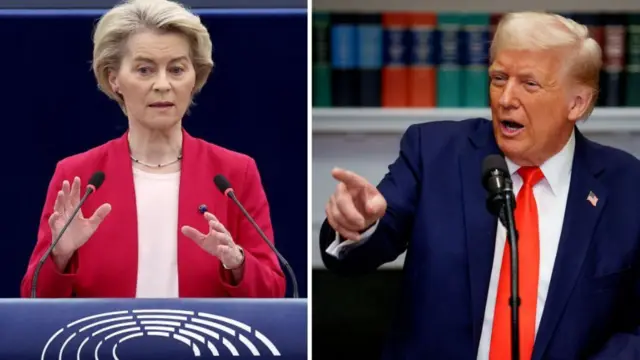
European Union President Ursula von der Leyen tok say she "deeply regrets dis measure" and add say tariffs dey "bad for business and worse for consumers".
"Dem dey disrupt supply chains. Dey bring uncertainty for di economy. Jobs dey at stake, prices up, nobody need dat, on both sides, no be in di EU or di US."
She tok say di EU response dey "strong but proportionate" and say EU remain "open to negotiations".
However, di American Iron and Steel Institute (AISI), one group wey dey represent US steelmakers, bin welcome di tariffs, say dem go create jobs and boost domestic steel manufacturing.
Di group president Kevin Dempsey tok say di move close one system of exemptions, exclusions and quotas wey bin allow foreign producers to avoid tariffs.
"AISI applaud di president actions to restore di integrity of di tariffs on steel and implement one robust and reinvigorated program to address unfair trade practices," Oga Dempsey add.
Di US na major importer of aluminium and steel, and Canada, Mexico and Brazil dey among dia largest suppliers of di metals.
Wia dis foto come from, Reuters
'No exceptions'
Oda kontris also respond immediately to di move.
Trade Secretary Jonathan Reynolds tok say e dey disappointed and "all options dey on di table" to respond in di national interest.
Australia Prime Minister, Anthony Albanese, tok say di Trump administration decision to go ahead wit di new tariffs dey "entirely unjustified".
Albanese, wey bin don dey try to secure exemption to di tariffs, say Australia no go impose retaliatory duties sake of say dat kain move go only drive up prices for Australian consumers.
Meanwhile, Canada Energy Minister, Jonathan Wilkinson, bin tell CNN say im kontri go retaliate but add say Canada no dey look to escalate tensions.
Canada na one of America closest trade partners and di largest exporter of steel and aluminium to di US.
For 2018, during im first term as president, Trump bin impose import tariffs of 25% on steel and 10% on aluminium, but dem later negotiate carve-outs for many kontris.
Dis time di Trump administration don signal say exemptions no go dey.
British steel
Gareth Stace, director general for industry body UK Steel, tok say US move dey "hugely disappointing".
Some steel company contracts don already dey cancelled or put on hold, e tok, and add say customers for US go need pay £100m per year extra in di tax.
E tok say e bin share Trump concerns about cheap steel wey dey flood di market, but urge for am to work wit di UK rather dan to work against am.
"Surely President Trump realise say we be im friend, not im enemy, and our valued customers in di US na our partners - dem no be our enemies," e tok.
Tariffs go "hit us hard" at a time wen imports of steel into di UK dey rise and di industry dey "struggle" wit energy prices.
E bin call on di UK goment to "rapidly boost and bolster our trade defences" as di EU don do "to make sure di steel wey no go to di US" no flood di UK market, and to negotiate exemption from US tariffs.
Recession fears
Na Michael DiMarino dey run Linda Tool, one Brooklyn company wey dey make parts for di aerospace industry. Evritin e make involve some kain steel, much of dem dey come from American mills.
"If I get higher prices, I pass dem on to my customers. Dem get higher prices, dem pass am on to di consumer," Oga DiMarino tok, and add say e support di call for increased manufacturing in di US but warn say di president moves fit backfire.
Di American Automotive Policy Council, one group wey dey represent car giants like Ford, General Motors and Stellantis, also echo suchworries.
Di organisation president, Matt Blunt, tok say dem "dey concerned say to specifically revoke exemptions for Canada and Mexico go add significant costs" to car makers suppliers.
Some economists dey warn say di tariffs fit help di US steel and aluminium industries but hurt di wider economy.
"E dey protect [di steel and aluminium] industries but hurt downstream users of dia products as e go make dem more expensive," Bill Reinsch tok. Im be former Commerce Department official, wey now dey for di Center for Strategic and International Studies.
Fear of di economic cost of Trump trade tariffs don spark one selloff for US and global stock markets wey accelerate dis week afta di US president refuse to rule out di prospect of economic recession.
Meanwhile, research firm Oxford Economics, tok for one report say e don lower im US growth forecast for di year from 2.4% to 2% and make even steeper adjustments to im outlook for Canada and Mexico.
"Despite di downgrade, we still dey expect di US economy to outperform di oda major advanced economies over di next couple of years," di report add.
Additional reporting by Michelle Fleury for New York