'I dey determined to raise good men' - Chimamanda Ngozi Adichie tok about her sons, writing and odas inside exclusive interview
- Author, Grace Dean
- Role, BBC News
- Read am in 5 mins
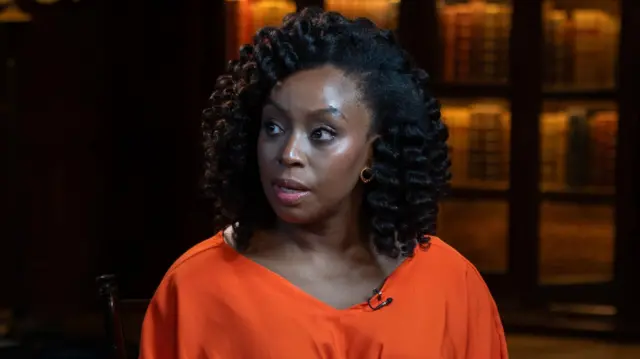
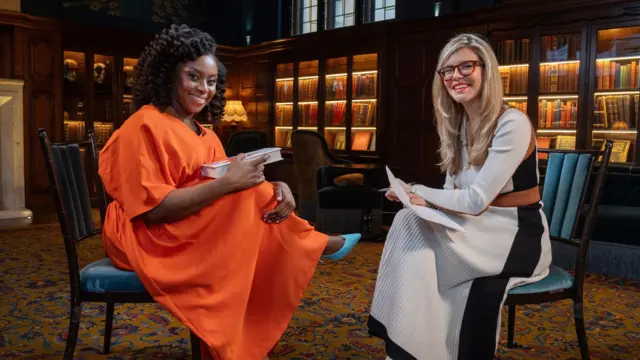
Chimamanda Ngozi Adichie say di writer's block she experience after she become pregnant with her first child bin dey "terrifying".
"Na really a frightening place to dey, becos writing na di tin wey dey give me meaning," di ogbonge Nigerian author, 47, tell BBC Emma Barnett.
"I no dey sure say e dey entirely physiological but sometin change, and I just no fit go back into dat magical place wia I fit write fiction."
Adichie bin born her first pikin, a daughter, in 2016. Last year, she born twin boys, wey now dey 11 months old.
While she bin dey pregnant, she bin get a "very foggy feeling" and "no fit think as clearly," she tok.
"I be pesin wey to dey think clearly dey so important to me, and so to dey in dat kind place emotionally dey very frightening," she tok.
Adichie now dey release her first novel in more than ten years, Dream Count.
Di book dey tell di tori of four women wey dey experience lives wey no dey go according to plan.



End of Di one wey oda users dey read well well
"I no fit write for a while, and den I start to write again," she tok.
Wia dis foto come from, BBC News
Adichie dey known for work wey dey explore themes including feminism, gender and immigration. Di novelist 2012 Ted Talk 'We Should All Be Feminists' help to push her to greater light, and even Beyoncé sample am for her 2013 song Flawless.
For one wide-ranging interview with BBC, she tok about topics including parenthood, grief and artificial intelligence (AI).
Adichie belief about gender don lead her to reflect on how she go like to bring up her sons. "I dey determined to raise good men," she tok.
"I wan raise my boys to dey emotionally comfortable, to dey in touch with emotion, to not be afraid of emotion, and also not to dey afraid of fear," she continue.
Compared to girls, Adichie believe say boys no get many "wholesome" role models. "Dis space just dey occupied by noxious characters and ideas," she tok.
Di writer add say she want her sons to be "di kind of boys wey no go start fight but if you bring fight to dem, dem go beat you up".
As well as having her three children, since writing her last novel, Adichie also don lose both of her parents.
"Grief dey reduce but only small small and den, at some point, e go come back," she tok.
Adichie bin dey surprised by how physical grief bin feel. "Your heart go really dey very heavy, you feel as if your body somehow no longer dey able to carry di weight of your heart," she tok.
Di novelist say grieving for her mother, wey die suddenly on her father birthday for 2021, get a role in shaping her new novel.
Wen she start to write di book - after her mother die - "I no think say I bin dey write about my mother," she tok. But wen she don nearly finish, she reread di manuscript and realise say e get "so much about mothers and daughters" inside am, even though she no bin dey conscious of dis while writing.
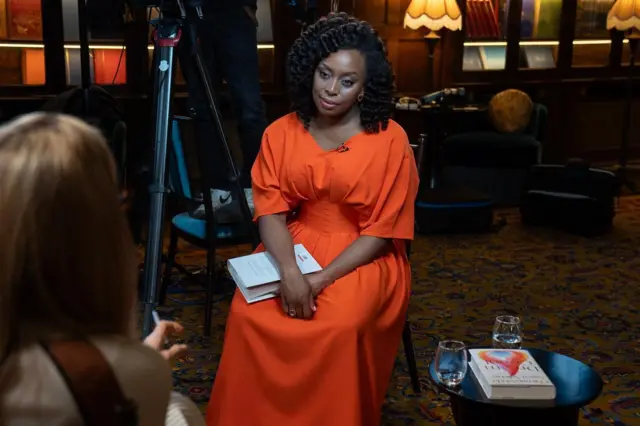
"I feel very strongly say, in some ways, my mother na im open di door for me to get back into dis magical place wey mean say I fit write fiction," Adichie tok. "I kind of think say she bin dey comfort me, and e actually dey deeply emotional for me to make dat realisation."
Wia dis foto come from, BBC News
As someone with deep emotional connection to di creative process, e no dey surprising say wen di conversation turn go AI, Adichie get strong stand.
Di author say make we no refer to any written content wey dey produced by generative AI as stories and say di technology go make all of us, if we allow am widely, "increasingly stupid".
She argue say AI fit limit human creativity, sometin she say "we suppose no ever think say we fit somehow replace".
Even using AI for tasks like summarising work emails fit dey damaging, she tok.
"Di ability to summarise na sometin wey require a certain level of creativity and imagination and intelligence, and e just seem to me say if you go give dat ability to sometin else, den wetin we go let our brains do for us?"
Watch di full interview on BBC iPlayer - Chimamanda Ngozi Adichie: The Interview with Emma Barnett