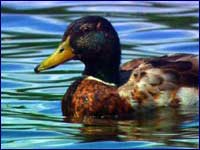
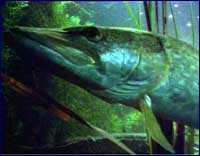
This programme tells us the story of the Quoile Pondage in County Down and how it has changed from an important transport and trade route in the past to a peaceful freshwater habitat in the present day. A key theme in the programme is how man has made use of this environment, changed and protected it.
The programme covers curriculum areas such as Geography, History and Science.
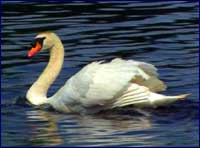
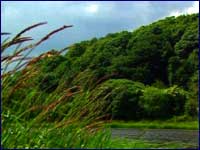
For centuries the Quoile River was a link between Strangford Lough and the town of Downpatrick, a tidal estuary which often flooded. .Many attempts were made to solve the flooding problem and it was finally resolved with the creation in 1957 of a tidal barrier at Hare Island. The construction of this tidal barrier turned the Quoile into a freshwater habitat known as the Quoile Pondage. This has resulted in the natural colonisation of the former seashore by marsh plants and reed beds, rushy grassland, alder and willow. The Quoile is now a wonderful freshwater habitat for many varieties of plants, insects, fish and birds, and attracts migrating waterfowl and waders.
So it’s hard to believe that this peaceful spot was once a bustling area forming part of an important transport route.
In early times it was a safe haven for people who settled there. Missionaries travelled across the Irish Sea, into Strangford Lough and down the Quoile River, founding places of worship such as Inch Abbey. Saint Patrick is known to have travelled down the Quoile River and hence the main town of the area, Downpatrick, is named after him. Downpatrick grew to be an important and thriving settlement.
In 1717 the Quoile Quay was built and served as a busy port for Downpatrick and the surrounding area for over 200 years. A steamer service even operated to Liverpool from Steamboat Quay.
This programme helps us to understand the rich and varied history of the Quoile and its environment by explaining how its use by man has changed over the years.
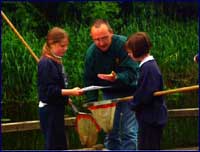
In the programme we see P6 pupils from Downpatrick Primary School who are carrying out a class project on the Quoile Pondage. We observe the class making models of things that can be found in the Quoile River (which can be viewed from the classroom window) and painting some of the birds that can be seen there. Presenter Mark Patterson is accompanied around the Pondage and its surrounding area by four pupils from the class. Here they find historical evidence in the form of the wreck of an old wooden ship which was used to transport goods to Downpatrick from far away. The children then discover Steamboat Quay, and from this learn about the kinds of goods imported to the area. The pupils further discover how the flooding problem was solved and investigate how this manmade solution entirely changed the environment of the Quoile.
The group study the freshwater habitat and the life forms that it now supports - minibeasts, plants, birds and fish - and discuss food chains and lifecycles.
The programme closes with birdwatching and an encounter with a fly-fisherman on the banks of the Quoile.