|  |  |  |  |
 |  |  |  |  |  |  |
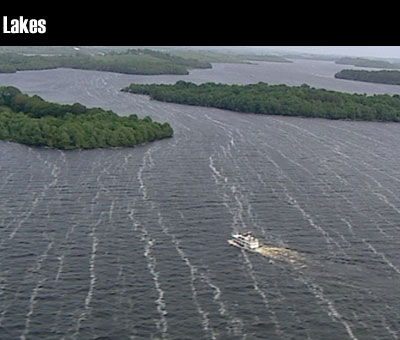  | 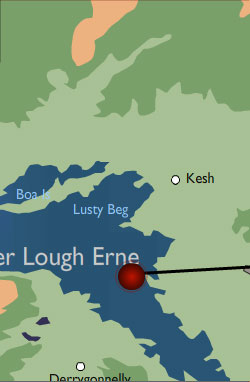 |
This is Lough Neagh, the largest fresh water lake in the British Isles covering 153 square miles. As well as being an important wetland Ecosystem, Lough Neagh has many economic uses. Its main use is as a reservoir to supply water to Belfast and other settlements. The water level in Lough Neagh was lowered by just over a metre in the last century to allow water to be drawn off for drinking. Other industries include sand extraction, fishing and farming of the surrounding land. Visitors can enjoy a wide range of water sports such as yachting, canoeing, wind surfing, water skiing and jet skiing without having to go to the coast. Boats like this one are common on Lough Neagh and here on Lower Lough Erne in County Fermanagh. This is another example of using our lakes and rivers for leisure and recreation. Upper and Lower Lough Erne have many marinas like this one at Castle Archdale. As well as a marina there is a caravan and camping site, youth hostel, walking trails, a forest park and the facilities can be used as a base to visit other tourist attractions in the area. Tourism provides tertiary jobs and brings money into the local economy. But all this activity puts pressure on the ecosystem of the Lough - the birds, fish, plants and other wildlife. The local authorities have to balance the demands on the Lough with the need to ensure that the Lough is not over used and ruined for future generations. | Lough Neagh is the largest fresh water lake in the British Isles. Lough Neagh's main use is as a reservoir to supply water to Belfast and other settlements. Other industries include sand extraction, fishing, farming and leisure and tourism. |