Summary

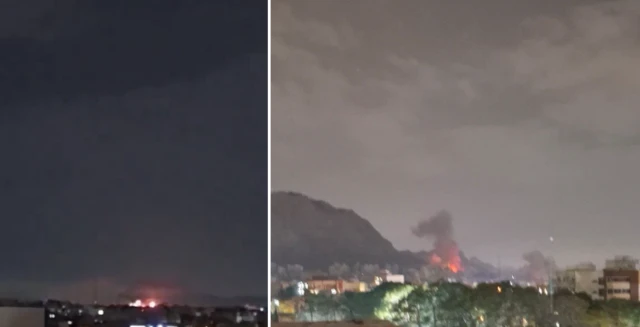
  1. Lebanese health ministry: 1,072 killed since start of warpublished at 17:42 GMT

    The number of people killed in Lebanon since Israel began its latest operations against Hezbollah has risen to 1,072, according to the country's health ministry.

    That's up from 1,039 on Monday, meaning 33 more deaths have been recorded in the past 24 hours.

    The ministry says the number of people wounded has also increased, to 2,966 - up by 90 on Monday's figure.
  2. Destruction after missiles hit Tel Aviv and Beirut, as Tehran prepares for future attackspublished at 17:30 GMT

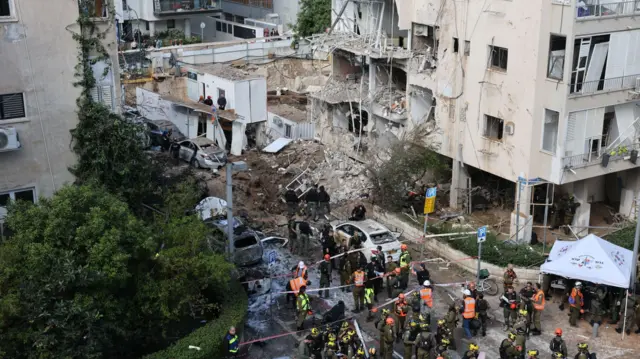
    Photographs from Tuesday show the damage caused to cities being hit by strikes.

    In Tel Aviv, Israel, balconies were sheared off residential buildings and walls were seen shedding masonry into a crater, following what officials are saying was a direct hit from an Iranian missile.

    Israeli emergency workers at the site of a missile attackImage source, EPA/Shutterstock

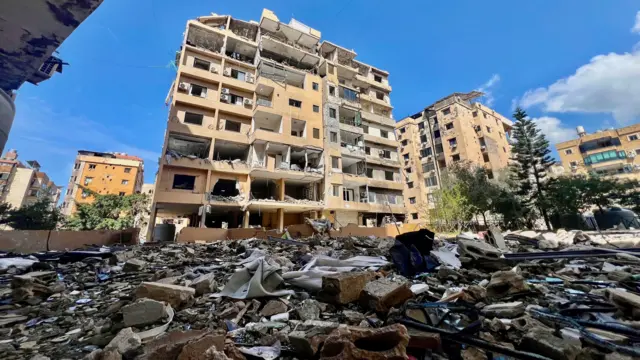
    In Beirut, Lebanon, vast piles of rubble have been pictured in the southern suburbs following overnight strikes from Israel.

    Rubble in BeirutImage source, Reuters

    Across Iran, some 82,417 "civilian units" (hospitals, clinics, pharmacies) have been damaged by air strikes since the start of the war, according to the president of the Iranian Red Crescent.

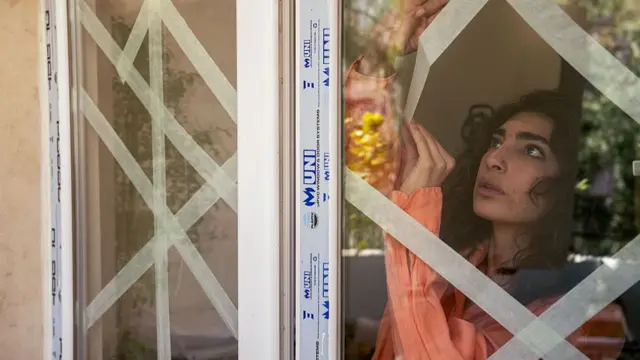
    Images coming out of Tehran show some residents making preparations for future strikes.

    A resident tapes a window to prevent it from shattering, amid ongoing US-Israeli strikesImage source, Getty Images
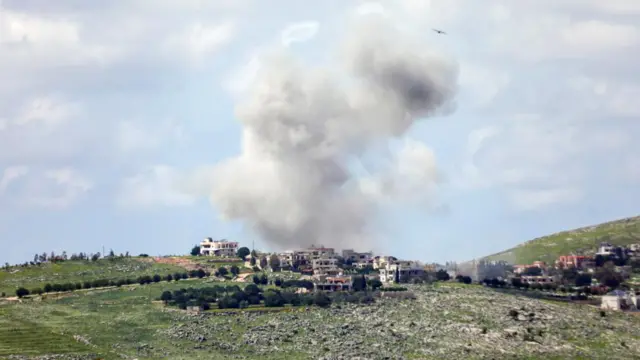
  3. Strike hits north Lebanon, local media reportspublished at 16:44 GMT

    A village in the north of Lebanon has been targeted by an air strike, according to unverified reports from Lebanese media.

    The country's National News Agency says one of its correspondents reported the strike, while the LBCI claims a missile exploded mid-air, sending fragments across the area.

    Reuters news agency says there were no immediate reports of casualties in the town of Sahel Alma.

    The BBC has not been able to independently verify the claims.

    Sahel Alma is a town in the Keserwan district of Lebanon, north of the capital Beirut.

  4. Bahrain suffers one of its worst attacks, as Gulf official calls it 'dangerous escalation'published at 16:01 GMT

    Frank Gardner
    Security correspondent, reporting from Doha

    Bahrain has suffered one of its worst attacks of the war so far, after an Iranian missile hit a military base in the west of the island.

    Bahrain said the attack on Hamala base killed a UAE military contractor (a Moroccan national) and injured over a dozen others, with four in critical condition.

    All the injured are Bahraini or UAE military personnel.

    A senior Gulf official said the attack marked "a dangerous escalation".

    "We will not be intimidated; our partnership with the Gulf, the United Kingdom and the United States is further strengthened," the official adds.

    Bahrain is home to the US Navy’s 5th Fleet but that base was evacuated days before the war began, with ships leaving port to spread out at sea.

    The island nation, which has often been "claimed" by Iran as a lost province, has debatably the worst relations with Tehran of all the six Gulf Arab states.

    It continues to suffer nightly drone and missile attacks from Iran, the vast majority of which are intercepted. Other attacks have hit oil storage tanks, the airport and a residential apartment block.

    Bahrain has a large and sometimes restive Shia population, some of which are known to have sympathies with the Islamic Republic of Iran. Bahrain is the only Gulf Arab state to deny entry to the international media.

  5. 'I want to blink and have it all be over': Iranians speak to BBC as strikes continuepublished at 15:30 GMT

    Ghoncheh Habibiazad
    Senior reporter, BBC Persian

    People in Iran have been speaking to BBC Persian about the Middle East conflict, one woman in her 20s says she "just wants to blink and have it all done and over".

    "I don't know how to feel," she says, adding: "I don't even want to think about the next steps."

    If the war ends and explosions stop, she tells the BBC, Iran will be left with a "regime that is very weak", but one that "still has power over their own people". She thinks the regime could "become even more violent".

    Meanwhile, a man in his 20s from Tehran finds Iran's denial of negotiations with the US "interesting", adding: "Literally anything that happens they deny it."

    "I don't care when it [the war] ends. I do care about how it ends," he adds.

    • BBC Persian is the Persian language service of BBC News, used by 24 million people around the world - the majority in Iran - despite being blocked and routinely jammed by Iranian authorities.
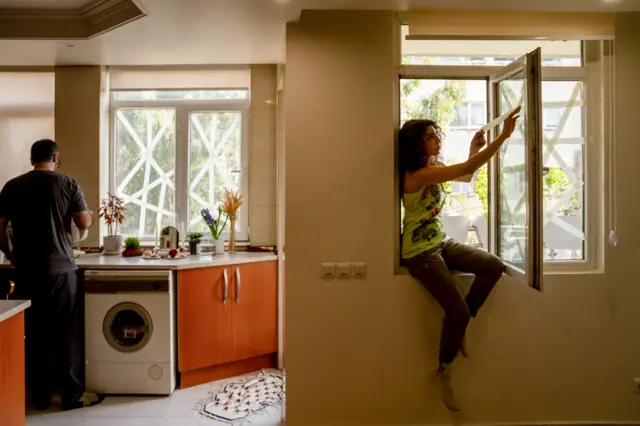
    A person tapes a window as another works in the kitchen in a home in Tehran on TuesdayImage source, Getty Images
    Image caption,

    A photo from Tehran today shows residents (not those quoted) taping windows to help prevent shattering amid strike attacks

  6. Iranian Red Crescent says 82,000 sites, including hospitals, damaged by strikes since war beganpublished at 15:10 GMT

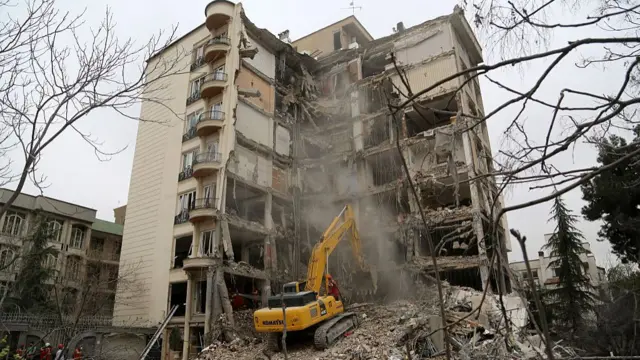
    A digger combs through a building which has been torn in half by an airstrikeImage source, Getty Images
    Image caption,

    Buildings in the Iranian capital Tehran have borne the brunt of US-Israeli strikes

    In our previous post we brought you images of daily life continuing in Tehran, but it comes amid the backdrop of ongoing conflict in the Middle East.

    Since the start of the war in Iran, 82,417 "civilian units" across the country have been damaged by airstrikes, according to the president of the Iranian Red Crescent.

    The humanitarian organisation's president says that "a total of 281 hospitals, clinics, and pharmacies have also been targeted".

  7. In Iran, daily life continues amid conflictpublished at 14:58 GMT

    Due to rolling internet blackouts and government restrictions on independent journalism, we have less access to imagery showing the impacts of this conflict in Iran than we in other parts of the Middle East.

    While we don't yet have verified photos of Israeli attacks on Iran today, images from inside Tehran show that daily life continues despite the ongoing conflict.

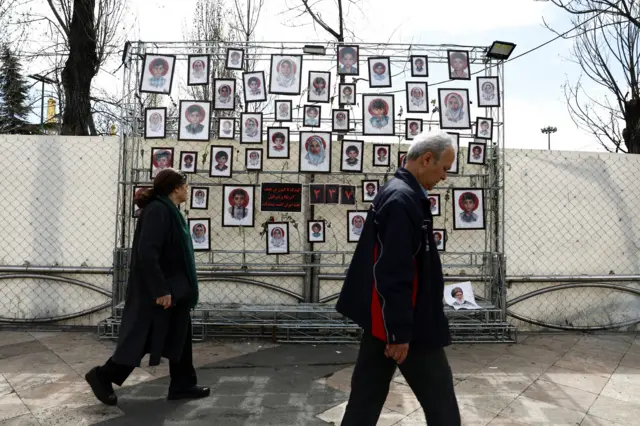
    Two people walk down a street in front of a mural showing the faces of children killed in the conflict.Image source, WANA via Reuters
    Image caption,

    People walk past a mural in Tehran commemorating children killed in US-Israeli attacks on Iran

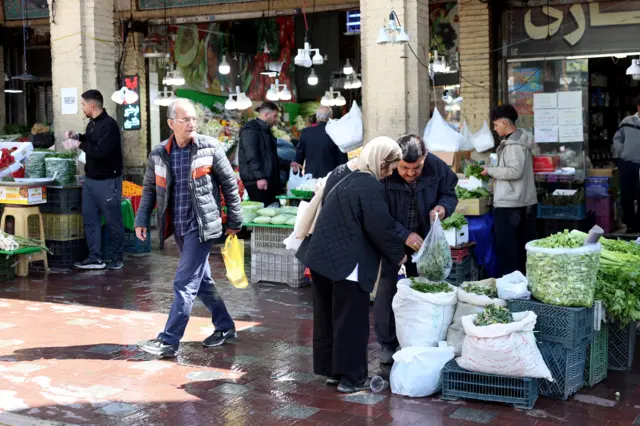
    Men and women shops and speak with vendors at Tajrish Bazaar, including fresh green produce and peppers.Image source, AFP
    Image caption,

    Locals shop in the fresh food area of Tajrish Bazaar

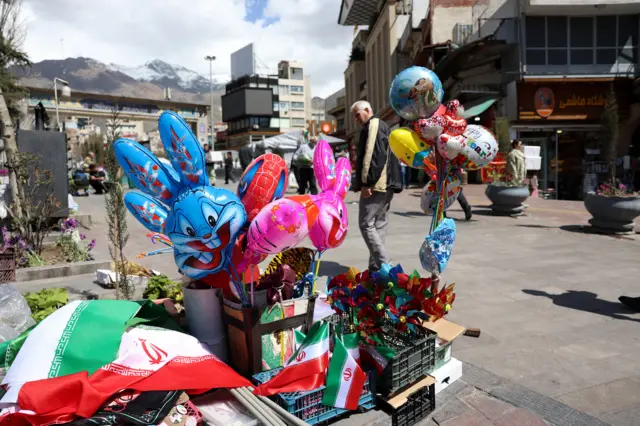
    A man walks past a stall selling flags, pinwheels and balloons at Tajrish Bazaar in Tehran with mountains and buildings in the background.Image source, AFP
    Image caption,

    A man walks past a stall selling flags, pinwheels and balloons at Tajrish Bazaar in Tehran

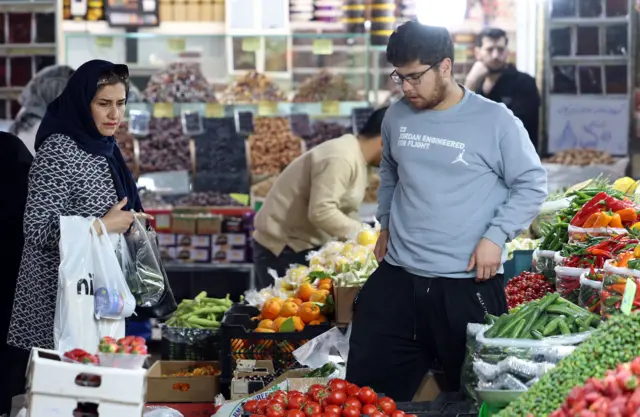
    A woman looks at vegetables as a man looks down while working at the marketImage source, EPA
    Image caption,

    People browse fresh produce at another market in Tehran

  8. Iran committed to comprehensive ceasefire - not temporary one, foreign minister tells Chinese counterpartpublished at 14:53 GMT

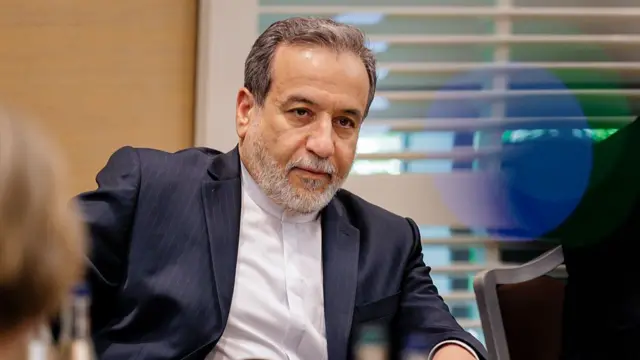
    Aragchi sat down in a dark suit and white shirtImage source, Getty Images
    Image caption,

    Chinese state media carries a report of a telephone conversation between Abaas Aragchi and his Chinese counterpart

    China's Foreign Minister Wang Yi has spoken to his Iranian counterpart Abbas Aragchi.

    In translated text from Chinese state media, Aragchi reportedly told Yi: "Iran is committed to a comprehensive ceasefire, not just a temporary one".

    He also explained that "Hormuz is open to all, and ships can pass safely, but countries currently at war are not being considered".

    The state media-provided readout of the conversation says Yi stressed: "Talking is always better than fighting" and urged for all parties to "seize every opportunity and window of opportunity for peace and initiate the peace process as soon as possible".

  9. Lebanese president says 'war could have been avoided', as he condemns Israel's bombing of bridgespublished at 14:46 GMT

    Smoke rises after Israeli strike in southern LebanonImage source, Reuters
    Image caption,

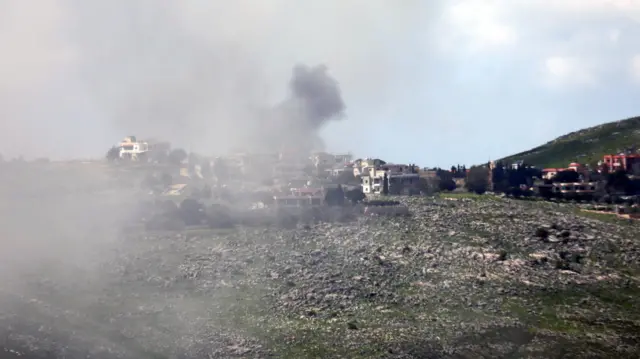
    Smoke has been seen rising in southern Lebanon as the Israeli military advances its operations

    The Lebanese presidency says the war "could have been avoided" if Israel had responded to calls to withdraw its occupancy in parts of southern Lebanon.

    Earlier, Israel announced its intention to take control of a large part of southern Lebanon - up to the Litani River. The waterway connects the region to northern Lebanon and lies around 30km (19 miles) from the country's border with Israel.

    Israel has blown up five bridges in the region, which it says were being used by Hezbollah.

    In a post on X, the Lebanese Presidency account cites President Joseph Aoun as saying that "Israel's bombing of bridges aims to isolate villages and towns south of the Litani from the rest of the Lebanese regions".

    Israel's Defence Minister Israel Katz says troops will establish a security zone up to the Litani River, and displaced residents will not be allowed back until northern Israel is safe.

    It comes as Israeli strikes continue to hit parts of the country's south, and Israel's Defense Forces say a new wave of strikes on Lebanese fuel sites has been completed.

  10. UAE serviceman killed in Iranian attack on Bahrain, ministry of defence sayspublished at 14:30 GMT

    A civilian contractor working for the United Arab Emirates armed forces has been killed in Bahrain, the UAE's ministry of defence says.

    In a statement, it says the serviceman, a Moroccan national, was killed "following an Iranian missile attack" that targeted Bahrain.

    The ministry of defence says the attack also resulted in five injuries to members of the UAE military.

  11. Wave of strikes targeted Lebanese fuel sites, Israeli military sayspublished at 14:10 GMT

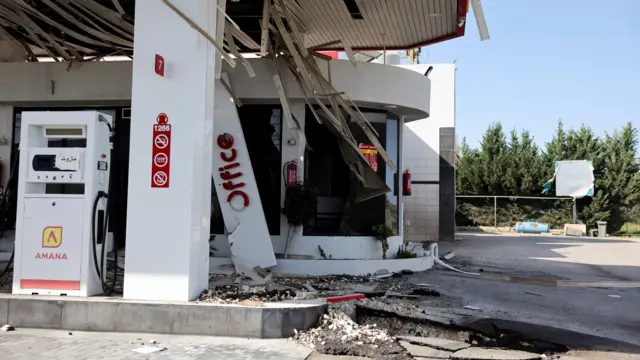
    A gas station which has been damaged by a strike. The roof is collapsed and there is a large crater next to a fuel pumpImage source, Reuters
    Image caption,

    Al-Amana sites, like this one pictured following a strike on 18 March, have been targeted by the IDF in recent days - as the Israeli military says it has launched a fresh wave

    The Israeli military says it has completed a wave of strikes across Lebanon "targeting fuel stations" that it says were being used by Hezbollah.

    Over the past day, the Israel Defense Forces (IDF) says, it has targeted fuel stations belonging to the company Al-Amana.

    It says this organisation is "controlled" by Hezbollah and "serves as significant financial infrastructure" supporting its activities.

    "As part of the strikes, fuel stations in various areas of Lebanon were targeted and rendered inoperable," the IDF adds, explaining the stations had been used to fuel trucks transporting weapons and fighters.

  12. Pakistani PM offers to host Iran-US peace talks as India's Modi speaks to Trumppublished at 13:58 GMT

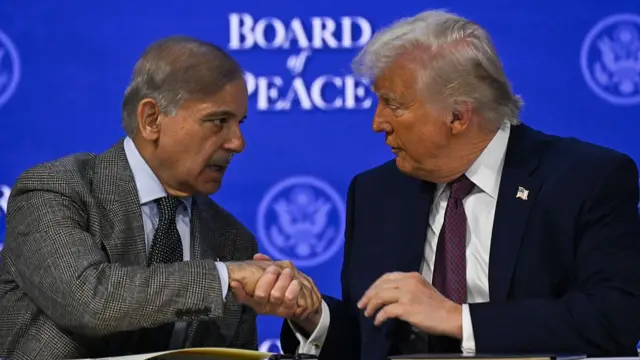
    Shehbaz Sharif shakes hands with Donald TrumpImage source, Getty Images
    Image caption,

    Pakistani Prime Minister Shehbaz Sharif has welcomed the idea of hosting peace talks attended by the US and Iran

    Pakistan's Prime Minister Shehbaz Sharif has volunteered his country as a venue for peace talks between Iran and the US.

    "Subject to concurrence by the US and Iran, Pakistan stands ready and honoured to be the host to facilitate meaningful and conclusive talks for a comprehensive settlement of the ongoing conflict," he writes on social media.

    Meanwhile India's Prime Minister Narendra Modi says he has had a phone call with US President Donald Trump, in which the pair "had a useful exchange of views on the situation in West Asia".

    Modi says he and Trump agreed to keep in touch "regarding efforts towards peace and stability", and stresses that ensuring the Strait of Hormuz "remains open, secure and accessible is essential for the whole world".

  13. Philippines declares state of energy emergencypublished at 13:50 GMT

    Suranjana Tewari
    Asia business correspondent, in Manila

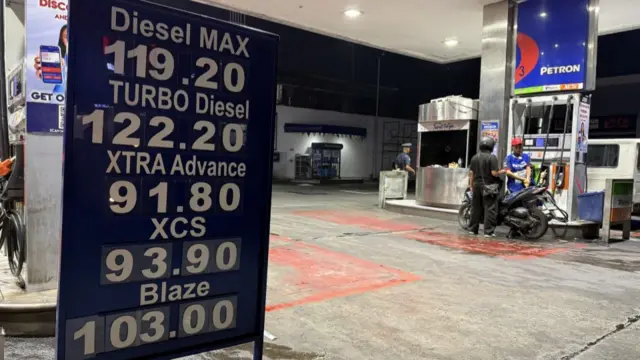
    A petrol station in Manila, Philippines.

    The Philippines has become the first country in the world to formally declare a state of national energy emergency in response to the Middle East conflict - and few nations are more exposed to the disruption to oil supplies.

    The country imports 98% of its oil from the Gulf, and Filipino consumers have already endured multiple fuel price hikes over the past three weeks. The price of diesel and petrol has more than doubled since the war broke out.

    In the Executive Order President Ferdinand Marcos Jr. cited an "imminent danger" to the country's energy supply, saying the declaration would give the government the legal authority to impose measures to ensure energy stability and protect the broader economy.

    Under the order, a committee has been formed to oversee the orderly distribution of fuel, food, medicines, and other essential goods. The government has also been empowered to directly purchase fuel and petroleum products to shore up supplies.

    On Tuesday, the energy minister said the Philippines has roughly 45 days of fuel supply at current consumption levels.

    The order remains in force for one year, unless extended or lifted by the president.

  14. Full economic impact of the war remains uncertain, UK chancellor sayspublished at 13:42 GMT

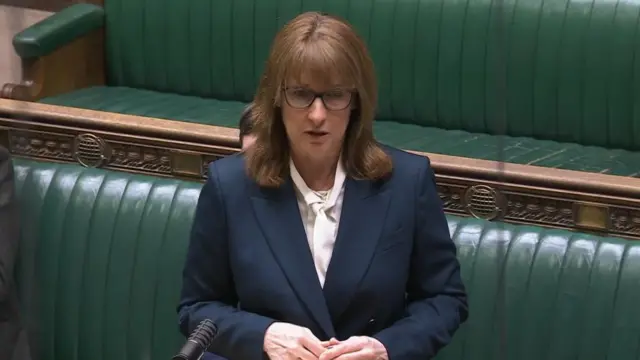
    Rachel Reeves making a statement to MPs in the House of Commons, wearing a navy blazer and standing in front of the green benchesImage source, House of Commons/PA

    Away from the UK's defence efforts in the Middle East, the economic impact of the conflict has been a key talking point in the House of Commons today.

    The effective closure of the Strait of Hormuz by Iran has had numerous potential impacts on the UK economy, with the price for a barrel of oil moving back to above $100 this morning.

    Such increases in oil costs could push petrol prices up by about 7p a litre, according to analysts, while natural gas price increases could raise energy bills and the price of food for households.

    Speaking in the Commons, Chancellor Rachel Reeves says "the full economic impact of the war remains uncertain".

    She adds that the government is bringing in a new "anti-profiteering framework" for the Competition and Markets Authority (CMA) - effectively stopping companies from "exploiting the crisis" through price hikes to customers.

  15. UK troops shoot down 14 drones in Iraq overnight - largest number in recent weekspublished at 13:34 GMT

    Jonathan Beale
    Defence correspondent

    British forces shot down 14 drones overnight at a coalition base in Erbil in northern Iraq - the largest number in recent weeks.

    Members of the RAF Regiment have been protecting the base with an Air Defence System known as Rapid Sentry.

    The Coalition base in Erbil has come under repeated attacks from Iranian drones over the past three weeks.

  16. UK pilots clock in nearly 900 hours defending allies in Middle East - Downing Streetpublished at 13:31 GMT

    We're briefly turning our attention to the UK, as Downing Street says British pilots have flown nearly 900 hours defending the UK and its allies in the region during the past four weeks.

    Overnight, the UK defended allies in Israel, Saudi Arabia, Kuwait, Bahrain and Jordan from attacks, the PM's official spokesman says, quoting Defence Secretary John Healey.

    In our next post we'll bring you more from our correspondent on the UK's defence efforts in the Middle East.

  17. Smoke rises in southern Lebanon after strikespublished at 13:18 GMT

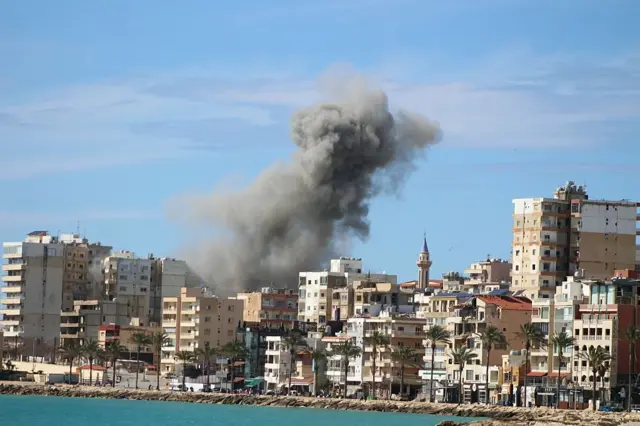
    Smoke rises an Israeli airstrike that targeted the eastern outskirts of the southern Lebanese coastal city of Tyre, with a blue sea and sky visible around the buildings.Image source, AFP
    Image caption,

    The southern city of Tyre could be seen with smoke rising from its eastern outskirts

    As we've just reported, Israel's defence minister Israel Katz says it will take control of a large part of southern Lebanon.

    We're seeing images from Lebanon of smoke rising in the southern city of Tyre and the villages of Hanniyeh and Kfar Tebnit following strikes.

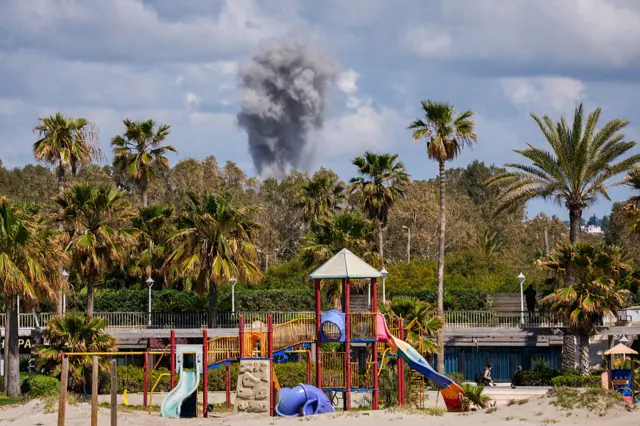
    A playground stands empty as smoke rises in the distance from the site of an Israeli airstrike that targeted the outskirts of the southern city of Tyre, with palm trees seen across the foreground and a blue sky around the rising smoke in the background.Image source, AFP
    Image caption,

    Smoke rises in the distance from a strike in the outskirts of the southern Lebanese city of Tyre

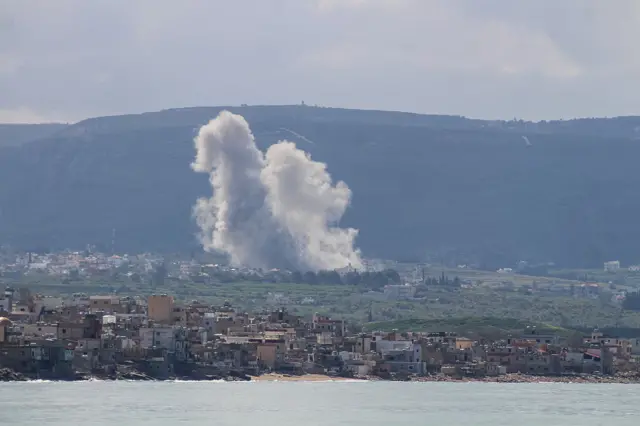
    The southern city of Tyre, shows smoke rising from the site of an Israeli airstrike that targeted the southern Lebanese village of Hanniyeh,Image source, AFP
    Image caption,

    Smoke rises from an airstrike that targeted the southern Lebanese village of Hanniyeh

  18. Israel says it will take control of large part of southern Lebanonpublished at 13:09 GMT

    Smoke rises after an Israeli strike in southern LebanonImage source, Reuters
    Image caption,

    Smoke rises after an Israeli strike in southern Lebanon

    Defence Minister Israel Katz says Israeli troops will take control of a large swathe of southern Lebanon as part of their campaign against Hezbollah.

    Katz says troops will establish a security zone up to the Litani River, about 30km (19 miles) from the Lebanon-Israel border and displaced residents will not be allowed back until northern Israel is safe.

    Five bridges "used by Hezbollah for the passage of terrorists and weapons" have been blown up, he says.

    The latest escalation began after Iran-backed Hezbollah fired rockets into northern Israel in retaliation for the killing of Iran's supreme leader and the frequent Israeli attacks on Lebanon despite the November 2024 ceasefire.

    Read more in our full story here.

  19. BBC Verify

    At least one blast seen in video from Iran's Isfahanpublished at 12:50 GMT

    Two night-time images showing at least one explosion in Iran's Isfahan from two different anglesImage source, X

    By Richard Irvine-Brown and Emma Pengelly

    BBC Verify has been looking into video and still images shared online late yesterday showing at least one explosion at Isfahan in central Iran. Some posts have claimed the blast was linked to strikes on an Iranian air base and energy infrastructure.

    However, based on our geolocation of the images - checking landmarks and physical geography with satellite imagery - we can see the scene of the blast was at least 20km (12.5 miles) from the city's major power plant, 8km (5 miles) from the nearest air base and 22km (14 miles) from the entrance of the Isfahan nuclear facility.

    The video (above, left) puts an explosion in line with the summit of Ghaémiyeh Mountain Park, seen from the north. The power plant would be out of shot to the west, the air base and nuclear site out of shot to the east.

    One of the stills (above, right) shows how close the explosion was to the hills. Based on the angles from which these images were taken it would appear the explosion is in the approximate area of a local police headquarters and a 60-acre industrial site.

  20. Iran appoints new security chief after Larijani's killingpublished at 12:43 GMT

    Ghoncheh Habibiazad
    Senior reporter, BBC Persian

    Iranian outlets are reporting that Mohammad Bagher Zolghar has been appointed the secretary of the Supreme National Security Council (SNSC), according to an official in Iran's presidential office.

    The appointment follows the killing of the previous top security official Ali Larijani on 17 March.

    Zolghadr has held numerous senior positions, including IRGC (Islamic Revolutionary Guard Corps) deputy commander, deputy interior minister for security affairs, deputy head of the judiciary and secretary of the powerful Expediency Council.