Summary

  1. Wave of strikes targeted Lebanese fuel sites, Israeli military sayspublished at 14:10 GMT
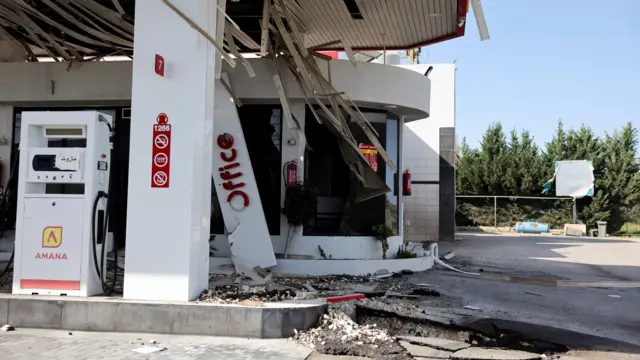
    A gas station which has been damaged by a strike. The roof is collapsed and there is a large crater next to a fuel pumpImage source, Reuters
    Image caption,

    Al-Amana sites, like this one pictured following a strike on 18 March, have been targeted by the IDF in recent days - as the Israeli military says it has launched a fresh wave

    The Israeli military says it has completed a wave of strikes across Lebanon "targeting fuel stations" that it says were being used by Hezbollah.

    Over the past day, the Israel Defense Forces (IDF) says, it has targeted fuel stations belonging to the company Al-Amana.

    It says this organisation is "controlled" by Hezbollah and "serves as significant financial infrastructure" supporting its activities.

    "As part of the strikes, fuel stations in various areas of Lebanon were targeted and rendered inoperable," the IDF adds, explaining the stations had been used to fuel trucks transporting weapons and fighters.

  2. Pakistani PM offers to host Iran-US peace talks as India's Modi speaks to Trumppublished at 13:58 GMT

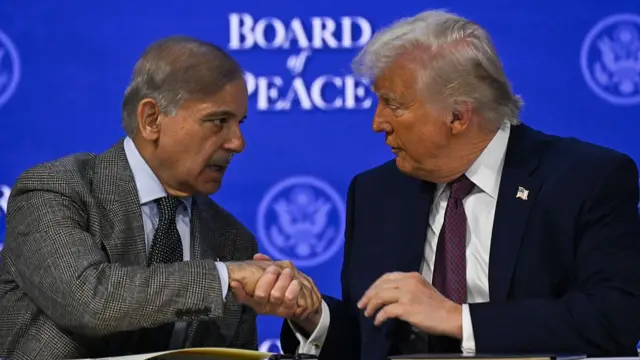
    Shehbaz Sharif shakes hands with Donald TrumpImage source, Getty Images
    Image caption,

    Pakistani Prime Minister Shehbaz Sharif has welcomed the idea of hosting peace talks attended by the US and Iran

    Pakistan's Prime Minister Shehbaz Sharif has volunteered his country as a venue for peace talks between Iran and the US.

    "Subject to concurrence by the US and Iran, Pakistan stands ready and honoured to be the host to facilitate meaningful and conclusive talks for a comprehensive settlement of the ongoing conflict," he writes on social media.

    Meanwhile India's Prime Minister Narendra Modi says he has had a phone call with US President Donald Trump, in which the pair "had a useful exchange of views on the situation in West Asia".

    Modi says he and Trump agreed to keep in touch "regarding efforts towards peace and stability", and stresses that ensuring the Strait of Hormuz "remains open, secure and accessible is essential for the whole world".

  3. Philippines declares state of energy emergencypublished at 13:50 GMT

    Suranjana Tewari
    Asia business correspondent, in Manila

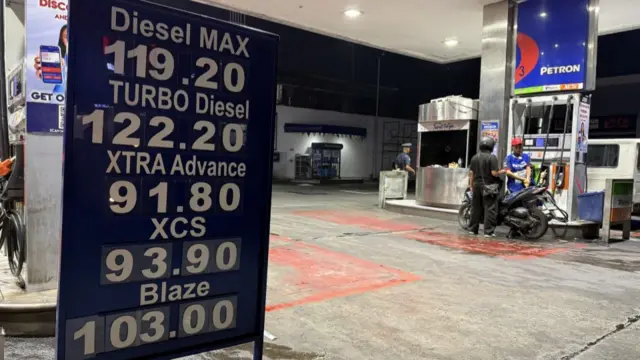
    A petrol station in Manila, Philippines.

    The Philippines has become the first country in the world to formally declare a state of national energy emergency in response to the Middle East conflict - and few nations are more exposed to the disruption to oil supplies.

    The country imports 98% of its oil from the Persian Gulf, and Filipino consumers have already endured multiple fuel price hikes over the past three weeks. The price of diesel and petrol has more than doubled since the war broke out.

    In the Executive Order President Ferdinand Marcos Jr. cited an "imminent danger" to the country's energy supply, saying the declaration would give the government the legal authority to impose measures to ensure energy stability and protect the broader economy.

    Under the order, a committee has been formed to oversee the orderly distribution of fuel, food, medicines, and other essential goods. The government has also been empowered to directly purchase fuel and petroleum products to shore up supplies.

    On Tuesday, the energy minister said the Philippines has roughly 45 days of fuel supply at current consumption levels.

    The order remains in force for one year, unless extended or lifted by the president.

  4. Full economic impact of the war remains uncertain, UK chancellor sayspublished at 13:42 GMT

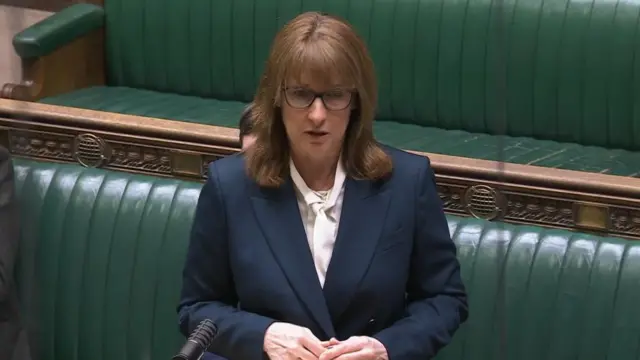
    Rachel Reeves making a statement to MPs in the House of Commons, wearing a navy blazer and standing in front of the green benchesImage source, House of Commons/PA

    Away from the UK's defence efforts in the Middle East, the economic impact of the conflict has been a key talking point in the House of Commons today.

    The effective closure of the Strait of Hormuz by Iran has had numerous potential impacts on the UK economy, with the price for a barrel of oil moving back to above $100 this morning.

    Such increases in oil costs could push petrol prices up by about 7p a litre, according to analysts, while natural gas price increases could raise energy bills and the price of food for households.

    Speaking in the Commons, Chancellor Rachel Reeves says "the full economic impact of the war remains uncertain".

    She adds that the government is bringing in a new "anti-profiteering framework" for the Competition and Markets Authority (CMA) - effectively stopping companies from "exploiting the crisis" through price hikes to customers.

  5. UK troops shoot down 14 drones in Iraq overnight - largest number in recent weekspublished at 13:34 GMT

    Jonathan Beale
    Defence correspondent

    British forces shot down 14 drones overnight at a coalition base in Erbil in northern Iraq - the largest number in recent weeks.

    Members of the RAF Regiment have been protecting the base with an Air Defence System known as Rapid Sentry.

    The Coalition base in Erbil has come under repeated attacks from Iranian drones over the past three weeks.

  6. UK pilots clock in nearly 900 hours defending allies in Middle East - Downing Streetpublished at 13:31 GMT

    We're briefly turning our attention to the UK, as Downing Street says British pilots have flown nearly 900 hours defending the UK and its allies in the region during the past four weeks.

    Overnight, the UK defended allies in Israel, Saudi Arabia, Kuwait, Bahrain and Jordan from attacks, the PM's official spokesman says, quoting Defence Secretary John Healey.

    In our next post we'll bring you more from our correspondent on the UK's defence efforts in the Middle East.

  7. Smoke rises in southern Lebanon after strikespublished at 13:18 GMT

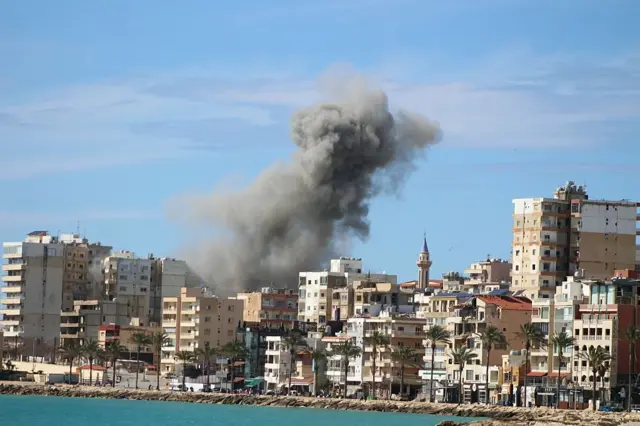
    Smoke rises an Israeli airstrike that targeted the eastern outskirts of the southern Lebanese coastal city of Tyre, with a blue sea and sky visible around the buildings.Image source, AFP
    Image caption,

    The southern city of Tyre could be seen with smoke rising from its eastern outskirts

    As we've just reported, Israel's defence minister Israel Katz says it will take control of a large part of southern Lebanon.

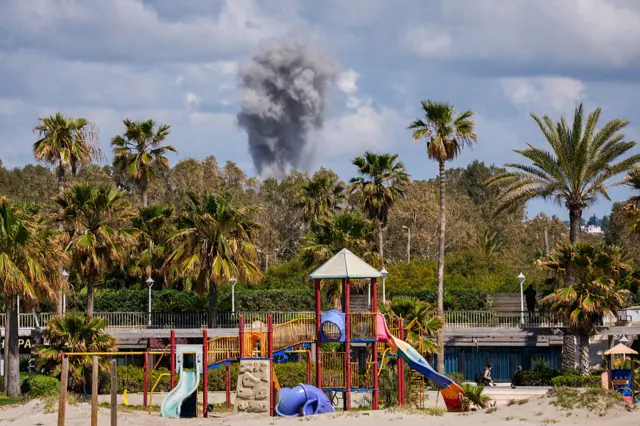
    We're seeing images from Lebanon of smoke rising in the southern city of Tyre and the villages of Hanniyeh and Kfar Tebnit following strikes.

    A playground stands empty as smoke rises in the distance from the site of an Israeli airstrike that targeted the outskirts of the southern city of Tyre, with palm trees seen across the foreground and a blue sky around the rising smoke in the background.Image source, AFP
    Image caption,

    Smoke rises in the distance from a strike in the outskirts of the southern Lebanese city of Tyre

    The southern city of Tyre, shows smoke rising from the site of an Israeli airstrike that targeted the southern Lebanese village of Hanniyeh,Image source, AFP
    Image caption,

    Smoke rises from an airstrike that targeted the southern Lebanese village of Hanniyeh

  8. Israel says it will take control of large part of southern Lebanonpublished at 13:09 GMT

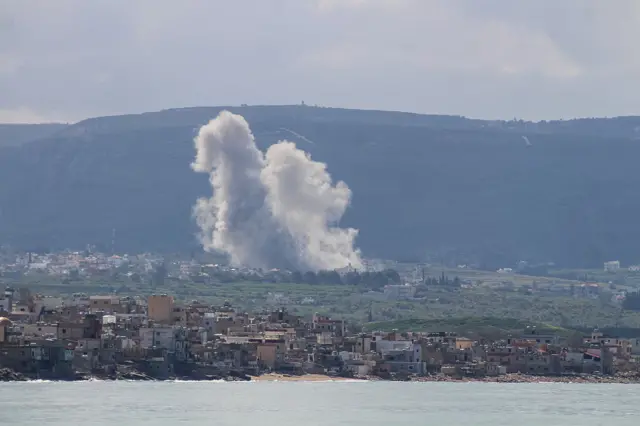
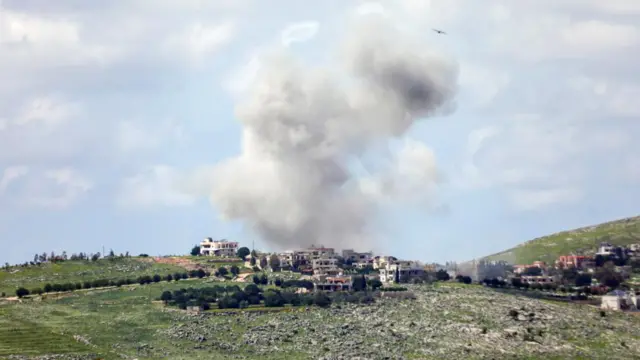
    Smoke rises after an Israeli strike in southern LebanonImage source, Reuters
    Image caption,

    Smoke rises after an Israeli strike in southern Lebanon

    Defence Minister Israel Katz says Israeli troops will control a large swathe of southern Lebanon as part of their campaign against Hezbollah.

    Katz says troops will establish a security zone up to the Litani River, about 30km (19 miles) from the Lebanon-Israel border and displaced residents will not be allowed back until northern Israel is safe.

    Five bridges "used by Hezbollah for the passage of terrorists and weapons" have been blown up, he says.

    The latest escalation began after Iran-backed Hezbollah fired rockets into northern Israel in retaliation for the killing of Iran's supreme leader and the frequent Israeli attacks on Lebanon despite the November 2024 ceasefire.

    Read more in our full story here.

  9. BBC Verify

    At least one blast seen in video from Iran's Isfahanpublished at 12:50 GMT

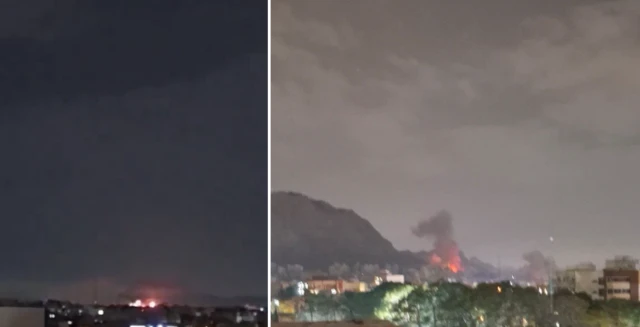
    Two night-time images showing at least one explosion in Iran's Isfahan from two different anglesImage source, X

    By Richard Irvine-Brown and Emma Pengelly

    BBC Verify has been looking into video and still images shared online late yesterday showing at least one explosion at Isfahan in central Iran. Some posts have claimed the blast was linked to strikes on an Iranian air base and energy infrastructure.

    However, based on our geolocation of the images - checking landmarks and physical geography with satellite imagery - we can see the scene of the blast was at least 20km (12.5 miles) from the city's major power plant, 8km (5 miles) from the nearest air base and 22km (14 miles) from the entrance of the Isfahan nuclear facility.

    The video (above, left) puts an explosion in line with the summit of Ghaémiyeh Mountain Park, seen from the north. The power plant would be out of shot to the west, the air base and nuclear site out of shot to the east.

    One of the stills (above, right) shows how close the explosion was to the hills. Based on the angles from which these images were taken it would appear the explosion is in the approximate area of a local police headquarters and a 60-acre industrial site.

  10. Iran appoints new security chief after Larijani's killingpublished at 12:43 GMT

    Ghoncheh Habibiazad
    Senior reporter, BBC Persian

    Iranian outlets are reporting that Mohammad Bagher Zolghar has been appointed the secretary of the Supreme National Security Council (SNSC), according to an official in Iran's presidential office.

    The appointment follows the killing of the previous top security official Ali Larijani on 17 March.

    Zolghadr has held numerous senior positions, including IRGC (Islamic Revolutionary Guard Corps) deputy commander, deputy interior minister for security affairs, deputy head of the judiciary and secretary of the powerful Expediency Council.

  11. UK and France building coalition to secure Hormuz, say officialspublished at 12:31 GMT

    Jonathan Beale
    Defence correspondent

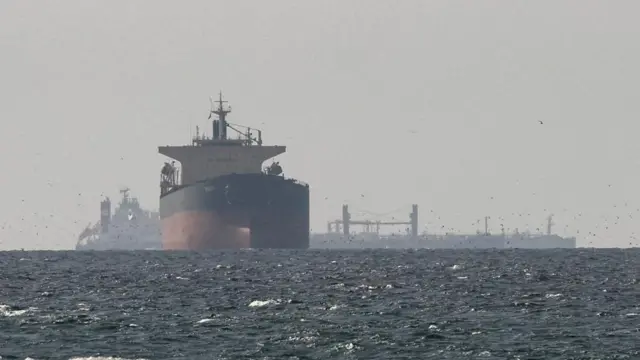
    Cargo ships in the Gulf, near the Strait of Hormuz.Image source, Reuters

    Defence officials say the UK, with France, is helping build a coalition of countries to help secure the Strait of Hormuz - "once conditions allow".

    The UK has offered to host a security conference on the key channel for global oil shipments in either Portsmouth or London in the near future to develop plans.

    Officials say that any mission will require a coalition of Navies to provide reassurance to merchant shipping, but emphasised that any plans to escort tankers would be dictated by the threat - which is currently too high.

    Officials say it will require a multinational solution involving crewed and autonomous vessels to help clear a path for safe passage and to deal with the threat of mines.

    One defence official says he believes reports that some mines had been laid "to be true", but adds that shipping lanes in the Strait of Hormuz were still open and being used by a small number of tankers.

  12. Markets are fast to react amid uncertainty around length of the warpublished at 12:23 GMT

    Naomi Rainey
    Business reporter

    With around a fifth of the world's oil and liquefied natural gas moving through the Strait of Hormuz, markets are quickly reacting to updates on how long the conflict could continue.

    US President Donald Trump's weekend threat to hit Iran's infrastructure pushed the benchmark oil price, Brent crude, up to $113 (£84.38) per barrel by Monday. Following his comments about positive talks with Iran, that cost fell back to $97.

    Prices continued to move through the day, climbing back to $106 (£79.15) and dropping again, before settling at just $100.

    Stock markets have also been shaken by the conflict, with the FTSE 100 down 4.8% in the last five days, while two of Asia's key indices – Japan’s Nikkei 225 and Hong Kong’s Hang Seng – are both down more than 3% since last week, despite seeing gains since Monday.

    While things are calmer on the markets today, there will likely be more moves as developments continue.

  13. Qatar says it is not considering closing US basepublished at 12:17 GMT

    Frank Gardner
    Security correspondent, in Doha

    A Qatari government spokesman has denied a media report that a proposed US-Iran deal might include closing the giant US-run airbase at Al-Udeid, here in Qatar.

    He said if anything, the current crisis will strengthen the existing partnerships that Qatar and the Gulf Cooperation Council states have, including with the US.

  14. Netanyahu is not changing coursepublished at 11:42 GMT

    James Waterhouse
    Reporting from Tel Aviv

    For all of the inconsistencies with America's goals, Israeli Prime Minister Benjamin Netanyahu is being specific: Israel will keep targeting Iran and its ally Hezbollah in southern Lebanon.

    "We will protect our vital interests under any circumstances," warned Netanyahu in a brief 36-second video. He is not changing course.

    Iran is still able to hit back, with one of its latest missiles causing a deep crater in the heart of a residential neighbourhood in Tel Aviv. Officials say it contained 100kg explosives.

    Close by, a billboard depicts Donald Trump in front of the Stars and Stripes of the American flag. "Finish the job Mr President!" reads its slogan, in relation to the ongoing war on Iran.

    It seems Israel is not planning on letting up, at least.

  15. Balconies sheared off and walls shedding masonry near Tel Aviv blast sitepublished at 11:27 GMT

    Lucy Williamson
    Middle East correspondent, reporting from Tel Aviv

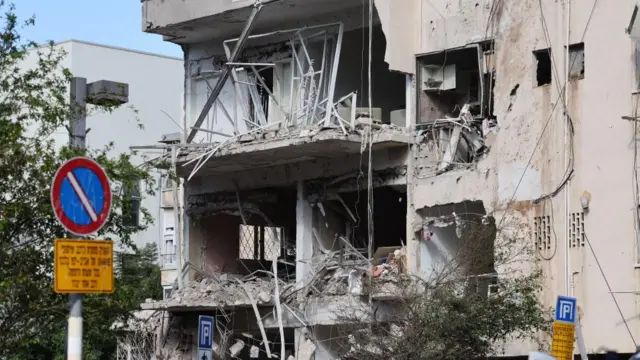
    Around the blast site in north Tel Aviv, balconies have been sheared off, and walls are shedding masonry into the crater between a cluster of residential buildings.

    Local reports suggest this was a direct hit from an Iranian missile that narrowly missed several apartment buildings.

    One man who lives on the road behind the impact site told us he didn't have time to get to the shelter when the sirens sounded, and had just reached his front door when it was blown open by the blast.

    He described fleeing from his apartment in bare feet as glass shattered around him. When he looked back, he said, a fire had already broken out in the debris behind him.

    Israel and Iran have continued to strike each other despite Donald Trump apparently offering Tehran fresh talks – spotlighting the unique nature of the conflict between the two Middle Eastern enemies.

    This war is now poised between capitulation and escalation, with neither side yet weak enough to make the deal its enemy wants.

    Damage at the site of an Iranian missile strike in a residential area in Tel Aviv,Image source, EPA/Shutterstock
  16. 'No attacks on Qatar for few days - but we are still in eye of the storm'published at 11:06 GMT

    Frank Gardner
    Security correspondent

    Al-Ansari confirms there have been no incoming missiles or drones from Iran aimed at Qatar since last Thursday but says "we are still in the eye of the storm".

    "The last time I stood here at this podium immediately [after] I finished there were two attacks," he says, adding that there are still Iranian attacks on "our neighbours here in the Gulf".

    He says they "are against any attacks on civilian infrastructure".

    "Our posture is defensive. We have had more than 200 drone attacks. We reserve the right to respond. No decision has yet been taken on whether to retaliate. Over 90% of attacks have been intercepted."

  17. 'You have to ask those involved in talks'published at 10:49 GMT

    Qatar foreign ministry spokesman

    Al-Ansari is asked if he believes US President Donald Trump has "correctly characterised the nature of the talks that he says Washington is having with Tehran".

    In response, al-Ansari says: "You have to ask those who are involved in the talks.

    "As I stated very clearly a minute ago: we are not involved in these talks. Our concern right now and focus is on protecting our country."

  18. Qatar not mediating between US and Iran, spokesman sayspublished at 10:42 GMT

    Frank Gardner
    Security correspondent, in Doha

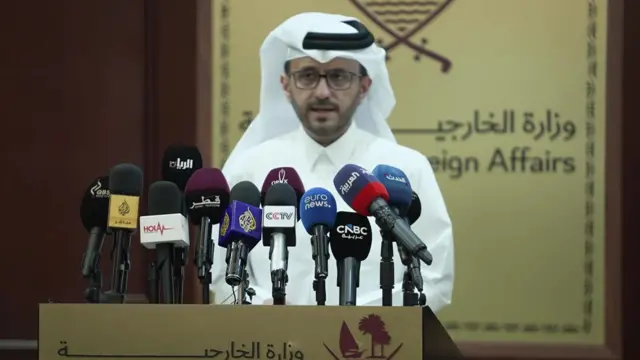
    Qatar foreign ministry spokesman Dr Majid Al-Ansari says Qatar is not involved in any US-Iran efforts to end the war.

    He says "our focus is on ending the attacks on our country and defending our territory".

    I asked him if Qatar could ever again have normal relations with the Islamic Republic of Iran after these attacks on the Gulf Arab states. His answer was, in effect, yes we can't change geography.

  19. Qatari foreign affairs spokesman to hold news briefingpublished at 10:19 GMT

    Frank Gardner
    Security correspondent, in Doha

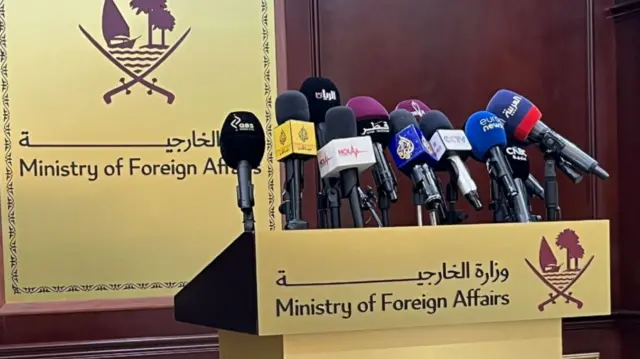
    A podium with many mics

    We are about to get the first comment and press conference from the Qatari government since talk of a peace deal emerged. We'll keep you posted as the Qatar Foreign Affairs spokesman Dr Majid Al-Ansari speaks.

  20. Analysis

    Large gap between possibility of talks and reality of ending the warpublished at 10:04 GMT

    James Landale
    Diplomatic correspondent

    In the Middle East, the fog of war is clouding the diplomacy too. Trump says both sides are talking, Iran says they are not.

    But a dialogue of sorts does seem to be taking place between intermediaries including Pakistan and Turkey.

    There is talk of a possible face-to-face meeting in Islamabad. All this has buoyed markets.

    But optimism is not thick on the ground. Mutual trust is all but absent; remember the US has now twice attacked Iran during negotiations. Hostilities continue, even if the US is holding off attacks on Iran’s energy for five days.

    US public statements remain erratic and at times contradictory. Both sides view the conflict differently: a war of choice for the US, one of survival for the Iranian regime. Let’s not forget, too, there’s a third belligerent, Israel, with its own agenda.

    Yes, the growing economic pain - and pressure from Gulf allies – is being felt in Washington, with Trump looking for a way out of the impasse. But the bar is high for agreement in any talks. How much of its nuclear and missile capabilities would Iran give up?

    Is the US ready to lift sanctions on Iran, guarantee no more attacks and even allow Tehran some control over the Strait of Hormuz? The gap between the possibility of talks and a substantive resolution of the conflict remains large.