Summary

  • The White House tells the BBC plans for talks with Iran remain "fluid", adding that any speculation "should not be deemed as final"

  • It follows the US president and Iran's parliament speaker giving conflicting accounts of potential talks between the two countries on the ongoing war

  • Donald Trump earlier said he had postponed threatened strikes on Iranian power plants after having "productive" conversations with Tehran. Iran said the talks were "fake news"

  • An Iranian foreign ministry official says Tehran has received "points from the US" via mediators as a potential precursor to discussions, according to the BBC's US partner CBS

  • Trump is hailing the "very strong talks", but so far there are only signs of a much smaller opening, our chief international correspondent Lyse Doucet writes

  • Meanwhile the price of oil again rose to over $100 a barrel, after plunging on Monday when Trump first posted about US-Iran talks

  • A committed pharmacist and a homesick blogger, who are the Iranian civilians killed in the war?

  1. 'You have to ask those involved in talks'published at 10:49 GMT
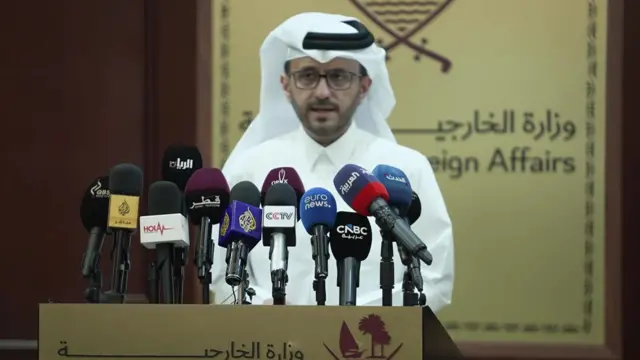
    Qatar foreign ministry spokesman

    Al-Ansari is asked if he believes US President Donald Trump has "correctly characterised the nature of the talks that he says Washington is having with Tehran".

    In response, al-Ansari says: "You have to ask those who are involved in the talks.

    "As I stated very clearly a minute ago: we are not involved in these talks. Our concern right now and focus is on protecting our country."

  2. Qatar not mediating between US and Iran, spokesman sayspublished at 10:42 GMT

    Frank Gardner
    Security correspondent, in Doha

    Qatar foreign ministry spokesman Dr Majid Al-Ansari says Qatar is not involved in any US-Iran efforts to end the war.

    He says "our focus is on ending the attacks on our country and defending our territory".

    I asked him if Qatar could ever again have normal relations with the Islamic Republic of Iran after these attacks on the Gulf Arab states. His answer was, in effect, yes we can't change geography.

  3. Qatari foreign affairs spokesman to hold news briefingpublished at 10:19 GMT

    Frank Gardner
    Security correspondent, in Doha

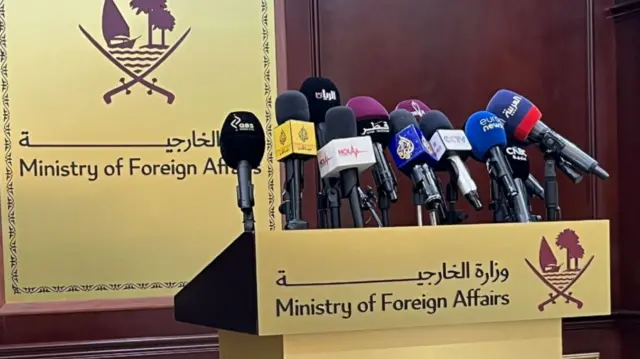
    A podium with many mics

    We are about to get the first comment and press conference from the Qatari government since talk of a peace deal emerged. We'll keep you posted as the Qatar Foreign Affairs spokesman Dr Majid Al-Ansari speaks.

  4. Analysis

    Large gap between possibility of talks and reality of ending the warpublished at 10:04 GMT

    James Landale
    Diplomatic correspondent

    In the Middle East, the fog of war is clouding the diplomacy too. Trump says both sides are talking, Iran says they are not.

    But a dialogue of sorts does seem to be taking place between intermediaries including Pakistan and Turkey.

    There is talk of a possible face-to-face meeting in Islamabad. All this has buoyed markets.

    But optimism is not thick on the ground. Mutual trust is all but absent; remember the US has now twice attacked Iran during negotiations. Hostilities continue, even if the US is holding off attacks on Iran’s energy for five days.

    US public statements remain erratic and at times contradictory. Both sides view the conflict differently: a war of choice for the US, one of survival for the Iranian regime. Let’s not forget, too, there’s a third belligerent, Israel, with its own agenda.

    Yes, the growing economic pain - and pressure from Gulf allies – is being felt in Washington, with Trump looking for a way out of the impasse. But the bar is high for agreement in any talks. How much of its nuclear and missile capabilities would Iran give up?

    Is the US ready to lift sanctions on Iran, guarantee no more attacks and even allow Tehran some control over the Strait of Hormuz? The gap between the possibility of talks and a substantive resolution of the conflict remains large.

  5. Shia group in Iraq says it was targeted by USpublished at 10:00 GMT

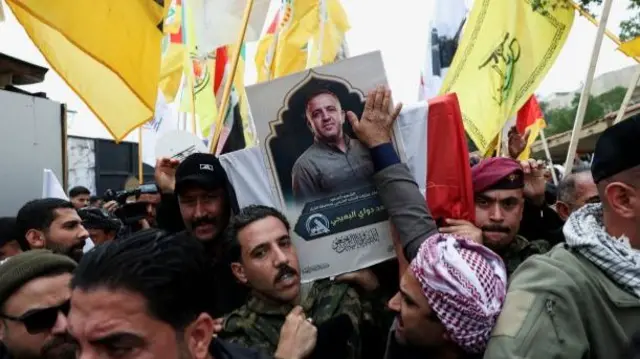
    Mourners carry the coffin of Saad al-Baiji, the Popular Mobilisation Forces' Anbar operations commander, who was killed in airstrikesImage source, Reuters
    Image caption,

    Mourners pictured at the funeral in Baghdad of militia commander Saad al-Baiji

    Iraq's paramilitary, Shia-dominant Popular Mobilisation Forces (PMF), has said in a statement on its website that 15 of its fighters were killed in a US attack on a site in the west of the country.

    A funeral has been taking place in Baghdad for the PMF commander Saad al-Baiji, who it says was killed in the strikes.

    The PMF is an umbrella organisation of mostly Shia paramilitary groups, some of which are aligned with Iran. It was formally integrated into Iraq's state security forces.

    The strikes targeted the PMF headquarters during a security meeting attended by senior commanders, Reuters reports.

  6. Analysis

    Are US-Iran talks actually happening?published at 09:16 GMT

    Lyse Doucet
    Chief international correspondent

    President Trump is hailing "very strong talks" with Iran. So far, there are only signs of a much smaller opening.

    Iran remains deeply suspicious of the US. Two previous periods of talks, in February and in June 2025, were both shattered by US-backed Israeli attacks.

    There are reports of calls between Iran's foreign minister, Abbas Araghchi and US envoy Steve Witkoff. But these conversations are described as very preliminary.

    Many countries, including Pakistan, Turkey, and Egypt, are trying to reduce tension. All three leaders have strong personal ties with Trump and have been actively engaged with Arab leaders during this crisis. Oman, the traditional mediator most trusted by Iran, is also involved.

    We live in unpredictable times but reports suggesting that leading Iranian official, Mohammad Bagher Ghalibaf, could soon meet US vice-president JD Vance seem fanciful.

    Trump keeps searching for his Iranian version of Venezuela's Delcy Rodriguez – a powerful but pragmatic player whom he can bend to his will.

    That won't happen in Iran's multi-layered system of clerics and commanders where hardliners, including Ghalibaf, are now calling the shots and demanding a very big price to end this war.

  7. Fresh strikes reported in Iranian capitalpublished at 09:00 GMT

    Ghoncheh Habibiazad
    Senior reporter, BBC Persian

    Strikes have started again on Tehran now, according to two sources in the east of the city.

    Iranian outlets have also said that air defence has been activated in parts of eastern Tehran.

  8. Israel continues to launch strikes on Iranian 'regime infrastructure'published at 08:59 GMT

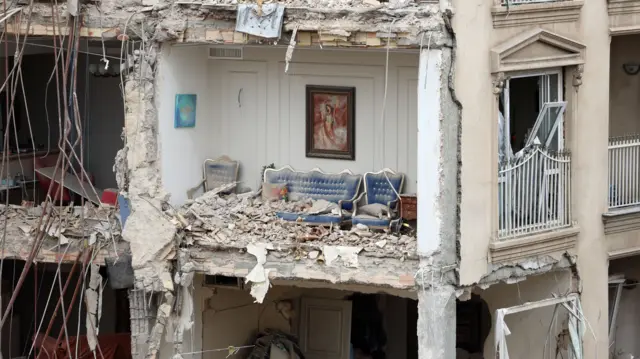
    A damaged building in Tehran, pictured on 23 MarchImage source, EPA
    Image caption,

    A damaged building in Tehran, pictured on 23 March

    Israel says its air force carried out a "wide wave of airstrikes" on "regime infrastructure" in Tehran on Monday.

    It comes after Israeli Prime Minister Benjamin Netanyahu said on Monday night that Israel would continue to strike Iran and Lebanon, after he had a phone call with US President Donald Trump.

    "We are crushing the missile programme and the nuclear programme," he said on X, adding: "We will safeguard our vital interests in any scenario."

    Trump said earlier on Monday the US would hold off attacking Iran's power plants for a five day period after having "productive" conversations with Tehran.

    US Central Command said on Monday evening that America continued to "aggressively strike Iranian military targets with precision munitions".

  9. Doubling down on fossil fuels would be 'wrong lesson' from energy crisis, UK minister sayspublished at 08:20 GMT

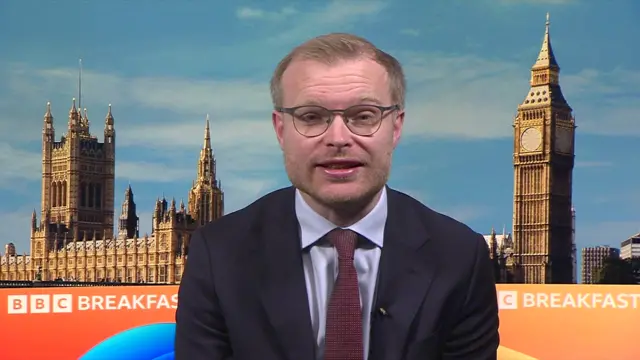
    UK energy minister Michael Shanks speaks to BBC Breakfast

    Doubling down on fossil fuels would be the "absolute wrong lesson" from an energy crisis, UK energy minister Michael Shanks tells BBC Breakfast.

    "Everything this government is doing is about fighting the corner of households... so we can bring down bills now and in long run," Shanks says.

    His comments come hours after the government announced developers will be required to install solar panels and heat pumps in all new homes in England as part of new planning requirements.

    Asked whether the government should relax rules on fossil fuel drilling to bring down bills, Shanks says oil and gas in the North Sea is "hugely important" but the future lies in a clean power system "that gets us off this rollercoaster".

  10. The Iranian civilians killed in the warpublished at 08:00 GMT

    Caroline Hawley and Soroush Pakzad

    Parastesh Dahaghin (left) and Berivan Molani (right) are just two of many civilian casualties in the warImage source, Supplied
    Image caption,

    Parastesh Dahaghin (left) and Berivan Molani (right) are just two of many civilian casualties in the war

    Tehran and other cities have been pummelled by US and Israeli airstrikes for more than three weeks.

    The toll on civilians is mounting fast. Most of their stories will never be told. But through the thick, black smoke of war and an internet blackout, small fragments of information are getting out.

    Parastesh Dahagain was killed while working in her pharmacy in Tehran after a nearby IT company was struck, according to the Iran Human Rights Documentation Centre.

    Video posted online shows a mourning ceremony for Parastesh – framed pictures of her nestled among candles and flowers.

    Her brother Poorya wrote on Instagram that his sister was just doing her job.

    Another woman, Berivan Molani – a 26-year-old lifestyle blogger who ran an online clothes shop – had returned to Tehran the day before she died, because she was homesick.

    Molani was in bed when debris from an air strike struck her head. Several of her neighbours were killed in the Israeli airstrike that targeted Iran's intelligence minister Esmail Khatib, said Razieh Janbaz, a friend of Molani.

    Night-time footage released by the Iranian Red Crescent shows rescuers removing fallen masonry to try to reach Berivan's trapped mother as she begs to know: "Is my daughter alive?"

  11. Six key developments as the war in the Middle East continuespublished at 07:35 GMT

    Gabriela Pomeroy
    Live reporter

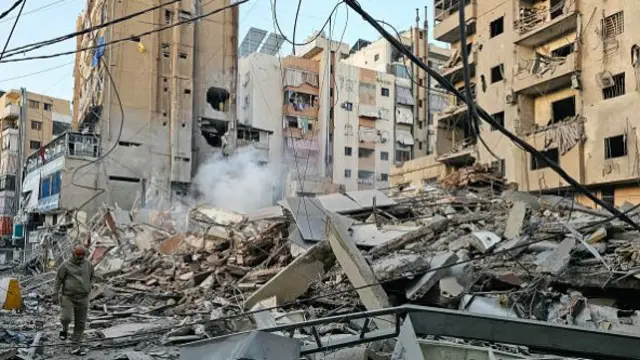
    The site of an overnight Israeli airstrike in Beirut's southern suburb of Bir al AbedImage source, Getty Images
    Image caption,

    The site of an overnight Israeli airstrike in Beirut's southern suburb of Bir al Abed

    • There is still confusion over talks between the US and Iran, after US President Donald Trump said on Monday that the countries had "constructive" talks. Iranian officials denied any substantive talks between the two nations, and the White House later said the situation was "fluid"
    • On Monday, the BBC's US partner CBS News reported that a senior Iranian Foreign Ministry official told them "we received points from the US through mediators and they are being reviewed"
    • Reports suggest that Trump's Middle East envoy Steve Witkoff could meet Iranian officials this week in Pakistan. The country says it is happy to host talks should they be required
    • The oil price fell after Trump mentioned the prospect of talks, before climbing back to more than $100 a barrel
    • On the ground overnight, Iran launched multiple waves of missiles at Israel, causing damage to buildings in Tel Aviv and central Israel. In Lebanon, state media reported Israeli strikes on Beirut overnight, and this morning the Israeli military told residents in the south to evacuate as it prepared to target more Hezbollah infrastructure
    • UK Chancellor Rachel Reeves will focus on the economic impact today when she updates MPs in the House of Commons on how the situation in the Middle East is affecting the UK. She is expected to set out some principles on how to support people if energy bills spiral in the coming months
  12. UK to set out principles on who might get energy bills supportpublished at 07:15 GMT

    Chris Mason
    Political editor

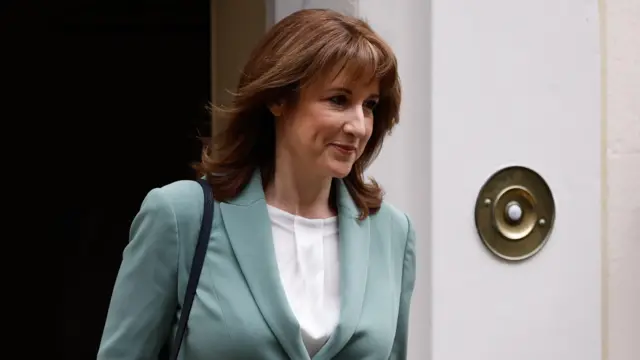
    UK's Chancellor Rachel Reeves leaves from 11 Downing Street dressed in a mint green blazer and white shirt.Image source, EPA

    For UK Chancellor Rachel Reeves there is an economic shock to react to, in real time.

    In the House of Commons later, she will focus on the domestic impact of the ongoing situation in the Middle East. I am told there will be three elements to her address to MPs, beginning with a short update on how the war is affecting the economy.

    There will also be a section on energy security, with a promise to crack on with delivering new nuclear power stations. What is described as "a new anti-profiteering framework" will be set out too.

    Reeves will then talk about the principles that will drive any further support to families if energy bills spiral in the coming months.

    Given the energy price cap on gas and electricity is in place until the end of June, ministers have time to work out what might be feasible, affordable and necessary.

  13. Bahrain says fire extinguished following Iranian attackpublished at 07:07 GMT

    Emergency workers pictured at site of fire in Bahrain, working to extinguish itImage source, Bahrain MOI/X

    Bahrain's Ministry of Interior says its Civil Defence has extinguished a fire at the site of a company, which it does not name, blaming "Iranian aggression".

    It comes around six hours after it said on X that sirens had been sounded, as people were warned to shelter in a safe place.

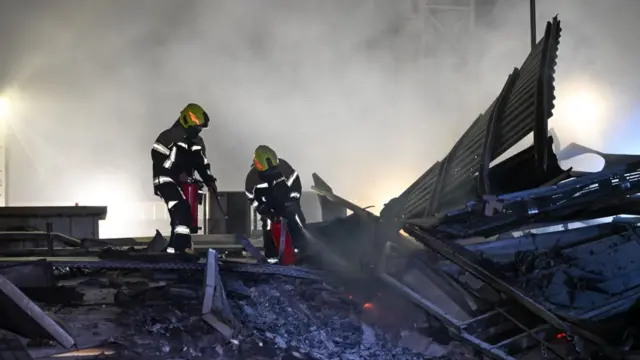
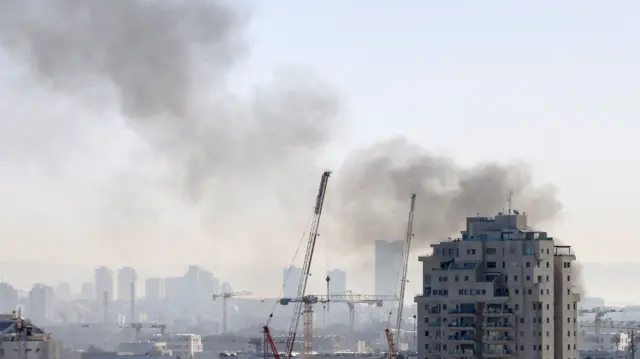
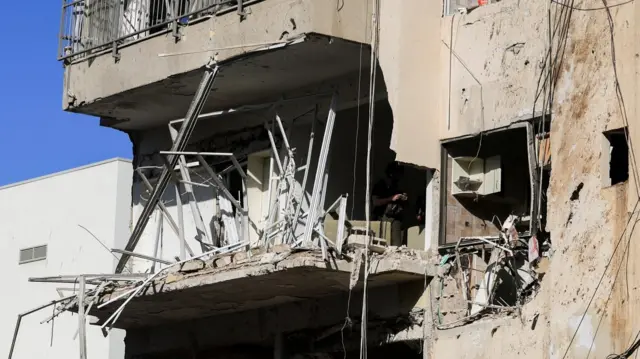
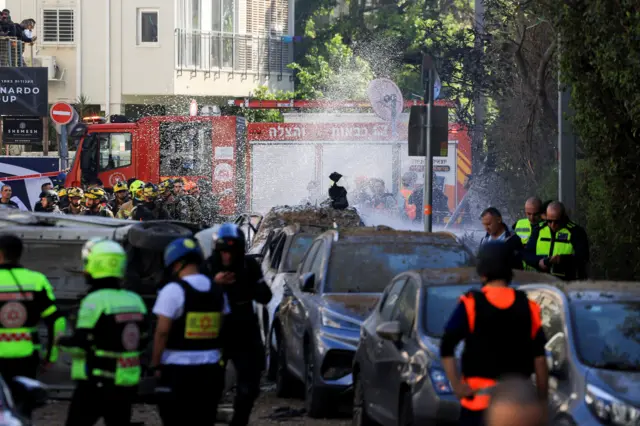
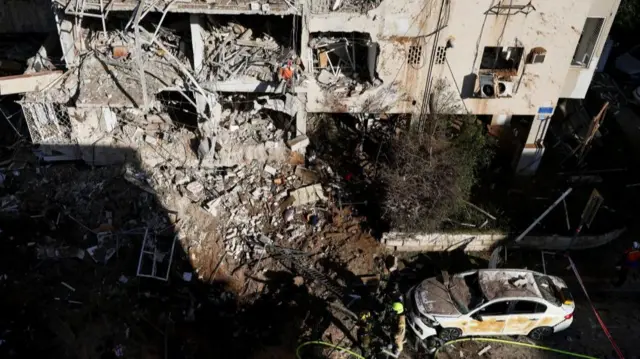
  14. Pictures show smouldering aftermath of strikes on central Israelpublished at 06:53 GMT

    Earlier, we reported that search and rescue teams had been deployed to central Israel, where "reports of impacts" had been received.

    We are now seeing some pictures from Tel Aviv.

    Smoke can be seen rising, and emergency teams are pictured working at the site of strikes. A building has been partially reduced to rubble. The extent of the damage is unclear.

    Smoke rises following Iranian missile barrages in central Israel, amid the U.S.-Israel conflict with Iran, in Tel Aviv, Israel, March 24, 2026.Image source, Reuters
    Image caption,

    Smoke rises following reports of Iranian missile barrages in central Israel

    Debris hangs from a damaged building at the site following Iranian missile barrages in central Israel, amid the U.S.-Israel conflict with Iran, in Tel Aviv, Israel, March 24, 2026.Image source, Reuters
    Image caption,

    Debris hangs from a damaged building

    Emergency personnel work at the site following Iranian missile barrages in central Israel, amid the U.S.-Israel conflict with Iran, in Tel Aviv, Israel, March 24, 2026.Image source, Reuters
    Image caption,

    Emergency personnel work at the site of a strike

    Emergency personnel work at the site following Iranian missile barrages in central Israel, amid the U.S.-Israel conflict with Iran, in Tel Aviv, Israel, March 24, 2026.Image source, Reuters
    Image caption,

    A building has been partially reduced to rubble

  15. Israel issues evacuation orders in southern Lebanonpublished at 06:48 GMT

    The Israel Defense Forces has issued evacuation warnings to residents in areas of southern Lebanon.

    It follows reports from state-run media that several neighbourhoods in southern Beirut were targeted by Israeli airstrikes overnight.

    The National News Agency says warplanes were spotted overnight launching attacks on the area.

    Earlier, Israel's military said it was striking Hezbollah infrastructure in Beirut.

  16. Pakistan 'always willing to host talks', foreign ministry tells BBCpublished at 06:22 GMT

    Carrie Davies
    BBC Pakistan correspondent

    Pakistan is "always willing to host talks" provided "the parties desire" them, according to the country’s foreign ministry spokesperson.

    Tahir Andrabi tells the BBC that Pakistan "has consistently advocated for dialogue and diplomacy to promote peace and stability in the region".

    There has been speculation that senior US officials could meet Iranian officials in Pakistan. Andrabi would neither confirm nor deny any conversations had been held with any party about holding talks.

    The White House earlier warned that the situation was "fluid" and cautioned that no formal meetings between any top leaders from the US and Iran had been announced.

    There has been no public statement about Pakistan officials speaking to senior US officials.

  17. Israel says more damage detected following strikespublished at 06:01 GMT

    Israeli search and rescue teams have been deployed to central Israel where "reports of impacts have been received", according to the Israel Defense Forces (IDF).

    Images posted to the Telegram account of Israel's Magen David Adom emergency service show smoke rising from buildings and debris.

    Earlier, we reported that emergency crews were also sent to southern Israel where damage was detected, after Israel's military sent out numerous alerts overnight warning of Iranian missiles heading towards the country.

  18. Peace 'critical' for global energy supplies, EU chief sayspublished at 05:37 GMT

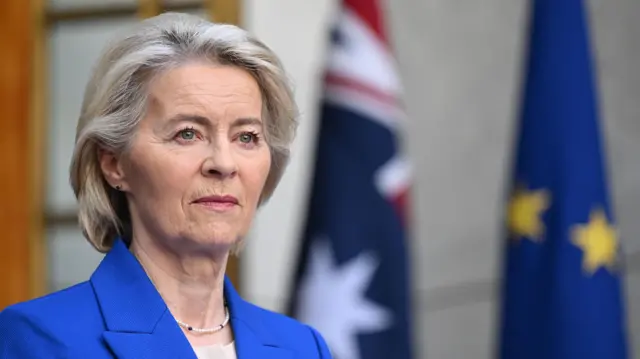
    Ursula von der Leyen in a bright blue blazer standing in front of an Australian flag and European Union flag, which are blurred in the background.Image source, EPA
    Image caption,

    Ursula von der Leyen spoke alongside Australia's prime minister Anthony Albanese in Canberra

    Speaking during a visit to Australia, European Union chief Ursula von der Leyen emphasised the need for negotiated peace to bring an end to the Iran war, saying she was "deeply concerned" about the ongoing conflict.

    "It is of utmost importance that we come to a solution that is negotiated, and this puts an end to the hostilities that we see in the Middle East," von der Leyen said alongside Australian Prime Minister Anthony Albanese in Canberra.

    Some EU countries are preparing to assist in a "mission" to protect the Strait of Hormuz once the war ends, von der Leyen said.

    "We all feel the knock-on effects on gas and oil prices, our businesses and our societies," adding that the trade channel is "critical for the energy supply lines worldwide".

  19. Damage in southern Israel detected, IDF sayspublished at 05:21 GMT

    The Israel Defense Forces (IDF) say they are are heading to "several areas" in the country's south where "reports of impacts have been received", according to a statement.

    Several alerts of missiles launched from Iran towards Israel have been issued overnight.

  20. Ultimatums and a trip to Graceland as Trump eyes Iran dealpublished at 04:55 GMT

    Anthony Zurcher
    North America correspondent

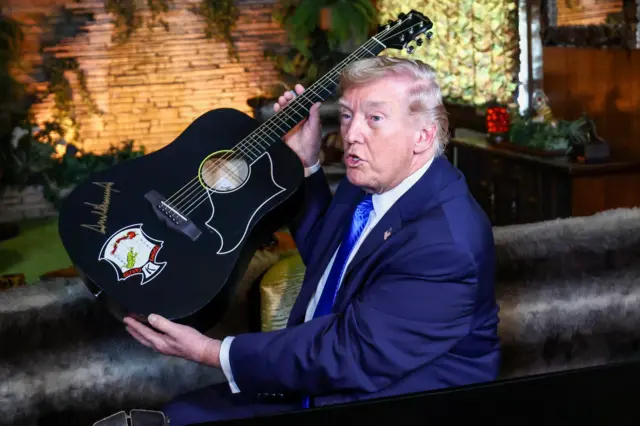
    Donald Trump holds a replica of a guitar after signing it during a visit to GracelandImage source, Reuters
    Image caption,

    Trump visited the home of Elvis Presley on Monday and signed a replica guitar

    Donald Trump's activities over the past few days have been a mix of diplomacy and diversions - with the occasional swing towards the surreal.

    On Friday, he said the US war against Iran was "winding down".

    By Saturday night, he had given Iran a 48-hour deadline to reopen the Strait of Hormuz or face withering new airstrikes on its energy production infrastructure.

    On Sunday, he golfed and by Monday morning, he said the Iranians were engaging in "constructive" talks with the US. Later that day, he visited Graceland, music legend Elvis Presley's historic home.

    US contact with an unnamed Iranian leader - not confirmed by Iran - was enough to merit a five-day stay of the threatened attacks, he said.

    But the prospect of talks was enough to send the US stock market surging and global oil prices dropping.

    Now, Trump is back in Washington, where a new five-day countdown to US attacks on Iranian power infrastructure will begin.

    After fits, starts and a pilgrimage to the home of a deceased rock legend, Trump may have provided the first indication of a real breakthrough.

    Or it could be just the latest instance of this president realising that the ultimatum he delivered put him in a tight spot, forcing a move to buy himself more time.

    You can read more analysis here.