Our live coverage has endedpublished at 17:15 BST 18 May
Our live updates have now ended.
You can read more on today's proceedings here.
The public inquiry into the Nottingham attacks of 13 June 2023 has heard more evidence into the killings of Barnaby Webber, Grace O'Malley-Kumar and Ian Coates by Valdo Calocane - who also seriously injured three others in a spate of attacks across the city. Calocane had been diagnosed with paranoid schizophrenia in 2020
Ifti Majid, the outgoing CEO of the under-fire Nottinghamshire Healthcare NHS Foundation Trust - which cared for Calocane before the attacks - gave evidence this afternoon and explained an email he wrote that said he was "fed up" of needing to respond to questions from the inquiry team
A barrister representing the survivors also accused Majid of being "distracted" during a meeting and "more focused" on getting his lunch
John Brewin, the former CEO, gave evidence earlier on Monday. He agreed in terms of inspections, "not much had changed" in three years
The inquiry heard Brewin also wrote to staff about a "harrowing" meeting with managers, saying that services at the trust "are not safe"
Our live updates have now ended.
You can read more on today's proceedings here.
We have heard from the former and outgoing CEOs of Nottinghamshire Healthcare NHS Foundation Trust today.
But a new CEO will be in post next month.
In March, it was announced that Mark Axcell had been appointed as the new CEO.
Axcell, who was previously CEO of the NHS Black Country Integrated Care Board, said at the time of his appointment he was "really pleased to be joining the trust at this critical time".
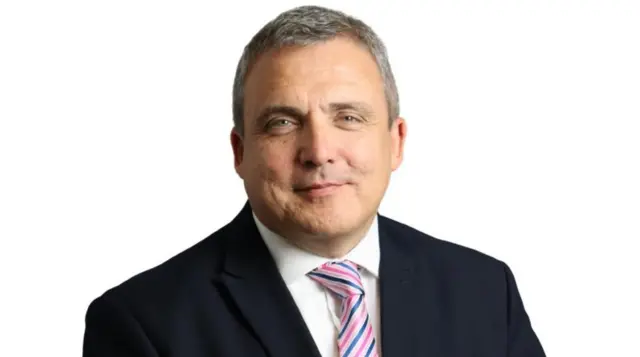 Image source, Black Country ICB
This afternoon we heard evidence from Ifti Majid, the outgoing CEO of Nottinghamshire Healthcare NHS Foundation Trust.
Majid was CEO of the organisation at the time of the Nottingham attacks in 2023.
Here is a recap of what we heard:
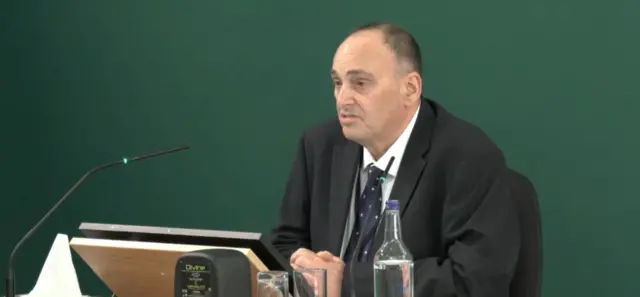 Image source, The Nottingham Inquiry
If you'd like to find out about more of the evidence heard in the Nottingham Inquiry so far, you can get up to speed with the latest as part of our Need to Know series.
In the latest episode, BBC reporter Heidi Booth takes you through the latest evidence, including, for the first time, statements from Valdo Calocane's family members.
Ifti Majid, the outgoing CEO of Nottinghamshire Healthcare NHS Foundation Trust, has finished giving evidence to the inquiry.
The Nottingham Inquiry will resume tomorrow morning.
Addressing the inquiry, Sophie Cartwright KC - the barrister representing the survivors - said in a meeting with Wayne Birkett and his partner Tracey Hodgson, it was their impression he was "distracted".
Cartwright said Majid was "more focused" on getting his lunch.
In response, Majid said he was "really saddened" by what Cartwright was describing.
"Those who know me know that would never be my intention," he added.
The inquiry has heard on 17 October 2025, in an email, Ifti Majid said he needed "to make an apology" as for the next few weeks he needed respond to a set of questions from the Nottingham Inquiry team.
He wrote: "Sorry but this means many of the sessions I had planned to come out to teams and services need to be postponed.
"Fed up of needing to do this, but I'm afraid needs must."
Rachel Langdale, counsel to the inquiry, asked Majid to explain what he meant by stating he was "fed up" in the email.
In response, Majid said he wanted to make it "absolutely clear" when he was talking about being "fed up", he was referring to letting colleagues down by cancelling clinical visits.
"Chair, I want to make it absolutely clear in no way am I talking about being 'fed up' with the inquiry and recognising the importance of the inquiry," he added.
"I don't want this to be interpreted in any way as any non-commitment to the inquiry.
"I put an awful lot of effort in our organisation, delayed my retirement to ensure the organisation knows the importance of the inquiry."
He said the inquiry was an "opportunity" to support changes within mental healthcare.
The trust was placed in "Segment 4" by NHS England in February 2024.
That meant concerns around the trust's performance were such that it needed "enhanced oversight" and mandatory intervention to support improvements.
NHS England conducted a "well-led review" into the trust's leadership after this.
That review found culture in the trust was described by many staff as "top-down, closed directive, siloed... and or/unsupported".
Some leaders also expressed frustration around the pace of change and it was felt within the organisation that it was "reactive rather than proactive".
Majid said: "What I have experienced is that we are constantly chasing regulatory action plans, regulatory improvement and that tends to be about transactional improvement, and I really understand that, that feels to colleagues, like it's top down."
The inquiry has been hearing how notes regarding Nottingham attacks killer Valdo Calocane were "locked down", and the inquiry team has asked if notes in relation to the victims were also locked down in the "same manner".
In response, Majid pointed out none of the victims were receiving treatment from the hospital trust.
The inquiry was told Priory Hospital Arnold, where Calocane also received treatment, was rated as "inadequate" at the time.
Majid was also asked whether it would concern him if patients are being placed in settings rated "inadequate".
He told the hearing that would "absolutely concern" him - adding the trust had invested in a bed management team to better manage out-of-area placements.
In November 2023, months after the attacks, the inquiry heard a review was undertaken of the Early Intervention in Psychosis (EIP) team - which involved an audit of 15 clinical samples.
The report stated absence of specialist staff had a "detrimental impact" on the care of patients.
When asked by Rachel Langdale - counsel to the inquiry - whether the recommendations from the review had been implemented, Ifti Majid said the trust had "partially implemented" all recommendations, but said there was "more work" to do.
Nottinghamshire Healthcare NHS Foundation Trust has been under close scrutiny since the Nottingham attacks, and has come under fire for the failings that emerged in the aftermath.
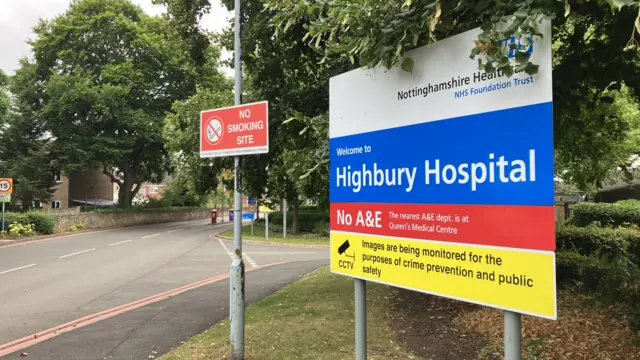
In January 2024, the trust suspended more than 30 members of its staff over allegations around staff conduct at Highbury Hospital - where Calocane had been admitted on a number of occasions.
The allegations, according to a report, included falsifying mental health observations, as well as maltreatment of patients.
Rampton Hospital, which is also run by the trust, was rated "inadequate" by the Care Quality Commission (CQC) in the same month.
At an annual general meeting of the trust in September 2024, Majid said the trust had "let down" patients and families.
"No-one should have to go through this, and I offer my heartfelt apologies for the opportunities we missed in the care and treatment of Valdo Calocane, to all of those who continue to be affected by what happened on that dreadful day," he said previously.
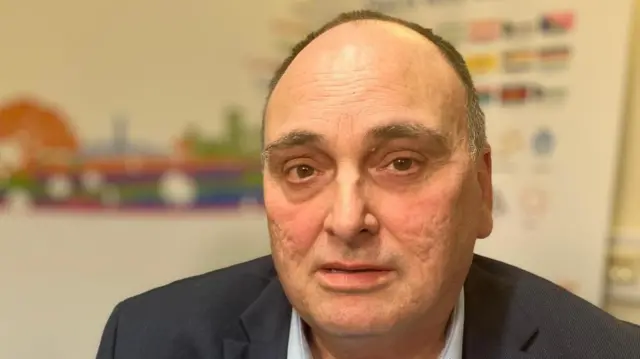
In February 2025, Majid admitted he owed an apology to the killer's family, following an NHS review into Calocane's care which found a catalogue of failings.
That review found the killer's risk was not "fully understood, managed, documented or communicated", and that there were missed opportunities to take more assertive action towards his care.
In May 2025, the BBC found two men with paranoid schizophrenia under the trust's care had stabbed members of the public in separate attacks - weeks before Calocane's killings.
The trust was told it needed to make "significant improvements" following a review of its leadership, which was published in January this year.
We know Valdo Calocane was responsible for the deaths of Barnaby Webber, Grace O'Malley-Kumar and Ian Coates. But what else do we know about the perpetrator of the Nottingham attacks?
Calocane, who has referred to himself as Adam Mendes, was born in Guinea-Bissau on 4 September 1991.
His family moved to Portugal when he was three, before coming to the UK in 2007 when he was 16 years old.
The triple killer completed a degree in mechanical engineering at the University of Nottingham, graduating in June 2022, when he was aged 30.
At Calocane's sentencing hearing, the court was told he had no previous convictions.
However, the inquiry has heard he had a history of police interactions linked to violent incidents, including the assault on Nottinghamshire Police officer PC Barnaby Pritchard.
In May 2020, Calocane was experiencing a psychotic episode when he kicked in the door of a woman's flat at Brook Court in Radford.
The woman fell from a window as she attempted to flee and was left needing metalwork and screws surgically fitted to her spine.
In July 2021, while he was a student at the University of Nottingham, Calocane suddenly grabbed his housemate, Sebastian, by the shirt and held him up against a wall. Sebastian also reported being followed home by Calocane in 2022.
In January 2022, while living at different accommodation, Calocane put his flatmate, Christopher, into a headlock following a confrontation about cleaning.
Weeks before the attacks, in May 2023, Calocane violently assaulted two colleagues at a warehouse in Leicestershire.
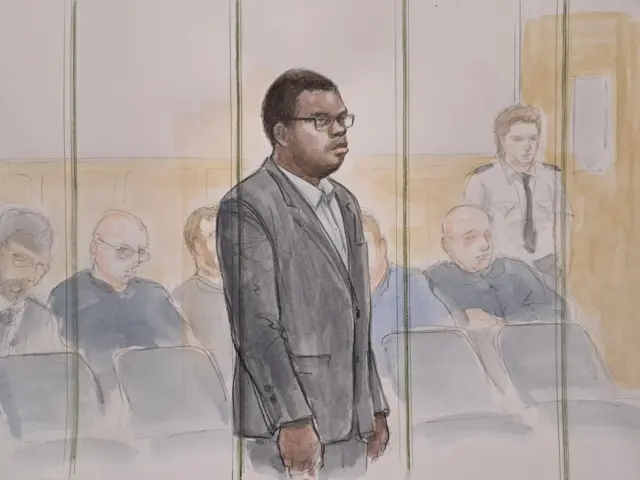 Image source, Helen Tipper
The inquiry has heard after serious incidents, including attempted homicide involving patients, reviews were carried out.
Langdale told the hearing the reviews identified "missed" opportunities to provide support to patients.
When asked whether changes could have been brought about "more quickly", Majid agreed.
Majid said since mid-2023, there had been "more than 90 visits from the CQC, more than 60 inspections".
"Each of those drive separate actions plans.
"So there is a real tension in my mind, between regulatory activity and sustainable learning that drives improvements," he said.
Majid said actions plans tended to "drive" policies that should be in place. But he said it was not just about the policy.
He said: "It's the person. How we support the person?
"How do we check that the person does what they should be doing? How do we support them with any queries?"
A report by the trust found that duty of candour intelligence training was not rolled out to the appropriate personnel at all levels in the trust.
Duty of candour requires clinicians to make people aware or alert them of failings or potential failings in care.
Majid added this was one of the things that the trust changed when it was developing and enhancing its patient safety functions.
The inquiry heard Majid had asked for comparative data on the number of "serious incidents", which took place regarding other mental health trusts.
When asked why by Langdale, Majid said a "concern" of his was how the trust managed serious incidents.
He told the inquiry he was trying to understand for an organisation the size of the trust, and considering the demographics, was there a "benchmark" figure?
Majid added he was told the information he requested was not available.
The inquiry heard an internal report identified a number of areas for learning at the trust, including:
Majid agreed these were not just areas of learning, but "failings" in the provision of care.
The chief executive said he was aware the trust had been rated "requires improvement" since 2019 when he started in the role.
Asked who was responsible for ensuring improvement, Majid said: "From the point that I take up post, that would be my responsibility."
The inquiry heard in 2022, before Ifti Majid was appointed CEO of the trust, the body was rated "requires improvement" by the CQC.
Langdale asked Majid whether he was aware not all governance processes "operated effectively" at team level, to which he agreed that he was aware.
The inquiry also heard meeting decisions were not always recorded at the time, which Langdale described as a "consistent and chronic" issue.
Majid was also asked whether he had meetings with the senior coroner when he began the role, to which he said he did not.
The outgoing CEO said "senior" members of staff such as the medical director or chief nurse would attend meetings with the senior coroner and provide feedback to him.
The inquiry has heard throughout evidence in the Nottingham Inquiry that mental health services followed a policy of using "the least restrictive practice" when dealing with its patients.
Majid said: "I think in mental health practice generally, it would be my view that least restrictive practice is what is expected to be aimed towards."
Asked if the risk a patient presents to others was adequately considered, he said: "It's a personal opinion, but my opinion would be that over recent years, the focus on safety to others, safety to the public, has reduced."
Rachel Langdale, counsel to the inquiry, asked Majid about a report that detailed there were "limited escalation mechanisms" provided at the NHS trust.
Majid told the inquiry his concern was that information about performance or "wasn't flowing up the organisation" in a way which enabled the board to understand what was happening on the front line.
He added he understood from colleagues that the previous accountability framework shared "what was positive" instead of holding to account.
When asked by Langdale whether he thought it had become an "echo chamber", Majid responded: "Yes, I would say so."
