Summary

  1. US has stopped fighting but remains 'ready' in region, says Central Commandpublished at 19:47 BST
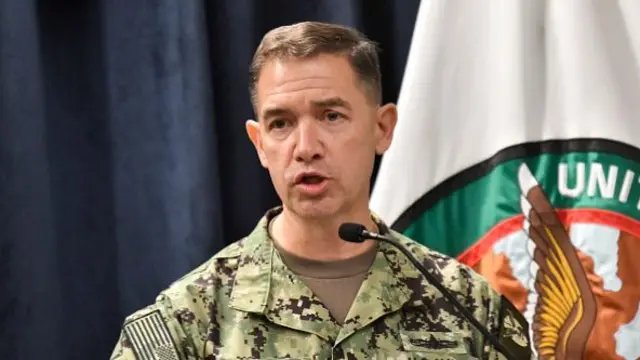
    Admiral Brad Cooper speaks in a podiumImage source, AFP via Getty Images
    Image caption,

    Admiral Brad Cooper delivered the latest update on the US military in the Middle East

    Although it's ceased fighting, the US remains "ready" in the Middle East, says its Central Command.

    Speaking in a video update, Admiral Brad Cooper says that the US has "paused offensive operations in accordance with the ongoing ceasefire".

    "Iran has suffered a generational military defeat", says Cooper.

    But he adds that the military remains "present, vigilant and ready if called" in the region, and continues to "stand shoulder to shoulder" with it's regional partners.
  2. There is no ceasefire in Lebanon, Netanyahu sayspublished at 19:30 BST

    Israel's prime minister has just released a message to those in the north of the country and emphasises "there is no ceasefire in Lebanon".

    "We continue to strike Hezbollah with force, and we will not stop until we restore your security," in a message published by the prime minister's office.

    Netanyahu reiterates Israel's objectives - to disarm Hezbollah and "to secure a historic and sustainable peace agreement between Israel and Lebanon".

    This message comes after US President Donald Trump told US media that Netanyahu had told him Israel would be "scaling back" attacks in Lebanon as peace talks play out.

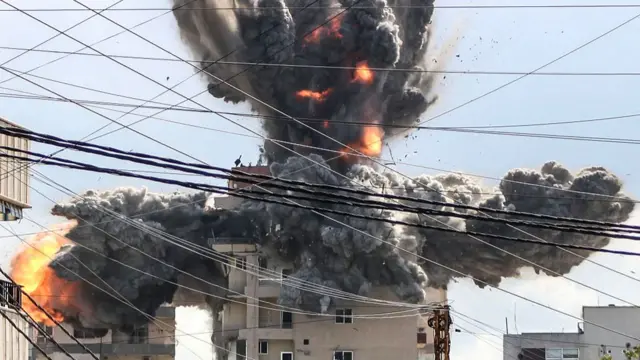
    A fireball rises from a building hit by an Israeli airstrike in the area of Abbasiyeh, on the outskirts of the southern Lebanese city of Tyre, on 8 April 2026Image source, Getty Images
    Image caption,

    A fireball rises from a building hit by an Israeli airstrike in the area of Abbasiyeh, on the outskirts of the southern Lebanese city of Tyre, on 8 April 2026

  3. Trump says Israel will be 'scaling back' strikes on Lebanon to support peace talkspublished at 19:24 BST

    Speaking in an interview with US outlet NBC News before Iran's supreme leader's statement, Trump says that Israeli Prime Minister Benjamin Netanyahu is going to be "scaling back" strikes on Lebanon ahead of upcoming negotiations between Iran and the US.

    "I spoke with Bibi and he's going to low-key it. I just think we have to be sort of a little more low-key," Trump tells NBC News following a phone call with Netanyahu.

    Along with confirming that Israel would be "scaling back" operations, Trump says he is "very optimistic" that a peace deal will be reached during negotiations in Islamabad.

    The US president says Iran is "agreeing to all the things that they have to agree to" and its officials are being "much more reasonable" when not speaking to the press.

  4. Iran will take management of Strait of Hormuz 'into new phase', says supreme leader statementpublished at 19:16 BST
    Breaking

    Some more now from the message attributed to Iran's Supreme Leader, Mojtaba Khamenei, which has been read out on state media.

    It's a lengthy statement, here's some of what it says:

    • The regime will "seek compensation for every single loss inflicted" and "damages for those injured in this war"
    • It says the regime will also "take the management of the Strait of Hormuz into a new phase" - but does not clarify what that will be
    • It calls on pro-Iranian protesters to take to the streets because "your voices raised in public squares have an impact on the outcome of the negotiations"
    • Iran "never sought war and we're not seeking war", it says, but will "not back off from seeking our legitimate rights in any way", adding this includes "the entire resistance front" - meaning Iran's allies and regional proxies
  5. Iranian state media shares statement attributed to supreme leaderpublished at 18:54 BST
    Breaking

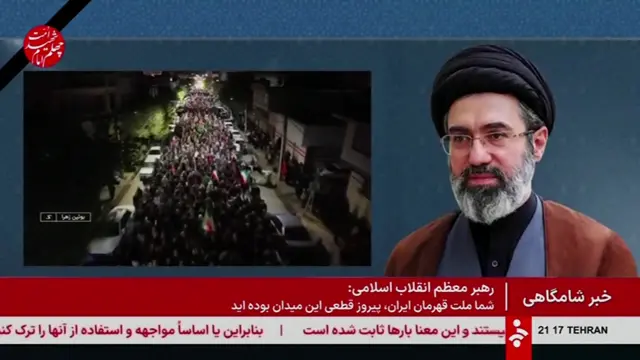
    A screenshot of IRIB television channel reading out message from KhamaneiImage source, IRIB
    Image caption,

    The Islamic Republic of Iran Broadcasting (IRIB) television channel read out the message

    A statement attributed to Mojtaba Khamenei, Iran's supreme leader, has been shared across the country's state media.

    As has been the case previously, it's a written statement. Khamenei has not been seen in public since becoming the country's supreme leader after the death of his father at the start of the war.

    In the message, he says Iran is the "victorious nation" of the war. We'll bring you more on this shortly.

  6. BBC Verify

    Strait of Hormuz status legally complicated, experts saypublished at 18:48 BST

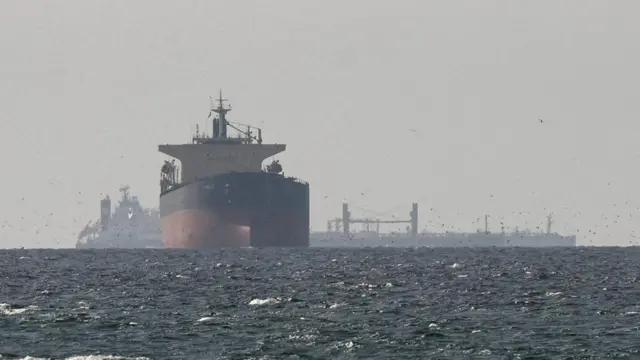
    A file pic of ships in the Gulf near the Strait of HormuzImage source, Reuters

    By Kayleen Devlin

    Experts have told BBC Verify that Iran’s insistence that the Strait of Hormuz falls within it and Oman’s territorial waters is true – but the legal status of the waterway is complicated.

    Tehran has threatened to attack any ships that pass the strait without its permission – despite saying it would reopen it as part of the ceasefire deal with the US. Iran has also said it will charge a toll for ships using the strait.

    • As we reported earlier, analysis of vessel-tracking data on MarineTraffic shows at least nine ships - including two oil and chemical tankers - have crossed the strait since the ceasefire was announced on Tuesday night

    Prof Andrew Serdy from the University of Southampton says at its narrowest point the strait is overlapped by the territorial waters of Iran on one side and Oman on the other. It is also covered by international rules that apply to major shipping routes, he adds.

    Dr Constantinos Yiallourides, an expert in the law of the sea, says Iran and Oman’s sovereignty is "limited by the right of peaceful transit passage" for foreign vessels under international law.

    Prof Richard Barnes from the University of Lincoln adds that "the precise legal regime in the strait is a grey area", with arguments on both sides. One view is that Iran cannot interfere with shipping, while another is that it may claim the right to restrict passage on security grounds.

    "It generally cannot act against neutral vessels, so would be restricted from targeting them or impeding their navigational rights," he says.

  7. Analysis

    Netanyahu's call for Lebanon talks a sign White House wants attacks scaled backpublished at 18:38 BST

    Paul Adams
    Diplomatic correspondent

    Benjamin Netanyahu’s call for direct talks with the Lebanese government is probably the first sign that the White House wants Israel to scale back its devastating aerial campaign.

    Even though Israel and the US insist that Lebanon was never part of the ceasefire deal, Washington knows that if a war is still raging there, it can probably kiss goodbye to any thought of meaningful progress at this weekend’s talks in the Pakistani capital, Islamabad.

    Reports from Israel suggest that the Israeli military has told the government that there’s no way to disarm Hezbollah without occupying the whole of Lebanon.

    Netanyahu says talks with the Lebanese government should start "as soon as possible" - how this squares with the latest Israeli military warning for civilians to evacuate large parts of Beirut’s southern suburbs is not clear.

    Most civilians have already left, but it will not be surprising if Israel mounts more attacks before allowing diplomacy to take over.

  8. What we've heard from nations around the worldpublished at 18:35 BST

    As we've just reported, UK Prime Minister Keir Starmer says Lebanon should be included in the ceasefire agreement and Israel should stop its attacks. Here's some of what we've heard from other countries today:

    German Chancellor Friedrich Merz says Germany is resuming direct talks with Iran, adding that he has encouraged US President Donald Trump to pursue further negotiations.

    He says Germany does not want this war to put "any further strain" on the US relationship with the other Nato members.

    In a statement, the Brazilian government says Israel's recent strikes against Lebanon "threatens to draw the region into a new escalation of violence and instability", urging Israel to "immediately suspend its military actions".

    Russia's foreign ministry has also condemned the strikes and called for Lebanon to be covered by the US-Iran ceasefire.

    Australian PM Anthony Albanese tells the Reuters news agency the ceasefire was an "important step forward" but says Australia "firmly believes that this has to apply to Lebanon as well".

    While China's foreign ministry calls for a de-escalation, adding in a statement that Lebanon’s sovereignty and security "should not be violated".

  9. Israel's attacks on Lebanon are 'wrong' and should stop, Starmer sayspublished at 18:28 BST

    Israel's attacks on Lebanon are "wrong" and "should stop", UK Prime Minister Keir Starmer says in an interview with ITV's Talking Politics podcast.

    But he says it's "hard to say" if they breach the temporary ceasefire agreed between the US and Iran this week.

    "We haven't got access to all the details of the ceasefire," he says, but adds the attacks "shouldn't be happening".

    He says his argument is Lebanon "should be included in a ceasefire and that's the important part of the overall approach".

  10. A look at the status of three key parts of the ceasefirepublished at 18:16 BST

    Freya Scott-Turner
    Live reporter

    Emergency services operate at the site of an Israeli strike carried out on WednesdayImage source, Reuters
    Image caption,

    Emergency services operate at the site of an Israeli strike in Lebanon carried out on Wednesday

    The ceasefire between the US and Iran began more than 36 hours ago. There have since been concerns that it appears to be on shaky ground, our diplomatic correspondent writes.

    Strikes in the Gulf appear to have largely stopped

    The United Arab Emirates's (UAE) defence ministry says no missiles or drones have been detected on Thursday. Kuwait also says it's air defences have "not reported any military movement" in the last 24 hours.

    And neither Saudi Arabia or Bahrain - which have seen repeated attacks throughout the conflict - have reported any strikes on Thursday.

    The Israeli military hasn't issued any alerts today that it has detected missiles from Iran, and we have not received reports of strikes in Iran on Thursday either.

    A small number of attacks were reported in the first few hours after the ceasefire was announced.

    Whether Lebanon is included remains a source of contention

    Israel says the agreement does not include Lebanon and carried out a large wave of strikes on Wednesday - it issued fresh evacuation orders for parts of southern Beirut on Thursday.

    Images from Thursday show what appear to be Israeli anti-projectile defence systems operating on the border with Lebanon.

    Iranian officials have called strikes against Lebanon a violation of the ceasefire, while US President Donald Trump says that Israel and Lebanon's conflict is a "separate skirmish".

    A short while ago, Israeli Prime Minister Benjamin Netanyahu said he'd told his government to start direct talks with Lebanon "as soon as possible", aimed at disarming Hezbollah.

    Uncertainty continues over Strait of Hormuz

    Iran's deputy foreign minister told the BBC on Thursday the Strait of Hormuz will reopen if the US withdraws its "aggression".

    The White House said on Wednesday that there is a discrepancy between what the Iranian regime is saying in public and in private, adding there has been an "uptick" in traffic through the strait and it is false to suggest it is closed.

    BBC Verify has looked at the data.

  11. Death toll from Wednesday attack on Lebanon rises to more than 300 - health ministrypublished at 18:09 BST
    Breaking

    The death toll from Israeli strikes on Lebanon on Wednesday has increased to more than 300 people, according to the country's health ministry, with 1,150 wounded.

    It's previous update said that 203 people had been killed and more than 1,000 wounded in the attacks.

    Lebanon is currently holding a day of mourning after the strikes, which the Israeli military said were targeting Hezbollah.

  12. Iran's supreme leader expected to deliver message in next few hourspublished at 18:08 BST

    Iran's Supreme Leader Mojtaba Khamanei will issue a message about the war to mark 40 days since the killing of his father, the late Supreme Leader Ali Khamanei, according to his Telegram account.

    The account says the message will be shared "in a few hours".

    It does not specify if the message will be a written statement or delivered in another form.

    Khamanei has not been seen in person since the start of the war, but messages attributed to him have been shared by Iranian media in other forms, such as read-outs on television.

  13. There's work to do on 'fragile' ceasefire - Starmerpublished at 17:38 BST

    Media caption,

    Work to do on 'fragile' ceasefire, says Starmer after meeting Gulf allies

    UK Prime Minister Keir Starmer has touched down in Bahrain as part of a wider trip visiting countries in the Middle East, where he's been meeting Gulf allies.

    He says the mood in those discussions has been one of shock that those countries were attacked because they did not attack Iran, relief that there is now a ceasefire, and "a general sense that it's fragile, that there's work to do in relation to it".

    The focus now is "to make sure that this ceasefire is a permanent ceasefire and that the Strait of Hormuz is open".

    "That takes more than just words, it takes a lot of action," he says.

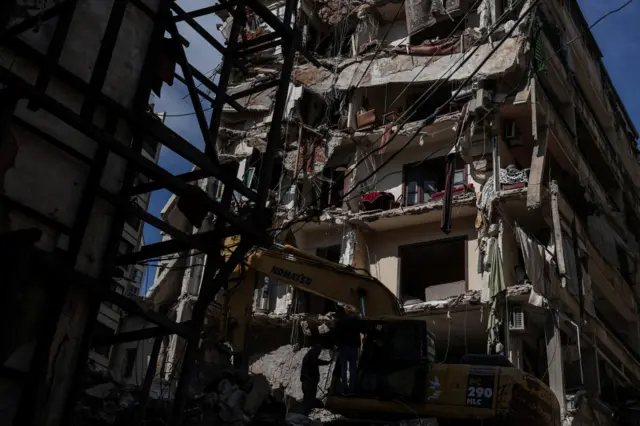
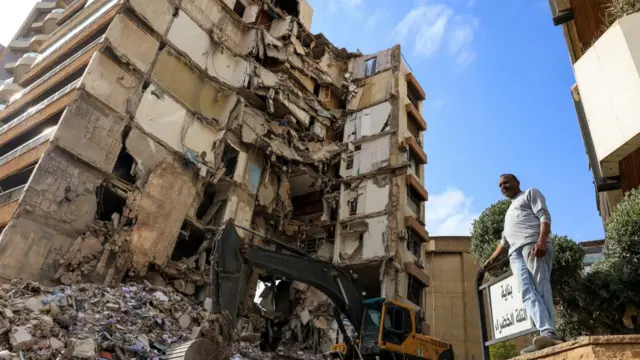
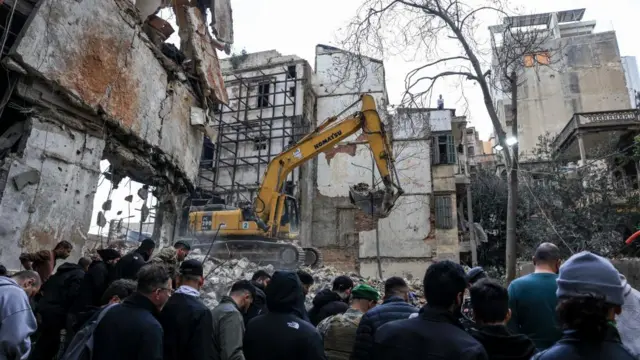
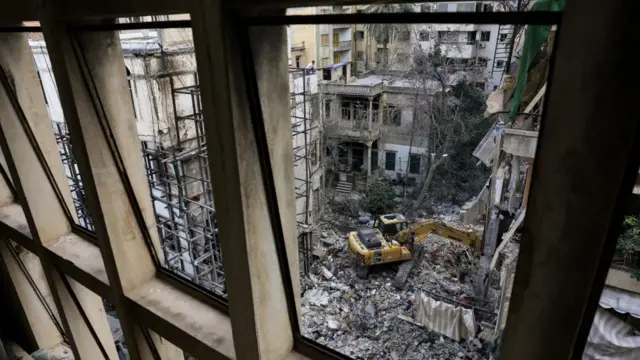
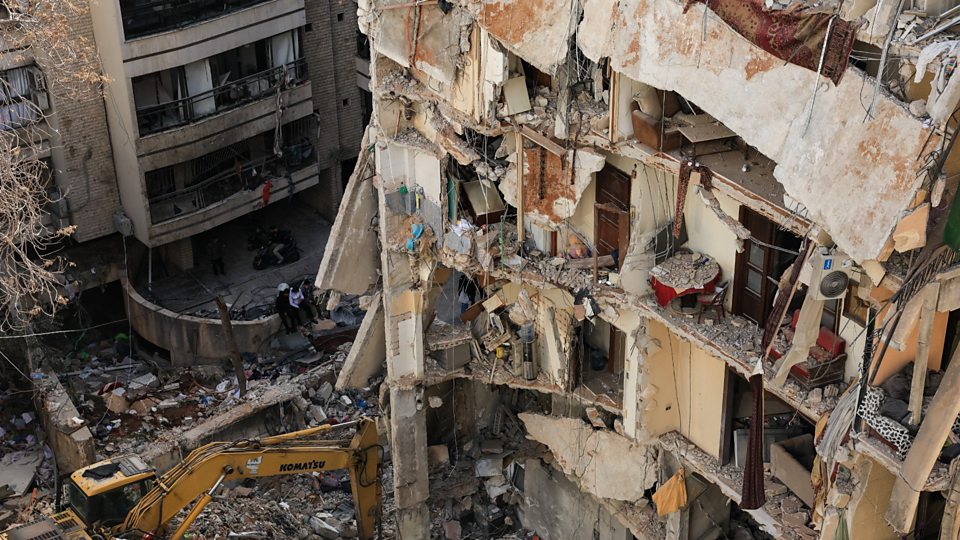
  14. Images show damage from Israel's strikes on Beirut on Wednesdaypublished at 17:30 BST

    A man stands outside a damaged building in Lebanon. There are large piles of rubble and debris and the building is clearly exposedImage source, Reuters
    Heavy machinery operates as people gather at the site of an Israeli strike carried out in BeirutImage source, Reuters
    Heavy machinery operates as people gather at the site of an Israeli strike carried out in Beirut - as seen from inside a buildingImage source, Reuters
  15. Democrats' attempt to restrict Trump's war powers failspublished at 17:25 BST

    Ana Faguy
    Reporting from Capitol Hill

    What we thought would happen on the floor of the US House of Representatives, happened.

    A handful of house Democrats attempted to pass the war powers measure using unanimous consent and failed.

    If the measure were to pass, it would terminate military operations against Iran until the Trump administration could get congressional approval.

    More than the measure failing, what we saw was just how contentious Washington has become.

    As soon as Democrat Glenn Ivey attempted to speak on the House floor, he was silenced with a thunderous gavel bang from his Republican colleague, Chris Smith of New Jersey.

    The six or seven Democrats on the floor shouted in protest and ultimately walked away.

    Immediately after, outside the Capitol, fewer than a dozen Democrats told reporters they wanted the Speaker of the House, Mike Johnson, to call the House back into session.

    "We've been at war for 40 days, we've only been in session for 33," Ivey said, with Democrats saying they will bring the measure back next week.

  16. Analysis

    Trump was 'disappointed' with Nato allies, alliance chief sayspublished at 17:20 BST

    Anthony Zurcher
    North America correspondent

    Yesterday, Nato Secretary General Mark Rutte made his case for the 77-year-old trans-Atlantic alliance to Donald Trump behind closed doors in the White House.

    Today, he laid out his arguments in public. Not that anything he said should be too surprising.

    Nato, he asserted, is still relevant. America’s European allies understand they have to share more of the military burden, but they are doing so.

    While some nations were caught off guard by the US-Israeli attack on Iran – and the lack of prior consultation, which he said was understandable given the need for operational security - they have since stepped up, he said.

    Trump may not be buying what Rutte is selling, however. The secretary-general acknowledged that the US president was "disappointed" in their conversation – which he called "frank and open". After the meeting, Trump posted more criticism of what he sees as Nato’s lack of assistance in the war effort.

    Rutte may be considered the "Trump whisperer" for his apparent friendship with the president. But the strains the Iran conflict have placed on America and its European allies are going to take more than soft words to mend.

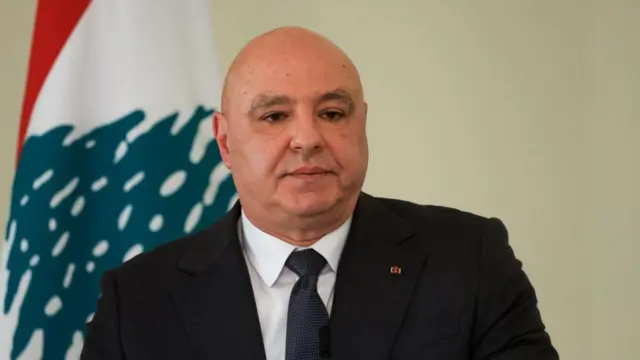
  17. Lebanese president earlier said 'only solution' was ceasefire followed by direct talkspublished at 17:08 BST

    Lebanese President Jospeh AounImage source, Reuters

    Shortly before Netanyahu announced that he'd told his cabinet to start direct talks with Lebanon, we also heard from the Lebanese President Joseph Aoun.

    In a statement posted on X, he said the "only solution" is a ceasefire between Israel and Lebanon, followed by "direct negotiations" between them.

    Aoun also said his country's security forces have been "carrying out their work fully to enforce security, despite the "difficult circumstances they are facing".

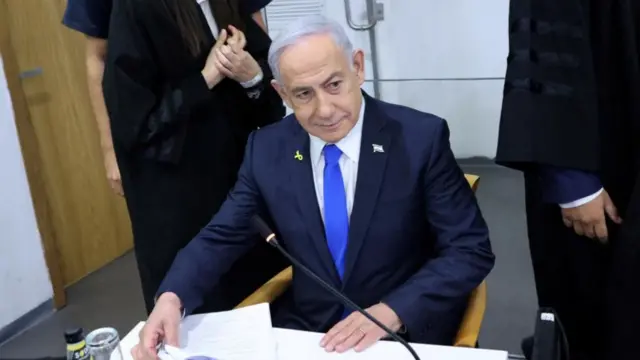
  18. Netanyahu says he's told cabinet to start direct talks with Lebanonpublished at 16:47 BST
    Breaking

    NetanyahuImage source, Reuters

    Israeli Prime Minister Benjamin Netanyahu says he's told his cabinet to start direct talks with Lebanon "as soon as possible".

    In a statement posted on X in Hebrew, it says he requested this to his cabinet yesterday, in light of "repeated calls" from Lebanon to open direct negotiations.

    He adds that the talks will focus on the "disarming Hezbollah and establishing peaceful relations between Israel and Lebanon".

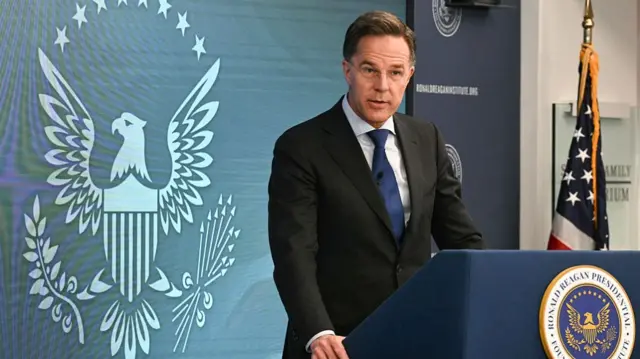
  19. Nato allies providing 'massive support' to Trump on Iran, Rutte sayspublished at 16:37 BST

    Mark Rutte speaking in Washington, in front of reportersImage source, Getty Images

    During his address, Rutte insists that Nato is not "whistling past the graveyard" - and says allies are moving quickly to secure budgets required for their armed forces.

    On the US-Israel war with Iran, Rutte says: "When it came time to provide the logistical and other support the United States needed in Iran, some allies were a bit slow, to say the least."

    He adds: "In fairness, they were also a bit surprised. To maintain the element of surprise for the initial strikes, President Trump opted not to inform allies ahead of time.

    "But what I see, when I look across Europe today, is allies providing a massive amount of support."

    Rutte continues, saying: "Nearly without exception, allies are doing everything the United States is asking. They have heard and are responding to President Trump's requests."

    The Nato head also has praise for the UK in "leading a coalition of countries" to ensure free passage through the Strait of Hormuz. "This is evidence of a mindset shift," he adds.

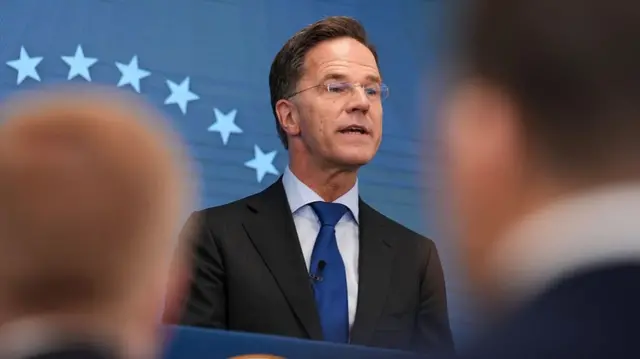
  20. Nato head Rutte speaking in Washington - watch livepublished at 16:10 BST
    Breaking

    Mark Rutte speaking at a pedestal in WashingtonImage source, AFP via Getty Images

    Nato Secretary General Mark Rutte is speaking now in Washington.

    We will bring you the key lines here - and you can watch live at the top of the page.