Summary

  1. Iran 'better not be' charging ships going through Strait of Hormuz, says Trumppublished at 22:33 BST

    Iran "better not be" charging ships to pass through the Strait of Hormuz, says US President Donald Trump.

    "There are reports that Iran is charging fees to tankers going through the Hormuz Strait", he says on Truth Social. "They better not be and, if they are, they better stop now".

  2. No place for tolls on international waterways - UK foreign secretarypublished at 22:20 BST

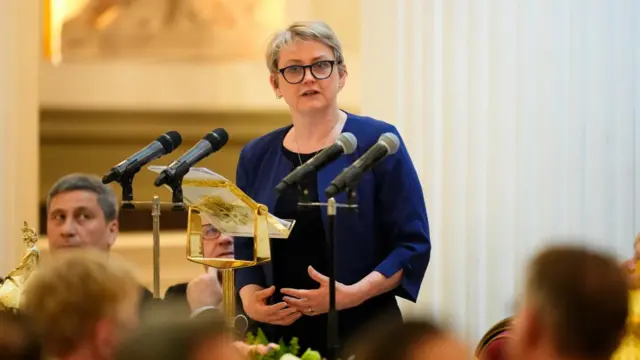
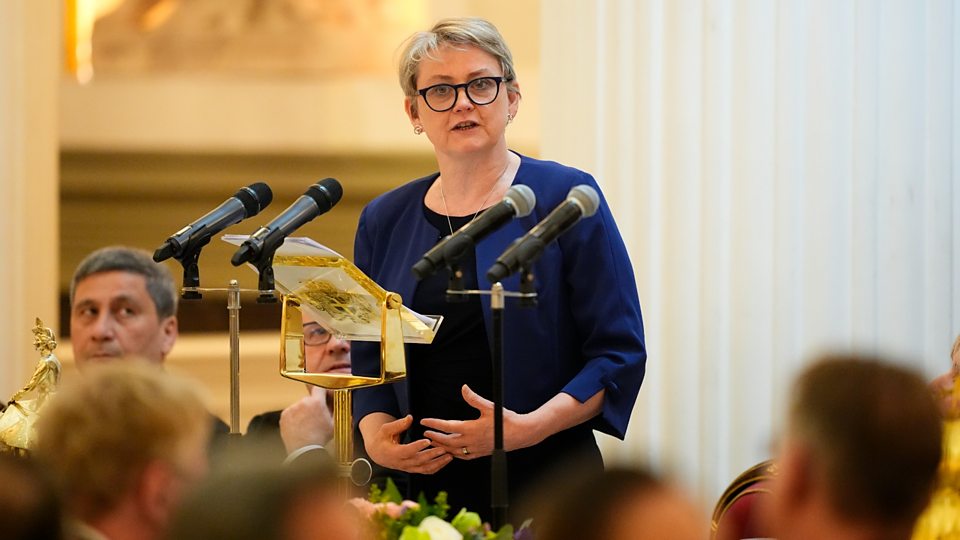
    Yvette CooperImage source, PA Media

    UK Foreign Secretary Yvette Cooper says the UK has been working for a "swift resolution" to the conflict and for a plan for what will come after.

    She says "most important of all for us" is the "reopening" of the Strait of Hormuz.

    She says no country can close such a route as it "goes against the fundamental principles of the law of the sea".

    "We need the full and unconditional of the strait as a central part not just of the current ceasefire but the long-term future for the region," she says.

    "The fundamental freedoms of the seas must not be unilaterally withdrawn or sold off for individual bidders. And nor can there be any place for tolls on an international waterway.

    "Freedom of navigation means navigation must be free."

    Cooper also says a durable peace settlement cannot be reached in the Middle East if "in Lebanon the crisis endures".

  3. Damage in Lebanon after Israel confirms fresh air strikespublished at 22:17 BST

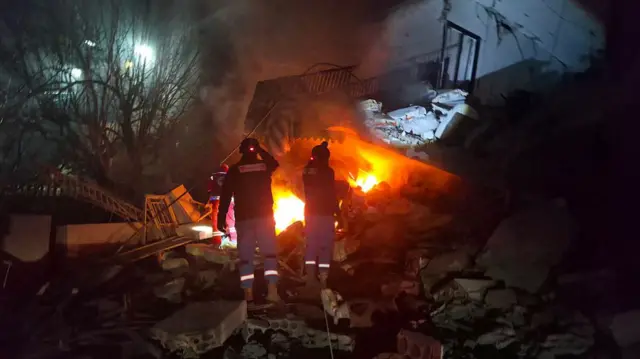
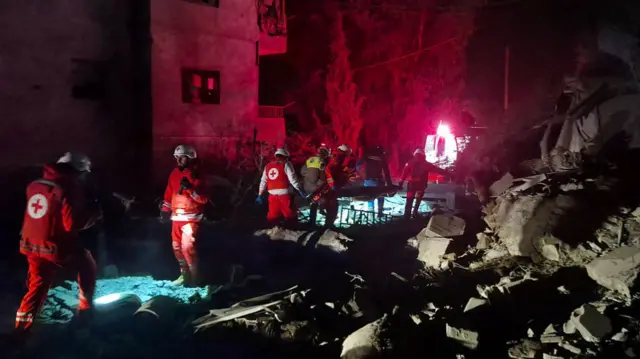
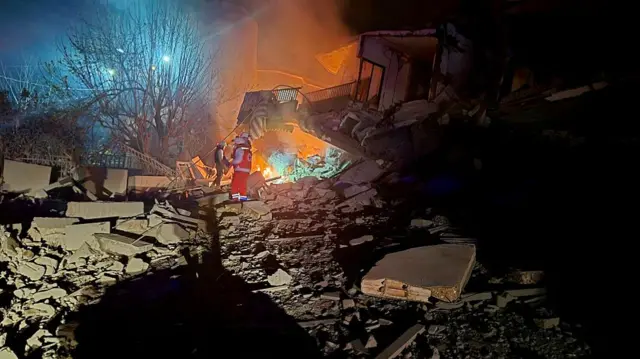
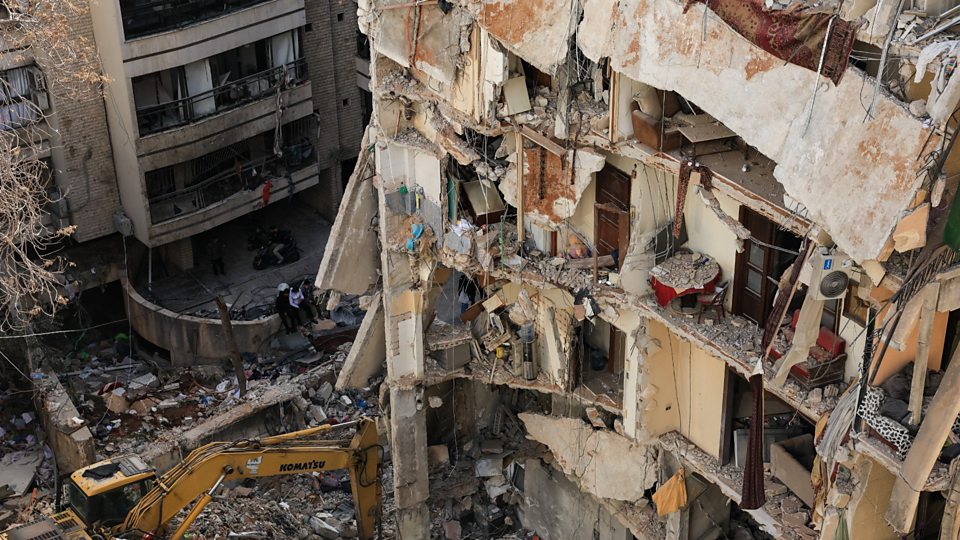
    Photos show a village in the southern Lebanese city of Choukine reduced to rubble after Israel confirmed a fresh wave of air strikes in the region.

    An hour ago, the Israeli Air Force posted on X that it would be targeting "terrorist" infrastructure in the region.

    "The Air Force has begun to attack launch sites of the terrorist organization Hezbollah in Lebanon a short while ago," they wrote.

    Lebanon's state media said on social media that fighter jets targeted several other cities as well, injuring multiple people and destroying civilian homes.

    Two men look on as fire burns under a destroyed building surrounded by rubbleImage source, Getty Images
    Emergency responders walk through rubbleImage source, Getty Images
    First responders near a building that has been destroyed and turned to rocks and rubbleImage source, Getty Images
  4. Hezbollah statement confirms rocket attack on northern Israelpublished at 22:14 BST

    A little earlier, Israeli emergency services said that it was responding to an attack launched at northern Israel. Media in the country were reporting that sirens had sounded in the Haifa area.

    A statement shared by the pro-Hezbollah television channel Al Manar, and attributed to the Iran-backed group, has taken credit for the attack.

    It says that Haifa was targeted "with a barrage of advanced missiles".

    The statement says that the group did this because it "adhered to the ceasefire" while "the enemy did not".

    A separate statement attributed to the group also says it fired rockets at Israeli soldiers in the city of Bint Jbeil in Lebanon. The IDF has not commented on this.

  5. UK foreign secretary speaks in Londonpublished at 21:59 BST

    UK Foreign Secretary Yvette Cooper is giving a speech at Mansion House in central London.

    She is expected to speak about the situation in the Middle East - we'll bring you the key updates here, and you can watch live above.

  6. Starmer and Trump discuss 'next stage' in plan to open Strait of Hormuz - No 10published at 21:40 BST

    UK Prime Minister Keir Starmer and US President Trump have said they're at the "next stage of finding a resolution" to open the Strait of Hormuz, says Downing Street.

    Starmer has just landed in Qatar, from where his phone call with the US president took place.

    A statement from No 10 says that Starmer set out the UK's "efforts to convene partners to agree a viable plan" to open the shipping lane.

    "They agreed that now there is a ceasefire in place and agreement to open the Strait, we are at the next stage of finding a resolution," it says.

    It adds that Starmer and Trump "discussed the need for a practical plan to get shipping moving again as quickly as possible".

  7. Rockets fired at northern Israel from Lebanonpublished at 21:35 BST

    Israel's emergency services says it is responding to an attack launched at northern Israel, with no known casualties at the moment.

    This follows reporting from the Times of Israel, citing the IDF, that a small number of rockets were launched by Hezbollah at northern Israel.

    Israeli media reported earlier that sirens had sounded in the Haifa area, in the north of the country.

  8. Lebanon evacuation order 'unfeasible' as covers two major hospitals - WHO chiefpublished at 21:17 BST

    An evacuation order Israel has issued for an area of Beirut in Lebanon is "unfeasible" because the area contains two major hospitals, the director general of the World Health Organisation (WHO) says.

    An evacuation order for Beirut's Jnah area "includes two major referral hospitals; the Rafik Hairiri University Hospital and Al Zahraa Hospital", says Tedros Adhanom Ghebreyesus.

    There are roughly 450 patients at the two hospitals, 40 of whom are in intensive care, he says.

    "At this time, no alternative medical facilities are available" to receive these patients, he says, this makes their evacuation "operationally unfeasible".

    "Both facilities are operating at full capacity including treating the injured from the strikes of 8 April," he adds.

  9. US State Department to host Israel-Lebanon talkspublished at 20:55 BST

    Tom Bateman
    US State Department correspondent

    A State Department official says they can confirm that the department will host a meeting next week to discuss ongoing ceasefire negotiations with Israel and Lebanon.

  10. Kuwait says national guard site attacked by dronespublished at 20:46 BST
    Breaking

    Kuwait says one of its national guard sites has been targeted by "hostile drones".

    The attack resulted in "significant material damage", but there have been no casualties, the government says on social media.

    Kuwait's army says in a separate post on social media that air defences have been working to deal with hostile drones, and that vital facilities have been targeted.

  11. Some Iranians say they're 'happy' about ceasefire, others think it's 'just another trap'published at 20:31 BST

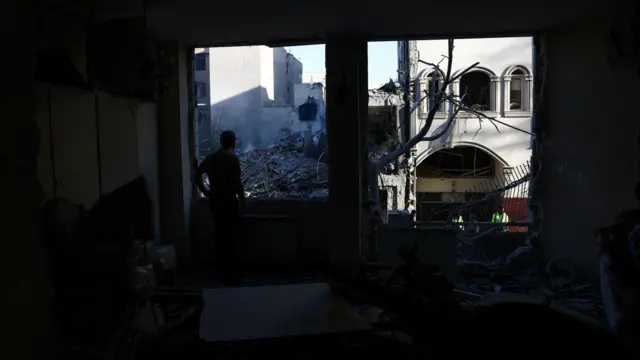
    A man stands in a dark room and stares out at a pile of rubbleImage source, Reuters
    Image caption,

    File photo of a man in Tehran whose home was damaged in a strike, dated 7 April - one day before the ceasefire

    How do people in Iran feel about the ceasefire? Some have been speaking to BBC Persian, which is used by 24 million people in the country, despite being blocked and routinely jammed by Iranian authorities.

    One person says they "feel happy" about it, because "the country won’t be destroyed more, and fewer people will be killed".

    But they say a better outcome would have been "the end of the Islamic Republic" regime, because it "feels like living next to an angry and wounded wolf that shows its fangs to the people now and then".

    The US and Israel "can't be trusted", says another person. "I don’t think this ceasefire could permanently last." They say they think the truce is "just another trap" to coax Iranian regime leadership out of hiding so that the US or Israeli military can target them.

    A psychiatrist from Tehran says, "I visit people in their homes everyday... People are tired and are suffering from the economic pressure and can’t afford to buy their medicines".

    They "hope the Islamic Republic stops supporting its proxies", and thinks "it should release political prisoners, carry out widespread reforms and national reconciliation to avoid a civil war".

  12. WHO says Lebanese hospitals may run out of critical medical supplies within dayspublished at 20:07 BST

    Hospitals in Lebanon may run out of life-saving medical equipment as they grapple with the injuries caused by recent Israeli strikes, says the World Health Organization (WHO).

    Abdinasir Abubakar, the WHO's representative in Lebanon, tells Reuters news agency that some of the country's hospital may run out of life-saving trauma kits - which include bandages, antibiotics, and anaesthetic - within "a few days".

    According to Lebanon's health ministry, 303 people were killed and more than 1,000 wounded on Wednesday across the country as a result of Israeli attacks.

    "If we have another mass casualty, like what happened yesterday, it will be a disaster," Abubaker tells Reuters.

    "Probably we will lose more lives just because we don't have enough supplies."

    The WHO says it will work with the Lebanese Ministry of Health to move supplies between hospitals to avoid total depletion of stocks, but cautioned that the health system is being stretched to its limit.

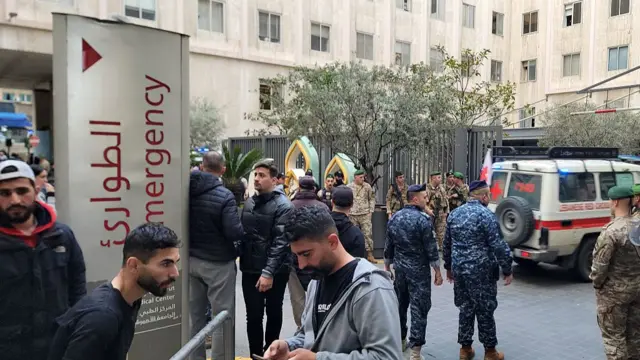
    Lebanese security officials stand guard as victims are rushed to a hospital in Beirut following a series of Israeli airstrikes that targeted several areas in the Lebanese capital and its outskirts on April 8, 2026Image source, Getty Images
    Image caption,

    Lebanese security officials stand guard as victims are rushed to a hospital in Beirut following a series of Israeli airstrikes that targeted several areas in the Lebanese capital and its outskirts on April 8, 2026

  13. IDF launches fresh strikes in Lebanonpublished at 19:54 BST
    Breaking

    The Israel Defense Forces (IDF) says it has launched a fresh wave of strikes on Lebanon, which it says is targeting Hezbollah-affiliated sites.

    "A short while ago, the IDF began striking Hezbollah launch sites in Lebanon," the statement reads.

  14. US has stopped fighting but remains 'ready' in region, says Central Commandpublished at 19:47 BST

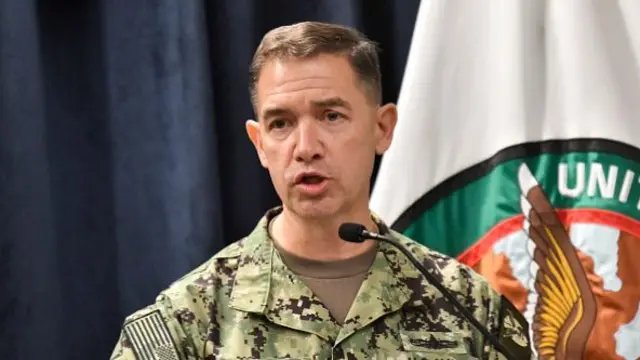
    Admiral Brad Cooper speaks in a podiumImage source, AFP via Getty Images
    Image caption,

    Admiral Brad Cooper delivered the latest update on the US military in the Middle East

    Although it's ceased fighting, the US remains "ready" in the Middle East, says its Central Command.

    Speaking in a video update, Admiral Brad Cooper says that the US has "paused offensive operations in accordance with the ongoing ceasefire".

    "Iran has suffered a generational military defeat", says Cooper.

    But he adds that the military remains "present, vigilant and ready if called" in the region, and continues to "stand shoulder to shoulder" with it's regional partners.

  15. There is no ceasefire in Lebanon, Netanyahu sayspublished at 19:30 BST

    Israel's prime minister has just released a message to those in the north of the country and emphasises "there is no ceasefire in Lebanon".

    "We continue to strike Hezbollah with force, and we will not stop until we restore your security," in a message published by the prime minister's office.

    Netanyahu reiterates Israel's objectives - to disarm Hezbollah and "to secure a historic and sustainable peace agreement between Israel and Lebanon".

    This message comes after US President Donald Trump told US media that Netanyahu had told him Israel would be "scaling back" attacks in Lebanon as peace talks play out.

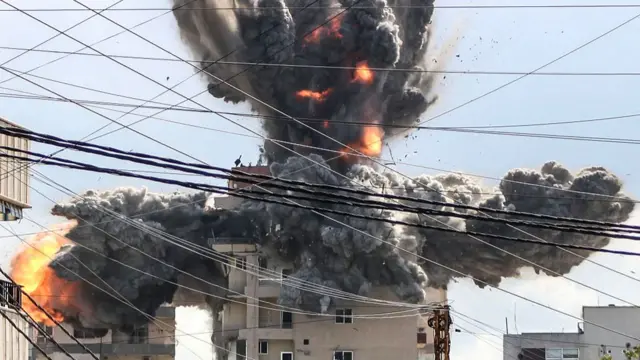
    A fireball rises from a building hit by an Israeli airstrike in the area of Abbasiyeh, on the outskirts of the southern Lebanese city of Tyre, on 8 April 2026Image source, Getty Images
    Image caption,

    A fireball rises from a building hit by an Israeli airstrike in the area of Abbasiyeh, on the outskirts of the southern Lebanese city of Tyre, on 8 April 2026

  16. Trump says Israel will be 'scaling back' strikes on Lebanon to support peace talkspublished at 19:24 BST

    Speaking in an interview with US outlet NBC News before Iran's supreme leader's statement, Trump says that Israeli Prime Minister Benjamin Netanyahu is going to be "scaling back" strikes on Lebanon ahead of upcoming negotiations between Iran and the US.

    "I spoke with Bibi and he's going to low-key it. I just think we have to be sort of a little more low-key," Trump tells NBC News following a phone call with Netanyahu.

    Along with confirming that Israel would be "scaling back" operations, Trump says he is "very optimistic" that a peace deal will be reached during negotiations in Islamabad.

    The US president says Iran is "agreeing to all the things that they have to agree to" and its officials are being "much more reasonable" when not speaking to the press.

  17. Iran will take management of Strait of Hormuz 'into new phase', says supreme leader statementpublished at 19:16 BST
    Breaking

    Some more now from the message attributed to Iran's Supreme Leader, Mojtaba Khamenei, which has been read out on state media.

    It's a lengthy statement, here's some of what it says:

    • The regime will "seek compensation for every single loss inflicted" and "damages for those injured in this war"
    • It says the regime will also "take the management of the Strait of Hormuz into a new phase" - but does not clarify what that will be
    • It calls on pro-Iranian protesters to take to the streets because "your voices raised in public squares have an impact on the outcome of the negotiations"
    • Iran "never sought war and we're not seeking war", it says, but will "not back off from seeking our legitimate rights in any way", adding this includes "the entire resistance front" - meaning Iran's allies and regional proxies
  18. Iranian state media shares statement attributed to supreme leaderpublished at 18:54 BST
    Breaking

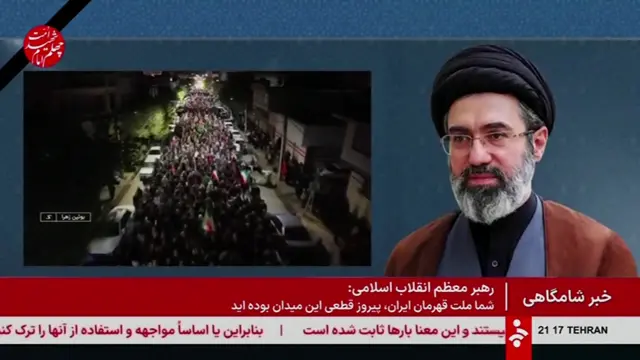
    A screenshot of IRIB television channel reading out message from KhamaneiImage source, IRIB
    Image caption,

    The Islamic Republic of Iran Broadcasting (IRIB) television channel read out the message

    A statement attributed to Mojtaba Khamenei, Iran's supreme leader, has been shared across the country's state media.

    As has been the case previously, it's a written statement. Khamenei has not been seen in public since becoming the country's supreme leader after the death of his father at the start of the war.

    In the message, he says Iran is the "victorious nation" of the war. We'll bring you more on this shortly.

  19. BBC Verify

    Strait of Hormuz status legally complicated, experts saypublished at 18:48 BST

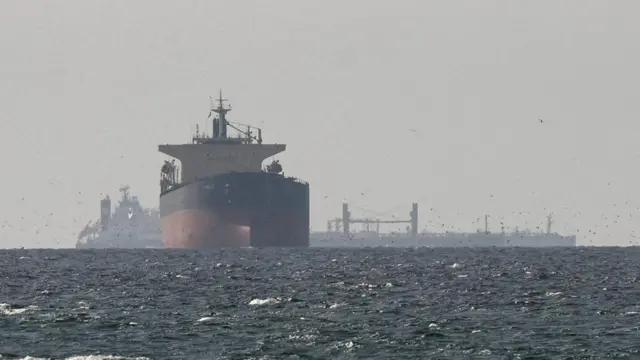
    A file pic of ships in the Gulf near the Strait of HormuzImage source, Reuters

    By Kayleen Devlin

    Experts have told BBC Verify that Iran’s insistence that the Strait of Hormuz falls within it and Oman’s territorial waters is true – but the legal status of the waterway is complicated.

    Tehran has threatened to attack any ships that pass the strait without its permission – despite saying it would reopen it as part of the ceasefire deal with the US. Iran has also said it will charge a toll for ships using the strait.

    • As we reported earlier, analysis of vessel-tracking data on MarineTraffic shows at least nine ships - including two oil and chemical tankers - have crossed the strait since the ceasefire was announced on Tuesday night

    Prof Andrew Serdy from the University of Southampton says at its narrowest point the strait is overlapped by the territorial waters of Iran on one side and Oman on the other. It is also covered by international rules that apply to major shipping routes, he adds.

    Dr Constantinos Yiallourides, an expert in the law of the sea, says Iran and Oman’s sovereignty is "limited by the right of peaceful transit passage" for foreign vessels under international law.

    Prof Richard Barnes from the University of Lincoln adds that "the precise legal regime in the strait is a grey area", with arguments on both sides. One view is that Iran cannot interfere with shipping, while another is that it may claim the right to restrict passage on security grounds.

    "It generally cannot act against neutral vessels, so would be restricted from targeting them or impeding their navigational rights," he says.

  20. Analysis

    Netanyahu's call for Lebanon talks a sign White House wants attacks scaled backpublished at 18:38 BST

    Paul Adams
    Diplomatic correspondent

    Benjamin Netanyahu’s call for direct talks with the Lebanese government is probably the first sign that the White House wants Israel to scale back its devastating aerial campaign.

    Even though Israel and the US insist that Lebanon was never part of the ceasefire deal, Washington knows that if a war is still raging there, it can probably kiss goodbye to any thought of meaningful progress at this weekend’s talks in the Pakistani capital, Islamabad.

    Reports from Israel suggest that the Israeli military has told the government that there’s no way to disarm Hezbollah without occupying the whole of Lebanon.

    Netanyahu says talks with the Lebanese government should start "as soon as possible" - how this squares with the latest Israeli military warning for civilians to evacuate large parts of Beirut’s southern suburbs is not clear.

    Most civilians have already left, but it will not be surprising if Israel mounts more attacks before allowing diplomacy to take over.