Summary

  1. Israeli strikes against Lebanon on Wednesday 'completely wrong' - UK foreign secretarypublished at 08:35 BST
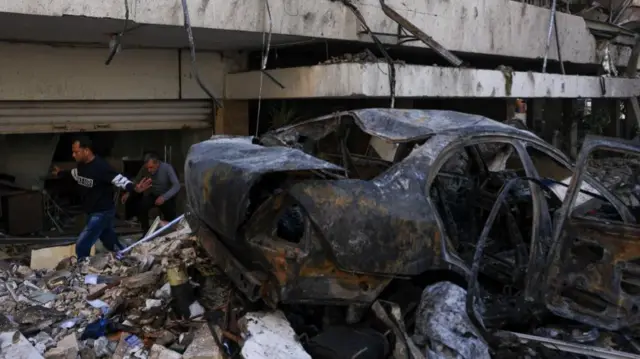
    A burnt car at the site of an Israeli strike in Al-Mazraa in Beirut. The Lebanese health ministry says Israeli attacks killed at least 182 people on WednesdayImage source, Reuters
    Image caption,

    A burnt car at the site of an Israeli strike in Al-Mazraa in Beirut. The Lebanese health ministry says Israeli attacks killed at least 182 people on Wednesday

    With Keir Starmer in the UAE, we've just heard more from UK Foreign Secretary Yvette Cooper, who was speaking to Radio 4's Today programme.

    She repeats her call for Lebanon to be "urgently included" in the US-Iran ceasefire agreement, describing Israel's strikes against Lebanon on Wednesday as "completely wrong".

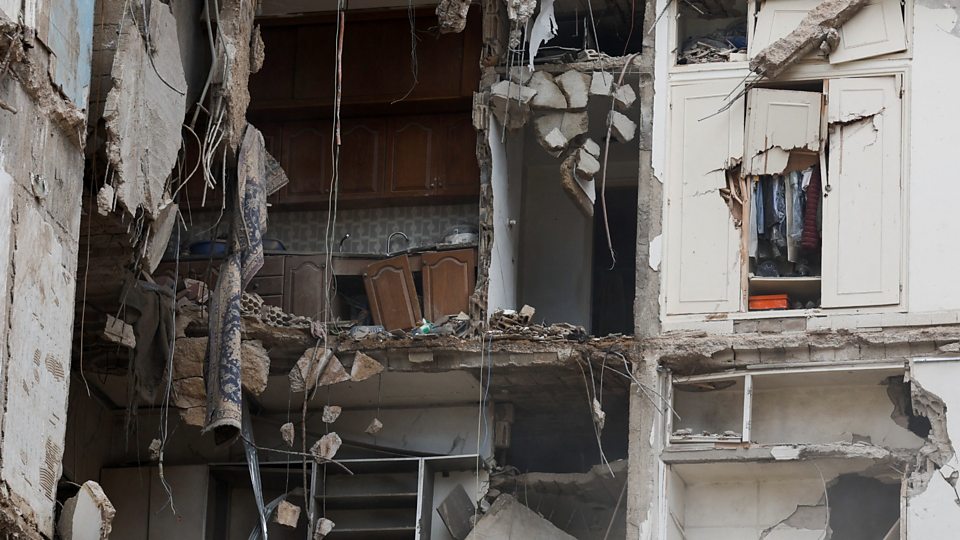
    "We’ve seen the mass displacement of civilians in Lebanon with significant humanitarian consequences.

    "This escalation in damaging, it's wrong… we want the ceasefire extended to cover Lebanon."

    Cooper is then asked about the Iranian deputy foreign minister's comments that the Strait of Hormuz is not in international waters and that safe passage depends on the "the goodwill of Iran and Oman".

    She disputes this, stating freedom of navigation applies to international transit routes under maritime law, adding that "countries cannot simply hijack those kinds of international transit routes and unilaterally apply tolls".
  2. Keir Starmer arrives in UAE for talks on Iran warpublished at 08:25 BST
    Breaking

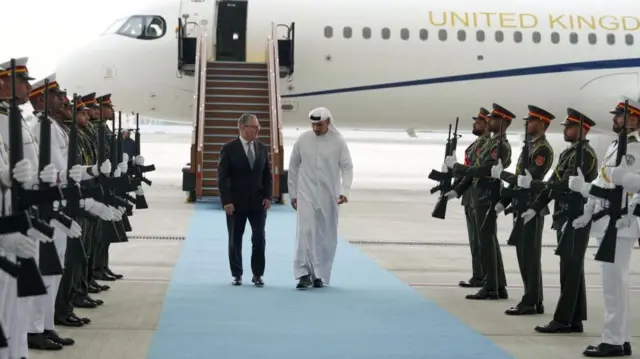
    Keir Starmer welcomed by Khaldoon Khalifa Al Mubarak, chairman of the Executive Affairs Authority, as he arrives at the airport in Abu Dhabi in the UAE earlier todayImage source, PA Media
    Image caption,

    Keir Starmer welcomed by Khaldoon Khalifa Al Mubarak, chairman of the Executive Affairs Authority, as he arrives at the airport in Abu Dhabi in the UAE earlier today

    UK Prime Minister Keir Starmer has arrived in the United Arab Emirates for further talks on the Iran war.

    His arrival comes with the US-Iran ceasefire under strain - with Iran saying that ongoing Israeli strikes against Lebanon are a "grave violation" of the deal.

    Starmer has already met Saudi Crown Prince Mohammed Bin Salman in Jeddah, and is expected to meet UAE President Sheikh Mohamed bin Zayed Al Nahyan.

  3. Recap: What Iran's deputy foreign minister told the BBCpublished at 08:12 BST

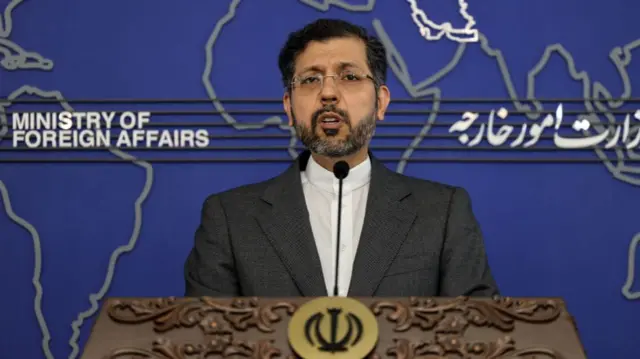
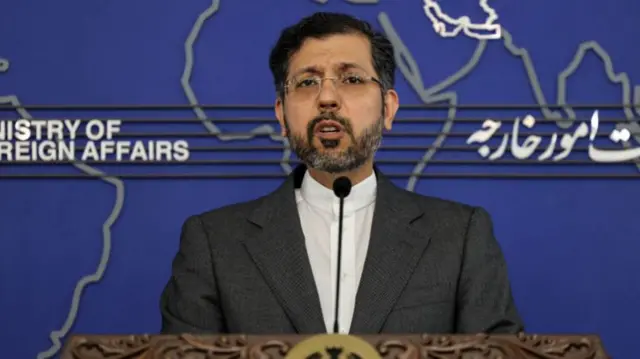
    Saeed Khatibzadeh speaks behind an ornate wooden lectern in front of a large map of the world.Image source, Getty Images

    BBC's Today programme earlier had an exclusive 15-minute interview with Iran's deputy foreign minister, Saeed Khatibzadeh. Here's a recap of what he said:

    • After Israeli attacks on Lebanon continued on Wednesday - despite a US-Iran ceasefire - the minister says Iran sent a message to the Oval Office last night, which he sums up as: "You cannot have a cake and eat it at the same time"
    • He adds: "You cannot ask for a ceasefire and then accept terms and conditions, accept all the areas that a ceasefire is applied to, and name Lebanon, exactly Lebanon in that, and then your ally [Israel] just starts a massacre"
    • He says the US "must choose" whether it wants war or peace. "They cannot have it both at the same time. They are mutually exclusive, it is quite clear"
    • When questioned on whether Iran will pull out of negotiations if the Israeli strikes continue, he says: "We are very much focusing on the wellbeing of the whole Middle East"
    • Nick Robinson asked if Iran will ask its militant proxy, Hezbollah, to stop firing rockets into Israel from Lebanon. Khatibzadeh says the deal includes Lebanon, and Iran and its allies were willing to "accept ceasefire"
    • The minister says Iran will "provide security for safe passage" through the Strait of Hormuz - but reopening will only happen "after the United States actually withdraw this aggression", seemingly referring to Israel's attacks on Lebanon
  4. Lebanon should be 'urgently included' in ceasefire, says UK foreign secretarypublished at 08:03 BST
    Breaking

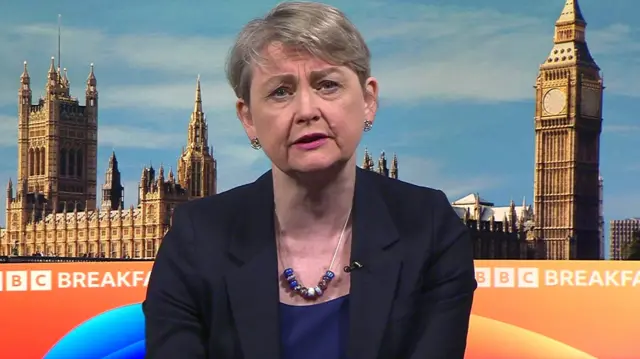
    Yvette Cooper on BBC Breakfast

    While the Iranian deputy foreign minister was speaking to the Today programme, the UK foreign secretary was talking to BBC Breakfast TV.

    She says Lebanon should be "urgently included" in the conditional two-week ceasefire agreement between the Untied States and Iran.

    Cooper says she is "extremely concerned" by the "escalation of Israeli strikes" seen in the country on Wednesday,.

    She says she believes this is the "right thing to do" for Israel's security as well as the "wider security of the region".

  5. Iran minister says Strait of Hormuz will reopen when the US stops 'aggression'published at 08:01 BST

    Khatibzadeh tells the Today programme that Iran will "provide security for safe passage" through the Strait of Hormuz - which he says was "open for millenia" until the US war with Iran began.

    However, he says the reopening will only happen "after the United States actually withdraw this aggression", seemingly referring to Israel's attacks on Lebanon.

    Khatibzadeh says Iran will abide by "international norms and international law" - however, he says the strait is not in international waters, and safe passage depends on "the goodwill of Iran and Oman".

    Nick Robinson asks if safe passage means Iran will not be "charging a fee for every ship that goes through, or threatening to blow it up".

    In response, the minister says Iran wants the strait be be "peaceful", but safe passage is two-sided and it will not accept the Gulf being "misused by warships".

    This Flourish post cannot be displayed in your browser. Please enable Javascript or try a different browser.

  6. Minister pressed on whether Iran will stop Hezbollah attacking Israelpublished at 07:55 BST

    Khatibzadeh says "we ask everyone in the Middle East to be abiding by this ceasefire that we reached with Americans".

    Nick Robinson asks if this means Iran will ask its militant proxy, Hezbollah, to stop firing rockets into Israel from Lebanon.

    Khatibzadeh says that "it's quite clear Hezbollah is pure Lebanese freedom movement".

    He is pressed on whether he is denying that Iranian officers are advising, training and arming Hezbollah.

    "I'm not denying that," he says, adding that he is "not shy to say" that Iran provides "support to this freedom and resistance movement", but it is "not true that they are acting on behalf of us".

    He adds that, on the US-Iran deal, it was included that Iran and its allies and the US and its allies were "going to accept ceasefire from that moment".

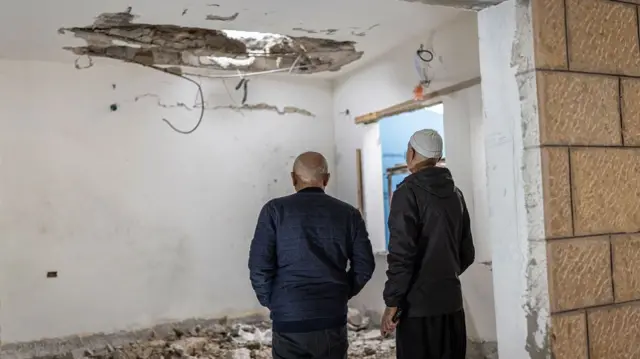
    This picture, taken on 2 April, shows people in the Israeli city of Shefa-Amr inspecting damage from a rocket fired from LebanonImage source, Getty Images
    Image caption,

    This picture, taken on 2 April, shows people in the Israeli city of Shefa-Amr inspecting damage from a rocket fired from Lebanon

  7. Back and forth messages between US and Iran last night - ministerpublished at 07:46 BST

    On this weekend's talks between the US and Iran in Pakistan, Khatibzadeh says that "back and forth messages" between both sides continued through Pakistan last night.

    He adds that Iran is "very much focused on getting this done" as it's "within our national interests".

    He says he understands that US Vice President JD Vance is going to lead the talks for the US, and the speaker of Iran's parliament Mohammad Bagher Ghalibaf is going to lead the talks for Iran.

  8. US 'must choose' between war and ceasefire, minister sayspublished at 07:35 BST

    In his inteview with the Today programme, Iran's deputy foreign minister says the US "must choose" whether it wants war or peace.

    "They cannot have it both at the same time. They are mutually exclusive, it is quite clear."

    As we already reported, Saeed Khatibzadeh says Israel's ongoing strikes in Lebanon are a "grave violation" of the US-Iran ceasefire.

    Iran, he says, asks "everybody in the Middle East to abide by this agreement...and we expect the Americans to do the same with its allies."

    When questioned by Nick Robinson on whether Iran will pull out of negotiations if the Israeli strikes continue, he says: "We are very much focusing on the wellbeing of the whole Middle East."

  9. Listen to Iran's deputy foreign minister livepublished at 07:32 BST
    Breaking

    We have already brought you some key lines from our interview with Iran's deputy foreign minister, Saeed Khatibzadeh.

    He says the Israeli attacks on Lebanon on Wednesday were a "grave violation" of the US-Iran ceasefire.

    You can listen to the full interview now - either click here, or press "listen live" at the top of the page.

  10. After a day of horror in Beirut, it's hard to know what Israel's long-term strategy ispublished at 07:23 BST

    Hugo Bachega
    Middle East correspondent, reporting from Beirut

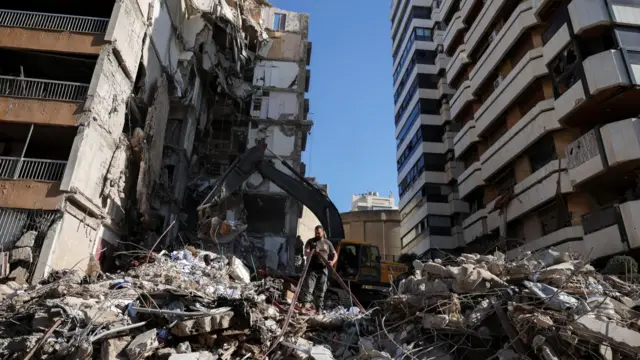
    The aftermath of an Israeli strike on Beirut, seen on ThursdayImage source, Reuters
    Image caption,

    The aftermath of an Israeli strike on Beirut, seen on Thursday

    The morning after Israel’s bombs brought horror and destruction to this city, Beirut is quiet.

    President Joseph Aoun described it as a “massacre”, and the government announced that today would be a public holiday, to mourn those who were killed.

    For 10 minutes, at around 14:00 here, the whole country came under attack.

    The Israeli military said more than 100 air strikes were carried out on what it described as Hezbollah targets. Busy, densely populated residential areas were hit, and Israel knew that this would inevitably lead to a high number of casualties.

    According to the Lebanese health ministry, at least 182 people were killed, a number that is likely to be higher, and 890 wounded.

    It is difficult to see what the long-term Israeli strategy is.

    Even Israeli military officials acknowledge what has been known in Lebanon for a long time: that Hezbollah will not be disarmed by force.

    The attacks may give Israel some military gain, but this is likely to be limited.

    Meanwhile, opponents and supporters of the group are coming together in their anger and criticism of Israel, united in their view that what happened here was unacceptable and unjustifiable.

  11. You cannot have a cake and eat it at the same time, Iranian minister tells USpublished at 07:18 BST
    Breaking

    Saeed Khatibzadeh speaks behind a wooden lectern in front of a large map of the world.Image source, Getty Images

    We can bring you some more lines now from the Today programme's interview with Iran's deputy foreign minister.

    Saeed Khatibzadeh says Iran sent a message to the Oval Office last night: "You cannot have a cake and eat it at the same time."

    He adds: "You cannot ask for a ceasefire and then accept terms and conditions, accept all the areas that a ceasefire is applied to, and name Lebanon, exactly Lebanon in that, and then your ally just starts a massacre."

    Khatibzadeh says the strikes by Israel amount to a "sort of genocide". Israel insists it is hitting the militant group Hezbollah, which is itself firing rockets into Israel.

    You can hear the full interview on BBC Radio 4 from 07:30 BST - listen live at the top of the page.

  12. Israeli attacks on Lebanon were 'grave violation' of ceasefire, Iranian minister tells BBCpublished at 07:07 BST
    Breaking

    The Israeli attacks on Lebanon on Wednesday were a "grave violation" of the US-Iran ceasefire, Iran's Deputy Foreign Minister Saeed Khatibzadeh tells the BBC's Today programme in an exclusive interview.

    We'll have more lines from that interview very soon - and you can hear the full thing on BBC Radio 4 from 07:30 BST.

  13. Iranian negotiators head to Pakistan - despite scepticism over 'repeated ceasefire violations'published at 06:53 BST
    Breaking

    An Iranian delegation is heading to Pakistan today to begin negotiations with the US on ending the war, Iran's ambassador to Pakistan has confirmed.

    They are set to meet US Vice-President JD Vance in Islamabad on Saturday.

    Reza Amiri Moghadam, the Iranian ambassador to Pakistan, posts on X that the talks will be "based on 10 points proposed by Iran". As we've reported, there is some confusion about exactly what those points are.

    Moghadam says the talks will take place "despite skepticism of Iranian public opinion due to repeated ceasefire violations by Israeli regime to sabotage the diplomatic initiative".

  14. UK to urge Strait of Hormuz reopening - and for Lebanon to be included in ceasefirepublished at 06:18 BST

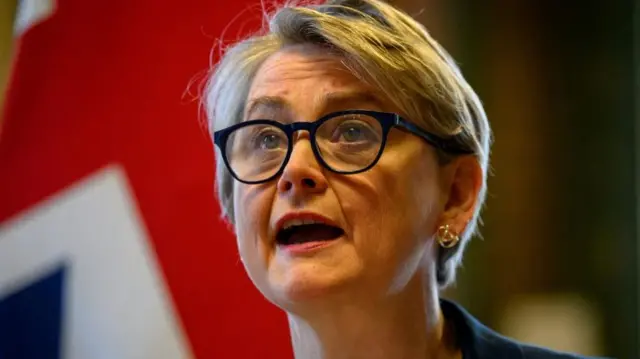
    Yvette CooperImage source, Reuters

    UK Foreign Secretary Yvette Cooper will call for the Strait of Hormuz to be fully reopened later today.

    In her annual speech on UK foreign policy priorities, Yvette Cooper will also call for Lebanon to be included in the US and Israel's ceasefire agreement with Iran.

    Pakistan - which mediated the US-Iran ceasefire - initially said Lebanon was included in the deal. But Israel said it was not and carried on with air strikes, killing 182 people yesterday, according to Lebanon's health ministry.

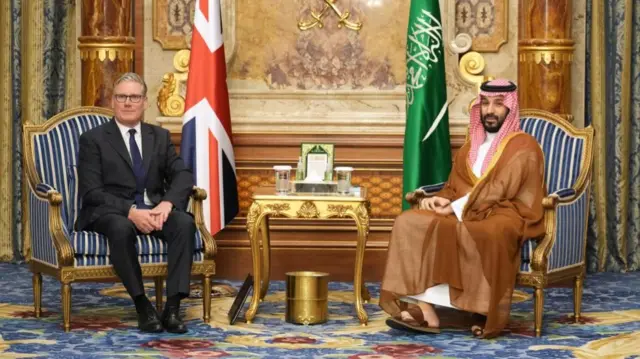
    Prime Minister Sir Keir Starmer is visiting allies in the Gulf, last night meeting Saudi Crown Prince Mohammed bin Salman, who agreed on the need for a lasting peace.

    Prime Minister Sir Keir Starmer met Saudi Arabia's Crown Prince Mohammed bin Salman in Jeddah, Saudi Arabia, on WednesdayImage source, PA Media
    Image caption,

    Prime Minister Sir Keir Starmer met Saudi Arabia's Crown Prince Mohammed bin Salman in Jeddah, Saudi Arabia, on Wednesday

  15. Oil prices rise on Thursday as ceasefire remains uncertainpublished at 05:55 BST

    A picture of petrol pumps at a gas stationImage source, Getty Images

    Oil prices nudged higher on Thursday morning trading in Asia after plunging when the US agreed to stop striking Iran for two weeks.

    Global benchmark Brent crude was up 2.2% at $96.70 (£72.18) a barrel, while US-traded West Texas Intermediate was 2.8% higher at $96.90.

    Cracks in the conditional ceasefire have started to show after Israel continued to launch strikes at Lebanon.

    Brent initially sank 15% to just under $92 a barrel on Wednesday after US President Donald Trump's announcement, though prices edged upwards slightly later in the day.

    Oil prices are still far higher than they were before the war started on 28 February.

    Read more here.

  16. What does Trump mean by Iran meeting 'REAL AGREEMENT'?published at 05:34 BST

    Accounts of the two-week ceasefire struck between the US and Iran have been conflicting.

    The disagreements centre around alternate versions of a 10-point plan that have emerged.

    Trump says "there is only one group of meaningful "POINTS" that are acceptable to the United States".

    He has made clear what he wants under what he calls the real agreement: "NO NUCLEAR WEAPONS and, the Strait of Hormuz WILL BE OPEN & SAFE."

    There have been several versions from the Iranian side.

    Iranian state-run media revealed one that included ending fighting in Iran, Iraq, Yemen and Lebanon, reopening the Strait of Hormuz, and full commitment to the US lifting sanctions.

    Later, Iran's Supreme National Security Council's 10-point plan appeared and added uranium enrichment and for Tehran to keep control of the Strait of Hormuz.

    Demands about enrichment were later dropped from the English translation of the security council's statement.

    There was no mention of the ceasefire including Lebanon in Trump's post, which has also been a key point of contention over the terms of the ceasefire agreement.

  17. Trump says US forces to stay 'in place' until 'REAL AGREEMENT' complied withpublished at 04:57 BST
    Breaking

    US President Donald Trump has just written on Truth Social, warning Iran that the "'Shootin’ Starts,' bigger, and better, and stronger than anyone has ever seen before" if the "REAL AGREEMENT" is not fully complied with. This is his post in full:

    All U.S. Ships, Aircraft, and Military Personnel, with additional Ammunition, Weaponry, and anything else that is appropriate and necessary for the lethal prosecution and destruction of an already substantially degraded Enemy, will remain in place in, and around, Iran, until such time as the REAL AGREEMENT reached is fully complied with. If for any reason it is not, which is highly unlikely, then the “Shootin’ Starts,” bigger, and better, and stronger than anyone has ever seen before. It was agreed, a long time ago, and despite all of the fake rhetoric to the contrary - NO NUCLEAR WEAPONS and, the Strait of Hormuz WILL BE OPEN & SAFE. In the meantime our great Military is Loading Up and Resting, looking forward, actually, to its next Conquest. AMERICA IS BACK!

  18. Military activity in Lebanon poses 'grave risk' to truce, UN chief sayspublished at 04:38 BST

    UN Secretary General António Guterres "unequivocally condemns the massive strikes by Israel across Lebanon on 8 April" and urges "all parties to immediately cease hostilities", a statement from his spokesperson reads.

    These strikes "resulted in hundreds of civilians being killed and injured, including children, as well as damage to civilian infrastructure", it reads.

    Guterres continues that he is "deeply alarmed by the mounting toll on civilians" and has extended his condolences to the Lebanese government.

    He warns that the military activity in Lebanon "poses a grave risk to the ceasefire and the efforts toward a lasting and comprehensive peace in the region", adding "there is no military solution to the conflict".

  19. Strait of Hormuz is key to ceasefire dealpublished at 04:21 BST

    The Strait of Hormuz, a narrow shipping route in the Gulf region, is one of the world's most important shipping routes and has been a sticking point of the conflict.

    US President Donald Trump had repeatedly threatened to strike Iranian civilian infrastructure unless it ended its blockade of the global shipping channel, with a deal struck on Tuesday night to reopen the passage through the strait as part of a two-week ceasefire between the US and Iran.

    However Iran warned on Wednesday that ships passing through the strait without the permission of the Revolutionary Guard Corps "would be targeted and destroyed".

    White House Press Secretary Karoline Leavitt says Trump expects for the strait to be opened "immediately", adding it has been relayed to him privately that is what is taking place and reports suggesting otherwise are false.

    This Flourish post cannot be displayed in your browser. Please enable Javascript or try a different browser.

  20. Iran tells ships how to avoid mines in Strait of Hormuz - state mediapublished at 03:48 BST

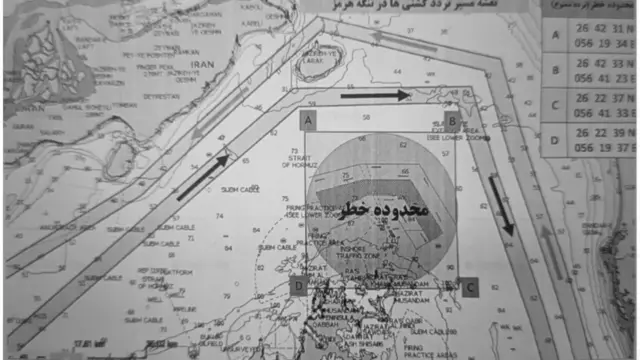
    A map with arrows marking the routes through Strait of HormuzImage source, Islamic Revolutionary Guard Corps

    Ships planning to pass through the Strait of Hormuz should take alternative routes, to "comply with the principles of maritime safety and to be protected from possible collisions with sea mines", Iran's Revolutionary Guards said in a statement cited in Iranian state media.

    The statement goes on to lay out the alternative routes, along with a map showing them. Ships entering from the Sea of Oman are to sail to the north of Larak Island, then continue towards the Persian Gulf.

    Ships bound in the other direction should exit from the Persian Gulf, pass south of Larak Island and continue towards the Sea of ​​Oman.