Summary

  • The government sets out major changes to the system for children with special eductional needs and disabilities (SEND) in England - here's an overview

  • Our experts are answering your questions - watch live above

  • By 2035 education, health and care plans (EHCPs) - legal documents which set out the help children are entitled to - will be reserved for only the most complex cases

  • From 2029, children will be reassessed for ECHPs as they move up to to their next stage of education. The number of people with these plans has more than doubled in a decade in England - how are EHCPs changing?

  • "I'm confident parents will see change, but we want to do it carefully," Education Secretary Bridget Phillipson tells the BBC

  • One parent tells us the current system is an "uphill struggle". Tell us your experiences here

  1. 'How many children have an EHCP, and is the number rising?'published at 14:50 GMT

    A RED banner which says YOUR VOICE in white

    Andrew in Guildford next asks what proportion of children in the UK have an EHCP - education, health and care plan - and how has this number changed.

    SEND and inclusion specialist Margaret Mulholland says the number of children with an EHCP has increased rapidly since 2015.

    The increase is due to multiple reasons, Mulholland says, including "getting better at identifying need".

    Though, the number of children identified with SEND "has stayed pretty much the same", she adds.

    She adds: "If we do get money through these reforms... and get in early to support need, then we may not see as many young people needing an EHCP."


    This Flourish post cannot be displayed in your browser. Please enable Javascript or try a different browser.

  2. 'Where is the money for these SEND changes coming from?'published at 14:45 GMT

    A banner that says Your Voice in white text on a red background.

    The first question up is from Andy in Stoke-on-Trent, he asks where the money to fund these changes is coming from.

    Political correspondent Alex Forsyth explains that the government is putting £4bn as upfront investment (that money is spread over three years - Ben Chu from BBC Verify looked at the figures earlier).

    Some of those funds will go directly to schools, other bits will go to local authorities so that they can hire specialist staff.

    Forsyth says she has asked the government where the money is coming from, to which they said it's money that was allocated in the spending review.

    This is new money for the SEND system, the government told the BBC.

    Forsyth explains that this is the government trying to say they are putting the resources in to ensure children have access to support.

  3. Your questions answered on SEND changespublished at 14:30 GMT

    A red banner which says 'YOUR VOICE' in white

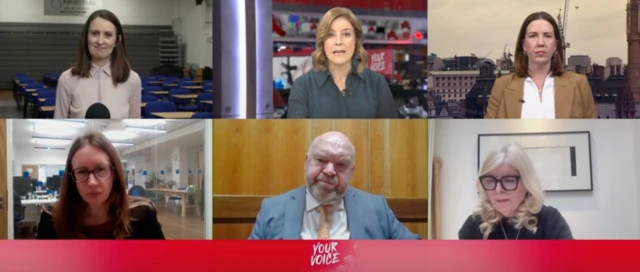
    A panel of experts will shortly be answering your questions on today's announcement on changes to the SEND system. You will be able to watch live above from 14:30 GMT.

    On the panel we'll have:

    • Senior education reporter Vanessa Clarke
    • Political correspondent Alex Forsyth
    • SEND spokesperson for the County Council Network Bill Revans
    • Chair of the Disabled Children's Partnership Anna Bird
    • SEND and inclusion specialist Margaret Mulholland
    A screenshot from BBC News Channel with five women and one man in split image.
  4. Unclear where extra SEND money will come frompublished at 14:21 GMT

    Ben Chu
    BBC Verify policy and analysis correspondent

    The government has said it plans to invest an extra £4bn in children with special educational needs and disabilities (SEND) in England over the next three years, including funding for schools and more specialist teachers.

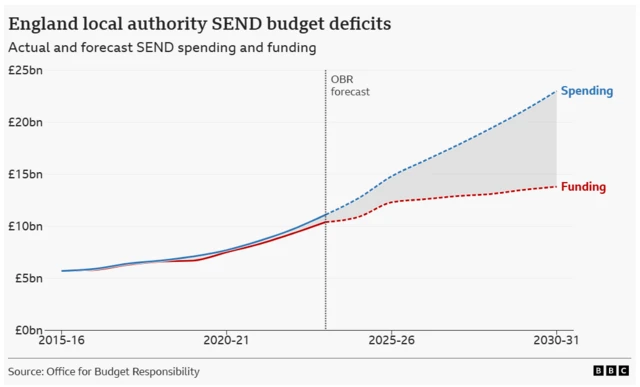
    In the Budget last November, the Office for Budget Responsibility (OBR) forecast the gap between government funding given to councils in England to spend on SEND and their actual spending on SEND would reach £6bn by 2028-2029, external.

    This calculation was based on the expectation there would be a rise in the number of new education, health and care (EHC) plans needed in England. These plans provide extra support for these children and young people up to the age of 25.

    Education Secretary Bridget Phillipson has suggested the extra investment and reforms to the assessment system could help bring down future spending pressure on the SEND system, but it’s not clear whether it will be enough to eradicate the expected £6bn deficit the OBR has projected for 2028-2029.

    It’s also unclear where the additional £4bn of spending over the next three years will come from.

    The education department's SEND reform consultation document released today, external states its budgets will rise as a result of today’s new investments relative to what was previously planned. But the department’s annual budgets were fixed in cash terms up to 2028-29 in the June 2025 Spending Review.

    The Treasury told BBC Verify it does not expect the additional spending to require a re-opening of the Spending Review to top up the education department’s overall budget. It said the department will be able to cover the additional costs from within its existing resources, which the Treasury claims included money for SEND reforms.

    Graph showing actual SEND spending and funding, compared to the OBR forecast
  5. Lib Dems say government must be 'more ambitious'published at 14:12 GMT

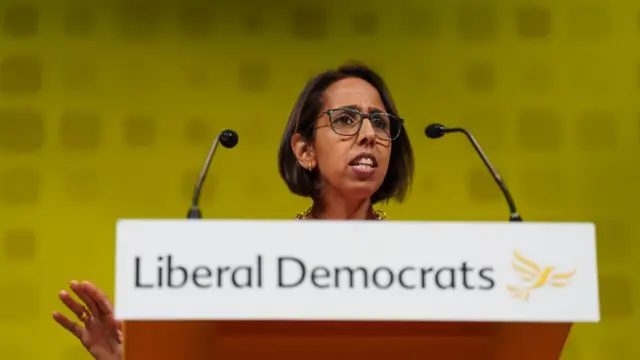
    Munira Wilson speaking in front of a Liberal Democrats podiumImage source, PA Media

    Let's bring you some more political reaction to the government's SEND reforms.

    Liberal Democrats education spokeswoman, Munira Wilson, says the government is taking "solid steps" to address the system, but that "the devil will be in the detail".

    "I am pleased ministers have finally listened to Liberal Democrat calls for tighter rules on private SEND providers. They must go further with an 8% cap on profits and for SEND schools to be given Critical National Infrastructure status - to block any dodgy backroom deals," Wilson says in a statement.

    Currently the status of critical national infrastructure is reserved for essential services like energy, transport and water.

    “But we also need to ensure we identify children who need help much sooner. Too many are falling through the cracks. The government needs to be more ambitious and look at universal screening," she adds.

  6. Badenoch questions where money is coming from for SEND changespublished at 14:07 GMT

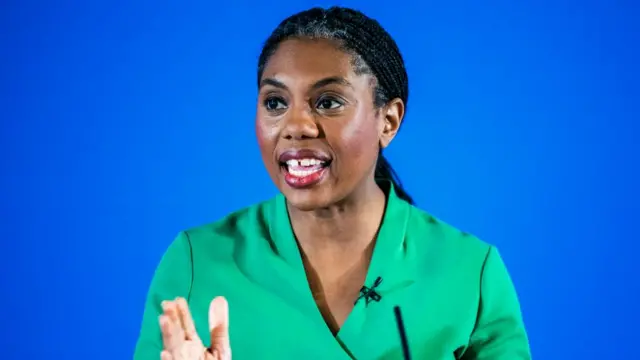
    Conservative leader Kemi Badenoch wearing a green dress and standing in front of a blue backgroundImage source, PA

    Conservative leader Kemi Badenoch says her biggest concern regarding the government's changes to the SEND system in England is financial.

    Speaking during a meeting with apprentices in London, Badenoch questions where the money is coming from.

    She says the government took out £6bn to pay for SEND provision during the Budget, and "what these proposals are covering is just about £4bn".

    "We know that there is an issue with special educational needs but right now I think many parents are worried about these changes", she adds.

    For context: The government has announced it will pay SEND costs currently covered by councils from 2028, a move that is forecast to create a £6bn pressure.

  7. Education, health and care plans - what's changing?published at 13:45 GMT

    By 2035, education, health and care plans (EHCPs) will be reserved for children with the most complex cases.

    EHCPs are legal documents that identify a pupil's needs and set out what support they should receive.

    Local authorities are responsible for ensuring EHCPs are followed.

    Until 2015, the proportion of pupils with EHCPs in schools was relatively stable at 2.8%. Since then it has nearly doubled to 5.3%.

    The government is worried that without changes, demand will only grow and it won't be possible to meet it.

    This Flourish post cannot be displayed in your browser. Please enable Javascript or try a different browser.

  8. Our panel of experts set to answer your questions on SEND changespublished at 13:31 GMT

    A banner that reads Your Voice in white text with a red background.

    At 14:30 GMT our experts will be answering your questions following the announcement of major changes to the system for children with special educational needs and disabilities (SEND) in England.

    On our panel of experts will be:

    • Vanessa Clarke, our senior education reporter, who's at Ninestiles, An Academy - a secondary school in Birmingham
    • BBC political correspondent, Alex Forsyth who joins us from Westminster
    • Bill Revans – SEND spokesperson for the County Council Network, he's also a Liberal Democrats councillor for Somerset and Taunton
    • Anna Bird is chair of of Disabled Children’s Partnership – a coalition of over 130 organisations who campaign for better education, health and social care for SEND children
    • Margaret Mulholland, SEND and Inclusion Specialist for the Association of School and College Leaders

    You can send us your questions via email or WhatsApp, external.

  9. 'Clear pathways will be crucial': How some charities are reactingpublished at 13:19 GMT

    We've been hearing reaction from some charities and organisations following the government's announcement of major changes to the SEND system in England:

    The Institute For Public Policy Research says the SEND system is "broken", with thousands of young people "waiting more than a year" for an initial assessment. Investing more in early support "will ensure more children get help sooner", says the organisation's executive director Harry Quilter-Pinner.

    The Autism Service, a provider of ADHD and autism assessments,says "providing earlier, school-based support through Individual Support Plans may help some children access help more quickly". Its founder, Dr Lisa Williams, says "moving through tiers can be frustrating for families", which means "clear pathways and timely reviews will be crucial".

    Amanda Allard, Director of the Council for Disabled Children, says the charity welcomes the scale of the Schools White Paper and its "vision for an inclusive education system". The proposals "set out the basis of a system that fully values children and young people with additional needs and their families, and commits the resources to make it happen", Allard adds.

  10. 'I'm confident parents will see change, but we want to do it carefully,' Phillipson tells BBCpublished at 13:09 GMT

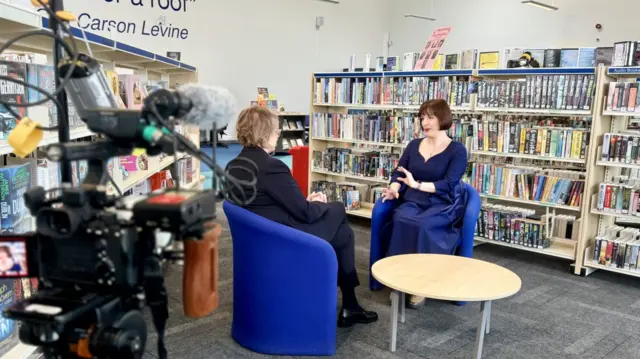
    Education Secretary Bridget Phillipson sitting opposite BBC's Branwen Jeffreys on blue chairs in a school library.

    The BBC's Education Editor Branwen Jeffreys has spoken with Education Secretary Bridget Phillipson following her speech at a school in Peterborough.

    She puts it to the education secretary that Labour may not still be in power when the main changes to SEND come into effect in 2029. "So how do you know they will be seen through?" she asks.

    In response, Phillipson says "the money starts going in from this year," pointing also to the extra expert support she says will be commissioned for schools to draw down on from later this year.

    "I'm confident parents will see that change, but we want to do it carefully," she adds.

    Quote Message

    Children have been let down by the system and we want to deliver that reform."

    Education Secretary Bridget Phillipson

  11. Government sets out major changes to SEND - what you need to knowpublished at 12:56 GMT

    The government has outlined planned changes to the SEND system in England. If you're just joining us, here's an overview:

    What is SEND?

    SEND stands for special educational needs and disabilities. It applies to children and young people who need extra support to meet their physical, communication, social, emotional or mental health needs.

    In England, if they need more support than is typically provided in mainstream schools, their parent or carer can apply for an education, health and care plan (EHCP) which sets out the extra support they are entitled to.

    Rising costs, extra funding

    Overall spending on SEND has risen by two-thirds in the past decade, according to the Institute for Fiscal Studies (IFS). Despite this, in 2024 the National Audit Office described the system as "broken".

    Today,the government has announced around £4 billion of extra funding, and set out plans for a wider overhaul of the system in its Schools White Paper.

    What's been announced?

    • By 2035, EHCPs will be reserved for only the most complex special educational needs
    • Children who currently have an EHCP will keep them until they reach the next stage of their education
    • Children will be reassessed for EHCPs as they move up to their next stage from 2029
    • Under the changes, the government projects that the proportion of children with SEND on the current highest level of support in school will start falling each year from the end of the decade
  12. 'You have to fight every step of the way,' says EastEnders actor Kellie Brightpublished at 12:39 GMT

    Emma Jacobs
    BBC Panorama

    Actress Kellie Bright in a bright red shirt standing behind a floral patterned chair against a pink background.Image source, Kellie Bright

    EastEnders actor Kellie Bright's son is autistic, has ADHD and is dyslexic.

    Kellie, for BBC Panorama, speaks to parents who say they’re exhausted by the fight to get the right education for their children.

    "To try and get the support that you need, you have to fight every step of the way," she says.

    She follows three families who are applying to their councils for an Education, Health and Care Plan (EHCP), a crucial document which can say where a child goes to school and what extra support they should get.

  13. Too little detail to know if government's plans will work, parent sayspublished at 12:21 GMT

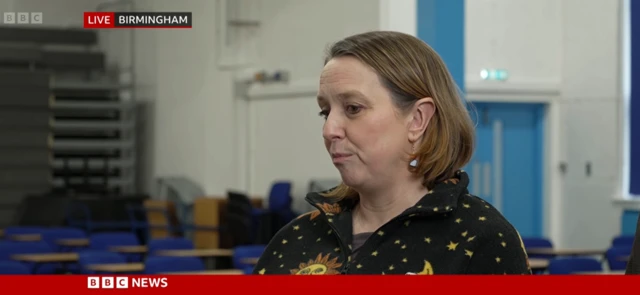
    Laura Jerram wears a black blouse with yellow stars as she speaks to a BBC News journalist at a school

    "It's devastating to watch your child struggling", says Laura Jerram, a mother of two children with SEND, one who attends a mainstream school and another who receives specialist provision.

    While the government's plans for inclusion bases in schools "is not a bad thing", Laura says people with different kinds of needs require different kinds of support from a range of different professionals.

    She says too little detail has been provided regarding the government's plans to know whether it will work in practice.

    In response to a question regarding the number of tribunals,, external where parents disagreed with a refusal to offer support for their children, Laura says: "If you have a fully funded school with excellent inclusion facilities, then more children will receive support earlier, that's fair to say."

    "But the worry is it places parents and children in opposition with each other, which is not a healthy dynamic."

    For context: The process for parents and children to get an EHCP can be lengthy, with fewer than half issued within the 20 week legal deadline in 2024. There was a record number of tribunals, external in 2024/25, where parents disagreed with a refusal to offer support, or were challenging the level of support offered.

  14. The cost of current SEND system has increased sharplypublished at 12:01 GMT

    As we've been reporting, part of the reason changes are being made to the SEND system is the increasing cost.

    Overall spending on SEND has risen by two-thirds in the past decade, according to the Institute for Fiscal Studies (IFS).

    In 2024 the National Audit Office described the system as "broken", warning it was "financially unsustainable" for councils and saying that although costs were rising it was still not delivering better outcomes for children.

    Here's a look at the figures:

    This Flourish post cannot be displayed in your browser. Please enable Javascript or try a different browser.

    Just over 1.7 million (about one in five) pupils in England's schools receive support for special educational needs.

    As of January last year, 639,000 young people up to the age of 25 had education, health and care plans (EHCPs) in England - the number has more than doubled in a decade.

  15. Phillipson says changes will be phased in 'carefully'published at 11:45 GMT

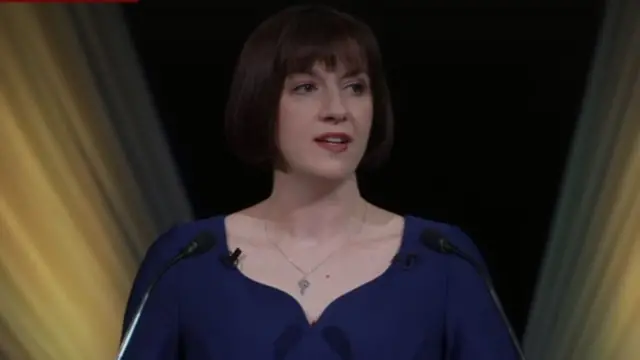
    Phillipson said the changes would be phased in over a decade.

    "We'll do this carefully," she said, adding her aim was to "build up the system now ahead of a bigger change".

    "This time of opportunity doesn't come across very often, and I'm determined that we seize it," she adds.

    Education Secretary Bridget Phillipson wearing a blue top while speaking against a black and gold background.
  16. Government also setting out plans today on recruiting 6,500 new teacherspublished at 11:41 GMT

    Phillipson has finished speaking, before doing so she took questions from journalists.

    She was asked how the government is going to ensure children with SEND flourish at a time when more teachers were leaving the profession due to workloads.

    Phillipson says retaining and recruiting brilliant teachers and support staff is "absolutely critical to delivering better education for all children".

    She says that the government is setting out its plans today to reach its target of recruiting 6,500 new teachers, which it committed to in its manifesto.

    She adds that retention numbers in teachers is the "best they've been since around 2010", so the government is making progress but there is more to do.

  17. 'EHCPs for children with most complex needs will stay' - Phillipsonpublished at 11:22 GMT

    Reiterating what we reported earlier, Phillipson says education, health and care plans (EHCPs) for children with the most complex needs will stay.

    She says these plans will be "guided by nationally defined, and evidence-based specialist provision packages".

    She says that what is crucial is "that support starts early", adding that the government's "best start hubs" for younger children will now also cover SEND.

    Phillipson says the government is investing £200m in these hubs so that more of them have dedicated SEND professionals.

  18. Support should stretch 'from birth to workplace', education secretary sayspublished at 11:13 GMT

    Phillipson says she wants to deliver great local schooling with high standards and inclusion, driven by ambition for every student.

    "I want your child to achieve, I want your child to thrive," she says. Where deprivation is deepest, she adds, that's where she'll "be boldest".

    The government will work to drive funding to where it's needed most, adding that "we have a moral responsibility to work together on this".

    She says the government will ensure there's support that "stretches from birth to the workplace".

  19. Children with SEND 'sidelined', Phillipson sayspublished at 11:04 GMT

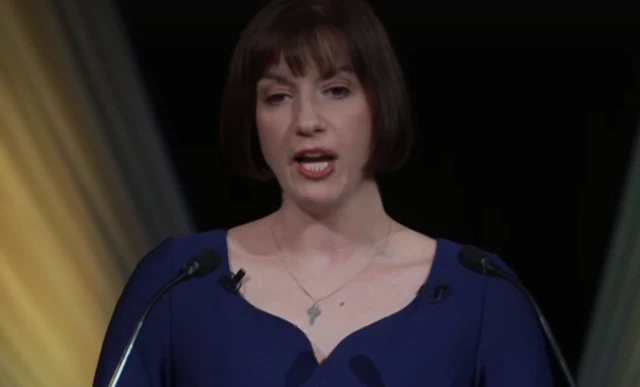
    Education Secretart Bridget Phillipson wears a blue top while speaking at a podium against a black and gold background.

    As the government unveils its planned changes, Education Secretary Bridget Phillipson starts her speech at Midlands school by saying her approach is one "for all children".

    She says that despite the heroic efforts of staff the "disadvantage gap is still wide, children with SEND are sidelined and bright children from ordinary families are still not achieving all that they should".

    Phillipson says our current education system "works well for some children but not all".

    "When it comes to opportunities, background still counts for too much and hard work too little," she says, rejecting the idea that "excellence is only possible for some children".

  20. Education care plans to be reserved for most complex SEND cases by 2035published at 11:00 GMT
    Breaking

    Branwen Jeffreys
    Education Editor

    The government has just revealed its full planned changes to the system supporting children with special educational needs and disabilities (SEND) in England.

    It says that by 2035, education, health and care plans (EHCPs) - the legal documents which set out the extra help children are entitled to - will be reserved for only the most complex special educational needs. This will help the government manage the costs of delivering an expensive part of the system.

    Children with SEND will fit into two levels of support: Targeted, which will apply to all pupils in mainstream schools, or Specialist, which will be for children with the most complex needs. That Specialist level of support will be the basis for EHCPs in future.

    Children who currently have an EHCP will keep them until they reach the next stage of their education, such as secondary school or sixth form and college. Children will be reassessed for EHCPs as they move up to their next stage of education from 2029.