Summary

  1. 'I'm confident parents will see change, but we want to do it carefully,' Phillipson tells BBCpublished at 13:09 GMT
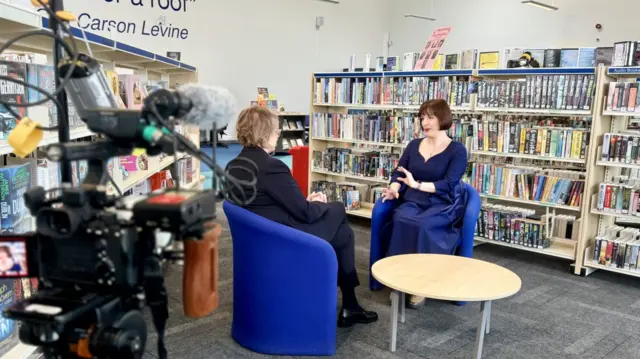
    Education Secretary Bridget Phillipson sitting opposite BBC's Branwen Jeffreys on blue chairs in a school library.

    The BBC's Education Editor Branwen Jeffreys has spoken with Education Secretary Bridget Phillipson following her speech at a school in Peterborough.

    She puts it to the education secretary that Labour may not still be in power when the main changes to SEND come into effect in 2029. "So how do you know they will be seen through?" she asks.

    In response, Phillipson says "the money starts going in from this year," pointing also to the extra expert support she says will be commissioned for schools to draw down on from later this year.

    "I'm confident parents will see that change, but we want to do it carefully," she adds.

    Quote Message

    Children have been let down by the system and we want to deliver that reform."

    Education Secretary Bridget Phillipson

  2. Government sets out major changes to SEND - what you need to knowpublished at 12:56 GMT

    The government has outlined planned changes to the SEND system in England. If you're just joining us, here's an overview:

    What is SEND?

    SEND stands for special educational needs and disabilities. It applies to children and young people who need extra support to meet their physical, communication, social, emotional or mental health needs.

    In England, if they need more support than is typically provided in mainstream schools, their parent or carer can apply for an education, health and care plan (EHCP) which sets out the extra support they are entitled to.

    Rising costs, extra funding

    Overall spending on SEND has risen by two-thirds in the past decade, according to the Institute for Fiscal Studies (IFS). Despite this, in 2024 the National Audit Office described the system as "broken".

    Today,the government has announced around £4 billion of extra funding, and set out plans for a wider overhaul of the system in its Schools White Paper.

    What's been announced?

    • By 2035, EHCPs will be reserved for only the most complex special educational needs
    • Children who currently have an EHCP will keep them until they reach the next stage of their education
    • Children will be reassessed for EHCPs as they move up to their next stage from 2029
    • Under the changes, the government projects that the proportion of children with SEND on the current highest level of support in school will start falling each year from the end of the decade
  3. 'You have to fight every step of the way,' says EastEnders actor Kellie Brightpublished at 12:39 GMT

    Emma Jacobs
    BBC Panorama

    Actress Kellie Bright in a bright red shirt standing behind a floral patterned chair against a pink background.Image source, Kellie Bright

    EastEnders actor Kellie Bright's son is autistic, has ADHD and is dyslexic.

    Kellie, for BBC Panorama, speaks to parents who say they’re exhausted by the fight to get the right education for their children.

    "To try and get the support that you need, you have to fight every step of the way," she says.

    She follows three families who are applying to their councils for an Education, Health and Care Plan (EHCP), a crucial document which can say where a child goes to school and what extra support they should get.

  4. Too little detail to know if government's plans will work, parent sayspublished at 12:21 GMT

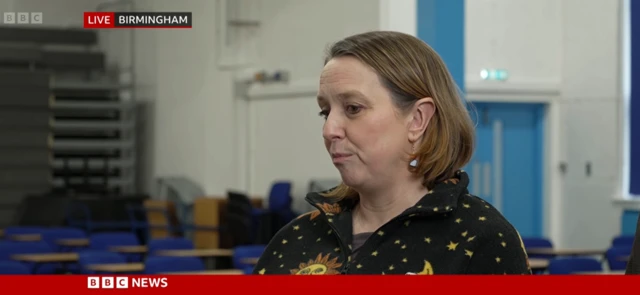
    Laura Jerram wears a black blouse with yellow stars as she speaks to a BBC News journalist at a school

    "It's devastating to watch your child struggling", says Laura Jerram, a mother of two children with SEND, one who attends a mainstream school and another who receives specialist provision.

    While the government's plans for inclusion bases in schools "is not a bad thing", Laura says people with different kinds of needs require different kinds of support from a range of different professionals.

    She says too little detail has been provided regarding the government's plans to know whether it will work in practice.

    In response to a question regarding the number of tribunals,, external where parents disagreed with a refusal to offer support for their children, Laura says: "If you have a fully funded school with excellent inclusion facilities, then more children will receive support earlier, that's fair to say."

    "But the worry is it places parents and children in opposition with each other, which is not a healthy dynamic."

    For context: The process for parents and children to get an EHCP can be lengthy, with fewer than half issued within the 20 week legal deadline in 2024. There was a record number of tribunals, external in 2024/25, where parents disagreed with a refusal to offer support, or were challenging the level of support offered.

  5. The cost of current SEND system has increased sharplypublished at 12:01 GMT

    As we've been reporting, part of the reason changes are being made to the SEND system is the increasing cost.

    Overall spending on SEND has risen by two-thirds in the past decade, according to the Institute for Fiscal Studies (IFS).

    In 2024 the National Audit Office described the system as "broken", warning it was "financially unsustainable" for councils and saying that although costs were rising it was still not delivering better outcomes for children.

    Here's a look at the figures:

    This Flourish post cannot be displayed in your browser. Please enable Javascript or try a different browser.

    Just over 1.7 million (about one in five) pupils in England's schools receive support for special educational needs.

    As of January last year, 639,000 young people up to the age of 25 had education, health and care plans (EHCPs) in England - the number has more than doubled in a decade.

  6. Phillipson says changes will be phased in 'carefully'published at 11:45 GMT

    Phillipson said the changes would be phased in over a decade.

    "We'll do this carefully," she said, adding her aim was to "build up the system now ahead of a bigger change".

    "This time of opportunity doesn't come across very often, and I'm determined that we seize it," she adds.

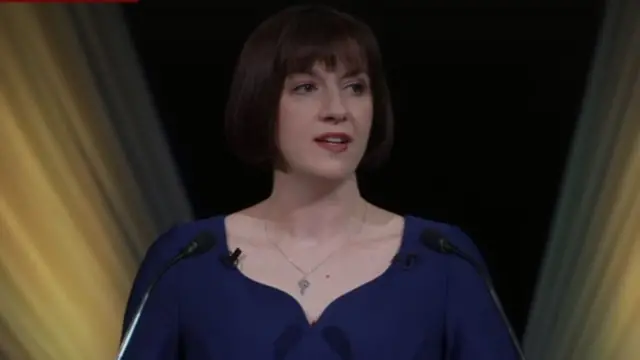
    Education Secretary Bridget Phillipson wearing a blue top while speaking against a black and gold background.
  7. Government also setting out plans today on recruiting 6,500 new teacherspublished at 11:41 GMT

    Phillipson has finished speaking, before doing so she took questions from journalists.

    She was asked how the government is going to ensure children with SEND flourish at a time when more teachers were leaving the profession due to workloads.

    Phillipson says retaining and recruiting brilliant teachers and support staff is "absolutely critical to delivering better education for all children".

    She says that the government is setting out its plans today to reach its target of recruiting 6,500 new teachers, which it committed to in its manifesto.

    She adds that retention numbers in teachers is the "best they've been since around 2010", so the government is making progress but there is more to do.

  8. 'EHCPs for children with most complex needs will stay' - Phillipsonpublished at 11:22 GMT

    Reiterating what we reported earlier, Phillipson says education, health and care plans (EHCPs) for children with the most complex needs will stay.

    She says these plans will be "guided by nationally defined, and evidence-based specialist provision packages".

    She says that what is crucial is "that support starts early", adding that the government's "best start hubs" for younger children will now also cover SEND.

    Phillipson says the government is investing £200m in these hubs so that more of them have dedicated SEND professionals.

  9. Support should stretch 'from birth to workplace', education secretary sayspublished at 11:13 GMT

    Phillipson says she wants to deliver great local schooling with high standards and inclusion, driven by ambition for every student.

    "I want your child to achieve, I want your child to thrive," she says. Where deprivation is deepest, she adds, that's where she'll "be boldest".

    The government will work to drive funding to where it's needed most, adding that "we have a moral responsibility to work together on this".

    She says the government will ensure there's support that "stretches from birth to the workplace".

  10. Children with SEND 'sidelined', Phillipson sayspublished at 11:04 GMT

    Education Secretart Bridget Phillipson wears a blue top while speaking at a podium against a black and gold background.

    As the government unveils its planned changes, Education Secretary Bridget Phillipson starts her speech at Midlands school by saying her approach is one "for all children".
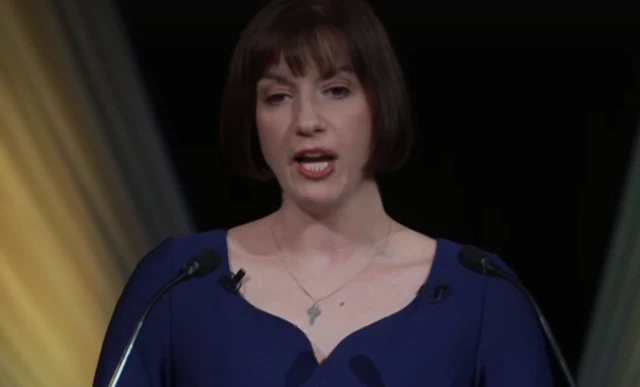
    She says that despite the heroic efforts of staff the "disadvantage gap is still wide, children with SEND are sidelined and bright children from ordinary families are still not achieving all that they should".

    Phillipson says our current education system "works well for some children but not all".

    "When it comes to opportunities, background still counts for too much and hard work too little," she says, rejecting the idea that "excellence is only possible for some children".

  11. Education care plans to be reserved for most complex SEND cases by 2035published at 11:00 GMT
    Breaking

    Branwen Jeffreys
    Education Editor

    The government has just revealed its full planned changes to the system supporting children with special educational needs and disabilities (SEND) in England.

    It says that by 2035, education, health and care plans (EHCPs) - the legal documents which set out the extra help children are entitled to - will be reserved for only the most complex special educational needs. This will help the government manage the costs of delivering an expensive part of the system.

    Children with SEND will fit into two levels of support: Targeted, which will apply to all pupils in mainstream schools, or Specialist, which will be for children with the most complex needs. That Specialist level of support will be the basis for EHCPs in future.

    Children who currently have an EHCP will keep them until they reach the next stage of their education, such as secondary school or sixth form and college. Children will be reassessed for EHCPs as they move up to their next stage of education from 2029.

  12. Education secretary speaks about special education changespublished at 10:55 GMT

    We're now hearing from Education Secretary Bridget Phillipson, who is making a speech in at a school in Peterborough about the government's plans.

    We'll bring you updates here, and you can watch live at the top of the page.

  13. The biggest issue with SEND system is the funding, says head teacherpublished at 10:46 GMT

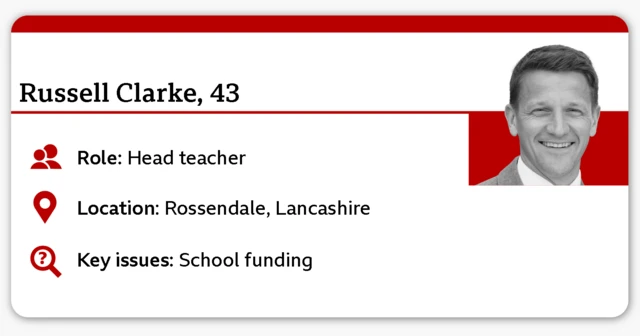
    A profile-style graphic titled “Russell Clarke", aged 43, listing role as head teacher, location as Rossendale, Lancashire, and key issue of school funding. A small portrait appears on the right side of the card.

    Russell Clarke is the head teacher at Haslingden High School and Sixth Form in Rossendale, Lancashire, where over 300 students are on the SEND register.

    Russell says he needs more specialist staff, better facilities, and more training to broaden the school's provision - things he hopes will be addressed in the government's upcoming white paper.

    The biggest issue with the SEND system is the funding, Russell says, "both the amount and how it's distributed".

    "Schools need more funding to provide inclusive teaching and timely access to specialist support," he says.

    He adds that there also needs to be more practical consultation between schools, families, and the authorities on how to deliver the support a child needs.

  14. A closer look at the SEND system in Englandpublished at 10:23 GMT

    An graphic with a pink background and an illustration of a parent helping to put a backpack on a child's back. The illustration reads "SEND in the Spotlight"

    SEND in the Spotlight is a weekly podcast from the team behind Woman's Hour.

    It explores why the special educational needs system is so widely considered to be broken and how it might be fixed.

    Hosted by Nuala McGovern, the podcast provides a platform where families can share their experiences of raising a child with special educational needs.

    Share your story with the team: send@bbc.co.uk.

  15. 5 Live listeners share their views on SEND reformspublished at 10:14 GMT

    'Everything is an uphill struggle': Adam, from Milton Keynes, whose eight-year-old son is autistic and non verbal, says he's experienced first hand how "broken" the SEND system is.

    He tells BBC Radio 5 Live that when it comes to getting support for his son, who "is on the higher end of his needs", "everything is an uphill struggle".

    "I don’t think there is a mainstream school that can suit him. But he’s been turned down by pretty much every special needs school in the area anyway", he says.

    'A constant battle': Debra, from Sidcup in south-east London, tells Radio 5 Live the government's SEND reforms don't sound "new or revolutionary at all", adding that it "just seems different language for the same provision".

    As a special educational needs coordinator, Debra says "I’ve got a constant battle of knowing what the children in my school need to flourish and learn, but not having the resources available to me to properly achieve it".

    She says "that's where the investment needs to go, into training people and having enough adults available with the right level of training to understand the needs of the children".

  16. Children's needs 'don't disappear - they escalate when unsupported'published at 10:02 GMT

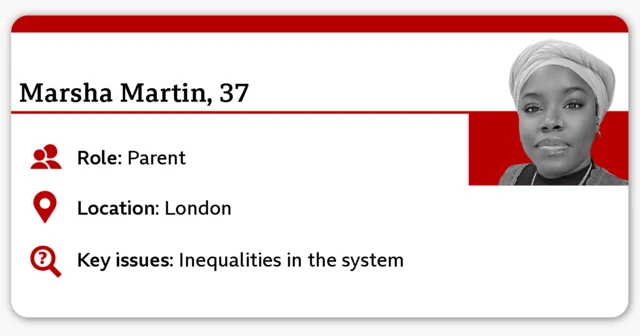
    A profile-style graphic displaying the name “Marsha Martin", aged 37, with icons indicating role as parent, location in London, and key issue of inequalities in the system. A partial portrait appears on the right side of the card.

    Marsha and her three children are autistic and have ADHD.

    She founded Black SEN Mamas in 2020, a peer support network bringing together families with similar experiences, and it now supports thousands of parents across the UK and abroad.

    She says non-white families, particularly those from low-income backgrounds, face "additional barriers at every stage".

    She believes her own daughter has been treated unfairly in the past and says her experience, working with parents through Black SEN Mamas, is that unconscious biases may play a part in the way decisions are made about children's needs.

    But that is hard to prove.

    She wants the government's reforms to include specific training for staff to help tackle racism and unconscious bias.

    Marsha also fears vulnerable children could lose support once they leave year 6 and says she is disappointed by proposed plans to reassess the support children are entitled to after they finish primary school.

    "Children's rights are being compromised, and their needs don't disappear - they escalate when unsupported," she says.

  17. School reforms 'will give the next generation a better chance' - education secretarypublished at 09:48 GMT

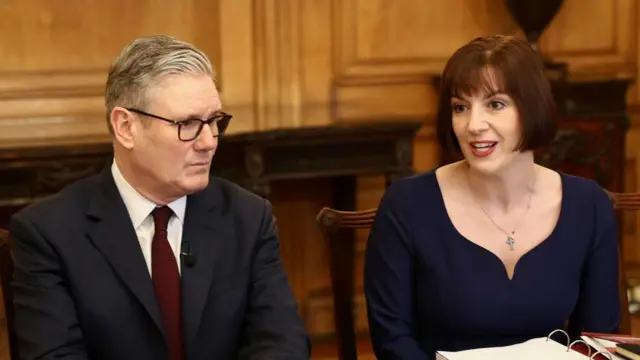
    Prime Minister Sir Keir Starmer and Education Secretary Bridget Phillipson sit next to each other around a tableImage source, PA Media
    Education Secretary Bridget Phillipson says the school reforms will "deliver better life chances for children".

    Speaking to school leaders and charities at Downing Street, she says: "That has been the driving principle behind all of this, how we make sure that every child in our country can achieve and thrive.

    "And I'm confident that what we're setting out today gives us that opportunity and will give the next generation a better chance than those who have gone before."

  18. Starmer says he receives more questions on SEND in Parliament than any other issuepublished at 09:35 GMT

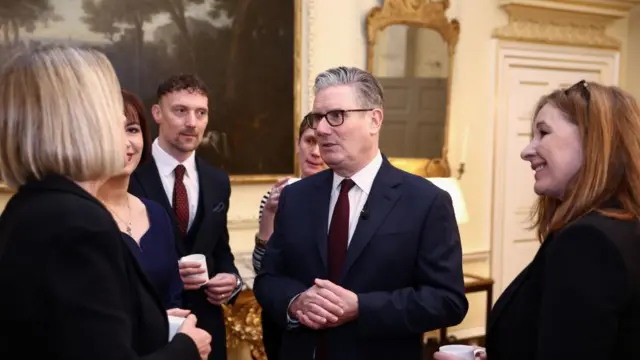
    Starmer speaks to a woman while four people around them listenImage source, PA Media

    Prime Minister Keir Starmer says he wants the school reforms to offer "a better education for every single child".

    Starmer held an education roundtable with school leaders and charities in Downing Street ahead of the publication of the Schools White Paper later this morning.

    Starmer says the government is recruiting 6,500 teachers and cracking down on children missing school.

    "You can't have high standards if you don't have inclusion - they're two sides of the same coin, and therefore we have to reform special educational needs," he says.

    Starmer says SEND is "the issue that's come up at Prime Minister's Questions more than any other, from all political parties in all parts of the country".

    "That is really unusual, and that tells you something about the fact that the system does not work as it is," he says.

  19. Listen: BBC 5 Live taking calls on SENDpublished at 09:29 GMT

    BBC Radio 5 Live is hearing from members of the public on SEND ahead of this morning's government announcement.

    You can listen to it live in the streamat the top of our page.

  20. What else will be in the Schools White Paper?published at 09:20 GMT

    Hazel Shearing
    Education correspondent

    We’ve been talking a lot about SEND but the policy document being published today is actually the government’s Schools White Paper – so it will include other important things, too.

    The focus, the Department for Education (DfE) says, is on breaking down barriers to opportunity, so we’re expecting announcements on key issues across England’s schools.

    One is attendance. Absence rates are still higher than they were before the pandemic, and it’s been worrying ministers. Expect more details on a new attendance target.

    Another is attainment. We’ll be keeping an eye on a potential new progress measure that the DfE says will help children who start secondary school significantly behind their classmates, as well as schemes targeting the north-east England and coastal areas.

    Then there’s staffing – especially issues with hiring teachers and keeping them. We’ll hear about financial incentives for head teachers and an increase to maternity pay for school staff.