Summary

  1. Israel says it has attacked key Iranian petrochemical facilitypublished at 12:30 BST
    Breaking

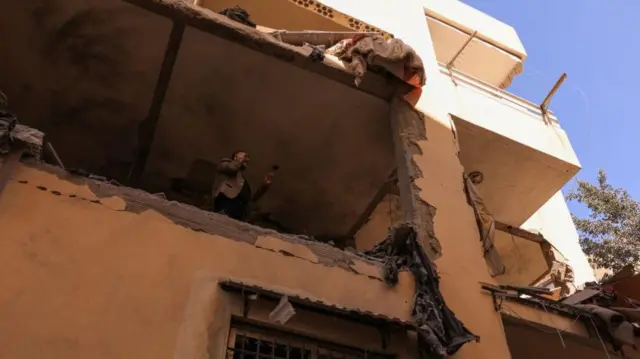
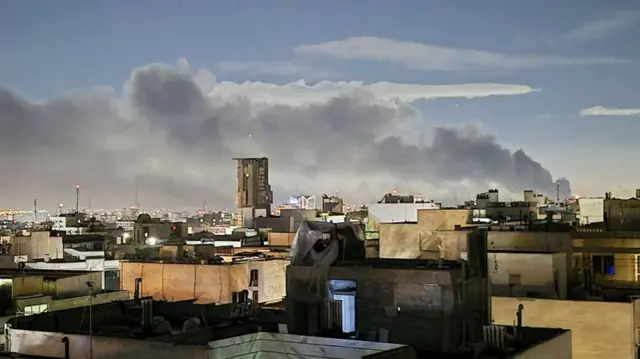
    Israel's defence minister Israel Katz has released a statement saying they have struck a petrochemical facility in Iran, as he says the IDF has been instructed to continue to attack Iranian infrastructure "with all force".

    "The IDF has now strongly attacked the largest petrochemical facility in Iran located in [Asaluyeh]," following an attack on another facility last week, Katz says.

    "Now the two facilities, which together are responsible for about 85% of Iran's petrochemical exports - have been taken out of service and are not functioning," the statement reads.

    The facility, based in Asaluyeh, produced around half of the country's petrochemicals, Katz adds.

    The semi-official Tasnim news agency has in the last few moments reported that two petrochemical companies have been attacked.

  2. Oil prices rise then fall in choppy tradingpublished at 12:14 BST

    Osmond Chia
    Business reporter

    Oil prices have dropped from this morning's $110 figure, which was reached after US President Donald Trump threatened to destroy critical infrastructure in Iran unless it allows ships to cross the Strait of Hormuz.

    In an expletive-laden social media post on Sunday, Trump said the US would attack power plants and bridges unless the crucial waterway is open by 20:00 ET (01:00 BST Wednesday).

    Brent crude rose above $110 (£83.38) a barrel on Monday morning UK-time before those gains eased after a report of US-Iran talks over a potential ceasefire.

    News website Axios reported that the US, Iran and a group of regional mediators are discussing the terms of a potential 45-day ceasefire that could lead to a permanent end to the conflict, citing US, Israeli and regional sources.

    In the hours following the Axios report, the global benchmark oil price fell from over $110 a barrel to around $107.

    Read more here.

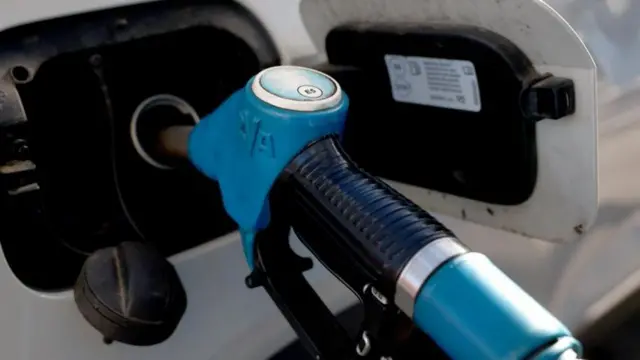
    A close-up image of a fuel nozzle inserted into a vehicle's fuel tank.Image source, Reuters
  3. In Lebanon, no respite from the constant sound of Israeli fighter jetspublished at 11:58 BST

    Hugo Bachega
    Middle East correspondent in Nabatieh, Lebanon

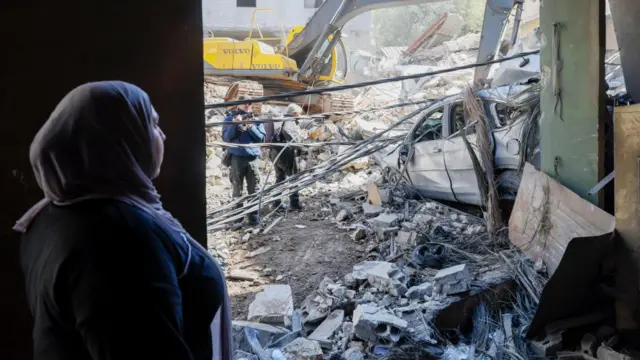
    A woman watches as a bulldozer clears the rubble of destroyed buildings following an Israeli trike near the Rafik Hariri University Hospital (RHUH), in the Jnah District of Beirut, Lebanon.Image source, EPA/Shutterstock

    From Lebanon’s south to the east and Beirut, there has been no respite from Israeli air strikes.

    Dahieh, where Hezbollah is based, was hit again in the morning, after the Israeli military repeated its evacuation order for the area.

    A dense plume of smoke billowed from the location hit, described by Israel as a Hezbollah target. The once densely populated district is deserted, as most of its residents left at the start of the war.

    In the east, the authorities say Israeli attacks this morning killed at least three people. Waves of air strikes also hit southern areas of the country, killing at least six people.

    In Nabatieh, we could hear the constant sound of Israeli fighter jets and drones in the sky.

    Not far from here, invading Israeli troops are seizing territory as Israeli authorities say their aim is to create what they call a security buffer zone along the border in southern Lebanon. The fear is that this could lead to an occupation of parts of the country.

  4. Death penalty one of many tactics used by Iranian regime to prevent further protestspublished at 11:46 BST

    Ghoncheh Habibiazad
    Senior reporter, BBC Persian

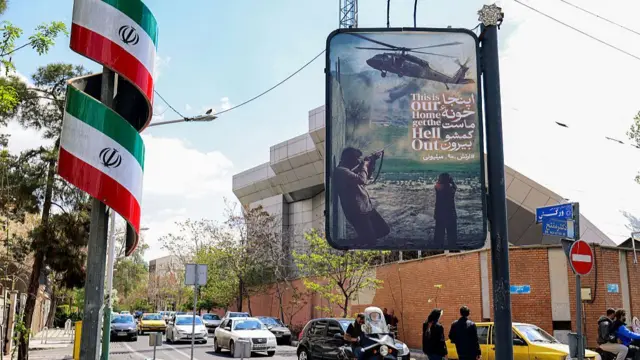
    A poster in Tehran on Monday morning, reading (in English): "This is our home, get the hell out"Image source, Getty Images
    Image caption,

    A poster in Tehran on Monday morning, reading (in English): "This is our home, get the hell out"

    Since the war began, Iranian outlets have been reporting daily on arrests in different parts of the country. Many of those detained have been accused of collaborating with opposition media and foreign intelligence services, with warnings coming from Iranian officials and outlets to those who might step out of line.

    There have been no signs of mass anti-establishment protests like those seen in January. During that wave, at least 6,508 protesters were killed and 53,000 arrested, according to the US-based Human Rights Activists News Agency.

    The scale of that crackdown, combined with current measures, may be contributing to the absence of large-scale demonstrations.

    From what people have told me from the capital, on some nights, aside from the sound of strikes and explosions, there is another noise that prevents people from sleeping.

    It is the sound of patrols moving through the streets with the Islamic Republic’s flag and loudspeakers which can reinforce a constant sense of control.

    Other tactics have also been used, including checkpoints appearing across cities, the internet blackout, and mass text warnings sent to residents.

    These measures limit communication, making it more difficult for protests to form and spread.

    Since the war started, Iranian officials and state TV have been promoting nightly pro-establishment rallies held in major squares of cities, where some anti-establishment protests also happened during January.

  5. Iran executes another man related to anti-government protests in Januarypublished at 11:37 BST

    Ghoncheh Habibiazad
    Senior reporter, BBC Persian

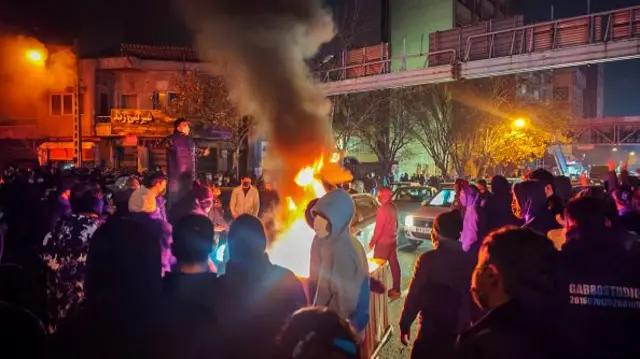
    A fire is lit and people gather round at night time in a Tehran streetImage source, Getty Images
    Image caption,

    January saw people take to the streets of Iran to protest soaring inflation and the collapse of the country's currency, the rial

    Iran says it has executed another person over accusations related to involvement in the January protests.

    Ali Fahim had been accused of entering a military-related location in Tehran and attempting to pull out motorcycles from the site, according to a report by the Islamic Revolutionary Guard Corps (IRGC) Tasnim News Agency.

    The report says that people, including Fahim, set fire to the site but that he was arrested after being trapped in the blaze.

    The BBC cannot independently verify these accusations and claims.

    In the context of the war:

    The report by Tasnim also refers to a claim by US President Donald Trump, that the US had sent "a lot of guns" to Iranian protesters through Kurdish militias. Iranian officials have also previously accused the US and Israel of backing the protests.

    So far, reports suggest that Iran has executed at least 14 political prisoners since the war began on 28 February, and there are some who are at risk of execution.

    Rights activists have warned of a rise in politically motivated executions recently.

  6. Iranian strike on Haifa kills four, targeting Israel's sense of securitypublished at 11:17 BST

    Lucy Williamson
    Middle East correspondent, reporting from Haifa

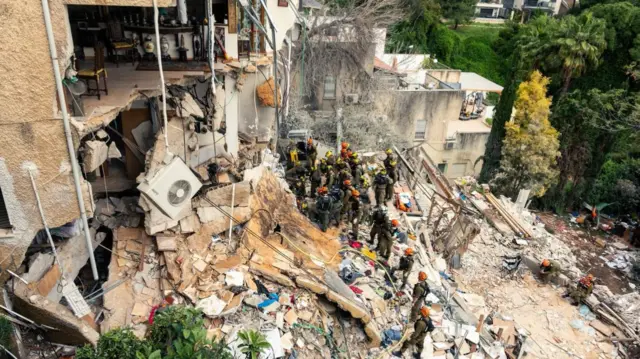
    Emergency service workers stand in the rubble of a building in Haifa, Israel, after an Iranian strike.Image source, IDF

    We’ve just seen four body bags brought out of the rubble in Haifa - residents of a building hit by an Iranian missile yesterday.

    Security officials said the bomb had failed to explode on impact and was still live when rescue teams arrived, complicating the search.

    Search units reportedly had to tunnel through the concrete of a neighbouring building to reach the four people trapped inside.

    Mor Barel, who lives in a building opposite the bomb site, said even with the protection of Israel’s multilayered air defences, living with the threat of Iranian attacks felt like a daily gamble of "Russian Roulette".

    Polls suggest the overwhelming support of Jewish Israelis for this war is starting to wane, after more than five weeks of conflict.

    Israel has framed victory in terms of its success in hitting Iran’s ballistic missile sites and leadership, but Iran’s target is Israel’s sense of security, and it can hit that with a single missile strike on a single building.

  7. Reports of a peace deal presented to Iran and US - what we know so farpublished at 11:02 BST

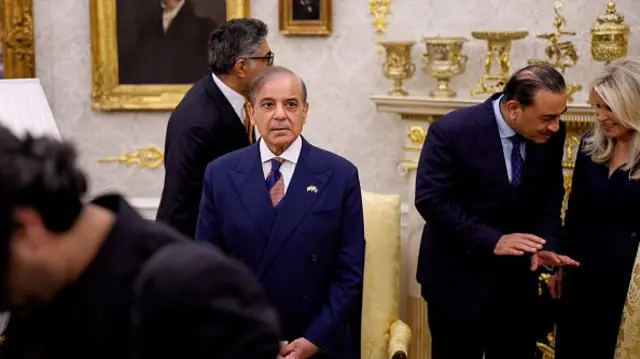
    Asim Munir stands in the Oval OfficeImage source, Getty Images
    Image caption,

    Pakistan's army chief Asim Munir - pictured here on a White House visit in September - is reported to be playing a central role in mediation

    Both Reuters news agency and Axios are reporting that a proposal to cease hostilities has been passed to the US and Iran. Some detail has emerged but there's still lots we don't know - let's take a look:

    What we know

    • A framework to end hostilities has been passed to the US and Iran, says Reuters
    • According to reports, there are "two-tiers" to the deal. It says this is an immediate ceasefire, with a more comprehensive agreement to follow later. This echoes Axios reports that mediators were discussing a 45-day ceasefire
    • Pakistan, Egypt and Turkish mediators have been involved in the negotiations, according to Axios. While Pakistan's army chief, Asim Munir, has been in contact "all night long" with US Vice-President JD Vance, adds Reuters
    • A senior Iranian official has ruled out opening the Strait of Hormuz as part of any temporary ceasefire, Reuters says
    • These reports come after Donald Trump appeared to set a new deadline for Iran to reopen the Strait of Hormuz by 20:00 ET on Tuesday (01:00 BST Wednesday)

    What we don't know

    • Any more specifics about the terms of a deal. For example, how some of the war's key sticking points so far - the Strait of Hormuz, strikes, nuclear enrichment - play a role
    • How closely the terms of this ceasefire plan mirror earlier unsuccessful proposals - such as the 15-point plan given to Iran in late March
    • How the Gulf countries in the region - that have been subject to numerous attacks throughout this conflict - feature in a peace proposal
    • If there is a timeline for either side to respond
  8. Iran drafts response to mediators on ending war - state mediapublished at 10:53 BST

    Iran's foreign ministry spokesperson says a response to the mediators working to bring an end to the US-Israel war with Iran has been drafted.

    It follows reports from Reuters, citing unnamed sources, that Pakistan is playing a major role in working out a new plan to end the conflict.

    Esmail Baghaei is cited by state-run news agency IRNA as saying that the 15-point plan shared through intermediaries by the US "was in no way acceptable to us".

    He adds that negotiations to bring about an end to the conflict are "incompatible with ultimatums and threats to commit war crimes," following Trump's warning that the US will target Iran's civilian infrastructure if the Strait of Hormuz is not reopened.

    Instead, he says Iran has compiled a set of demands "based on our own interests and considerations".

    "We knew from the beginning what we wanted and what red lines we were unwilling to cross, and our position is clear even now. From the very moment this discussion came up, our answers were ready," he says, adding Iran has formulated its own responses and "will announce details in due time".

  9. Where strikes have already hit infrastructure and civilian targets in Iranpublished at 10:45 BST

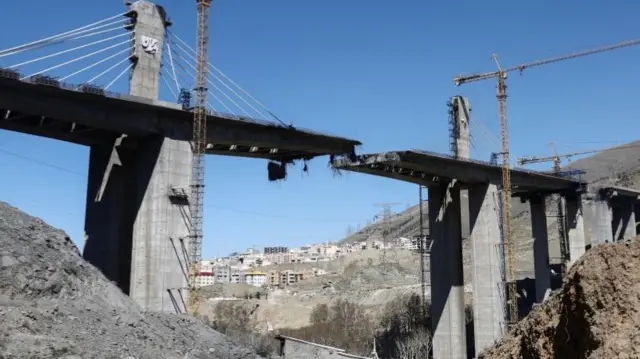
    A bombed bridge is shown spanning a dry rocky valley. There are several gaping holes in the bridge, which is surrounded by cranes.Image source, Reuters

    US President Donald Trump is threatening to blow up electricity plants, oil wells and water desalination plants in Iran if the country does not meet his new Tuesday deadline to reopen the Strait of Hormuz.

    A number of infrastructure and civilian targets have already been hit during the war; the US and Israel say some were related to military operations, while others were accidental.

    • On 28 February, the first day of the war, two missile strikes hit Shajareh Tayyebehschool in Minab. The attack killed at least 168 people, Iranian officials said, including about 110 children. No one has officially accepted responsibility, though US media have reported that American military investigators believe its own forces were likely responsible
    • In early March, "black rain" clouded Iran's capital Tehran following attacks on oil facilities. Those targeted included the Fardis, Shahran, and Aghdasieh oil depots, and the Tehran oil refinery
    • Iran's two largest steel plantshave been shut down due to multiple rounds of US-Israeli air strikes, the companies operating them say. Iran is a major global producer of steel
    • Early last week, the UN's nuclear watchdog confirmed Israeli strikes had caused "severe damage" to the Khondab power plant, a heavy water complex in north-west Iran. No contamination was reported
    • Last Thursday, 2 April, the major B1 bridge was destroyed by US strikes in Karaj, a city just west of Tehran, with Trump subsequently boasting about the bridge's destruction on social media
    • Today, the Sharif University of Technology has been hit by a strike, which also caused a gas outage in parts of Tehran. A number of universities have been hit since the start of the war, including Tehran University of Scienceand Technology and Shahid Beheshti University
    Media caption,

    Footage shows smoke rising from Karaj bridge

  10. Iran vows decisive and comprehensive response if US strikes civilian infrastructurepublished at 10:38 BST

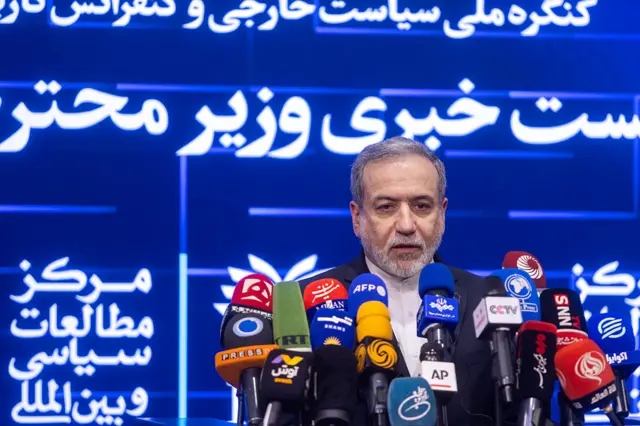
    Abbas Araghchi Iran's Foreign Ministry seen during his weekly press conference.Image source, Getty Images

    If the US carries out its threat to strike civilian infrastructure in Iran it will "undoubtedly be met with a decisive and comprehensive response from the Armed Forces of the Islamic Republic of Iran", Iran's foreign minister has said in a call with his French counterpart, Jean-Noël Barrot.

    Abbas Araghchi says the US threat "amounts to the normalisation of war crimes and genocide".

    A report of the call by Iran's foreign ministry says that Barrot described the threats of an attack on infrastructure as causing increased tension in the region, and he emphasised the need for a diplomatic solution.

  11. We're going to find out if US military is ready to say no to Trump - former Obama adviserpublished at 10:18 BST

    Ben Rhodes, former Deputy National Security Advisor of the United States under President Obama, says Trump's approach to the Iran war "increasingly feels like one man in one room making decisions".

    A little earlier he told BBC Radio 4's Today programme that Trump doesn't seem to be relying on political and military advisers, and is not following the "normal process".

    Rhodes says the US president is threatening to commit war crimes, following his latest warning to Iran's civilian infrastructure.

    "We're going to find out whether US military is ready to say no to Trump," he adds.

    Trump has to accept this war will only end over the negotiating table, Rhodes says, adding that though Iran has been weakened by strikes they have, in some ways, been strengthened by demonstrating - through the Strait of Hormuz - the strangle-hold they can have on the global economy.

  12. Frantic, last ditch diplomacy accelerates as Trump's deadline nearspublished at 10:07 BST

    Lyse Doucet
    Chief international correspondent

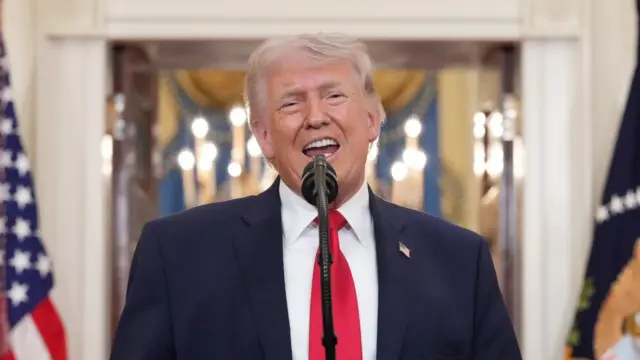
    Donald Trump in a dark suit and red tie speaking into a microphone.Image source, EPA/Shutterstock

    It's tempting to ignore President Trump’s bellicose expletive-laden rhetoric. But it’s too dangerous to be ignored.

    If Trump carries out his threats to "leave not one bridge or power plant standing," Israel will also intensify its attacks on infrastructure and Iran has threatened to retaliate against Gulf states.

    Frantic, last ditch diplomacy is accelerating as Trump’s Tuesday deadline nears.

    The Reuters news agency is reporting, based on unnamed sources, that mediators are working on a new plan - with Pakistan playing a major role - to bring the US back from this dangerous brink.

    The Axios news website also carried news of efforts to reach a ceasefire and the move to a permanent end to this war.

    Iran’s response to this reported plan isn’t clear – it’s repeatedly made it clear it won’t submit to Trump’s language of surrender and his terms for a deal which have amounted to diktats.

    But will it be enough for Trump to back down, as he did in late March, to give the plan, and the president, more time?

  13. Israel claims responsibility for killing IRGC intelligence chiefpublished at 09:47 BST

    Ghoncheh Habibiazad
    Senior reporter, BBC Persian

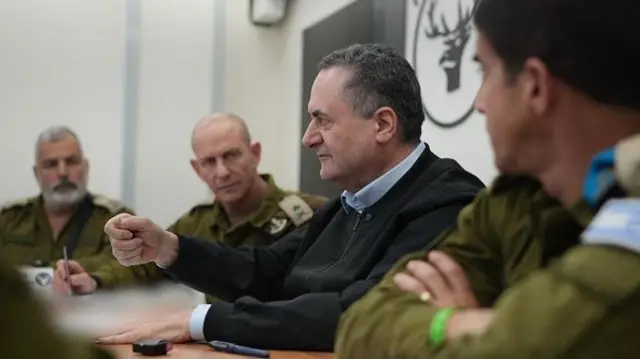
    File photo of Israeli Defence Minister Israel Katz, and members of the Israel Defense Forces (IDF)Image source, Anadolu via Getty Images
    Image caption,

    File photo of Israeli Defence Minister Israel Katz, and members of the IDF

    More now on the death of Iran's intelligence chief, with Israel's Defence Minister Israel Katz and the Israel Defense Forces (IDF) claiming responsibility for the killing of Majid Khademi.

    The IDF has written on Telegram that his killing is "another severe blow" to the Iranian Revolutionary Guard Corps (IRGC).

    When it comes to Iran acknowledging the deaths of its senior commanders in the recent war, most examples involve Iran confirming their deaths only after Israel or the US has claimed responsibility. However, this time Iran announced it earlier.

    Khademi was appointed as the commander of the IRGC intelligence organisation four days after his predecessor, Mohammad Kazemi, was killed in an Israeli attack on 15 June 2025.

    Back in August last year, Khademi urged parliament to prioritise the completion of a domestic intranet, saying it was needed to “safeguard the sovereignty” of Iran's cyberspace.

    Iran is currently still under an internet blackout since the war began on 28 February, although some domestic websites and apps remain accessible within the country.

  14. IDF issues warning to residents in southern Beirutpublished at 09:31 BST

    The Israel Defense Forces (IDF) has issued a warning to residents in the southern suburbs of the Lebanese capital Beirut.

    IDF spokesman for Arab media Avichay Adraee says Israel is continuing operations and strikes in various parts of the southern suburbs.

    It comes after at least 11 people were killed across Lebanon on Sunday.

    Lebanese authorities say 1,461 people have been killed in Israeli strikes since 2 March.

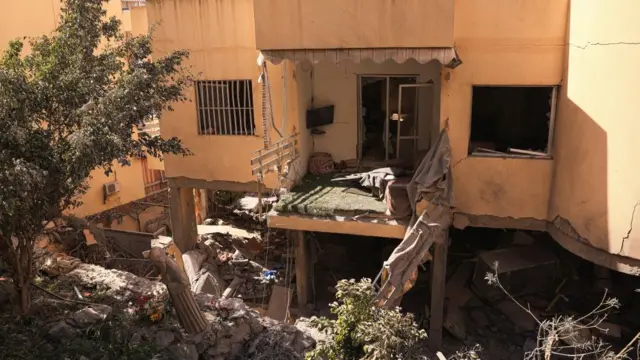
    The bottom floor of a building has been turned to rubble. A damaged balcony can be seen above itImage source, Reuters
    Image caption,

    Damage at the site of an Israeli strike on an apartment building in Lebanon

  15. IRGC says intelligence chief killed by Israel-US attackpublished at 09:03 BST
    Breaking

    Ghoncheh Habibiazad
    Senior reporter, BBC Persian

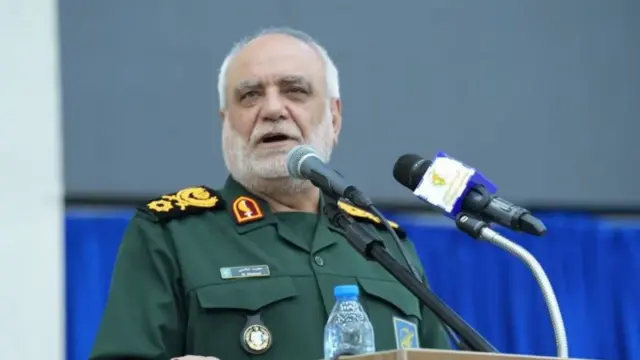
    Majid Khademi, a man with thin white hair and beard, wearing military uniformImage source, Iranian state media

    Iran’s Islamic Revolutionary Guard Corps (IRGC) has announced in a statement published by Iranian news outlets that their intelligence chief, Majid Khademi, has been killed.

    The statement says he was killed this morning and has accused Israel and the US of targeting him.

    I’ve reached out to the Israel Defense Forces (IDF) and they say they’ll “look into” the report.

    Khademi had replaced Mohammad Kazemi, who was also killed in an Israeli attack on 15 June 2025 during the 12-day Iran-Israel war.

    Back in February, following deadly anti-government protests in January, Khademi had accused US President Donald Trump of fuelling what Iranian officials have described as a "staged murder" strategy, aimed at increasing casualties to justify foreign military intervention.

    Khademi had claimed during that time that more than 10 foreign intelligence services, including Israel's cyber warfare and intelligence unit 8200, played a role in the protests that swept across Iran. According to the US-based Human Rights Activists News Agency, at least 7,000 people were killed in the January crackdown.

  16. Iran's vice-president hits out at Trump following strike on university in Tehranpublished at 08:41 BST

    Iran's first vice-president calls the strike on the Sharif University of Technology "a symbol of Trump's madness and ignorance". The US has not taken responsibility for the attack.

    The strike appears to have damaged parts of the university, including its technology centre building and the school's mosque, BBC Persian reports. The attack also has caused a gas outage in parts of Tehran.

    Dr Mohammad Reza Aref says the US president "fails to understand that Iran's knowledge is not embedded in concrete to be destroyed by bombs; the true fortress is the will of our professors and elites".

    "This fortress will not crumble," he adds.

    A number of universities in Iran have been hit since the start of the war, including Tehran University of Science and Technology and Shahid Beheshti University.

  17. More attacks across Middle East: A recappublished at 08:25 BST

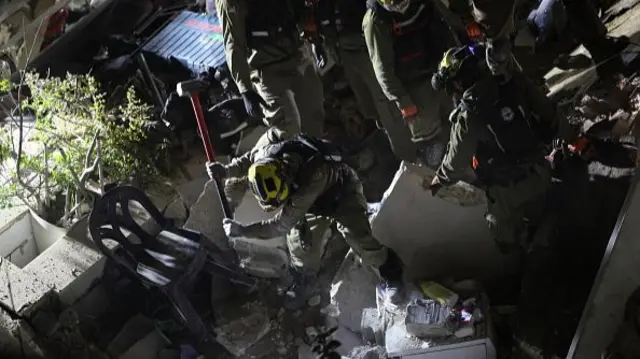
    A man with a sledge hammer digs in rubbleImage source, AFP via Getty Images
    Image caption,

    Israeli emergency services search for missing people after a strike on a residential building in Haifa

    Since our last update, alarms have sounded once again in countries across the Middle East. Here's a quick update on the attacks recorded so far on Monday.

    Iran: Thirteen people have been killed by a US-Israeli strike on a residential area in the Tehran province, says IRGC-affiliated Fars news agency. The outlet said that six of those killed overnight in the area were children.

    A strike has damaged several buildings at Sharif University in Tehran. Several Iranian media outlets now say gas supply has been restored, having been disrupted by the attack.

    Israel: Emergency services report several injuries after strikes on the country overnight. A man and woman in their forties and two girls aged five were treated for smoke inhalation in Haifa. Two were injured in central Israel, including a 34-year-old with serious shrapnel injuries.

    The Israeli military later said it was working to intercept missiles launched from Iran. Shortly after, it announced it was safe to leave protected spaces across the country.

    United Arab Emirates: Falling debris on Raneen Systems, a technology company, has injured a Ghanaian national in Abu Dhabi's industrial zone, says the Abu Dhabi media office.

    Authorities say they are dealing with an Iranian drone attack on one of the country's two main telecoms operators, Du, in the east of the UAE. No injuries have been reported from the attack, they add.

    Saudi Arabia: A Ministry of Defence spokesperson says the country has intercepted and destroyed two drones in the last few hours.

    Meanwhile in Lebanon, people have been inspecting the damage after more Israeli air strikes on Sunday (see picture below). The attacks killed at least 11 people across the country yesterday. Lebanese authorities say 1,461 people have been killed in Israeli strikes since 2 March.

    A man talks on the phone while inspecting damage at the site of an Israeli strike on an apartment building in Ain Saadeh, Lebanon, on Monday morningImage source, Getty Images
    Image caption,

    A man talks on the phone while inspecting damage at the site of an Israeli strike on an apartment building in Ain Saadeh, Lebanon, on Monday morning

  18. Iran's deputy FM claims Trump's threats 'constitute war crimes'published at 08:08 BST

    Iran's deputy foreign minister says Trump's threats on Iranian civilian infrastructure "constitute war crimes" and a "flagrant violation of Article 2(4) of the United Nations Charter".

    The article prohibits members of the UN from using or threatening force, external against the territorial integrity of any state.

    Kazem Gharibabadi adds that Iran will deliver "a decisive, immediate, and regret-inducing response to any aggression or imminent threat".

    Our correspondent Tom Bateman spoke to Luis Moreno Ocampo, founding chief prosecutor of the International Criminal Court (ICC), last month.

    "Intentionally directing attacks at civilian objects... which are not military objectives," is a war crime, Moreno Ocampo said.

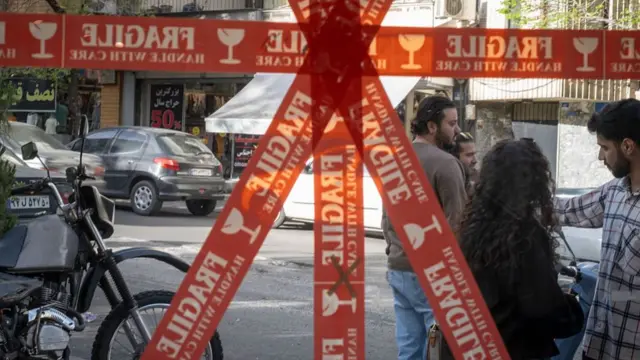
    Iranians outside a cafe in Tehran on Sunday, as tape covers the windows to protect them from shatteringImage source, Getty Images
    Image caption,

    Iranians outside a cafe in Tehran on Sunday, as tape covers the windows to protect them from shattering

  19. 'It feels like we’re sinking deeper into a swamp': Iranians speak to BBCpublished at 07:22 BST

    Ghoncheh Habibiazad
    Senior reporter, BBC Persian

    Smoke rises from residential areas in eastern and western parts of Tehran following airstrikes carried out by the United States and Israel in Tehran, Iran, on 6 April.Image source, Getty Images
    Image caption,

    Smoke rises from a residential area in Tehran, Iran, following strikes

    I spoke yesterday with residents in Iran's capital Tehran and the nearby city of Karaj who tell me of their fears for the future after US President Donald Trump issues new threats on infrastructure.

    "It feels like we’re sinking deeper into a swamp. What can we do as ordinary people? We can’t do anything. We can’t stop him," one man in his 20s tells me.

    Trump has threatened to hit the country's civilian infrastructure and says Iranians will be "living in hell" unless the Strait of Hormuz is reopened.

    Some in Iran have been stockpiling resources. One woman in her 20s tells me her mum "is filling every bottle she can find in the house with water", while another woman whose family only has enough supplies for a few days says: "Without electricity, nothing will be possible. Nothing at all. I just hope he won’t hit Iran too hard."

    A man in Tehran whose family have also been stockpiling is concerned that, if Trump attacks Iran's infrastructure, "these efforts are pointless".

    Another Iranian man, in his 30s, tells me he doesn't see a bright future for the Iranian people. "With all these attacks, Iran won't be a place we can live in anymore. It’s going to be impossible to go back to how things were before the war."

  20. Iranian media says 15 ships passed through Strait of Hormuz in 24 hourspublished at 06:51 BST

    Ghoncheh Habibiazad
    Senior reporter, BBC Persian

    Iran's Fars news agency, which is affiliated to the country's Islamic Revolutionary Guard Corps (IRGC), said earlier that 15 ships passed through the Strait of Hormuz "with permission from Iran" in the previous 24-hour period.

    It added that traffic was still 90% lower than before the start of the war.

    Some Iranian officials, including Foreign Minister Abbas Araghchi, have repeatedly said that the vital shipping lane is not shut, but it is closed only to "enemy countries".

    For example, yesterday Iran announced Iraq is exempt from any restrictions it is imposing, according to the spokesman for Iran's Khatam al-Anbiya Central Headquarters.

    Meanwhile, Iranian officials and lawmakers have also raised the possibility of tolling vessels using the strait.

    Earlier an aide at Iran’s President’s Office, says the Strait of Hormuz "will be reopened" when "a portion of transit tolls is used to compensate for all the damage caused" by the war.

    Media caption,

    'We are at the edge of a battlefield': BBC reports near Strait of Hormuz