Summary

  1. IRGC says intelligence chief killed by Israel-US attackpublished at 09:03 BST
    Breaking

    Ghoncheh Habibiazad
    Senior reporter, BBC Persian
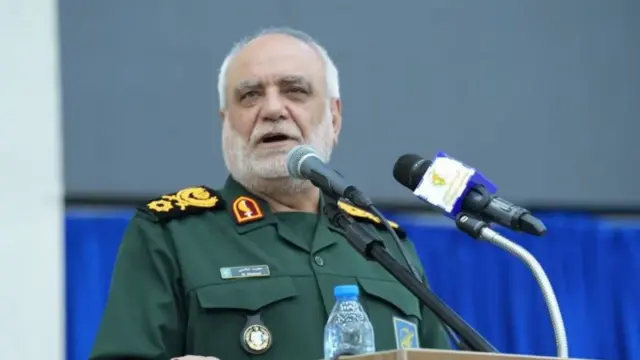
    Majid Khademi, a man with thin white hair and beard, wearing military uniformImage source, Iranian state media
    Image caption,

    Majid Khademi

    Iran’s Islamic Revolutionary Guard Corps (IRGC) has announced in a statement published by Iranian news outlets that their intelligence chief, Majid Khademi, has been killed.

    The statement says he was killed this morning and has accused Israel and the US of targeting him.

    I’ve reached out to the Israel Defense Forces (IDF) and they say they’ll “look into” the report.

    Khademi had replaced Mohammad Kazemi, who was also killed in an Israeli attack on 15 June 2025 during the 12-day Iran-Israel war.

    Back in February, following deadly anti-government protests in January, Khademi had accused US President Donald Trump of fuelling what Iranian officials have described as a "staged murder" strategy, aimed at increasing casualties to justify foreign military intervention.

    Khademi had claimed during that time that more than 10 foreign intelligence services, including Israel's cyber warfare and intelligence unit 8200, played a role in the protests that swept across Iran. According to the US-based Human Rights Activists News Agency, at least 7,000 people were killed in the January crackdown.
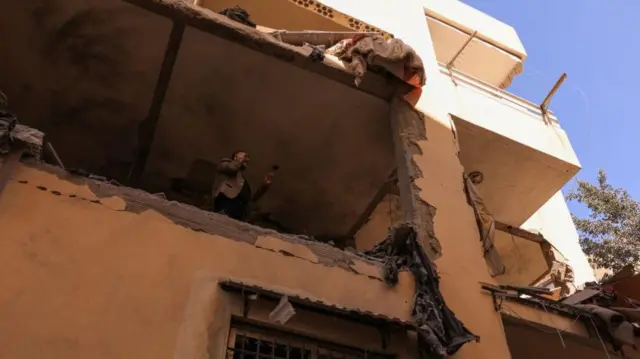
  2. Iran's vice-president hits out at Trump following strike on university in Tehranpublished at 08:41 BST

    Iran's first vice-president calls the strike on the Sharif University of Technology "a symbol of Trump's madness and ignorance". The US has not taken responsibility for the attack.

    The strike appears to have damaged parts of the university, including its technology centre building and the school's mosque, BBC Persian reports. The attack also has caused a gas outage in parts of Tehran.

    Dr Mohammad Reza Aref says the US president "fails to understand that Iran's knowledge is not embedded in concrete to be destroyed by bombs; the true fortress is the will of our professors and elites".

    "This fortress will not crumble," he adds.

    A number of universities in Iran have been hit since the start of the war, including Tehran University of Science and Technology and Shahid Beheshti University.

  3. More attacks across Middle East: A recappublished at 08:25 BST

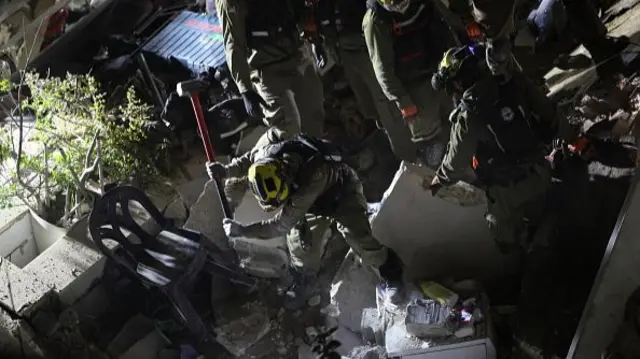
    A man with a sledge hammer digs in rubbleImage source, AFP via Getty Images
    Image caption,

    Israeli emergency services search for missing people after a strike on a residential building in Haifa

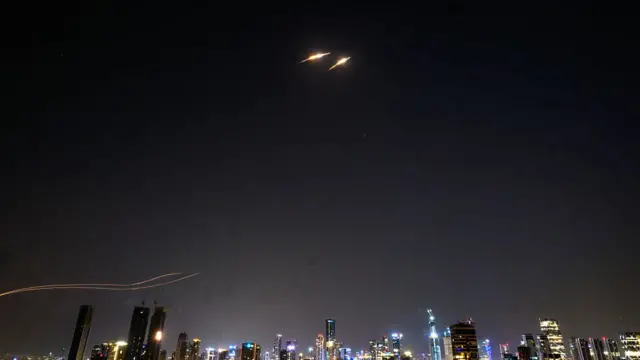
    Since our last update, alarms have sounded once again in countries across the Middle East. Here's a quick update on the attacks recorded so far on Monday.

    Iran: Thirteen people have been killed by a US-Israeli strike on a residential area in the Tehran province, says IRGC-affiliated Fars news agency. The outlet said that six of those killed overnight in the area were children.

    A strike has damaged several buildings at Sharif University in Tehran. Several Iranian media outlets now say gas supply has been restored, having been disrupted by the attack.

    Israel: Emergency services report several injuries after strikes on the country overnight. A man and woman in their forties and two girls aged five were treated for smoke inhalation in Haifa. Two were injured in central Israel, including a 34-year-old with serious shrapnel injuries.

    The Israeli military later said it was working to intercept missiles launched from Iran. Shortly after, it announced it was safe to leave protected spaces across the country.

    United Arab Emirates: Falling debris on Raneen Systems, a technology company, has injured a Ghanaian national in Abu Dhabi's industrial zone, says the Abu Dhabi media office.

    Authorities say they are dealing with an Iranian drone attack on one of the country's two main telecoms operators, Du, in the east of the UAE. No injuries have been reported from the attack, they add.

    Saudi Arabia: A Ministry of Defence spokesperson says the country has intercepted and destroyed two drones in the last few hours.

    Meanwhile in Lebanon, people have been inspecting the damage after more Israeli air strikes on Sunday (see picture below). The attacks killed at least 11 people across the country yesterday. Lebanese authorities say 1,461 people have been killed in Israeli strikes since 2 March.

    A man talks on the phone while inspecting damage at the site of an Israeli strike on an apartment building in Ain Saadeh, Lebanon, on Monday morningImage source, Getty Images
    Image caption,

    A man talks on the phone while inspecting damage at the site of an Israeli strike on an apartment building in Ain Saadeh, Lebanon, on Monday morning

  4. Iran's deputy FM claims Trump's threats 'constitute war crimes'published at 08:08 BST

    Iran's deputy foreign minister says Trump's threats on Iranian civilian infrastructure "constitute war crimes" and a "flagrant violation of Article 2(4) of the United Nations Charter".

    The article prohibits members of the UN from using or threatening force, external against the territorial integrity of any state.

    Kazem Gharibabadi adds that Iran will deliver "a decisive, immediate, and regret-inducing response to any aggression or imminent threat".

    Our correspondent Tom Bateman spoke to Luis Moreno Ocampo, founding chief prosecutor of the International Criminal Court (ICC), last month.

    "Intentionally directing attacks at civilian objects... which are not military objectives," is a war crime, Moreno Ocampo said.

    Iranians outside a cafe in Tehran on Sunday, as tape covers the windows to protect them from shatteringImage source, Getty Images
    Image caption,

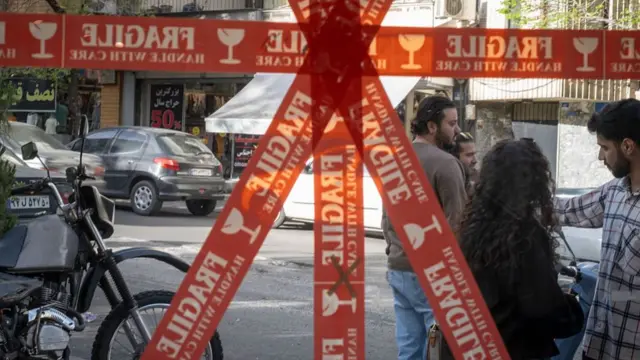
    Iranians outside a cafe in Tehran on Sunday, as tape covers the windows to protect them from shattering

  5. 'It feels like we’re sinking deeper into a swamp': Iranians speak to BBCpublished at 07:22 BST

    Ghoncheh Habibiazad
    Senior reporter, BBC Persian

    Smoke rises from residential areas in eastern and western parts of Tehran following airstrikes carried out by the United States and Israel in Tehran, Iran, on 6 April.Image source, Getty Images
    Image caption,

    Smoke rises from a residential area in Tehran, Iran, following strikes

    I spoke yesterday with residents in Iran's capital Tehran and the nearby city of Karaj who tell me of their fears for the future after US President Donald Trump issues new threats on infrastructure.

    "It feels like we’re sinking deeper into a swamp. What can we do as ordinary people? We can’t do anything. We can’t stop him," one man in his 20s tells me.

    Trump has threatened to hit the country's civilian infrastructure and says Iranians will be "living in hell" unless the Strait of Hormuz is reopened.

    Some in Iran have been stockpiling resources. One woman in her 20s tells me her mum "is filling every bottle she can find in the house with water", while another woman whose family only has enough supplies for a few days says: "Without electricity, nothing will be possible. Nothing at all. I just hope he won’t hit Iran too hard."

    A man in Tehran whose family have also been stockpiling is concerned that, if Trump attacks Iran's infrastructure, "these efforts are pointless".

    Another Iranian man, in his 30s, tells me he doesn't see a bright future for the Iranian people. "With all these attacks, Iran won't be a place we can live in anymore. It’s going to be impossible to go back to how things were before the war."

  6. Iranian media says 15 ships passed through Strait of Hormuz in 24 hourspublished at 06:51 BST

    Ghoncheh Habibiazad
    Senior reporter, BBC Persian

    Iran's Fars news agency, which is affiliated to the country's Islamic Revolution Guards Corps (IRGC), said earlier that 15 ships passed through the Strait of Hormuz "with permission from Iran" in the previous 24-hour period.

    It added that traffic was still 90% lower than before the start of the war.

    Some Iranian officials, including Foreign Minister Abbas Araghchi, have repeatedly said that the vital shipping lane is not shut, but it is closed only to "enemy countries".

    For example, yesterday Iran announced Iraq is exempt from any restrictions it is imposing, according to the spokesman for Iran's Khatam al-Anbiya Central Headquarters.

    Meanwhile, Iranian officials and lawmakers have also raised the possibility of tolling vessels using the strait.

    Earlier an aide at Iran’s President’s Office, says the Strait of Hormuz "will be reopened" when "a portion of transit tolls is used to compensate for all the damage caused" by the war.

    Media caption,

    'We are at the edge of a battlefield': BBC reports near Strait of Hormuz

  7. Analysis

    Ceasefire needed for meaningful progress in talks, insider tells BBCpublished at 06:41 BST

    Tom Bateman
    US State Department correspondent

    Meaningful progress is unlikely to take place in negotiations between the US and Iran without a ceasefire first, a regional official familiar with the discussions tells me.

    "For any discussion, there needs to be a cessation of hostilities. It needs cessation, because it is not there as we speak... Ceasefire may be a precondition," says the official briefed on the discussions who spoke to the BBC on condition of anonymity due to the sensitivity of the talks.

    The source described mediated contact between the US and Iran, which has moved steadily for over a fortnight, much of the content of which remained secret.

    But talks have been challenging due to difficulty getting messages to and from officials in Iran amid the ongoing war and communications blackout.

    "To convey messages to Iran, getting a response in reasonable time is not possible. The average time of response has been a day or so," the official tells me.

    Trump told the news website Axios on Sunday that his envoys Steve Witkoff and Jared Kushner were holding "intense negotiations" with the Iranians but did not give further details, only saying that if a deal wasn't made to re-open the Strait of Hormuz he was "blowing up everything".

    Iran’s senior presidential aide Medhi Tabatabai said on Sunday the Strait of Hormuz would reopen only under a "new legal regime" in which Iran would use revenue from transit fees as reparations for the damage inflicted by the US-Israeli war.

    Pakistan, Turkey and Egypt have all been involved in efforts to mediate. The three countries’ foreign ministers reportedly held phone calls with both Witkoff and Iranian foreign minister Abbas Araghchi on Saturday.

  8. Don't underestimate Trump's ability to make good on Iran threatspublished at 06:34 BST

    Simi Jolaoso
    North America correspondent

    President Trump has dialled up the rhetoric in his latest social media post reminding Iran of his deadline to reopen the Strait of Hormuz.

    You can sense the frustration, and it makes for uncomfortable reading.

    Even though US media has reported that Donald Trump said on Sunday the two sides are “deep in negotiations”, it’s important to bear in mind the reality on the ground.

    More marines, paratroopers and warships have been deployed to the Middle East over the past few days.

    The last time the Trump administration said it was in talks with Iran, it struck the country - starting this war.

    This is also the second reminder Trump has given this weekend, threatening to target Iranian civilian infrastructure. It is important to not underestimate him making good on his threat.

    A billboard in Tehran - apparently showing the Iranian military collecting US ships and aircraft in a net - seen in Tehran on SundayImage source, Reuters
    Image caption,

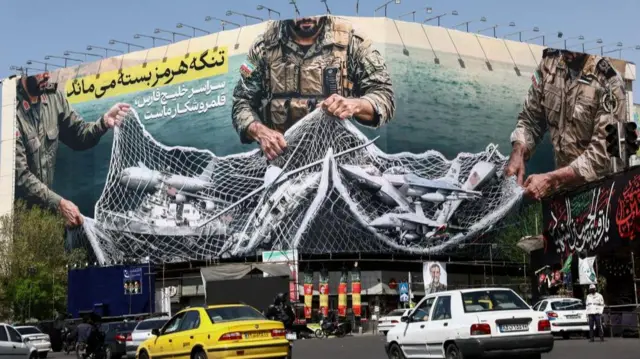
    A billboard in Tehran - apparently showing the Iranian military collecting US ships and aircraft in a net - seen in Tehran on Sunday

  9. Debris falling in Abu Dhabi as more Iranian attacks interceptedpublished at 06:16 BST

    Abu Dhabi authorities are responding to falling debris after its air defence systems made a "successful interception", says the Abu Dhabi Media Office.

    A Ghanaian national was injured as debris fell on the Raneen Systems company in the Musaffah industrial area of the city, it says.

    On Sunday, the UAE Ministry of Defence said it intercepted 50 Iranian drones, one cruise missile, and nine ballistic missiles from Iran.

    That takes the totals to 2,191 drones, 24 cruise missiles, and 507 ballistic missiles since the start of the war.

  10. Strike hits Iranian university, causing gas outage in Tehranpublished at 05:37 BST

    The Sharif University of Technology has been hit by a strike, causing a gas outage in parts of Tehran.

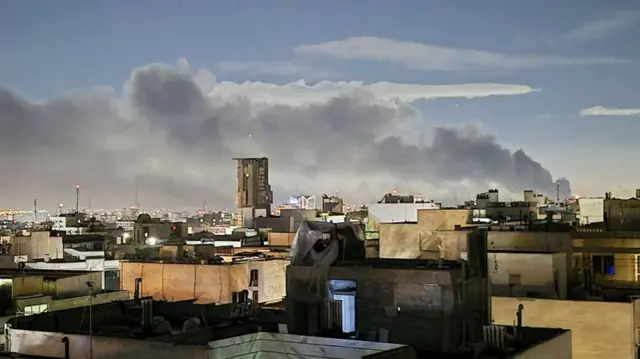
    BBC Persian reports that parts of the university, including its technology centre building and the school's mosque, appear to have been damaged. Images online this morning show thick smoke rising from areas in Iran's capital city.

    Elsewhere in the capital city, an airstrike on a residential building has killed 13 people.

    The mayor of the district that includes the university, said gas was being temporarily cut due to the attack.

    A number of universities in Iran have been hit since the start of the war, including Tehran University of Science and Technology and Shahid Beheshti University.

  11. Oil prices hit $110 after Trump's latest threatspublished at 05:11 BST

    Osmond Chia
    Business reporter

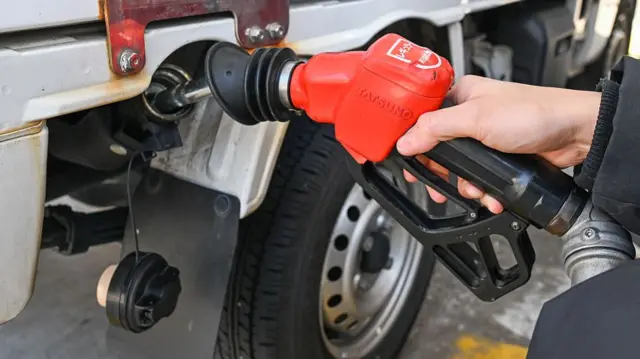
    Oil prices hit $110 (£83.38) a barrel after President Donald Trump's expletive-laden threat against Iran on social media.

    The price of Brent rose initially by 1.6% to $110.85, before retreating slightly during morning trade in Asia.

    US-traded crude gained slightly by 0.3% to $111.80.

    The initial jump came after Trump put more pressure on Tehran by threatening to strike Iran's bridges and power plants if Iran did not back down on its threat against ships that try to cross the critical Strait of Hormuz trade waterway.

    Major Asian stock markets also edged higher. Japan's Nikkei 225 exchange rose by 1.6% while South Korea's Kospi index gained by 0.9%.

    Read more here.

    A driver refuels a vehicle at a petrol stationImage source, Getty Images
  12. Iran warns of 'much more devastating' retaliation if civilian targets hitpublished at 04:28 BST

    Iran has warned of "much more devastating" retaliation if the US and Israel were to strike civilian targets, state media has reported.

    "If attacks on civilian targets are repeated, the next stages of our offensive and retaliatory operations will be much more devastating and widespread," reads a statement from a spokesman for the Khatam al-Anbiya Central Headquarters - Iran's highest operational military command unit. The statement was published by the Islamic Republic of Iran Broadcasting (IRIB).

    It comes after the US president threatened attacks on Iranian power plants and bridges if Iran fails to meet his Tuesday deadline to reopen the Strait of Hormuz.

  13. Attacks continue across the Middle Eastpublished at 04:19 BST

    Rockets are launched to intercept Iranian ballistic missiles fired towards Tel Aviv in the early hours on April 06, 2026 in Tel Aviv, Israel.Image source, Getty Images
    Image caption,

    Iranian missiles intercepted above Tel Aviv, Israel

    Israeli strikes on Lebanon on Sunday have killed at least 15 people and wounded 39 others, AFP reports citing the Lebanese health ministry.

    At least five people were killed in a strike on Beirut, while three were killed in an attack on an apartment building in Ain Saadeh, east of Beirut, officials said.

    A four-year-old girl was among seven people killed in a strike on the southern town of Kfar Hatta, the ministry added.

    In Israel, two bodies have been recovered from a residential building that was hit by a missile, Israeli media report.

    Israel's military says it has conducted a wave of strikes against targets in Iran's capital, Tehran.

    A US-Israeli strike on a residential building killed at least five people and left several people buried under rubble in Qom, south of Tehran, a deputy governor told the semi-official SNN news agency, Reuters reported.

    The UAE and Kuwait said their air defences had also responded to missile and drone attacks.

  14. Trump to host news conference later today on airman rescuepublished at 03:52 BST

    US President Donald Trump earlier posted a message on his Truth Social platform about yesterday's dramatic rescue of the second US airman from a downed F-15 in Iran.

    He says he will be hosting a news conference with the military on Monday at 13:00 ET (18:00 BST).

    Trump noted in his post the daring nature of the raid deep in the mountains of Iran and how this type of rescue is "seldom attempted" due to the dangers.

    The weapon systems officer was rescued nearly two days after his US fighter jet was shot down by Iran, hiding in mountains with a beacon signal and a handgun to defend himself as Iranians scoured the area looking for him.

    The jet's pilot was rescued earlier by US crews. Trump says in his post that the pilot was rescued in broad daylight after spending about 7 hours in Iranian territory.

    The White House press secretary announced shortly after Trump's post that "due to popular demand" the news conference will be held in the briefing room, rather than the smaller Oval Office where it had been scheduled.

  15. 'We are at the edge of a battlefield' - BBC reports near Strait of Hormuzpublished at 03:43 BST

    Media caption,

    'We are at the edge of a battlefield': BBC reports near Strait of Hormuz

    The BBC's senior international correspondent Orla Guerin has travelled to the edge of the Strait of Hormuz in Oman, which Iran has put a stranglehold on since the war broke out.

    The critical artery is normally used for 20% of the world’s oil and liquefied natural gas.

    By leaving ships stranded in the waterway, Iran is reducing the global supply of oil, driving up prices and creating fear among consumers.

  16. Is Trump threatening to commit a war crime?published at 03:42 BST

    Tom Bateman
    US State Department correspondent

    US President Donald Trump's threat to blow up electricity plants, oil wells and water desalination plants in Iran could amount to a threat to commit potential war crimes, according to international treaties and conventions on the laws of war.

    The deliberate destruction of energy infrastructure could have a devastating effect on civilian life - even if the plants are also argued to have a military or government purpose.

    Luis Moreno Ocampo, founding chief prosecutor of the International Criminal Court (ICC) - to which neither the US nor Iran are party - told me that Trump's bombing of Iranian power plants, as well as attacks by both Iran and Israel on energy infrastructure, would not amount to legitimate targets.

    Under the Rome Statute, established by the court, "intentionally directing attacks at civilian objects... which are not military objectives" is a war crime, Moreno Ocampo said.

    Trump has previously said he doesn't "need international law" and is guided by his "own morality".

    White House Press Secretary Karoline Leavitt was asked about this issue of potential war crimes last week and rejected the notion.

    "Of course, this administration and the United States armed forces will always act within the confines of the law. But with respect to achieving the full objectives of Operation Epic Fury, President Trump is going to move forward unabated. And he expects the Iranian regime to make a deal with the administration."

    You can read more on this issue here: Iran war shows norms of international conflicts have been overturned

  17. Trump issues expletive-laden threat to Iranpublished at 03:39 BST

    US President Donald Trump pauses after speaking about the Iran war from the Cross Hall of the White House in Washington DC.Image source, EPA

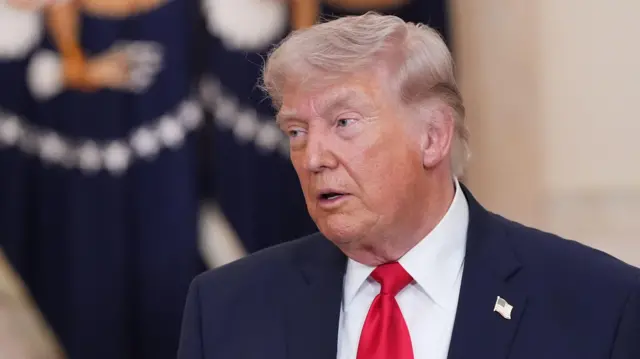
    US President Donald Trump has published an expletive-laden post on social media in which he threatened to destroy Iran's power plants and bridges if it failed to meet his new Tuesday deadline to reopen the Strait of Hormuz.

    "Tuesday will be Power Plant Day, and Bridge Day, all wrapped up in one, in Iran," he wrote. "There will be nothing like it!!!"

    Initially, his deadline was set for Monday 6 April, having posted on Saturday 4 April that Iran had "48 hours" to make a deal.

    But hours after posting his latest threat to Iran on Truth Social which referenced "Tuesday", Trump followed up with "Tuesday, 8:00 P.M. Eastern Time!" (01:00 BST on 8 April) - an apparent extension of the deadline.

    The US president has postponed deadlines for the reopening of the Strait of Hormuz several times.

    Later on Monday evening, Trump also told Fox News there was a "good chance" a deal would be reached on Monday, but he was considering "blowing everything up and taking over the oil" if one was not made quickly.

    The president's latest remarks came as he announced that the second crew member of a US fighter jet downed over Iran had been successfully rescued in an operation deep inside hostile territory.

    BBC White House reporter Bernd Debusmann Jr says that although Trump has been quick to claim the victory as evidence that the US has achieved "overwhelming air dominance and superiority", sources tell him that it is a little more complicated.

    Follow along with our live coverage for the latest updates.