Summary

  1. Countries supplying arms to Iran to face tariffs - Trumppublished at 12:35 BST

    In a follow-up post, Trump writes:

    "A Country supplying Military Weapons to Iran will be immediately tariffed, on any and all goods sold to the United States of America, 50%, effective immediately. There will be no exclusions or exemptions!"

  2. Trump says US 'working closely' with Iranpublished at 12:32 BST
    Breaking

    Trumps briefs media at the White HouseImage source, YURI GRIPAS/POOL/EPA/Shutterstock

    US President Donald Trump has posted on Truth Social.

    He says that the US will work with Iran, "which we have determined has gone through what will be a very productive Regime Change!"

    Trump says Iran won't enrich uranium, and the US will work with Tehran to "dig up and remove all of the deeply buried (B-2 Bombers) Nuclear 'Dust.'

    "It is now, and has been, under very exacting Satellite Surveillance".

    He adds: "Nothing has been touched from the date of attack. We are, and will be, talking Tariff and Sanctions relief with Iran. Many of the 15 points have already been been agreed to."

  3. Iran-US ceasefire a 'fragile truce', says JD Vancepublished at 12:11 BST

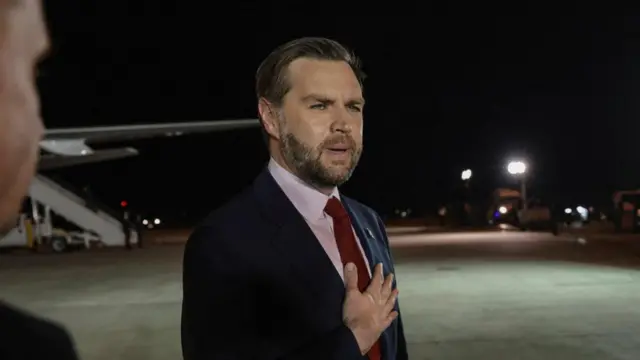
    US Vice-President JD Vance describes the ceasefire as a "fragile truce", urging Iran to negotiate in "good faith" for a long-term deal.

    Speaking in Budapest, where he's supporting Hungary's PM Viktor Orbán ahead of the country's national elections on Sunday, Vance says an agreement is possible if "Iranians are willing in good faith to work with us".

    But he warns that if they "prevent even the fragile truce that we've set up from taking place, then they're not going to be happy".

    Pakistan's PM Shehbaz Sharif - who has been mediating talks - says Islamabad will host US and Iranian delegations on Friday "to further negotiate for a conclusive agreement to settle all disputes".

    There have been reports from Iranian media that Vance will head US negotiations with Iran, but we're yet to hear from Washington on this.

    Media caption,

    JD Vance explains 'fragile truce' between US and Iran

  4. Analysis

    Why Iran’s defensive strategy might make a ceasefire difficultpublished at 11:59 BST

    Joe Inwood
    World news correspondent

    A woman walks among buildings destroyed in a joint attack by Israel and the United States on April 6, 2026, in Tehran, IranImage source, Getty Images
    Image caption,

    For more than a month, the US and Israel launched co-ordinated attacks on Iran

    Usually, the killing of the entire political and military leadership of a country would lead to chaos, maybe even collapse. In Iran, this has not happened.

    That may be due to their adoption of what’s known as a decentralised mosaic defence strategy, effectively devolving operational power to local commanders.

    They would have a list of objectives and be empowered to operate independently, without expecting communication from Tehran.

    This offered protection from the US and Israeli “decapitation” strategy - in which almost the entire top brass were killed.

    However, it could also be an impediment to peace. Without an effective chain of command, circulating orders to cease fire may be difficult.

    Obviously we won’t know for a while, but this could well lead to the possibility of attacks continuing, even as the political leadership in Tehran tries to do a deal.

  5. Strikes still being reported by some Gulf countriespublished at 11:55 BST

    While Washington and Tehran have agreed a temporary truce for two weeks, some countries in the region are still reporting strikes from Iran.

    Attacks won't necessarily have been ordered by the country's leadership, as Iran gave regional commanders the power to order strikes and it may take time for ceasefire orders to filter through.

    This is what we've heard so far this morning:

    Kuwait

    The military says it has been dealing with "an intense wave of hostile Iranian attacks" since 08:00 local time (06:00 BST).

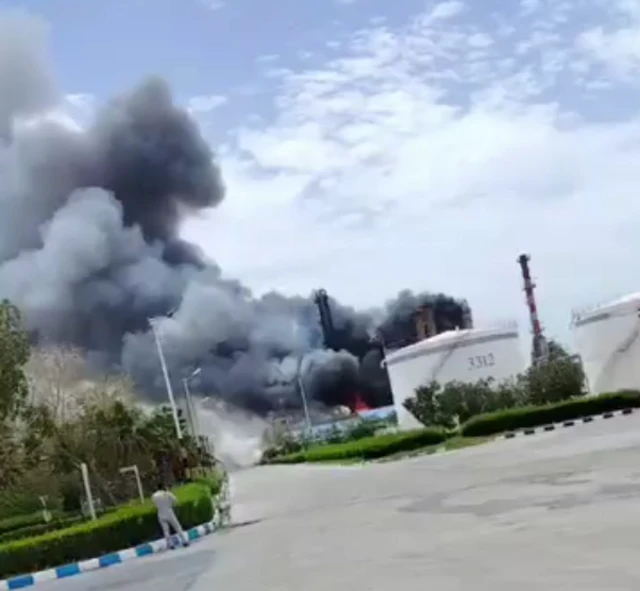
    Twenty-eighty drones have been intercepted, it says, but the attacks have caused "severe material damage" to oil infrastructure, power stations and water desalination plants.

    United Arab Emirates (UAE)

    Since the ceasefire came into effect, the country's Ministry of Defence says it has been "actively engaging" with missiles and drones.

    The attacks originated from Iran, it says in the update, and urges people to follow safety protocols.

    • Earlier in the day, we also heard from Bahrain, which said two people had minor injuries after an Iranian drone attack. The government did not confirm whether this took place before the temporary truce was announced.
  6. Iraqi airports to reopen, says country's aviation chiefpublished at 11:48 BST

    Iraq's airspace will be reopening, the president of the Iraqi Civil Aviation Authority says.

    Bangen Rekani announces in a post on X that all airports in the country will be reopening "starting from today", following comments last week that daily assessments were being conducted in an attempt to open "one or more airports, even partially".

    Ahmed Hoshyar, the director of Iraq's Erbil International Airport, has also confirmed the reopening of the country's airspace in reports carried by local Iraq news outlets.

    The INA separately reported that Kirkuk Airport would open within 24 hours.

  7. Iran's internet blackout enters 40th daypublished at 11:13 BST

    Iranians are still widely blocked from using the internet, a shutdown that a monitoring group says has now entered its 40th day.

    "The wartime censorship measure continues, even as the US and Iran regimes each declare victory, with the Iranian people once again left in the dark," internet monitoring group NetBlocks says.

    While the near-total shutdown continues, some people have managed to stay connected using satellite internet Starlink and other methods, although they’re paying a hefty price for it.

    In Iran, using or possessing a Starlink device can lead to up to two years in prison, and authorities have been trying to crack down on it.

    It is also costly, with internet access via Starlink being sold on the Telegram messaging app for around $6 (£4.50) for 1 GB of data - a high price in a country where the average monthly salary is estimated to be between $200 and $300 (£149 - £223).

    A graph from Netblocks shows near-total drop in internet traffic in Iran from the 28th of Feb, with an almost flat line until today, 8 April.Image source, Netblocks
  8. BBC Verify

    Videos show aftermath of overnight strike in south Lebanonpublished at 11:01 BST

    A screenshot from a video of around 5 people looking at a large fire and smoke outside a damaged building at nightImage source, X

    By Shruti Menon and Peter Mwai

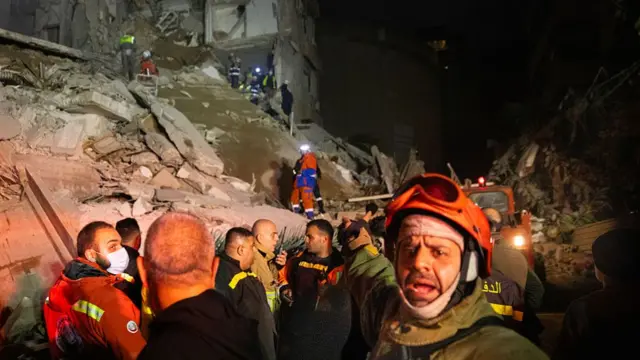
    BBC Verify has examined videos showing the aftermath of a reported overnight strike targeting a vehicle outside a cafe in the city of Sidon in southern Lebanon.

    Two verified clips show at least one vehicle on fire and a plume of smoke rising, as people gather nearby and firefighters battle to douse the blaze.

    Footage recorded later shows the fire has been extinguished and damage to the cafe and other vehicles nearby is clearly visible.

    Lebanon’s Ministry of Health says eight people were killed and 22 injured in an Israeli attack.

  9. Oil prices still higher than before the war, despite droppublished at 10:50 BST

    Dearbail Jordan
    Senior business reporter

    Oil prices continued to fall on Wednesday following plans for a conditional ceasefire between the US and Iran.

    Brent crude dropped by nearly 15% to $94 (£70) per barrel.

    It is a significant decline from highs of nearly $120 as missiles flew across the Gulf and US President Donald Trump confused markets with contradictory statements - at one moment hinting at an exit strategy before, just hours later, threatening to hit Iran "extremely hard".

    There was also Iran's effective closure of the Hormuz strait - one of the world's busiest oil shipping channels - leaving shipments from the Middle East severely disrupted.

    While the fall in oil prices is to be welcomed, Brent crude is 30% more expensive than it was before the conflict began on 28 February.

    This Flourish post cannot be displayed in your browser. Please enable Javascript or try a different browser.

  10. Analysis

    Trump's threat that 'a whole civilisation will die' didn't materialise - but it may have done lasting damagepublished at 10:37 BST

    Joel Gunter
    Reporting from Jerusalem

    There is relief both here in the region and globally that US President Donald Trump backed down from his threat on Tuesday to Iran - that “a whole civilisation will die tonight”.

    But his remark can’t be erased from the record. Even for a president known for bellicose threats, the wording of the statement was newly shocking in its dark and aggressive attitude.

    Trump is the head of an administration that is supposed to be helping to negotiate peace in Ukraine and in Gaza. His key negotiators on those issues - son-in-law Jared Kushner and former real estate developer Steve Witkoff - are the same two men working on Iran.

    How much credibility can Trump and his team project in those other arenas after such a threat, which, whether Trump meant it or not, carried a genocidal tone.

    Trump has brushed off questions about the legality of his previous threats to destroy civilian infrastructure in Iran, including power plants and bridges, suggesting that he is untroubled by legal and moral boundaries involved.

    Joe Kent, a former director of the National Counterterrorism Center, who resigned in March in protest over the Iran conflict, warned yesterday that if Trump went through with his threat it would severely damage the US on the world stage.

    "If he attempts to eradicate Iranian civilisation, the United States will no longer be viewed as a stabilising force in the world, but as an agent of chaos - effectively ending our status as the world’s greatest superpower.”

    Trump did not go through with it last night. But his threat alone may have done lasting damage.

  11. Criticism and celebration for truce deal - how European leaders are respondingpublished at 10:27 BST

    Pedro Sanchez speaking in a room panelled with woodImage source, EPA/Shutterstock
    Image caption,

    Spanish Prime Minister Pedro Sánchez

    European leaders have largely welcomed the temporary truce agreed by the US and Iran. Here's what we've heard about who leaders think should take the credit for the deal, and what should happen next.

    • Keir Starmer, the UK prime minister, says the ceasefire "will bring a moment of relief to the region and to the world", and calls for partners to "do all we can" to sustain it
    • "Ceasefires are always good news," says Spanish Prime Minister Pedro Sánchez. But he says his government "will not applaud those who set the world ablaze just because they turn up with a bucket"
    • Ukrainian President Volodymyr Zelensky says it's "important" that the US "has taken this diplomatic step", and calls for the interests of "every nation" to be taken into account when making decisions about a post-war world
    • Austria's Chancellor Christian Stocker thanks Pakistan for its "successful mediation efforts", and says that the window for diplomacy has opened "a little further"
  12. Iranian media reports clean-up operation under way in Tehranpublished at 10:20 BST

    A landscape image of rubble on the ground in front of a partially collapsed buildingImage source, Sobhan Farajvan/Pacific Press/LightRocket via Getty Images
    Image caption,

    An information and communication technology building at Sharif University of Technology, western Tehran, after strikes

    The Tasnim news agency, which is linked to the Islamic Revolutionary Guards Corps, is reporting that a clean-up operation and the initial stages of reconstruction has begun in Tehran.

    Citing one of the city's district mayors, Tasnim reports that debris has begun to be removed and roads reopened while in some places the ground is being levelled for the beginning of reconstruction work.

  13. Saudi Arabia says it supports efforts to reach permanent dealpublished at 10:10 BST

    Reacting to news of the temporary ceasefire agreed between Iran and the US, Saudi Arabia says it welcomes the announcement.

    "The Kingdom affirms its support for the mediation efforts undertaken by the Islamic Republic of Pakistan to reach a permanent agreement that achieves security and stability and addresses all the issues that have caused instability and insecurity for several decades," a statement from the country's foreign ministry says.

    "At the same time, the Kingdom emphasises the necessity of keeping the Strait of Hormuz open... without any restrictions".

    The statement adds that Saudi officials hope the ceasefire will enhance the "security of the region" and that attacks on other countries in the Middle East "will cease".

    • For context: Gulf Arab states - Saudi Arabia, UAE, Qatar, Bahrain, Kuwait and Oman - have expressed anger after coming under almost daily bombardment from Iran's drones and missiles despite declining to back the war on Iran. There's more on that here.
  14. Analysis

    Oil price down, markets up - but economic scarring could remainpublished at 09:55 BST

    Faisal Islam
    Economics editor

    Markets have responded positively to the ceasefire, with a notable fall in the oil price and a rally in stock markets. However, there are many reasons for caution.

    There are different accounts over the next stage of negotiations between Iran, the US, and Israel. The test is whether face-to-face negotiations actually occur.

    Then there is the physical situation in the Strait of Hormuz. Will traffic flow freely, as suggested by President Trump?

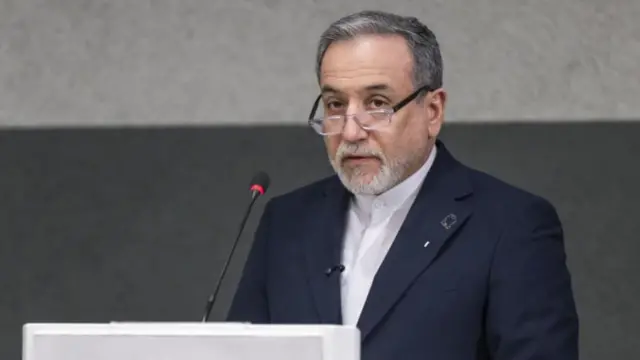
    Or will it flow "via coordination with Iran’s Armed Forces and with due considerations to technical limitations", as suggested by Iran’s foreign minister? This is vital, not just for oil and gas - but also jet fuel, sulphur, urea, and diesel.

    This also raises a fundamental question about any peace. Iran has now created a new reality in the Gulf: it has established that it can control the key maritime chokepoint, even without a functioning navy and airforce. It had even begun to collect tolls. Will this remain? Will the Gulf nations accept this?

    Global gas production will likely to be damaged for some years, following direct damage to infrastructure, mostly in Qatar. It will take weeks to restart production - and years for that production to be back to pre-war capacity.

    So the absence of a further escalation is a relief for the global economy. The depth of the economic scarring from this conflict remains an open question.

    This Flourish post cannot be displayed in your browser. Please enable Javascript or try a different browser.

  15. FTSE rises as markets respond positively to ceasefire newspublished at 09:35 BST

    Jemma Crew
    Business reporter

    European markets are responding positively to news of the ceasefire.

    The FTSE 100 was up by 2.5% in early trading after London markets opened on Wednesday.

    In France, the CAC 40 was up 4.07% in early trading, while Germany’s DAX rose by 4.87%.

    Stock markets also rallied in Asia - Japan's Nikkei gained 5.5%, the Kospi in South Korea rose 6.8%, Hong Kong's Hang Seng exchange gained 3%, and Shanghai's composite index rose 2.5%.

  16. IDF says it has stopped attacking Iran, but will continue in Lebanonpublished at 09:23 BST
    Breaking

    The Israel Defense Forces (IDF) says it has stopped attacking Iran, but will continue operations in Lebanon.

    In a statement, it says that it "completed a wave of strikes in Iran" and has now ceased fire "in accordance with directives" from political leadership.

    It adds that it is "highly prepared to respond defensively against any violation" against Israel.

    However, against Hezbollah in Lebanon, "the IDF is continuing to conduct targeted ground operations", it says.

  17. It will take time for Strait of Hormuz traffic to return - analystpublished at 09:06 BST

    A Maersk container ship, seen in Spain last monthImage source, Reuters
    Image caption,

    A Maersk container ship, seen in Spain last month

    The two-week ceasefire announced by Donald Trump last night requires Iran to reopen the Strait of Hormuz.

    But shipping analyst Lars Jensen, who previously worked for Danish logistics giant Maersk, tells BBC Radio 4's Today programme that "nothing has really changed yet" in the strait - adding "it will take time" for trust to build.

    He say he expects to see many vessels exiting the Gulf in the next few days, but only a "trickle" entering due to the possibility of ships becoming trapped if the ceasefire breaks down.

    This Flourish post cannot be displayed in your browser. Please enable Javascript or try a different browser.

  18. Israeli air strikes hit southern Lebanonpublished at 08:43 BST
    Breaking

    Hugo Bachega
    Middle East correspondent, reporting from Saida in southern Lebanon

    Media caption,

    Strike hits Tyre in Lebanon after Israeli evacuation warning

    The Israeli military has carried out a wave of air strikes in southern Lebanon this morning - an indication that, for Israel, the US-Iran ceasefire deal does not apply to Lebanon.

    This morning, air strikes hit the Tyre and Nabatieh areas in the south of the country, after the agreement was announced.

    The Israeli prime minister, Benjamin Netanyahu, has denied that the deal also covers the conflict with the Iranian-backed Lebanese armed group Hezbollah here.

    We’re still waiting to hear from the Lebanese government and Hezbollah. Pakistan, which mediated the deal, indicated that deal also involved Lebanon.

    In recent days, reports suggested that Hezbollah had called on Iran to include the Lebanese front in any agreement.

    Israel, meanwhile, has indicated it is seeking to create what it describes as a security buffer zone along the border inside Lebanese territory. Israeli troops have invaded Lebanon, and there are fears this could result in the occupation of parts of the country.

    Smoke rises from an explosion in the Abbasiyeh neighbourhood following an Israeli strike, in Tyre, Lebanon, April 8, 2026.Image source, Reuters
    Image caption,

    Smoke billows after a blast in Tyre, Lebanon, on Wednesday

  19. How the countdown to Trump's Iran deadline ticked bypublished at 08:38 BST

    Freya Scott-Turner
    Live reporter

    On Sunday, Donald Trump demanded that Iran reopen the Strait of Hormuz by 20:00 EDT on Tuesday (00:00 GMT / 01:00 BST). He later followed up with a threat to end Iran's "civilisation".

    As the deadline approached, here's how the diplomacy and announcements unfolded...

    12:06 GMT (13:06 BST):Donald Trump threatens that "a whole civilization will die tonight", unless Iran reopens the Strait of Hormuz.

    15:28 GMT: Iran's foreign affairs spokesperson Esmaeil Baqaei says Iran's "logic" will prevail over "brute force".

    19:17 GMT: Pakistan's prime minister - who was mediating - asks Trump to extend his deadline "to allow diplomacy to run its course".

    22:32 GMT: Trump announces a two-week "double sided ceasefire", if Iran agrees to "the complete, immediate and safe opening" of the Strait of Hormuz. The US president adds that a 10-point proposal he's received from Iran is "workable", and there will be a two week period to finalise the agreement.

    23:11 GMT:Tehran confirms a two-week ceasefire and safe passage through the Strait of Hormuz if attacks against Iran stop.

    23:50 GMT: Just minutes before Trump's deadline, Pakistan confirms the US and Iran have agreed to a ceasefire "effective immediately". The prime minister says it applies "everywhere including Lebanon".

    01:45 GMT:Israel says that it supports the ceasefire, but adds that it "does not include Lebanon".

    04:01 GMT:Trump hails a "big day for World Peace", saying the US will be "'hangin' around'" to help with traffic in the Strait of Hormuz.

    06:05 GMT: Israel tells people in the southern Lebanese city of Tyre to evacuate "immediately" for their safety - with attacks later reported.

    How Donald Trump announced the ceasefire: Donald J. Trump @realDonaldTrump + Based on conversations with Prime Minister Shehbaz Sharif and Field Marshal Asim Munir, of Pakistan, and wherein they requested that I hold off the destructive force being sent tonight to Iran, and subject to the Islamic Republic of Iran agreeing to the COMPLETE, IMMEDIATE, and SAFE OPENING of the Strait of Hormuz, I agree to suspend the bombing and attack of Iran for a period of two weeks. This will be a double sided CEASEFIRE! The
    Image caption,

    How Donald Trump announced the ceasefire

  20. Two injured in Iranian strike on Bahrain, government sayspublished at 08:17 BST

    Two people in Bahrain have "minor injuries" after an Iranian drone attack, says its interior ministry.

    It adds that "a number of houses" were damaged in the Sitra area due to falling shrapnel from the drone.

    The government has not confirmed whether the drone was fired before the US-Iran two-week ceasefire was announced.