Summary

  1. 'Lucky shot' downed US fighter jet, Trump insistspublished at 17:06 BST
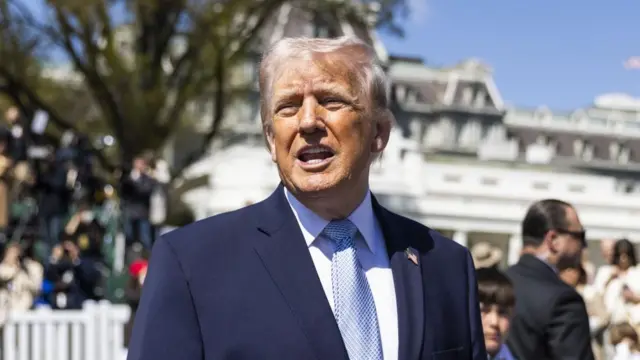
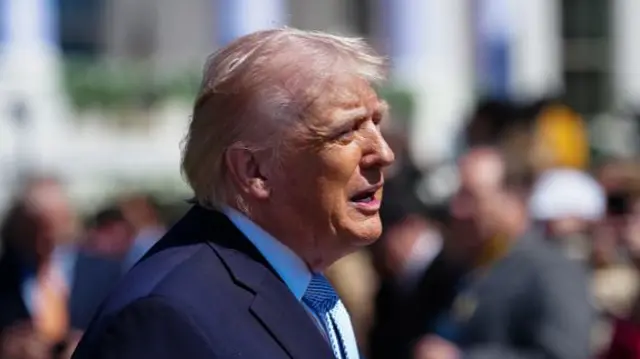
    Donald Trump in a dark suit speaking outside.Image source, EPA

    Returning to the rescued airman, Trump said Iran was able to down a US aircraft with a "lucky shot".

    However, he conceded "we have some helicopters with a lot of bullet holes in them right now probably".

    Before ending his remarks to journalists, Trump also insisted, amid an intense US-Israeli bombing campaign, "the Iranian people are most unhappy... when those bombs stop".

    The president repeated his demand that Iran could not have nuclear weapons. "They are lunatics and you can't put nuclear weapons in the hands of a lunatic," he said.

    We'll hear more from Trump at his press conference at 13:00 ET (18:00 BST).
  2. Trump repeats threats on power plants and bridges - but says US 'won't go further'published at 16:54 BST

    We can bring you more now from Trump's comments to the press made a short while ago at the White House.

    The president repeated threats to Iran that the US would continue striking its infrastructure if they don't surrender.

    "And if they don't, they'll have no bridges. They'll have no power plants. They'll have no anything."

    He added that he "won't go further, because there are other things that are worse than those two."

    "If I had my choice, what would I like to do? Take the oil," he says.

    "Because it's there for the taking. There's not a thing they can do about it.

    "Unfortunately the American people would like to see us come home. If it were up to me I'd take the oil, I'd keep the oil [...] make plenty of money and I'd also take care of the people of Iran."

  3. Trump claims he used expletives to make his point on Hormuzpublished at 16:26 BST

    A side view of Donald Trump outside with a crowd in the background.Image source, Getty Images

    Continuing his remarks to the press, Trump is asked why he used "such vulgar language" in his Truth Social post yesterday - referencing the expletives he used in his latest threat for Iran to open the Strait of Hormuz.

    "Only to make my point," he replies.

    "I think you've heard it before."

  4. Trump speaks to press at Easter White House celebrationspublished at 16:23 BST

    President Trump is speaking to the press as Easter celebrations continue at the White House.

    He insists negotiations are happening with "reasonable people" in the Iranian government.

    He says Iran's new leaders are much less radicalised compared to previous leaders who have been killed since the start of the war.

  5. A bizarre split screen at the White Housepublished at 16:18 BST

    Bernd Debusmann Jr
    Reporting from the White House

    I'm currently at the White House, where President Trump and his wife Melania are presiding over the annual Easter Egg Roll - while at the same time discussing the very serious ongoing war in Iran.

    The Easter Egg Roll is a long-running tradition at the White House, which first marked it in 1878.

    It's, in theory, a light-hearted event in which staff members, guests and even reporters bring their children along.

    This year's edition is expanded, and besides the hunt for Easter eggs there are activity stations such as "Hen to Home" - in which children can get a close look at live chicks, as well as a military card writing station and lunar exploration experience.

    The carefree, child-focused atmosphere, however, stands in stark contrast to President Trump's comments on Iran, which is says is "not so strong" now following more than a month of sustained US and Israeli bombing.

    We're expecting more substantive comments on the war at his later news conference in the White House briefing room.

    It is clear, however, that he is celebrating the success of the complex and dangerous search-and-rescue mission inside Iran as a notable victory - in a war that seems to many Americans to be getting more complicated and difficult to get out of.

  6. Trump talks Iran war and airman rescue at Easter eventpublished at 16:15 BST

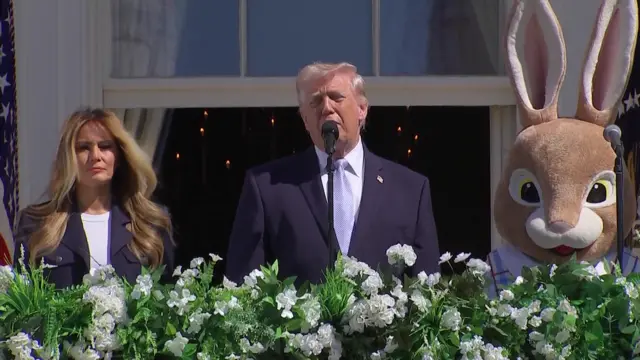
    Donald Trump speaking into microphone. To his left is Melania Trump, to his right a large easter bunny in costumeImage source, Reuters

    US President Donald Trump has been now speaking at the White House's annual children's Easter event.

    Flanked by the Easter Bunny, Trump starts by speaking about the war in Iran and yesterday's rescue of an injured airman left stranded in a remote mountainous region of Iran after his aircraft was shot down.

    "It's something that you rarely see," Trump says of the rescue, calling it difficult and high-risk. "I don't think it gets much more hostile than Iran."

    He says it's hard to conduct such an operation within the territory of an enemy that is "strong", but adds that Iran is not as strong as it was a month ago.

    Trump also teased his news conference later today - around 13:00 local time (18:00 BST) - during which he's expected to speak more about the war and the rescue.

    Trump is now taking questions from the press at the White House - watch live at the top of the page.

  7. Iranian demands includes 'an end to hostilities in the region' - state mediapublished at 16:12 BST

    Ghoncheh Habibiazad
    Senior reporter, BBC Persian

    According to Iranian state news agency IRNA, in its 10-point response Iran has rejected a ceasefire and emphasised the necessity of a permanent end to the war.

    It says the response includes a list of Iranian demands - "including an end to hostilities in the region, a protocol ensuring safe passage through the Strait of Hormuz, as well as reconstruction and the lifting of sanctions".

    IRNA adds that US President Donald Trump "by extending the repeated deadline once more, has stepped back from his previous threats."

  8. Iran rejects ceasefire plan in response to peace proposal - Iranian mediapublished at 16:06 BST
    Breaking

    The state-run Iranian news agency Irna is now reporting that Tehran has submitted its response to a US proposal to end the war.

    The agency reports the 10-point response includes a rejection to a proposed ceasefire, saying there needs to be a permanent end to the war.

  9. Trump to face the media at afternoon press conferencepublished at 15:58 BST

    Bernd Debusmann Jr
    Reporting from the White House

    It's already extremely crowded at the White House, where dozens of reporters have come in early to stake their claims on limited real estate in the briefing room ahead of President Donald Trump's news conference this afternoon.

    When Trump steps up to the podium at 13:00 local time, he will be peppered with questions about the successful rescue operation that recovered the two crew members of a US F-15, as well as where he sees the conflict going in coming days, weeks and months.

    One question that he is likely to face is about the lingering threats to US forces, despite his claims that Iran's military is largely unable to function.

    Trump has claimed that US forces have achieved "air superiority" over Iran.

    That does not mean they are immune to threats, as the pilots of at least two aircraft found out in recent days. It may, however, mean that any escalation could result in US casualties that might prove domestically difficult for the administration.

    Trump is also likely to be asked about the state of any ongoing negotiations or potential ceasefire - which the White House this morning described this morning as "an option".

    There is also, of course, his looming deadline to begin hitting Iranian energy targets.

  10. 'It's for President Trump to explain his language' - UK government ministerpublished at 15:43 BST

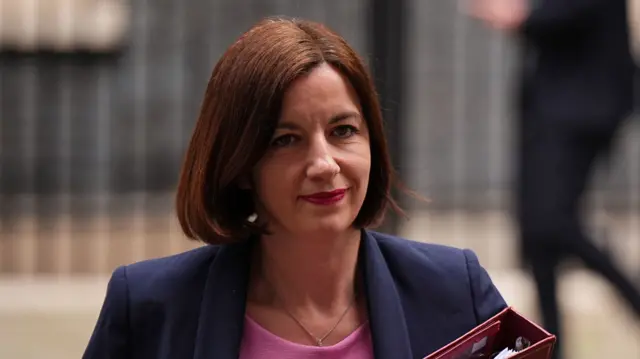
    Bridget Philipson headshotImage source, PA Media

    We've had some reaction through to Donald Trump's expletive-laden threat aimed towards Iran on social media yesterday.

    UK Education Secretary Bridget Phillipson has distanced the government from his choice of language.

    "We see this kind of language often used by President Trump. It's for President Trump to explain the language that he chooses to use. It is not language or an approach that this Government would be taking," she says as she reiterates the UK's position within the war is to participate in defensive action only.

  11. Five key points to remember about the Strait of Hormuzpublished at 15:41 BST

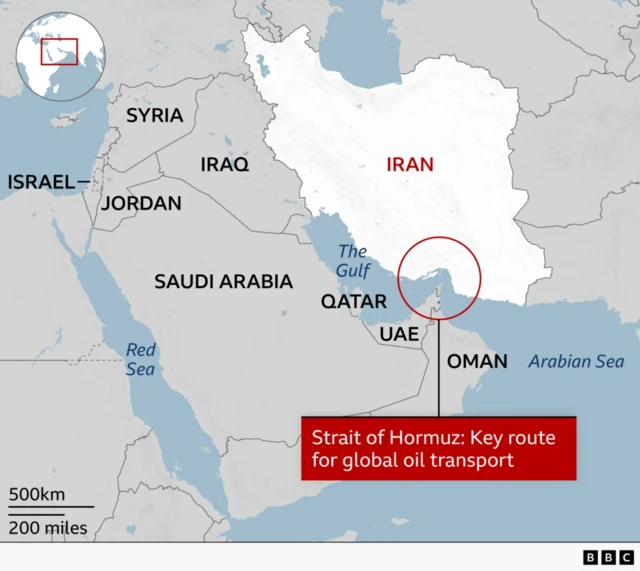
    A graphic showing a map of the Middle East, highlighting the Strait of Hormuz at its narrowest point between Iran and Oman.

    It's critical to the global economy

    The Strait of Hormuz is one of the world's busiest oil shipping channels, and about 20% of the world's oil and liquefied natural gas usually passes through it. It also carries a third of the world's fertiliser trade, and is a vital channel for food, medicines and technological supplies.

    Iran can influence traffic through the channel with attacks and threats

    The strait is narrow, and it has been easy for Iran to launch strikes at commercial ships - even after most of its navy was destroyed. The fear of being attacked means most vessels will not attempt the crossing without Iran's blessing, which gives the country significant leverage.

    It would be difficult to force open

    Trump has suggested countries that can't get fuel through the strait should “build up some delayed courage, go to the Strait, and just TAKE IT".

    But Maersk chief executive Vincent Clerc told the BBC that while naval escorts could offer a "temporary reprieve", it would take a "significant presence from the Navy to be able to provide a shield all the way through" - and even then, shipping and insurance companies would still balk at the risk.

    Economic pressure is mounting fast

    The strait's closure has dramatically pushed up global energy prices, with oil hitting $110 (£83.38) a barrel on Monday, and will also impact food, smartphones and medicines.

    Trump is furious over this political flashpoint

    Yesterday, in an expletive-filled post on Truth Social, he warned Iranians they would be "living in hell" if they did not meet his Tuesday deadline for reopening the strait. Trump has postponed his deadlines several times.

    Media caption,

    'We are at the edge of a battlefield': BBC reports near Strait of Hormuz

  12. Trump's shifting deadlines over the Strait of Hormuzpublished at 15:11 BST

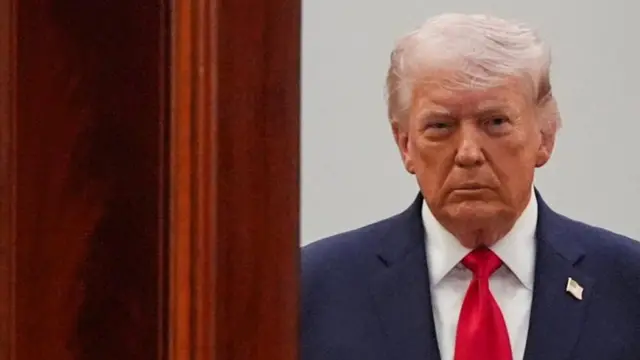
    Donald Trump stands next to a wooden doorImage source, Reuters

    We are due to hear from Donald Trump later today on the war in Iran.

    Sunday saw him issue the latest in a series of threats to attack civilian infrastructure in Iran, if the country didn't open up the Strait of Hormuz by 6 April.

    But his deadlines have chopped and changed over the course of the war - here's a recap.

    • Deadline 1: On 21 March, Trump said he would "hit and obliterate" power plants, "starting with the biggest ones first", if Iran didn't reopen the waterway within 48 hours
    • Deadline 2: Two days later, he said there had been "very good and productive conversations" between the countries and postponed strikes against energy infrastructure for five days
    • Deadline 3: On 27 March, Trump said he would postpone attacking energy plants for 10 days, "as per [an] Iranian government request", bringing the deadline to 6 April
    • 48-hour warning: On Friday, with the 6 April deadline looming, he warned that Iran had "48 hours" before he unleashed "all hell"
    • Latest threat: In a Sunday post peppered with expletives, Trump reiterated this threat, saying that "Tuesday will be Power Plant Day, and Bridge Day" - in a later post he said "Tuesday, 8:00 P.M. Eastern Time!"
  13. UAE says Iran's strategy likely to push Gulf states closer to USpublished at 15:00 BST

    Lorna Gordon
    Reporting from Dubai

    The United Arab Emirates is warning against a ceasefire that fails to address key issues in the region, including Iran’s nuclear programme and “the missiles and drones which are still raining down on us and other countries".

    Dr Anwar Gargash, a senior adviser to the UAE president, made the comments in a briefing that his country wants to see an end to the conflict but not one that creates continuous instability in the region going forward.

    Iran has had a chokehold on the Strait of Hormuz during this conflict. A handful of tankers are passing through the waterway every day, but the numbers are vastly reduced compared to normal.

    He said Iran’s strategy was likely to harden the Gulf’s security alignment with Washington - not reduce it - and lead to Israeli influence in the region becoming more prominent. He added that the UAE would “double down” on its relationship with the United States.

    He said “the Strait of Hormuz cannot be held hostage by any one country” and while the UAE was not ready to act as a maritime force, it would join "any American-led effort, international effort to secure navigation in the Strait.”

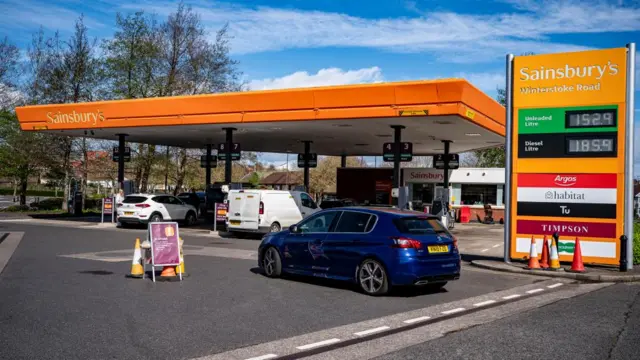
    Prices at a petrol station in Bristol on SundayImage source, PA Media
    Image caption,

    Cars at a petrol station in Bristol on Sunday

  14. 'Illegal and unacceptable': European Council president on civilian infrastructure strikespublished at 14:39 BST

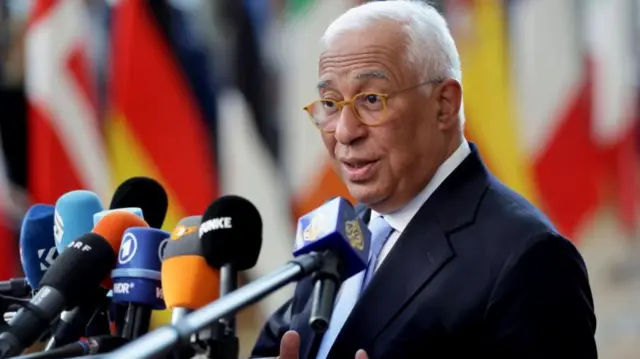
    António Costa is shown speaking behind a bank of microphones. He is wearing a dark blue suit with a white shirt and light blue tie.Image source, EPA

    Strikes on civilian targets are illegal, says the European Council's president - and "only a diplomatic solution" will end the war with Iran.

    "Any targeting of civilian infrastructure, namely energy facilities, is illegal and unacceptable," António Costa said in a post on X earlier this morning.

    His statement comes after threats by US President Donald Trump to destroy Iranian infrastructure if the Strait of Hormuz is not reopened.

    Luis Moreno Ocampo, founding chief prosecutor of the International Criminal Court, has previously told the BBC that the war on Iran amounts to a crime of aggression under international law.

    More than 100 experts on international law have also signed an open letter expressing "profound concern" about what they see as serious violations of international law by the US, Israel and Iran.

  15. Second Iranian petrochemical complex targeted - local mediapublished at 14:28 BST

    Multiple Iranian agencies are reporting the Marvdasht Petrochemical Complex has been targeted in an "enemy attack".

    The Fars news agency says the attack resulted in a fire that was "contained within the first few minutes".

    Citing the Marvdasht County Governor's Office, the semi-official Tasnim news agency adds that "no significant damage was inflicted" on the industrial unit.

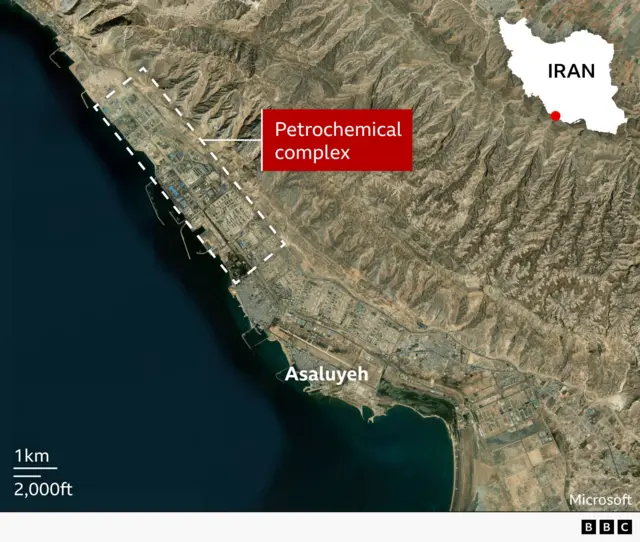
    Earlier, Israel said it had struck the South Pars petrochemical plant in Asaluyeh, in the south of Iran.

  16. What you need to know about the war in the Middle East on Mondaypublished at 14:19 BST

    Jacob Phillips
    Live reporter

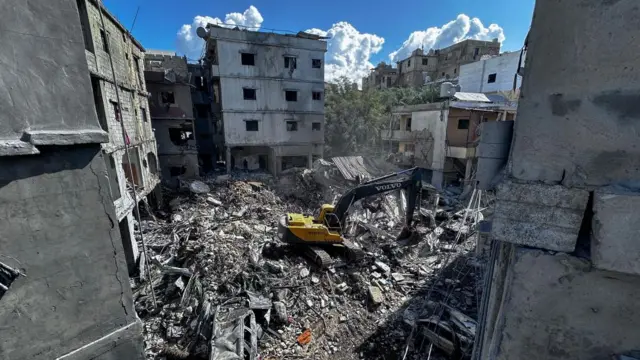
    A yellow crane sits in the middle of a square in Beirut surrounded by several damaged buildings. The floor has been completely covered in rubble from a recent airstrikeImage source, EPA/Shutterstock
    Image caption,

    The aftermath of an Israeli airstrike near Lebanon's largest public hospital in Beirut

    • The latest attack comes after US President Donald Trump warned of bigger strikes against Iranian infrastructure in an expletive-laden social media post
    • Trump said Tuesday will be "Power Plant Day and Bridge Day" if Iran does not reopen the Strait of Hormuz - a key choke point where around 20% of the world's oil passes through
    A satellite map of the coastal city of Asaluyeh in southern Iran, showing a large petrochemical complex along the shoreline. The complex is highlighted with a red label and outlined by dashed white lines. Mountains lie to the northeast, and the coastline runs north–south along the left side of the image. A small inset map of Iran in the top-right corner marks the location of Asaluyeh with a red dot. A scale bar indicates 1 km (2,000 ft).
  17. Israeli military kills wrong people in failed assassination attemptpublished at 14:01 BST

    Daniel De Simone
    BBC News, Jerusalem

    Pierre MouawadImage source, Lebanese Forces Party

    An Israeli attempt to assassinate a Hezbollah figure in Lebanon on Sunday instead killed a senior leader from a political group that is strongly opposed to Hezbollah.

    Approached by the BBC, the Israel Defense Forces (IDF) acknowledged the strike apparently failed to kill the intended target and that it "regrets the harm" to civilians.

    The Lebanese Forces Party, a largely Christian group, say the strike on an apartment block had killed senior official Pierre Mouawad and his wife Flavia.

    The apartment block was in Ain Saadeh, a predominantly Christian town east ​of Beirut. Lebanon's health ministry said it killed a man and two women.

    The local mayor says those killed were one ​floor below the targeted apartment.

    The IDF say reports that "several uninvolved individuals were harmed as a result of the strike are being reviewed.”

    The Lebanese Forces Party say Pierre Mouawad was "not a fighter, nor a military target” and that he had celebrated Easter at home with family before the deadly attack.

    The party condemned Hezbollah and say what happened is a result of military confrontations are being brought into residential neighbourhoods.

  18. Five conditions and 15-point plans: A look at previous proposals to end the warpublished at 13:40 BST

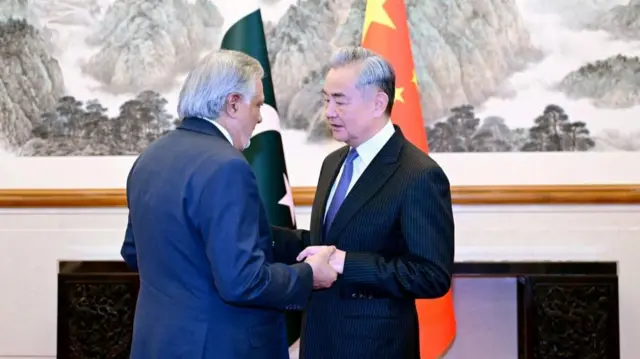
    Chinese Foreign Minister Wang Yi and Pakistani Deputy Prime Minister and Foreign Minister Mohammad Ishaq Dar shake hands in BeijingImage source, Chinese Foreign Ministry
    Image caption,

    A five-point ceasefire proposal was published by China and Pakistan, after their foreign ministers met in Beijing

    Some detail is starting to emerge about a rumoured ceasefire framework that's been passed to both the US and Iran. But this isn't the first time the idea of a peace plan has been broached.

    Previous negotiation reports have been unsuccessful, with the US and Iran either rejecting terms, or disputing that talks have even taken place.

    On 24 March, reports emerged that a 15-point plan had been sent to Iran by the US, with Pakistan acting as an intermediary.

    Israel's Channel 12 said it included demands Iran destroy key nuclear facilities, stop funding armed proxies in the region - such as Hezbollah or the Houthis - and open the Strait of Hormuz. In return, the US would remove sanctions from Iran.

    Tehran initially flatly rejected the plan - calling it "excessive" - but five conditions for ending the war were later published by Iranian state media. These included reparations and a guarantee that Iran would not be attacked again.

    Next, on 31 March, a five-point peace plan - drafted by Pakistan and China - was reported.

    The peace plan was drawn up after Pakistan's foreign minister flew to Beijing to ask for Chinese support for the country's efforts to negotiate an end to this conflict.

    It coincided with claims from Donald Trump that negotiations were going "extremely well", but Tehran stated that no talks were taking place.

    We also heard from Trump again on 2 April, when he claimed that Iran had asked the US for a ceasefire. This was swiftly described as "false and baseless" by Iran's foreign ministry.

  19. Reports of ceasefire plan 'one of many ideas and Trump has not signed off on it' - White House officialpublished at 13:35 BST

    As we reported earlier, the news agency Reuters says mediators are working on a new plan for an immediate ceasefire, citing unnamed sources.

    In response to that reporting, a White House official tells the BBC that this was "one of many ideas and [Trump] has not signed off on it. Operation Epic Fury continues."

    They add that Trump will "speak more" at a press conference at 13:00 local time (18:00 BST).

  20. Reported strikes come weeks after earlier attack on South Pars gas fieldpublished at 13:12 BST

    Monday's reports come weeks after international outcry over Israel's attack on Iran's South Pars gas field on 18 March.

    Tehran retaliated at the time by striking an energy complex in Qatar and attacking other energy targets in the Gulf.

    The attacks on energy infrastructure marked an escalation in the war launched by the US and Israel against Iran, which had already responded by restricting shipping through the Strait of Hormuz.

    They led to a spike in energy prices and US President Donald Trump later posted he had not known about the attack on South Pars in advance.

    The fallout raised questions over how united Israel and the US remain in their war aims; Israeli Prime Minister Benjamin Netanyahu subsequently stressed that Israel had "acted alone".

    Smoke and flames rise from the South Pars gas field following an Israeli strike in MarchImage source, Reuters
    Image caption,

    Smoke and flames rise from the South Pars gas field following an Israeli strike in March