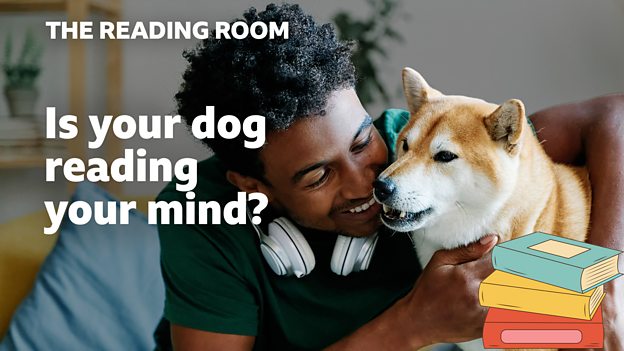

The Reading Room

Intermediate level

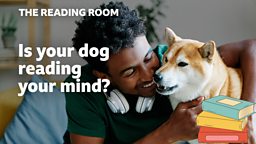
Is your dog reading your mind?

Episode 251105 / 05 Nov 2025

(Image: Getty)
___________________________________________________________________

More articles
_________________________________________________________

Hard: Upper intermediate level and above, B2 and above 

Introduction

Read the article and answer the questions below. To listen to this article, click here for an audio download.

Read 

1      Everyone knows that dogs are supposed to be our best friends. Could it be that they know what we are thinking? Whether it's getting excited at the prospect of a walk or knowing that tasty food is coming soon, are our dogs reading our minds?

2     Now, by mind-reading we're not talking about knowing our deepest thoughts in detail, but various psychologists have suggested that dogs might have a theory of mind. What this means is that they are aware that other creatures, like humans, are able to see and understand things in different ways. In various experiments it appears that dogs are able to identify who is paying them attention. They are more likely to ask for food from someone if there is a reason that the human would know where the dog treats are. If dogs have been forbidden food by someone, they are more likely to try and get it quietly.

3     As well as these behavioural studies, there are other things that show how dogs are able to relate closely to humans. Brain imaging studies have shown not only that canine brains react to human voices, but that they also show an emotional response to those human sounds which demonstrate strong feelings, such as laughing or crying. Brain scan studies have also shown that human faces also provoke an emotional response in dogs. Other studies have shown that sweat from people feeling scared could make dogs feel more stressed than sweat from happy people.

There is some debate about whether dogs have evolved to respond to human emotions as they have become domesticated or whether this behaviour is a learned reaction to stimuli. Experiments like those described above have also been carried out on wolves that have been raised by humans, who may have learned to respond to their carer's behaviour, but do not have the genes of a domesticated species. Wolves did show some abilities to respond to human emotions, but were less able to pick up more subtle clues.

5  Whether it's learned or innate, dogs' ability to read human emotions and intentions are one reason that we have included them in our lives for centuries. It's also why they have been successful as assistance dogs, helping their owners to get through everyday life.

Questions

1.   Match the headings to the paragraph.

Paragraph 1 ________
Paragraph 2 ________
Paragraph 3 ________
Paragraph 4 ________
Paragraph 5 ________

a. nature or nurture
b. companions and assistants
c. not just cats
d. different perspectives
e. canine brain responses
f. friendly mind readers?

2.    Choose the correct option based on the content of the article.

1. Dogs develop a detailed picture of what we are thinking.

a. True
b. False
c. Not given

2. Look at paragraph 3. What does 'they' refer to in the following sentence? 'They are more likely to ask for food from someone if there is a reason that the human would know where the dog treats are.'

a. humans
b. psychologists
c. dogs

3. Dogs know when they have to be secretive when getting food.
a. True
b. False
c. Not given 

4. Dogs show greater emotional responses than other commonly domesticated animals.

a. True
b. False
c. Not given

5. Dogs are better than wolves at responding to ________ signs from their carers.

a. obvious
b. subtle
c. quick

3.    Use the words from the list to complete the summary of the article.

It's clear that dogs 1) ________ to humans. Experiments have shown that these animals are 2) ________ that humans see things in a different way to them. 3) ________ have shown that dogs respond to human faces. They also show that human sounds that show strong emotions 4) ________ emotional responses. Studies have tried to show whether these reactions are 5) ________ or learned behaviours.

subtle
aware
domesticated
relate closely
innate
brain scans
provoke

Vocabulary 

aware
know of something

relate closely to
understand well and feel a connection with

brain scan
a study that takes images of the brain

provoke
make something happen

evolve
develop naturally over time

domesticate
train an animal to live with humans

stimulus
something that causes a reaction

genes
parts of DNA that tell living organisms how to grow and develop

subtle
difficult to notice

innate
a quality or ability that something naturally has

Answers

1.    Match the headings to the paragraph.

Paragraph 1 f) friendly mind readers?
Paragraph 2 d) different perspectives
Paragraph 3 e) canine brain responses
Paragraph 4 a) nature or nurture
Paragraph 5 b) companions and assistants


2.    Choose the correct option based on the content of the article. 

1. b. False.Now, by mind-reading we're not talking about knowing our deepest thoughts in detail, but various psychologists have suggested that dogs might have a theory of mind.

2. c. The pronoun 'they' refers to dogs in the previous sentence. In various experiments it appears that dogs are able to identify who is paying them attention'.

3. a. 'If dogs have been forbidden food by someone, they are more likely to try and get it quietly. 

4. c. Not given.The text does not mention other commonly domesticated animals.

5. b.Wolves did show some abilities to respond to human emotions, but were less able to pick up more subtle clues.

3.    Use the words from the list to complete the summary of the article.

It's clear that dogs relate closely to humans. Experiments have shown that these animals are aware that humans see things in a different way to them. Brain scans have shown that dogs respond to human faces. They also show that human sounds that show strong emotions provoke emotional responses. Studies have tried to show whether these reactions are innate or learned behaviours.

Next

Listen to the article.

Explore the the feelings and emotions topic page.

Listen to 6 Minute English: Do our pets care about us?

최신 The Reading Room