The Reading Room
Intermediate level
Is your dog reading your mind?
Episode 251105 / 05 Nov 2025

(Image: Getty)
___________________________________________________________________
More articles
_________________________________________________________
Hard: Upper intermediate level and above, B2 and above
Introduction
Read the article and answer the questions below. To listen to this article, click here for an audio download.
Read
1 Everyone knows that dogs are supposed to be our best friends. Could it be that they know what we are thinking? Whether it's getting excited at the prospect of a walk or knowing that tasty food is coming soon, are our dogs reading our minds?
2 Now, by mind-reading we're not talking about knowing our deepest thoughts in detail, but various psychologists have suggested that dogs might have a theory of mind. What this means is that they are aware that other creatures, like humans, are able to see and understand things in different ways. In various experiments it appears that dogs are able to identify who is paying them attention. They are more likely to ask for food from someone if there is a reason that the human would know where the dog treats are. If dogs have been forbidden food by someone, they are more likely to try and get it quietly.
3 As well as these behavioural studies, there are other things that show how dogs are able to relate closely to humans. Brain imaging studies have shown not only that canine brains react to human voices, but that they also show an emotional response to those human sounds which demonstrate strong feelings, such as laughing or crying. Brain scan studies have also shown that human faces also provoke an emotional response in dogs. Other studies have shown that sweat from people feeling scared could make dogs feel more stressed than sweat from happy people.
4 There is some debate about whether dogs have evolved to respond to human emotions as they have become domesticated or whether this behaviour is a learned reaction to stimuli. Experiments like those described above have also been carried out on wolves that have been raised by humans, who may have learned to respond to their carer's behaviour, but do not have the genes of a domesticated species. Wolves did show some abilities to respond to human emotions, but were less able to pick up more subtle clues.
5 Whether it's learned or innate, dogs' ability to read human emotions and intentions are one reason that we have included them in our lives for centuries. It's also why they have been successful as assistance dogs, helping their owners to get through everyday life.
Questions
1. Match the headings to the paragraph.
Paragraph 1 ________
Paragraph 2 ________
Paragraph 3 ________
Paragraph 4 ________
Paragraph 5 ________
a. nature or nurture
b. companions and assistants
c. not just cats
d. different perspectives
e. canine brain responses
f. friendly mind readers?
2. Choose the correct option based on the content of the article.
1. Dogs develop a detailed picture of what we are thinking.
a. True
b. False
c. Not given
2. Look at paragraph 3. What does 'they' refer to in the following sentence? 'They are more likely to ask for food from someone if there is a reason that the human would know where the dog treats are.'
a. humans
b. psychologists
c. dogs
3. Dogs know when they have to be secretive when getting food.
a. True
b. False
c. Not given
4. Dogs show greater emotional responses than other commonly domesticated animals.
a. True
b. False
c. Not given
5. Dogs are better than wolves at responding to ________ signs from their carers.
a. obvious
b. subtle
c. quick
3. Use the words from the list to complete the summary of the article.
It's clear that dogs 1) ________ to humans. Experiments have shown that these animals are 2) ________ that humans see things in a different way to them. 3) ________ have shown that dogs respond to human faces. They also show that human sounds that show strong emotions 4) ________ emotional responses. Studies have tried to show whether these reactions are 5) ________ or learned behaviours.
subtle
aware
domesticated
relate closely
innate
brain scans
provoke
Vocabulary
aware
know of something
relate closely to
understand well and feel a connection with
brain scan
a study that takes images of the brain
provoke
make something happen
evolve
develop naturally over time
domesticate
train an animal to live with humans
stimulus
something that causes a reaction
genes
parts of DNA that tell living organisms how to grow and develop
subtle
difficult to notice
innate
a quality or ability that something naturally has
Answers
1. Match the headings to the paragraph.
Paragraph 1 f) friendly mind readers?
Paragraph 2 d) different perspectives
Paragraph 3 e) canine brain responses
Paragraph 4 a) nature or nurture
Paragraph 5 b) companions and assistants
2. Choose the correct option based on the content of the article.
1. b. False.Now, by mind-reading we're not talking about knowing our deepest thoughts in detail, but various psychologists have suggested that dogs might have a theory of mind.
2. c. The pronoun 'they' refers to dogs in the previous sentence. In various experiments it appears that dogs are able to identify who is paying them attention'.
3. a. 'If dogs have been forbidden food by someone, they are more likely to try and get it quietly.
4. c. Not given.The text does not mention other commonly domesticated animals.
5. b.Wolves did show some abilities to respond to human emotions, but were less able to pick up more subtle clues.
3. Use the words from the list to complete the summary of the article.
It's clear that dogs relate closely to humans. Experiments have shown that these animals are aware that humans see things in a different way to them. Brain scans have shown that dogs respond to human faces. They also show that human sounds that show strong emotions provoke emotional responses. Studies have tried to show whether these reactions are innate or learned behaviours.
Next
Listen to the article.
Explore the the feelings and emotions topic page.
Listen to 6 Minute English: Do our pets care about us?
Latest The Reading Room

What happens when your job is just too boring?
Episode 251110 / 10 Nov 2025
Are you suffering from rust out?

What are the chances of an asteroid hitting you?
Episode 251109 / 09 Nov 2025
Practise your reading skills and learn about whether it's possible you could be hit by an asteroid!

Britain celebrates 200-year anniversary of passenger trains
Episode 251108 / 08 Nov 2025
Practise your reading skills and learn about the history of trains in English

Can we trust technology in sport?
Episode 251107 / 07 Nov 2025
Practise your reading skills and learn about how well technology is being used in sport

Life lessons learnt from pocket money
Episode 251106 / 06 Nov 2025
Practise your reading skills and learn about the pros and cons of pocket money in English
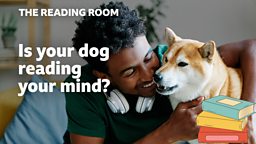
Is your dog reading your mind?
Episode 251105 / 05 Nov 2025
Practise your reading skills and learn about pets reading your mind in English

How can restaurants earn a Michelin star?
Episode 251104 / 04 Nov 2025
Practise your reading skills and learn about Michelin stars in English
Is food colouring bad for you?
Episode 251103 / 03 Nov 2025
Practise your reading skills and learn about whether food colouring really is bad for you

Small steps to build long-lasting habits
Episode 251102 / 02 Nov 2025
Practise your reading skills and learn about habits in English

Why some people believe AI is human
Episode 251101 / 01 Nov 2025
Practise your reading skills and learn about how AI can seem human in English

How to make a good apology
Episode 250924 / 24 Sep 2025
Practise your reading skills and learn about the art of a good apology in English
Beating brain fog
Episode 250923 / 23 Sep 2025
Practise your reading skills and learn about brain fog and how to avoid it

The joy of missing out
Episode 250922 / 22 Sep 2025
Practise your reading skills and learn the difference between 'FOMO' and 'JOMO'

Making friends as you age
Episode 250921 / 21 Sep 2025
Practise your reading skills and learn about ways to make friends as you reach adulthood
Morning shower or evening shower: Which is best?
Episode 250920 / 20 Sep 2025
Practise your reading skills and learn about hygiene in English
What can magic teach us about the brain?
Episode 250919 / 19 Sep 2025
Practise your reading skills and learn how illusions can tell us what happens in our brain

Can we create the perfect city soundscape?
Episode 250918 / 18 Sep 2025
Practise your reading skills and learn about city soundscapes

The world's first digital country
Episode 250917 / 17 Sep 2025
Practise your reading skills and learn about a country that is slowly sinking underwater

The benefits of spending money on a good time
Episode 250916 / 16 Sep 2025
Practise your reading skills and learn whether it's better to treat yourself by buying a thing or an experience

How to take control of your emotions
Episode 250915 / 15 Sep 2025
Practise your reading skills and learn about emotion regulation