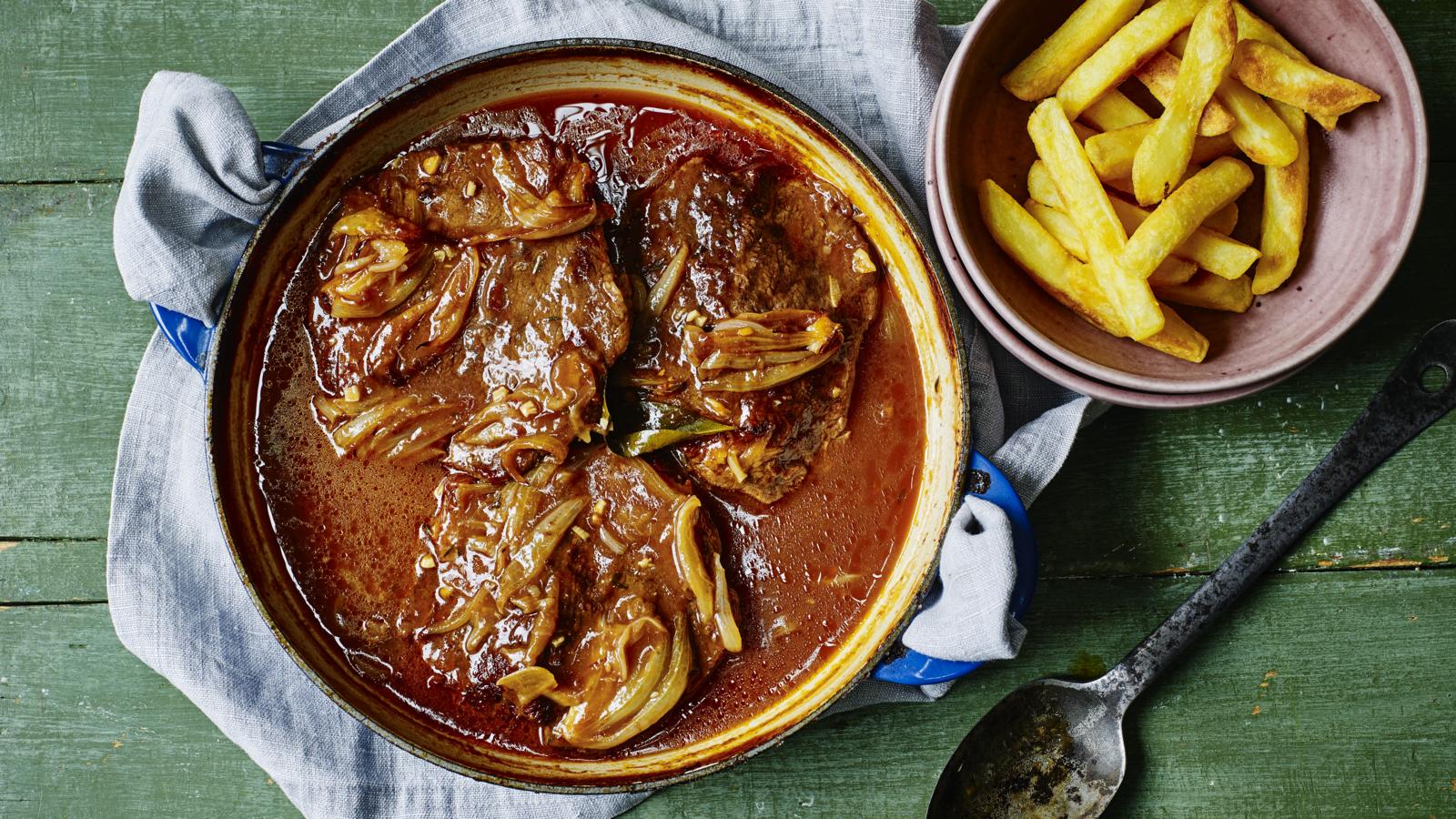
Beef casserole

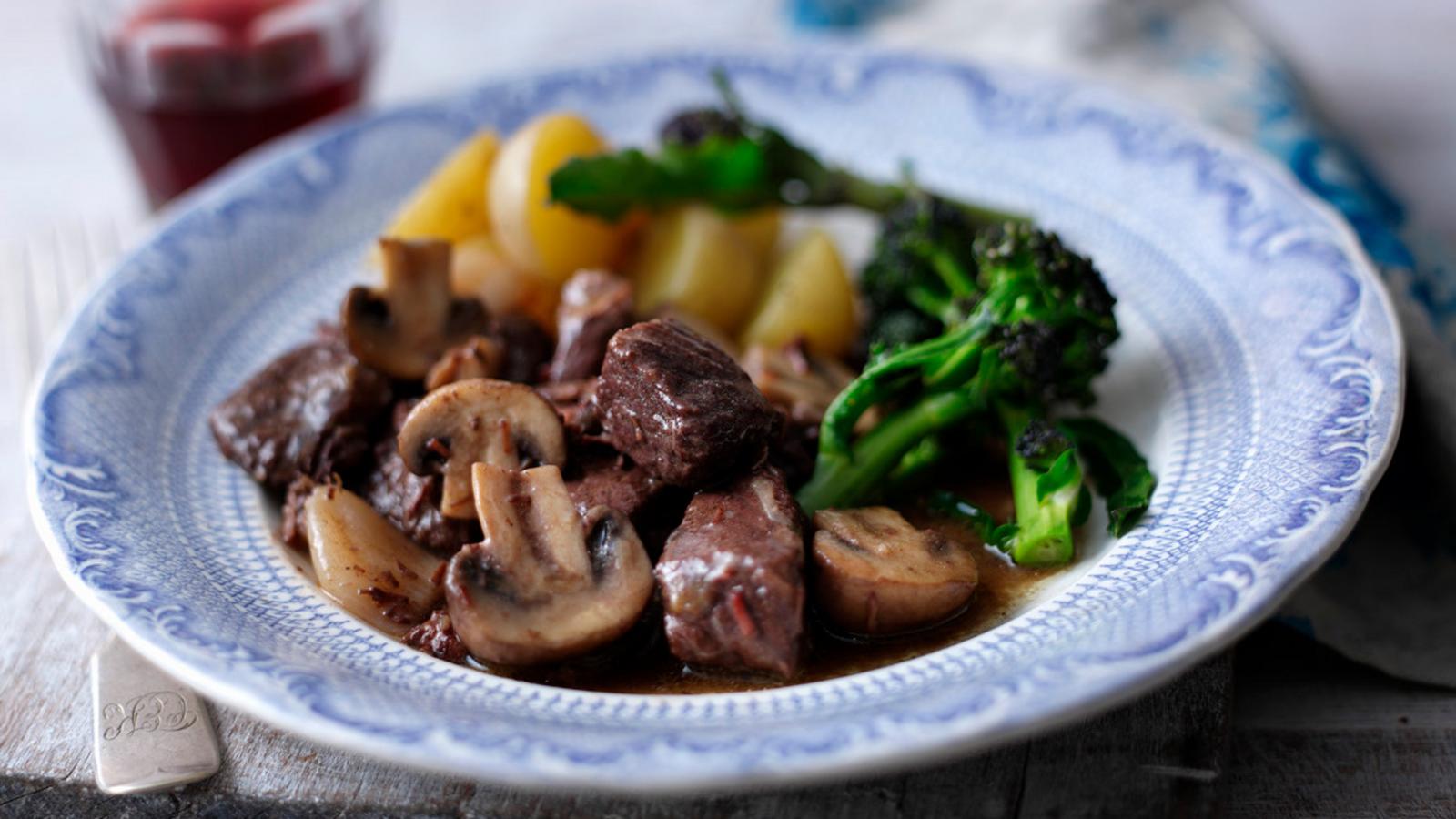
This comforting beef casserole is a perfect winter warmer, especially when served with a hearty kale and potato mash (but crusty bread is also lovely). Though this casserole tastes rich, it's really quite healthy thanks to lean meat and plenty of veg. Ideal as a family-friendly midweek meal or hearty weekend supper, it freezes beautifully and is easy to double up if you are planning to batch cook.
Each serving provides 429 kcal, 43g protein, 18g carbohydrates (of which 11g sugars), 16g fat (of which 5g saturates), 6g fibre and 1g salt.
Ingredients
- 700g/1lb 9oz braising steak, trimmed of excess fat and cut into 3-cm/1¼-in chunks
- 2 tbsp olive or sunflower oil
- 2 onions, thinly sliced
- 2 tbsp plain flour
- 2 tsp dried mixed herbs
- 150ml/5fl oz red wine
- 450ml/16fl oz beef stock, made with 1 stock cube
- 2 tbsp tomato purée
- 1 bay leaf
- 3 carrots (about 300g/10½oz), peeled and thickly sliced
- 300g/10½oz closed cup mushrooms, sliced
- sea salt and freshly ground black pepper
- handful fresh flatleaf parsley, roughly chopped, to garnish
For the kale mashed potato
- 575g/1lb 4½oz floury potatoes, preferably Maris Piper or King Edward, peeled and cut into roughly 5-cm/2-in chunks
- 25g/1oz butter
- 4 tbsp semi-skimmed milk
- 100g/3½oz kale, trimmed, hard stalks removed, roughly chopped
- sea salt and freshly ground black pepper
Method
Preheat the oven to 180C/160C Fan/Gas 4. Season the beef well with salt and pepper.
Heat half of the oil in a large flameproof casserole dish in two batches for 2–3 minutes, or until browned on all sides. Transfer the browned beef to a bowl using a slotted spoon or spatula once each batch is done.
Add the remaining oil and the onions to the casserole and fry over a medium–high heat for 4–5 minutes, or until lightly browned. Add the beef back into the casserole and sprinkle with the flour and dried herbs. Stir well together.
Pour the red wine and stock into the casserole and add the tomato purée and bay leaf. Stir well and bring to a simmer on the hob. Cover with a lid and cook in the oven for 1½ hours.
Carefully remove the casserole from the oven and stir in the carrots and mushrooms. Cover and bake for a further 45 minutes, or until the beef and vegetables are just tender.
Meanwhile, to make the kale mashed potato, place the potatoes into a large saucepan and cover with cold water. Bring to the boil and cook for about 15 minutes, or until very tender. Drain well then return to the saucepan. Mash with the butter and milk until smooth. Season with salt and pepper.
Place the kale into a saucepan and add 500ml/18fl oz water. Cover with a lid and bring to the boil for 5 minutes, or until tender, removing the lid and stirring the kale three or four times as it cooks. Drain well then stir into the mash.
Serve the kale mash alongside the casserole, garnished with the parsley.
Recipe tips
It’s best to buy thickly sliced braising beef (chuck steak) for this recipe as you will be able to cut it into nice large chunks. If you can only find the precut kind, choose meat with a good marbling of fat if you can. Lean, or extra trimmed, diced beef is more likely to be dry when cooked. The additional fat will bring flavour to the casserole and you can always skim off any excess with a spoon once its cooked. Supermarkets rarely label their beef as braising steak nowadays, it's more likely to be called diced beef (or slow cook diced beef).
Take the time to brown your meat and caramelise the onions as this adds loads of flavour to the casserole.
Any cooking oil, or even beef dripping, can be used, so use whatever you have handy, and be prepared to add a little extra if needed.
Medium to large onions give the best results for this casserole – you’ll need a total weight of around 350g/12oz before peeling. If you have only small onions, simply make up the weight by adding one or two more. A couple of sliced celery sticks can be added along with the onions if you have some handy.
If you need this recipe to be gluten free, you can swap in gluten-free flour and stock cubes.
Instead of dried herbs, you could add fresh. A combination of woody herbs such as thyme, rosemary and bay leaves work well. They don’t have to be chopped first if you are happy to fish out the stalks after cooking, or you could tie them into a bouquet garni with kitchen string.
Red wine adds richness to the casserole, but you can replace it with extra stock if preferred. Try beer as an alternative too if you fancy, adding a couple of teaspoons of sugar to balance the bitterness.
Add extra vegetables such as parsnips, turnips and swede at the same time as the carrots, or softer vegetables like courgettes, peppers and leeks for the last 30 minutes of the cooking time. Button mushrooms can be used instead of closed cup, but its best to cut in half rather than slice so they don’t fall apart. If using larger portabello mushrooms, cut in half and then slice in the opposite direction so the pieces cook evenly and are easy to eat.
If you don’t have any plain flour handy, you can always thicken the casserole with cornflour at the end of the cooking time instead. You’ll need around 3–4 tbsp cornflour mixed with the same about of water.
The difference between a casserole and a stew is that a casserole goes in the oven. If it suits you better to use the hob then you can simmer it on the lowest possible heat until the meat is tender and the sauce thickened. Give it a stir occasionally and check it's not drying out (add more water as needed).
To freeze the casserole
If making ahead, cook up until the end of step 5, reducing the cooking time by 25 minutes. Transfer to a large shallow dish, such as a lasagne dish, and leave to cool, stirring occasionally (transferring to a shallow dish will allow the casserole to cool more quickly). Once cold, spoon into freezer-proof containers, cover, label and freeze for up to 4 months. Thaw for 24–36 hours in the fridge, depending on the size of the container. Reheat in a lidded casserole at 190C/170C Fan/Gas 5 for about 40 minutes, or until piping hot throughout, stirring once.
If freezing leftovers, spoon into individual freezer-proof containers and allow to cool. Cover, label and freeze for up to 4 months. Thaw overnight in the fridge, transfer to a microwaveable dish and stir well. Reheat on HIGH (full power) for 4–5 minutes, or until piping hot throughout, stirring halfway through the cooking time.