Lemon meringue pie

- Prepare
- less than 30 mins
- Cook
- 30 mins to 1 hour
- Serve
- Serves 8–10
- Dietary
- Nut-freeVegetarian
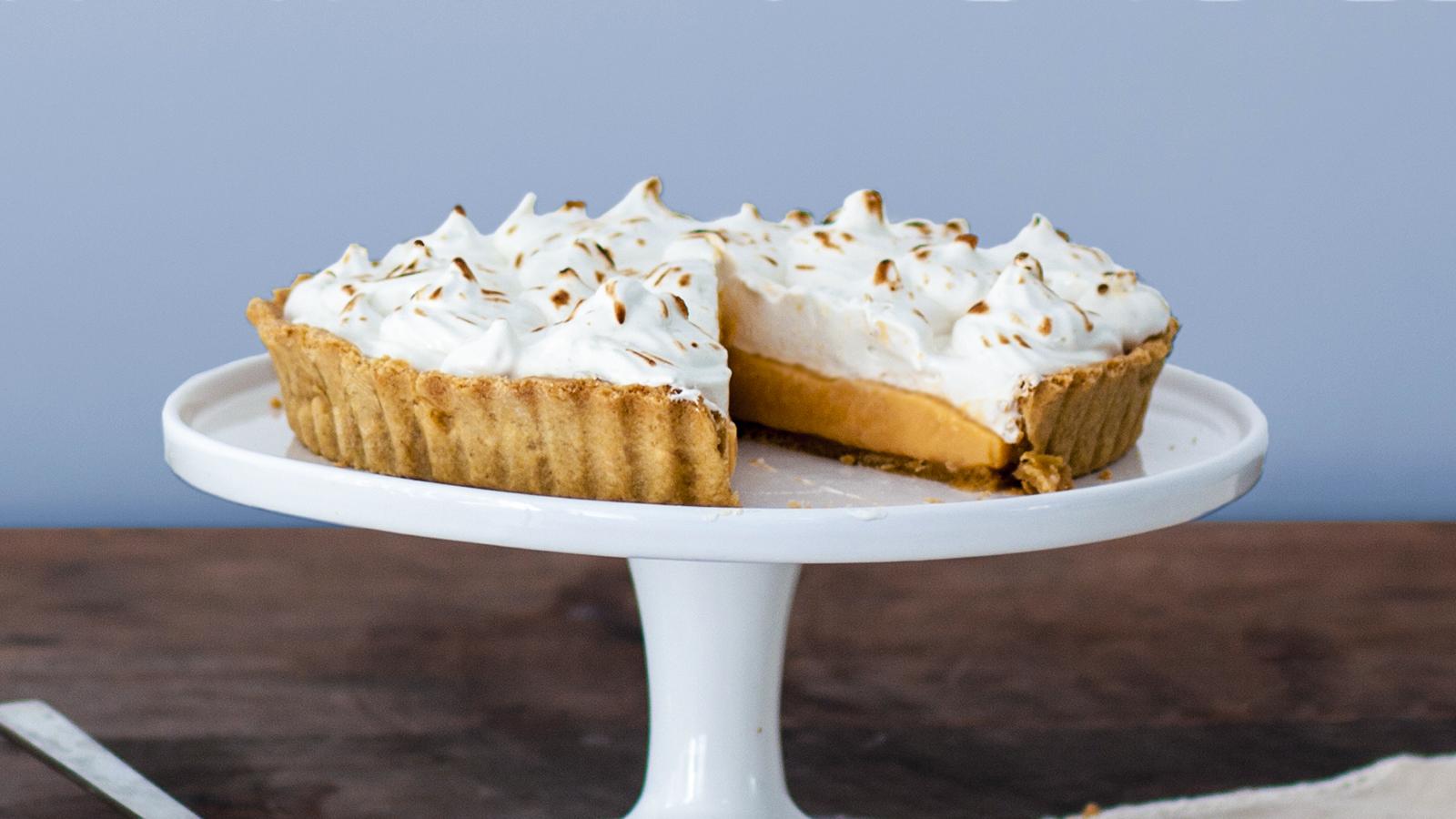
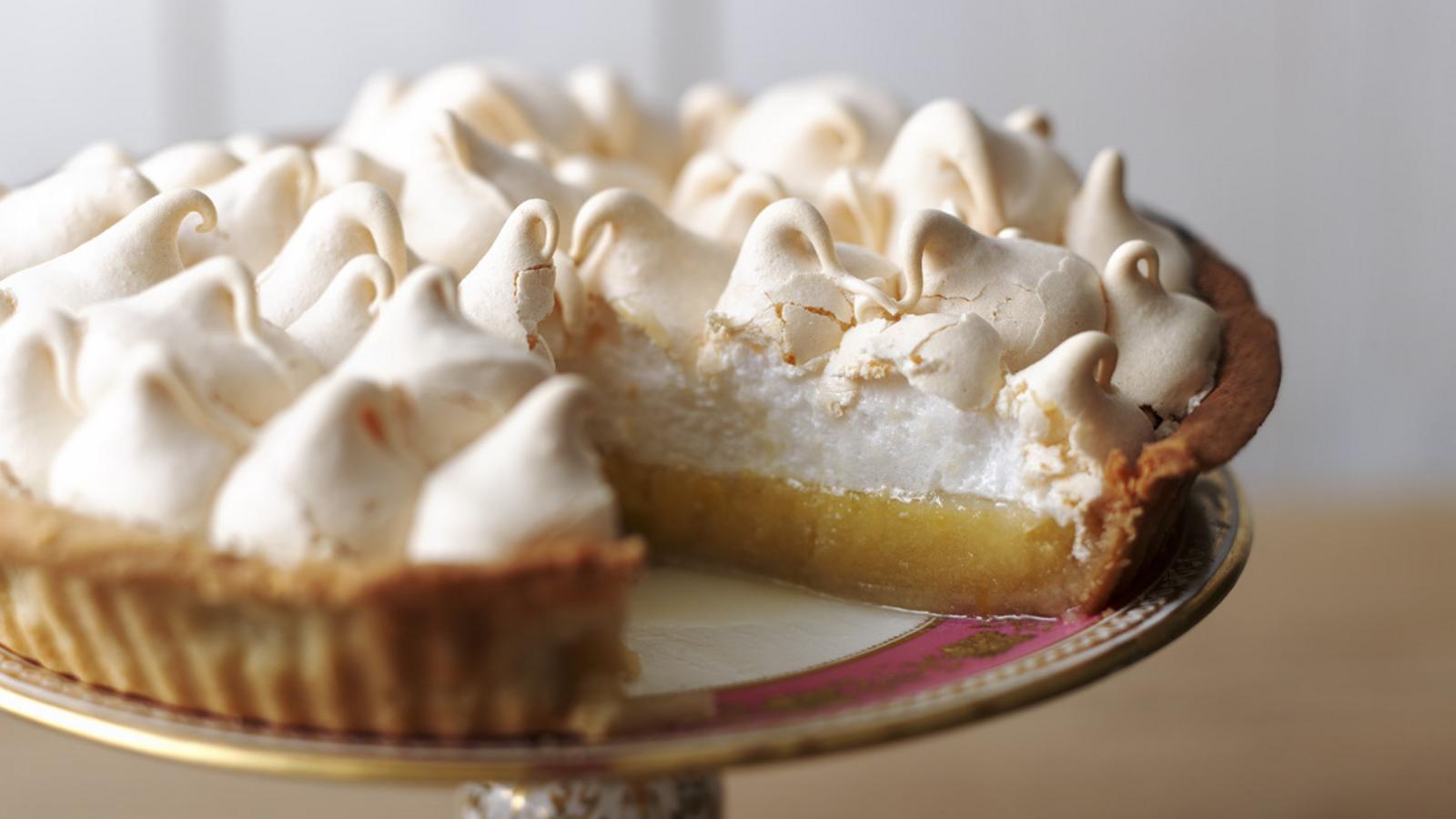
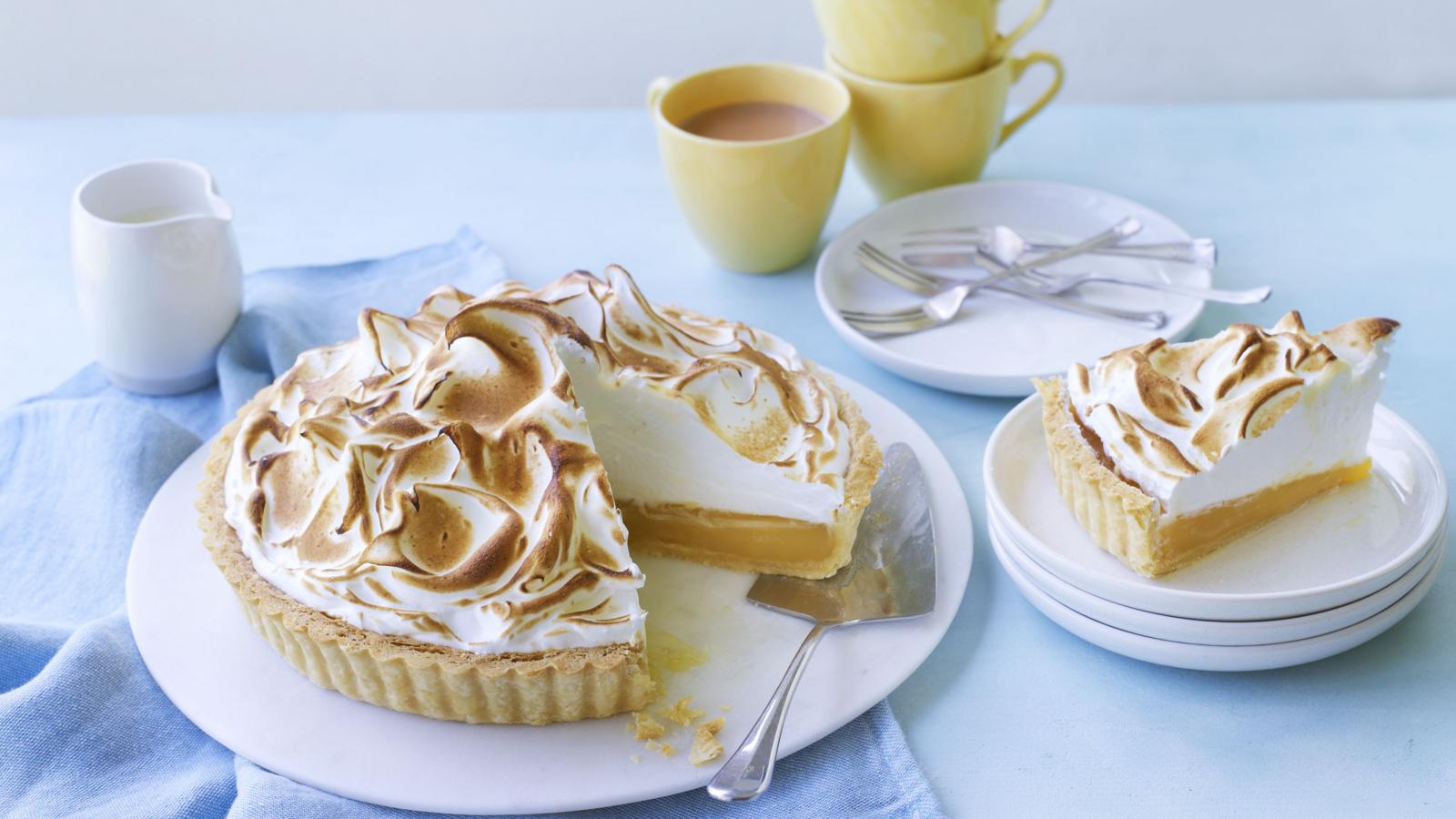
Mary Berry shows you how to make a lemon meringue pie in simple steps. It's best served fresh from the oven while it's still ever so slightly warm. See the recipe tips for lots of information on how to avoid soggy bottoms.
For this recipe you will need a 23cm/9in loose-bottomed flan tin and an electric mixer (preferably freestanding). A food processor is also handy to speed up the pastry making, but not essential.
Ingredients
For the pastry
- 225g/8oz plain flour
- 175g/6oz butter
- 45g/1¾oz icing sugar
- 1 large free-range egg, beaten
For the lemon filling
- 6 lemons, zest and juice (see recipe tips)
- 65g/2¼oz cornflour
- 250g/9oz caster sugar
- 6 free-range egg yolks
For the meringue topping
- 4 free-range egg whites
- 225g/8oz caster sugar
- 2 tsp cornflour
Method
Preheat the oven to 180C/160C Fan/Gas 4.
First make the pastry. Measure the flour and butter into a food processor and blend together until the mixture resembles fine breadcrumbs (alternatively rub in by hand). Add the icing sugar, egg and 1 tablespoon water and briefly pulse until combined to form a ball.
Tip the pastry onto a work surface and roll out to a 3mm thickness. Use the rolling pin to lift the pastry up and transfer it to line a 23cm/9in loose-bottomed flan tin. Be careful not to stretch the pastry as you tuck it into the corners. Cover in cling film and place in the refrigerator to chill for 30 minutes.
Take the pastry-lined tin out of the fridge and trim the excess pastry. Press the top edge of the pastry so that it stands slightly higher than the top of the tin. Use a fork to lightly prick the pastry base all over.
Line the pastry case with baking paper and fill with baking beans (or uncooked rice). Bake for 15 minutes. Remove the beans and paper and return to the oven for a further 5 minutes, or until the pastry is very lightly cooked. Remove from the oven and set aside.
Reduce the oven temperature to 170C/150C Fan/Gas 3½.
For the filling, mix the lemon zest and juice with the cornflour and stir to form a smooth paste. Measure 450ml/16fl oz water into a pan and bring to the boil. Add the lemon cornflour mixture to the hot water and stir continuously over the heat until the mixture is thick and smooth. Remove from the heat.
In a bowl mix together the sugar and egg yolks and carefully whisk into the lemon mixture in the pan. Stir over a medium heat until thickened (it should have the texture of a thick custard). Pour into the pastry case.
For the meringue, whisk the egg whites in a freestanding mixer until soft peaks form when the whisk is removed. Slowly add the caster sugar a little at a time, continuously whisking until all the sugar is incorporated and the meringue is very stiff and glossy (this can take up to 10 minutes). Add the cornflour and whisk again.
Spoon the meringue on top of the filled pastry case and spread to completely cover the lemon filling, taking care to get right to the edges. Create swirls on the top of the meringue using the back of a fork.
Bake in the oven for about 15 minutes until the meringue is lightly golden and crisp.
Allow to cool a little before carefully removing from the tin once it's safe to touch. Serve in slices while it's still very slightly warm.
Recipe tips
The size and juiciness of lemons varies. This recipe is assuming you have fairly small lemons (as you'd get in a supermarket multipack). The total amount of juice needed is about 180ml/6fl oz.
Meringue toppings on lemon meringue pies often weep. This can leave you with a few droplets of moisture on the meringue, or in worse cases it can make the pastry soggy and the meringue topping want to slide off the lemon filling. To avoid this, follow the instructions about bringing the pastry high up the sides in step 4 and then take care to ensure the meringue touches the pastry edge – this will give it something to stick to and avoid it slipping around when cooked. When making the meringue, go slow when adding the sugar, it's important to give each addition of sugar time to properly dissolve into the mixture (and it's important to use caster sugar as the smaller granules are absorbed more easily). Add the meringue topping while the filling is still very warm or hot – the extra heat from the filling will help cook and set the underside of the meringue, as a minimum you want them to be a similar temperature to avoid condensation forming (definitely not fridge cold).
If you are concerned about weeping meringues try a recipe which uses Italian meringue. It is a little more tricky to make, but there's far less chance of anything going wrong as it is much more stable (it also keeps for longer).
If you do get some excess moisture, use kitchen paper to dab it up as soon as you remove the tin.
You can pass the lemon filling through a sieve if there's any little lumps.
For best results eat lemon meringue pie within an hour or so of cooking – this isn't a good dessert to make well in advance as the longer it hangs around the more chance there is of moisture leaking from the meringue. Also keep it away from humidity, if your kitchen gets steamy it's best kept in a separate room until ready to serve.
Egg sizes are medium unless stated otherwise.