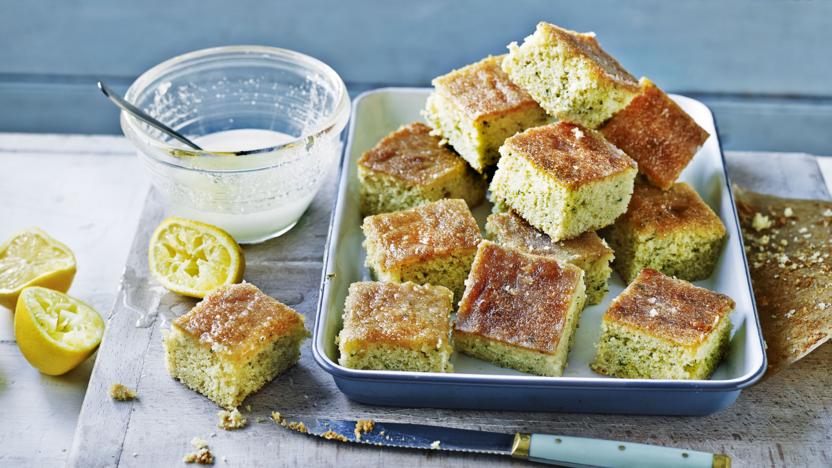
Lemon drizzle traybake cake
- Prepare
- less than 30 mins
- Cook
- 30 mins to 1 hour
- Serve
- Makes 18 squares
- Dietary
- Nut-freeVegetarian
Mary Berry's lemon drizzle traybake cake has been a hit since the 1960s, and this is the recipe she is most asked for when stopped in the street.
For this recipe you will need a 30x23cm/12x9in traybake tin.
Each serving provides 290 kcal, 4g protein, 38.5g carbohydrates (of which 25g sugars), 13.5g fat (of which 8g saturates), 0.7g fibre and 0.6g salt.
Ingredients
- 225g/8oz butter or baking spread at room temperature, plus extra for greasing
- 225g/8oz caster sugar
- 275g/10oz self-raising flour
- 1 level tsp baking powder
- 4 free-range eggs
- 4 tbsp milk
- 2 unwaxed lemons, finely grated zest only
For the glaze
- 175g/6oz granulated sugar
- 2 lemons, juice only
Method
Preheat the oven to 180C/160C Fan/Gas 4. Grease a 30x23cm/12x9in traybake tin with butter and line the base with baking paper.
Measure all the ingredients into a large bowl and beat for 2 minutes using an electric mixer, or until well blended. Turn the mixture into the prepared tin and level the top.
Bake for 25–30 minutes, until the cake has shrunk a little from the sides of the tin and springs back when lightly touched with a fingertip in the centre of the cake.
Meanwhile, make the glaze. Mix the sugar with the lemon juice and stir to a runny consistency.
Leave the cake to cool for 5 minutes in the tin, then lift out, with the lining paper still attached, and place on wire rack set over a tray.
Brush the glaze all over the surface of the warm cake and leave to set. Remove the lining paper and cut into 18 squares to serve.
Recipe tips
This lemon drizzle cake can be stored in an airtight container for 3–4 days.
It is important to spoon the lemon drizzle onto the cake while it’s still warm so the lemon juice soaks in properly. Baking a lemon cake as a fairly shallow traybake means the lemon drizzle topping travels through the cake without the need to make holes in the sponge. It’s best to mix the topping just before adding to the cake so the sugar doesn’t dissolve too much. Using granulated sugar gives a pleasing crunchy finish.
Lemon balm works well as an alternative for lemon verbena if you can’t get hold of any, or you could use finely chopped lemon thyme leaves.
Unwaxed lemons are best for grating but if you can’t get hold of any, simply wash your lemons well in hot water and use a soft brush to help remove the wax. Dry with a clean cloth before grating. To finely grate lemon zest, either use a microplane or the fine shredding holes on a box grater. These should look like a smaller version of the one you might coarsely grate cheese with rather than the spikey round holes (which are best for finely grating hard cheeses, such as Parmesan). Turn the lemon regularly as you grate so you only remove the yellow zest, which provides the intense lemon flavour, and not the bitter white pith.
For a change, use the zest of a couple of limes or an orange instead of one of the lemons.
This is a great recipe for a bake sale if you make it in a sturdy foil tray. Place on a baking tray to give it a more stability and leave to cool in the tray after drizzling with the lemon glaze.
If you don’t have a hand-held electric mixer, you can use a freestanding mixer or food processor instead, but you will need to reduce the beating time or the sponge batter will become runny and over-blended which will affect how it rises. Blend just enough to fully incorporate all the ingredients and stop when the cake batter is smooth and fairly thick. Pause the machine and push down the cake batter with a spatula at least once so you don’t end up with any lumps. You can also beat the ingredients together vigorously in a large bowl using a wooden spoon.
How to freeze
Sponge cakes like this lemon drizzle freeze extremely well. Simply allow the glazed cake to cool thoroughly then wrap in a layer of baking paper, followed by two layers of foil. Label and freeze for up to 2 months. Wrapping the cake thoroughly will help protect it. To thaw, remove the foil from the frozen cake, place in its baking paper on a cooling rack and defrost at room temperature for 2–3 hours before fully unwrapping.
You can also freeze the cake in portions, making it ideal for lunch boxes and picnics. Cut into single servings and wrap each one in foil. Place in a large freezer bag, label, seal and freeze for up to 1 month. Remove each portion of cake as you need it and thaw at room temperature for about 2 hours before serving.
How-to videos
Related recipes
This recipe is from...
Recipes from this episode
Try as part of this menu
Easy afternoon tea. Menu Easy afternoon tea
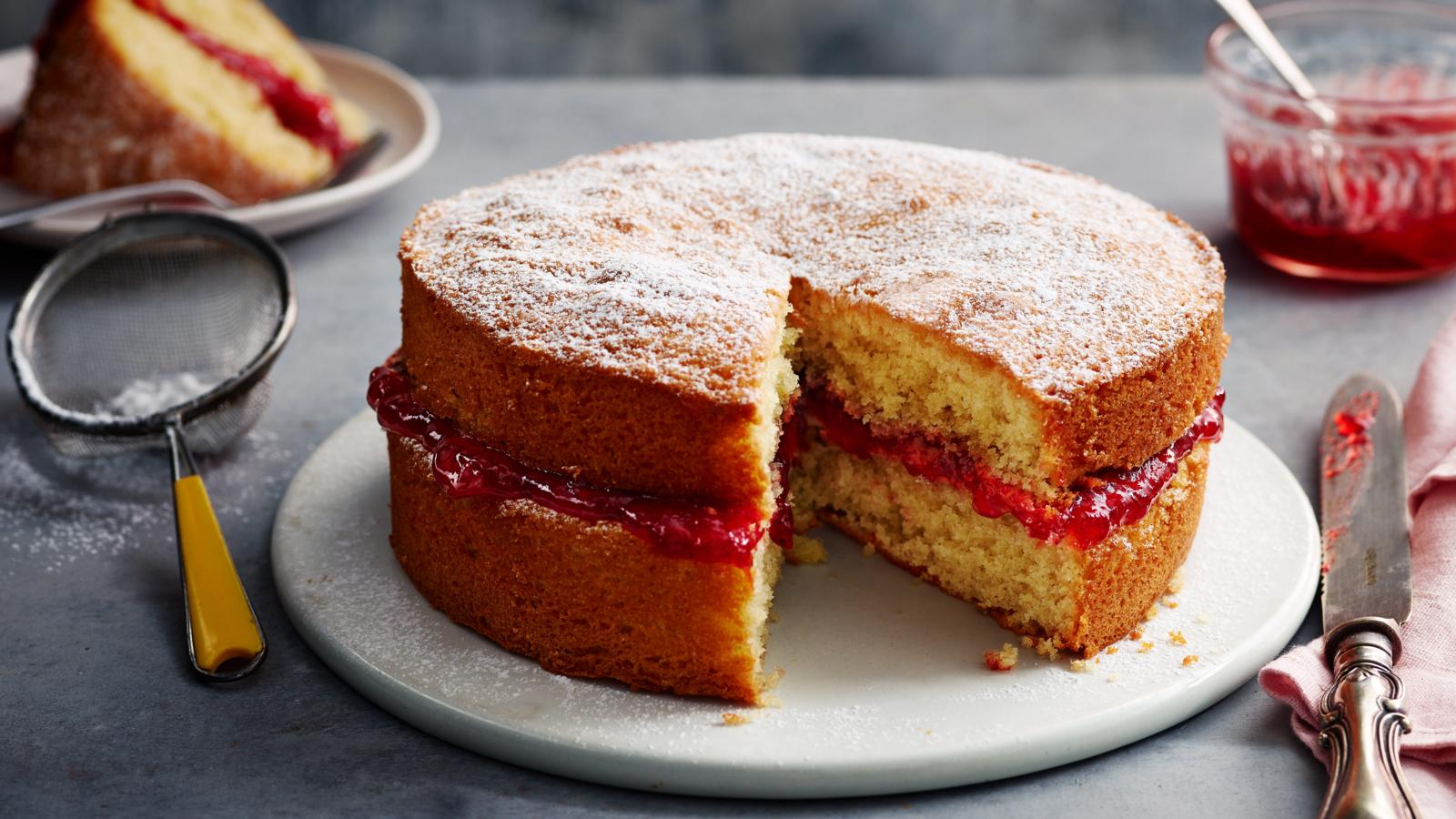
Easy recipes from Mary Berry that will make a brilliant afternoon tea. Bake a few favourites as a treat for friends or family, including lemon drizzle, scones and Victoria sponge cakes. Add a couple of simple sandwich choices and you're done!
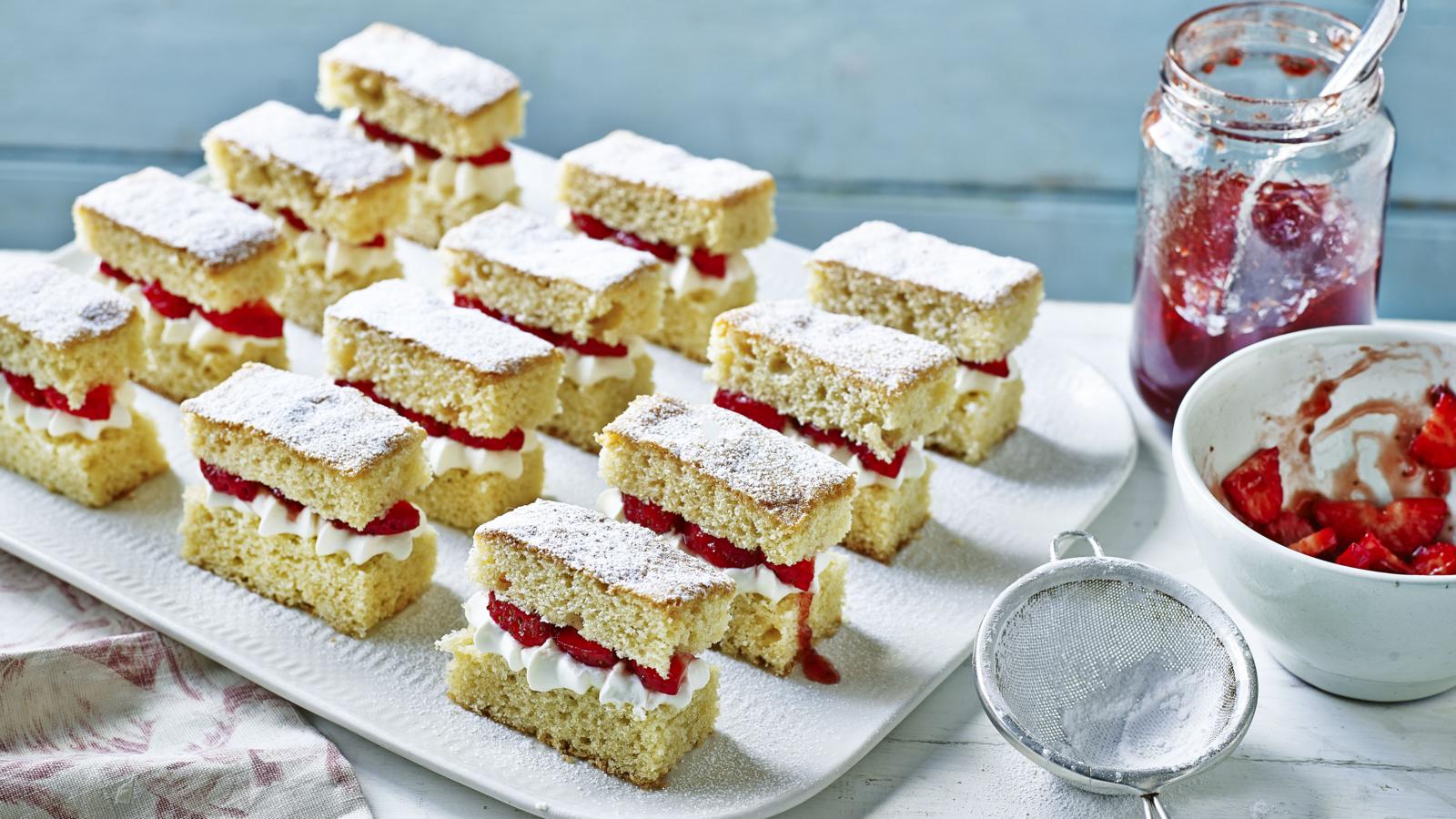
Mary Berry's scones. By Mary Berry
Cakes and baking

Lucy’s strawberry slices. By Mary Berry
Cakes and baking
Red pepper, cheese and chive tartlets. By Mary Berry
Starters & nibbles

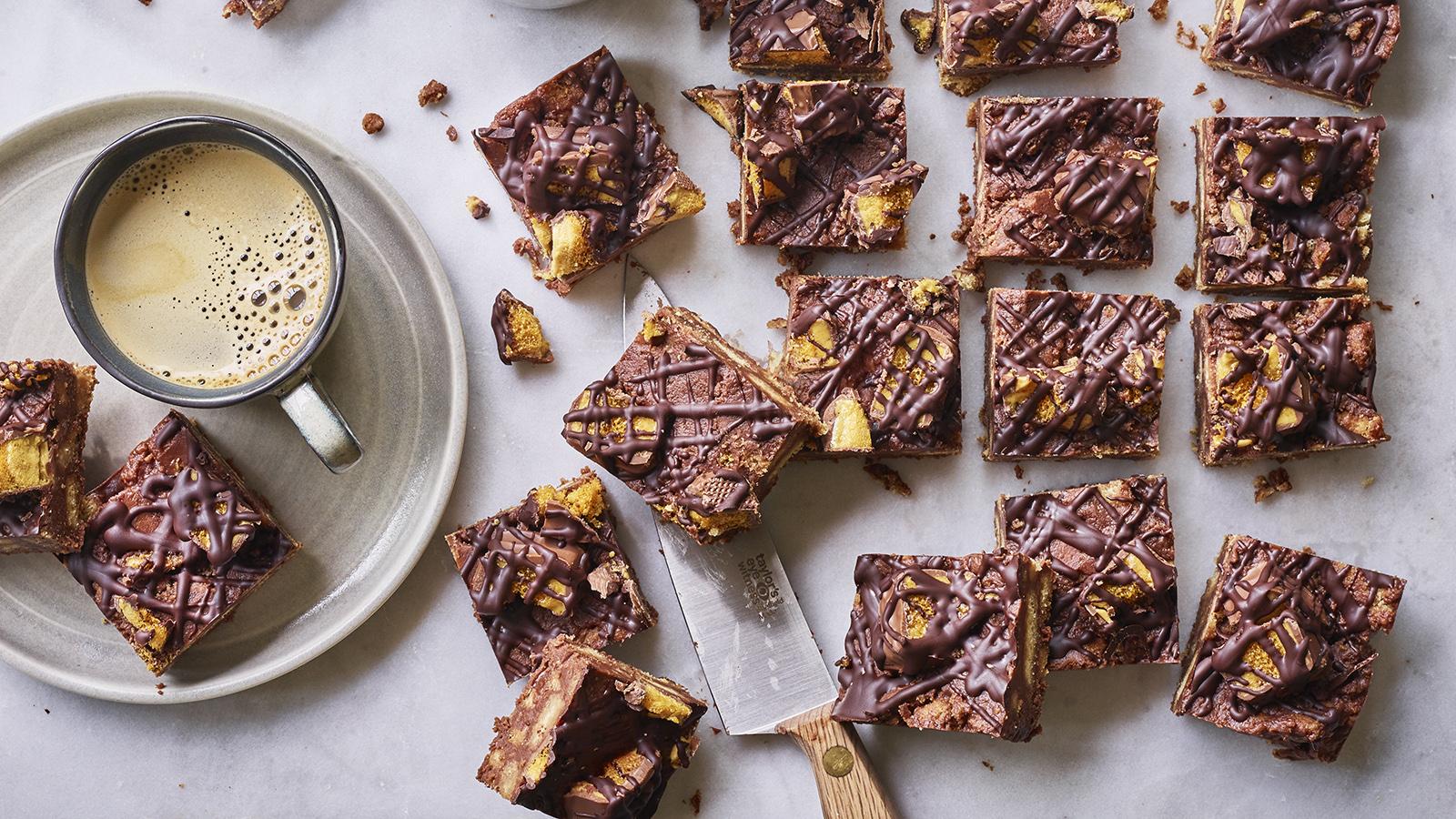
Honeycomb rocky road. By Mary Berry
Cakes and baking