|  | The defensive architectural points
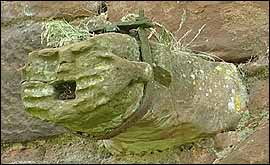
The original tower entrance is at the very foot of the spiral stone staircase. This door would only provide entry to the vaulted basement which would have had been used for cattle or as a provision store. A fortified door on the first floor protected the residents of the tower. This doorway off the tiny staircase, which meant no battering ram, could have forced entry, as there was not space to manoeuvre it. The narrow spiral staircase (newel staircase) was built to be incredibly narrow. This had important defensive properties. Any attacker approaching upwards would be unable to use of any sword, bow and arrows or spear being drawn as intruders climbed them, as their right side would be against the wall. The defender of the tower, retreating upwards, would have space to use his sword on the outside and his unguarded left side would be protected against the wall. The outside door would be made of iron grating and was immediately followed by an inner door of oak, reinforced with iron. The doors would only have been around 1.5 feet apart. This meant that only one man could stand between the two. Again, this would stop reinforcement or battering rams being used to gain entry and there was no space for a 'chain' of men to force entry. The tower's walls are 5 feet thick which made them incredibly strong. On the top of the tower is a parapet walkway. This method of construction is crennilation which enabled the top of the tower to be used as a look out but may well also have been used for attacking outwards while maintaining its defensive abilities. The floor of the parapet is one step down, one step up, one step down, one step up. This meant one could see over/or fire from the parapet one second and be hidden from view/ protected from fire, the next just by stepping onto the next step. This walkway was also used for drainage. We can still see the gargoyles on top through which the water would flow out. Some of them have their tongue sticking out! |