Architectural Key Points
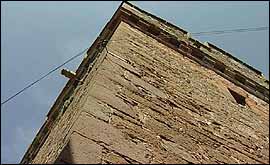
Evidence suggests that the site was inhabited prior to the construction of the 16th century tower and this could date from the 13th century or earlier, but archaeological surveys need to be done to establish what kind of dwelling would have been on the site. The date of 1584 is quite late for a tower to be built, so this would suggest that there was another building on the site. Brackenhill is an exceptional example of the fortified tower house of the Anglo-Scots border. It is a unique example of a Scots vernacular tower in an English setting and is remarkable for its state of preservation. Arguably the best-preserved 16th century tower house in Cumbria, its external elevations are virtually unaltered from its original state. Whilst there were many towers built in the Scots vernacular tradition - most of those have ended up being officially Scottish once the border was drawn. So, Brackenhill Tower is unique in its intactness and extremely rare to be a tower in the Scottish style sitting on English soil. Whilst the tower's interior was recast in the mid-19th century, original features appear to have been preserved wherever possible. It is likely much awaits discovery behind the plaster. Brackenhill Tower is a pele tower (English)/tower house (Scottish). A small fortified building, characteristic of the English Scottish border, intended for protection against raiders rather than to withstand a siege. The term is hard to define with precision and is often used fairly loosely, sometimes being applied to non-tower like structure i.e. wider or longer than they are high, that could rather be described as bastle. The tower's walls are five feet thick and rise to forty feet in height. It has a double gabled roof and is surrounding by corbelled and battlemented parapet. The land around Brackenhill Tower is in a good defensive position, with large ravines to the North and the South. No matter how rich or powerful a Border leader might become he needed a tower at least for his personal safety and to provide a rallying point and defensive centre for his dependants. In the border regions of both Northern England and Scotland the tower house was adopted as a response to the absolute necessity for an owner to be able to provide effective and inexpensive protection for himself and his family during the turbulent times of the later Middle Ages when there was a perpetual state of conflict between the native Scots and the English invaders (and Scottish reivers coming the other way across the border!). Brackenhill Tower would be a meeting point for Richie Graham's clan to gather before a raid and a safe, defensive stronghold to return to. Their great virtue was their simplicity and strength. They were impervious to fire from the outside, or anything less than artillery or sustained siege. Pele towers were numerous across the border region. Their name derives from the fact that the original towers were built with palisade made up of "piles" or wooden pales. Although it was not common to build them of masonry until the sixteenth century, there are some much earlier stone examples in the 14th Century. The date 1584 above the door would relate to the construction of the greater part of the fabric of the tower as its stands today. This was built by Richie Graham. Although some earlier material may have been re-used, none of the standing fabric seems to pre-date this. When the roof of the 1860 porch addition collapsed the Graham coat of arms was re-exposed, clearly indicating this house was built and owned by the Graham clan. When first erected, its is likely that in additions to the self-defensive tower, earlier buildings like a kitchen range may have stood on the site and being enclosed by a wall, palisade and/or ditch. Further archaeological investigation may reveal this. The tower comprised:
A vaulted basement, with a ground floor entrance at the foot of the newel stair.
The principal living room, the hall - as on the first floor, which at this stage was probably a single undivided chamber
A pair of chambers on the floor above.
The original arrangements at attic level are unclear. |