|  | | SEE ALSO | | Photo Gallery
Images taken whilst recording this series with the Barrow lifeboat crew. RNLI
The charity's national website. RNLI in the North
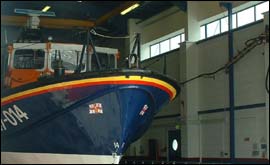
Includes a link to Barrow lifeboat station. | | | FACT-FILE | | The RNLI has 4 lifeboat stations in Cumbria - Barrow, St Bees, Workington and Silloth 2003 was the RNLI's busiest year nationally. In Cumbria - Barrow was the busiest station with 19 calls and 30 people rescued. Barrow's first lifeboat station was established in 1864. The current station was opened in 2001 and cost £3million. The Barrow crew cover 50 miles into the Irish Sea, up to Workington and south to Morecambe. The lifeboat crew has 19 members who go out to sea, plus a team who keep things ticking over back at base. The Barrow lifeboat is called 'RNLI James Bibby' and is a Tyne Class boat - the Tyne was the first 'fast' slipway boat introduced in 1982. The last Tyne was built in 1990 and the Barrow boat is one of four Tyne class lifeboats operating in the RNLI's North Division. The boat is steel, 47' long, carries 6 crew & can reach a max speed of 18 knots. The crew are on call 24 hours a day, 365 days a year but dont earn a penny because they're volunteers. The boat is stored on a table inside the station. When it's launched, the table tips up and the boat slides 80 metres down the slipway at a speed of up to 25 miles per hour. | | | PRINT THIS PAGE | | View a printable version of this page.
| |  |
| | The crew are all volunteers, who not only give up their time, but also risk their lives to save other people. They come from all different walks of life - there are people here from the nearby gas terminal, the hospital, the police force, the coroner's office and all sorts of other jobs - a whole range of people, some who give up their time to run rescue missions with the boat and some who keep things ticking over back at base. The Coxswain Alec Moore is in charge of the lifeboat crew - 19 of them in all. Alec started off as a volunteer 34 years ago as a teenager, and worked his way up through the ranks until he became the boss. A proud history As you enter the lifeboat station here there's an exhibition of photographs and information about the current crew and those from years gone by - and for Alec it's like a personal family album...  Hear Coxswain Alec Moore talk to Claire Barrowdale Hear Coxswain Alec Moore talk to Claire Barrowdale
Ron Nuttall, a retired scientist, is the Lifeboat Operations Manager. He is the man who receives the call-out when there's an incident at sea. The area covered by this boat reaches 50 miles out to sea, North up to Workington and South down to Morecambe. While the crew are out on a job, it's Ron's job to co-ordinate the rescue from the crew room back at base... Hear Ron Nuttall talk to Claire Barrowdale Always on call The lifeboat has to be ready at a moment's notice at any time of day or night and the RNLI has one paid member of staff at each station who works full time to ensure the boat is
ship-shape and ready to sail. The mechanic in Barrow is Paul Heavyside...
Paul Heavyside talks to Claire Barrowdale Team work The volunteers based at Roa Island are on call 24 hours a day, 365 days a year. The crew are split into two teams, some inside the cabin, called the wheelhouse, and some outside on the steering deck. I was with the Coxswain, Alec Moore, outside on the deck, doing my best to hang on tight as we plummeted 80 metres down the slipway and out to sea... Claire Barrowdale goes to sea Find out more about Claire Barrowdale the author of this feature.
Programme recorded April 2004 |