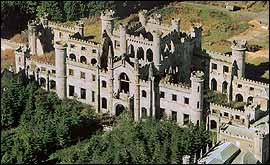
If ruined castles hit your historical building hotspot, then you should head straight for Lowther near Penrith. Lowther Castle is the ultimate fairytale castle, all turrets and towers and gothic arches silhouetted against the sky, set in 3000 acres of rolling parkland. It was designed by a young architect called Robert Smirke, and was built between 1806 and 1814, at the height of the Romantic movement which was sweeping Cumbria at the time. Experts say it's an outstanding example of gothic revival architecture. When the famous "Yellow Earl", Hugh Lowther, lived there in the last decades of the 19th and first decades of the 20th Century the castle was the centre of a social whirl: royalty, heads of state, politicians and all manor of the rich and famous of the time visited Lowther for parties and sporting weekends. The German Kaiser came twice and brought the Earl a very early Mercedes Benz along with a German chauffeur! 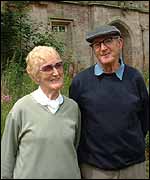 | | Winnie and Dick Tolmie in the overgrown castle grounds. Winnie has vivid memories of the castle from when she was a girl in the 1920s and Dick was employed at the castle for most of his working life. |
Hugh Lowther was a motoring pioneer and many older people remember the sight of his fleet of yellow cars winding through the narrow roads near Askam. The castle's owned by the Lowther Estate Trust and it's been in the Lowther family for around 900 years. You can't go inside now because it's far too dangerous, and overgrown with nettles and trees. The castle was closed in 1937 and used by a tank regiment during the Second World War who did almost as much damage to nearby dry stone walls and bridges as they did in Germany. Its contents were removed in the late '40s and the roof was removed in 1957. Since then the castle's been slowly crumbling away and the central tower is so close to collapsing that English Heritage has just awarded the Lowther Estate Trust £65,000 for emergency repairs. And it's an exciting time for these romantic ruins: The Lowther Castle and Garden Project is about to employ architects to help devise a master plan for taking the castle forward into the 21st Century. Graham Puxley, the project's director, hopes that in future years it will once again become a vibrant Cumbrian attraction with theatre and sculpture, and perhaps garden or food festivals. Watch this space. 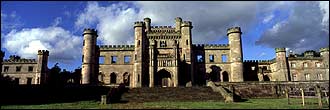
|