BBC BLOGS - BBC Weatherman Ian Fergusson’s Blog

Archives for October 2009

Howling winds for Halloween? (updated Sun., 06.50hrs)

Ian Fergusson|09:07 UK time, Thursday, 29 October 2009

I've been keeping you updated in my last blog entry with the weekend forecast, when we'll see the recent benign and very mild weather come to a distinctly wet and windy end.

And of course, on Saturday it's Halloween. Will the weather turn into a horror story? Well, I can certainly see it conspiring to snuff-out some of those candles in carved-out pumpkins... but mostly after midnight.

Halloween scene (Photo: Andrew Milligan/PA)The first signs of change arrive tomorrow evening (Friday), as a band of rain - heavy in places - moves eastwards overnight into Saturday morning, clearing around dawn. Beyond that, lingering uncertainties surround the regional detail of our forecast as we head through Saturday night and into Sunday, but one way or another, we'll see some heavy rain and pretty strong winds. A deep Atlantic low will spin-up south of Ireland during Saturday, tracking north-easterly across the British Isles - probably on a course taking it over Scotland - bringing gales and a swathe of wet weather for much of England, too.
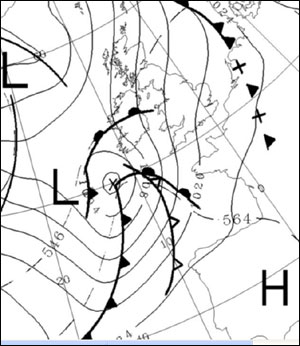
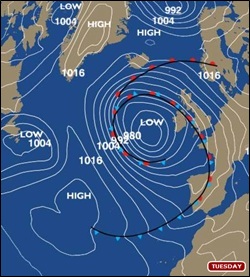
The latest Met Office synoptic chart for midnight Saturday-Sunday shows a deep low looming off southern IrelandWith the exact track of this depression still subject to some doubt, the extent and regional bias of any severe weather remains very uncertain. Some of the various forecast models we use suggest rainfall totals - at least in some areas - of 35mm or more in the West Country, but these predictions will be greatly refined (and possibly reduced) as we near the weekend. The worst conditions, however, are likely to occur through the nocturnal early hours of Sunday morning, after which we expect the heaviest rain to quickly clear eastwards. It's thus likely that by the time inclement weather arrives, most of the trick-or-treat youngsters out on Saturday evening are tucked-up in bed. Most...

Sunday daytime will remain very windy; feeling a good deal cooler than lately but largely bright, ahead of some further wet weather arriving off the Atlantic into Monday as we enter a distinctly unsettled spell.

On BBC Radio Gloucestershire's Breakfast Show this morning, I was suggesting to presenter Steve Kitchen that the sudden combination of heavy rain and many leaves blown off the trees could give some localised flooding problems, with a lot of standing water on some roads. It's a feature of the weather likely to remain a problem into the next working week, doubtless keeping local councils rather busy keeping the drains clear. But then this is Autumn, and the expected weather by no means anything exceptional...

UPDATE, THURS 29 OCTOBER, 19:30HRS:

Earlier today, the Met Office issued an advisory for the likelihood of severe weather from this system, affecting Northern Ireland and various parts of Scotland. I'm anticipating this to be extended to some other parts of the UK as the forecast continues to be refined.

The expected track of this Atlantic cyclone continues to vary somewhat between different models and indeed different model runs. Some of these are leaning towards a more southerly track and if this became reality, stronger winds would sweep the West Country, readily gusting to 50-60mph inland in exposed districts and doubtless leaving barely a single leaf hanging on the autumnal trees. 

However, despite this geographic variance in track (which will prove critical by even quite small margins), the broader timing remains largely similar between the models. As I mentioned earlier in this blog, the worsening weather is highly likely to arrive after midnight, rather than during Halloween evening itself.

UPDATE, SATURDAY 31 OCTOBER, 00.45hrs:

Still various forecasting uncertainties for this Sunday cyclone - not least how much it will deepen (or not) - and on balance, I'm leaning towards it being a spell of unexceptional wet (i.e., through early Sunday) and very windy (i.e., all Sunday!) spell of weather, rather than anything genuinely 'severe' in the truly statistical sense, at least for the West Country. Nonetheless, gusts of 50-60 mph for our region still very possible (and that's enough to trash weak or diseased trees, garden fences, etc) and local flooding certainly likely in some of our localities. I'll do my best to keep you abreast of the forecast developments.... 

UPDATE, SATURDAY 31 OCTOBER, 19.30hrs:

After settling down to watch the Abu Dhabi F1 Grand Prix qualifying session today, my planned day off work instead evolved into two hours spent back at the BBC Bristol weatherdesk.

A lengthy conversation on the 'phone at 12.15hrs with my Met Office colleague Darren Bett confirmed some of the nagging concerns we still have with detailed aspects of tomorrow morning's developments; but equally, it reaffirmed many of our firmer expectations.

On BBC Points West this evening, I highlighted our forecast of heavy rain (perhaps 30-35mm) combining with winds gusting to 50+ mph in some districts across our region. That's certainly enough to cause trouble on the roads with localised flooding and I'd wager some older or diseased trees getting toppled, too. Some weaker garden fences surely likely to be flattened in the process... in fact, I'm just off into the garden here in Bradley Stoke, to make sure anything likely to get blown-around is well secured.

The infra-red EUMETSAT satellite image below shows trouble brewing, as expected, out SW of Ireland. irsat.jpg
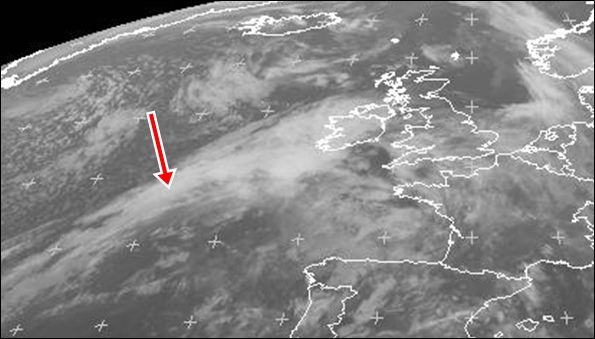
Here she comes... this 7pm infra-red satellite image may look innocuous, but wet and wild weather is quickly brewing in the eastern North Atlantic... (copyright EUMETSAT, 31 Oct. 2009)

The wave-like inflection is now developing into the anticipated cyclone that could deepen rather 'explosively', as we term it. But hopefully most of our viewers and listeners have got the basic weather message: one way or another, it's going to get wet and wild for at least the first part of Sunday morning.

And I doubt I'll get much sleep, frankly. One common characteristic of us dedicated weatherfolk is our concern - even on a supposed day off - about getting your forecast correct!

UPDATE, SUNDAY 01 NOVEMBER, 06.50hrs:

Well, I did say I wouldn't get any sleep...!

I'm watching the tree-tops swaying wildly here in the early gloom at Bradley Stoke; the sound of the wind and rain notifying just how dramatically our weather has changed overnight. Presently, we have winds gusting around 40mph down the road at Filton and I'm expecting the worst conditions - including heavy rain (up to 30mm) - to sweep through between now and 9 am. The Met Office has now issued a severe weather warning for our region, alongside a broad swathe of the country. 
Enjoy it while it lasts...

Ian Fergusson|19:44 UK time, Tuesday, 27 October 2009

Time for a brief update looking ahead towards the weekend, when - albeit mild conditions will still prevail - some very wet weather could become a feature, at least for a while.

Our balmy weather continues through to the end of this working week, as discussed in my last blog. More cloud around for many across the West tomorrow (Wednesday), but 17-18C still widely on the cards irrespective of any grey skies. A better chance of more widespread brighter conditions returning on Thursday and cloudier again by Friday... and by then, we'll have grown accustomed to daytime highs around 18C and overnight lows around 13-14C (that's about twice the average for this time of the year!).

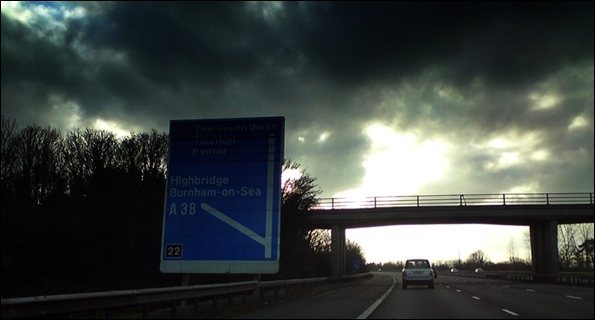
Ever-thickening Stratocumulus gathers above the M5 southbound, near Burnham-on-Sea, Somerset

Dark, rain-bearing skies are expected to return across the West mid-weekend... but the forecast detail remains uncertain, at least for now.

So, my attention now focuses further ahead, into the weekend. Never straightforward, my job (refer to previous comments here!) and sure enough, it's currently a tricky forecast - with various possible outcomes - keeping my grey matter working at overdrive on these early morning shifts.

Our present expectation is for dry, bright and increasingly breezy weather during the bulk of Saturday to be replaced by wet - and potentially very wet - conditions developing overnight into Sunday morning.

The regional forecast precision remains elusive at this stage, but with the focus for heaviest rain somewhere across southern / southern-central England. Watch this space and I'll keep you updated on the evolving Met Office forecast...

As for next week? Well, by midweek we expect a return to temperatures somewhere around the seasonal average. Unsettled weather, in the continuing west/southwesterly flow off the Atlantic, will dominate proceedings - possibly accompanied by some very windy conditions at times.

UPDATE, 19.45hrs, WED 28 OCTOBER:

We continue to watch the forecast evolution of deep cyclogenesis for Saturday night, with the story broadly painting the same picture: turning very wet and windy.

But exactly how wet, and how windy?

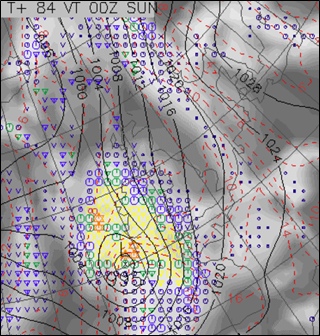
The Met Office forecast modelling for Saturday night into Sunday continues to broadly paint a distinctly wet and windy story (Image: Courtesy Met Office)Our difficulty remains establishing the precise track of this depression. Consequently, it's regional impact across the British Isles - in terms of any severe weather potential - remains very speculative, for now. But over the next 48 hours, successive runs of the Met Office's NAE (North Atlantic Evolution) model, alongside those produced by other nations such as those you can see online here, will help flesh-out some likely detail as we get nearer to the weekend.

I've just been reading through an updated briefing received from the Met Office Operations Centre in Exeter. Their latest frame valid for Saturday night (see right) highlights the key features we can expect: those tightly-packed isobars signifying the windy weather approaching from the southwest; the associated bright yellow colours denoting a swathe of heavy rain. We rely heavily on this sort of broadscale and subsequent higher detail (i.e., typically near-term models run at a resolution of 4km) forecast output from our Met Office colleagues, when determining your local forecasts.

Will the Trick or Treating types get a drenching over the weekend? It's looking likely (and I dare say some of you may have mixed views on that prospect!). Watch this space...

A very mild week ahead...

Ian Fergusson|10:23 UK time, Monday, 26 October 2009

Just when you thought it was safe to fold-up those summer t-shirts and break out the winter woolies, think again.

My own wardrobe is a scene of confused chaos, at least in terms of casualwear ensembles. I'm feeling 'seasonally challenged' in terms of making the correct clothing choice: one day, the leather jacket feels just right against the wind and rain; the next - it's ditched on the coathook in favour of wearing no jacket at all.

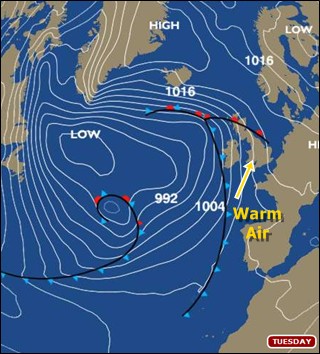
Tuesday's synoptic chart shows the British Isles within a broad warm sector of very mild tropical maritime airYes, it's nearly November - but positively balmy best describes the prospects for this week's weather. The warming trend has started today, as we draw up a very mild and moisture-laden southerly flow of air from the eastern North Atlantic Ocean.
Granted, we'll have to contend with some rather extensive low cloud and murky conditions at times this week, plus occasional spells of drizzle and light rain. But if you are under any sunny breaks - and we will certainly see some develop - it will feel positively warm for this time of year.

I'm wagering that somewhere across the West Country will reach 20 Celsius (68F) on or by Wednesday / Thursday, with 21C (70F) by no means impossible somewhere in central-southern England, given sufficient insolation.

And by night - when we'd normally expect temperatures to fall to around 7C - our region will instead experience double that value, offering at least a week of saving on central heating bills as duvets get readily kicked-off many beds, I'd imagine.

A Cloudspotter's Paradise...

Ian Fergusson|11:51 UK time, Friday, 23 October 2009

If you found yourself in clear conditions either side of Thursday's frequent downpours, some impressive skyscapes were on offer.

Many appeared courtesy of dramatic Cumulonimbus clouds, towering right up to the tropopause above parts of Somerset and Wiltshire.

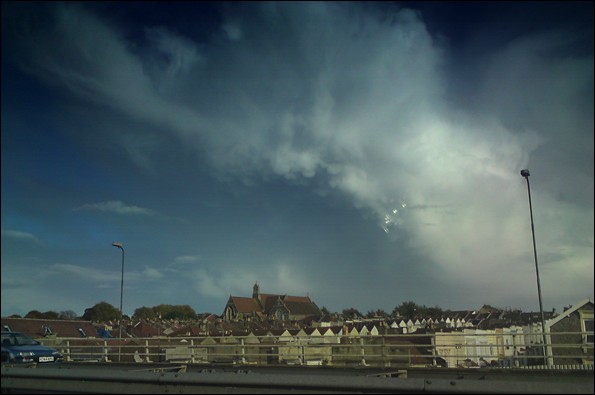
I managed to snap this beauty while solidly stuck in a lengthy jam on the M32 at Fishponds, heading out of Bristol from work at around 4.30pm.

And what a corker of a cloud it was, too.

Cumulonimbus incus (Photo: Ian Fergusson)

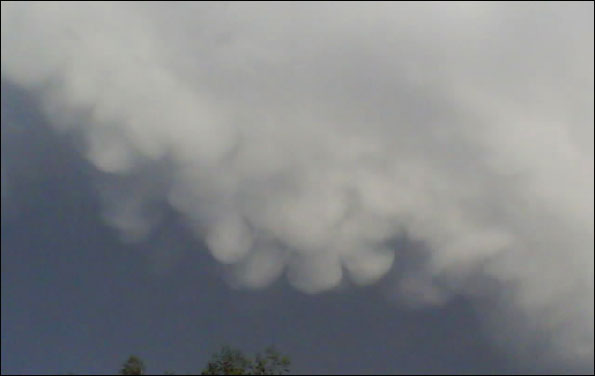
A mature thunderstorm - Cumulonimbus incus - seen from Fishponds, Bristol, 22 October 2009. Notice the pouch-like mammatus clouds visible at centre, directly above the church.

This Cumulonimbus incus had reached a mature phase, complete with a spectacular plume-like anvil, formed entirely of ice crystals, being swept away far to the northwest by the winds aloft.

The storm was located out east over Wiltshire, giving localised downpours there and a flash or two of lightning. As well as some mildly annoying reflections (no, they're not UFO's), my photo shows distinctive mammatus clouds billowing down from the underside of the anvil, signifying where cold air - having been carried high in vertical updrafts - was now sinking from this massive cloud's outflow.

If you took any similar shots of yesterday's showers and storms, do send them in to me - I'll put some here on the blog.

UPDATE Saturday 24 October - YOUR PHOTOS:

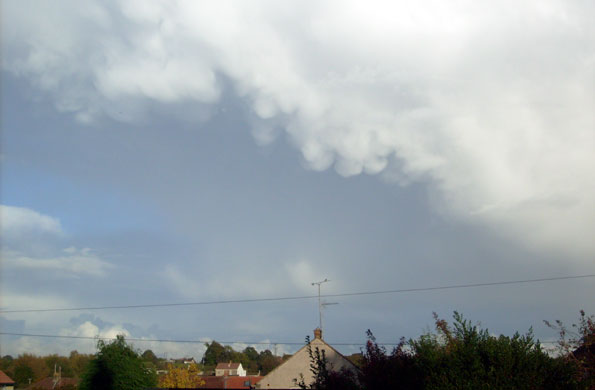
Paul Hayers sent me this excellent photo of the same storm (below), seen at a closer distance from his home in Kingswood. "It looked like marshmallows dropping out of the cloud," says Paul, describing the mammatus formation very evident in his picture...

mammatus_paul_hayers.jpg

Tom Hughes watched the storm from Wick, located out on the A420 east of Bristol: "I must admit, I'm a weather nut and am always looking for interesting weather," he tells me. Glad I'm not the only one, Tom! Thanks for your close-up photo of the mammatus (below). The storm must have loomed impressively at your location...

mammatus_tom_hughes.jpg

Tricky on the roads this morning...

Ian Fergusson|08:28 UK time, Thursday, 22 October 2009

It's an interesting morning, weather-wise, and pretty tricky out on the roads.  A succession of heavy downpours are bringing some difficult driving conditions across much of our region and we'll continue to see some potent showers on-and-off throughout much of the day.

I arrived at BBC Bristol at 7.40am this morning after a somewhat soggy 7-mile drive from Bradley Stoke, albeit some much wetter weather was very evident just south of my route. Looming in the early daylight, towering Cumulus congestus clouds were showing signs of readily developing in the unstable conditions, some already growing into Cumulonimbus - with some flashes of lightning a likely outcome, at least in some districts.

As I pen this blog, I'm watching further trouble brewing on the rainfall radar.

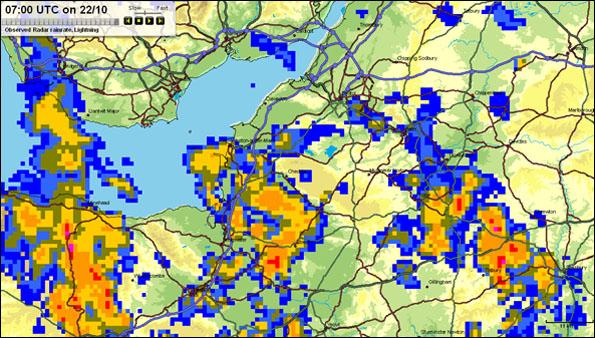
Rainfall radar across the West Country, 22 Oct. 2009, 0800hrs (Picture: via Met Office MBS System)

The Met Office rainfall radar system - shown here from 0800hrs this morning - paints a number of lively showers moving northwards during the rush-hour.

Some of these shower cells are merging together, especially through parts of Somerset and Wiltshire, where I'm tracking their likely northerly trajectories on our rainfall radar system. I'm also checking for signs of lightning, with a detection system accurate to within 1 km, updating every 5 minutes.

The bespoke system we use - developed and supplied by the Met Office - is extremely handy for local radio 'nowcasting' and short-range forecasts. We can zoom the mapping right into the scale of suburbs and smaller villages, with the option of overlaying major and minor roads.

By cross-referencing the rainfall radar with realtime traffic camera images, the impact of inclement weather out on our roads - especially the motorway network - becomes very clear and can be relayed to colleagues providing travel updates on our morning radio programmes.

It's going to be a busy day of weather-watching... and it's barely started.

UPDATE: 1100hrs, Thursday 22 October:

We're now watching clusters of quite potent-looking cells developing northwards through a swathe of central Wiltshire and elsewhere. As yet, they don't seem to have turned thundery. The Met Office has just issued a warning about the continued likelihood of heavy rain across much of our region:

NATIONAL SEVERE WEATHER WARNING SERVICE

Flash Warning of
- Heavy Rain

For the following areas
- Bath + NE Somerset (Severe)
- Dorset (Severe)
- N Somerset (Severe)
- Somerset (Severe)
- Wiltshire (Severe)

Frequent heavy showers are likely to produce accumulations of 15 to
20mm within 3 hours at some locations giving rise to large amounts
of surface water. The public are advised to take extra care and
refer to the Highways Agency for further advice on traffic
disruption on motorways and trunk roads.

Issued by the Met Office at 10:49 on Thursday, 22nd October 2009
Valid from 10:50 on Thursday, 22nd October 2009 until 16:00 on Thursday, 22nd October 2009

A cloud question from Gloucestershire...

Ian Fergusson|14:46 UK time, Wednesday, 21 October 2009

Bob Faraway from Eastington - not far off the M5 near Stroud, Gloucestershire - has e-mailed me a photograph of clouds he watched passing above his home on Monday morning.

"Please can you advise what might cause these cloud formations," Bob asks, "as they look unusual to me?"

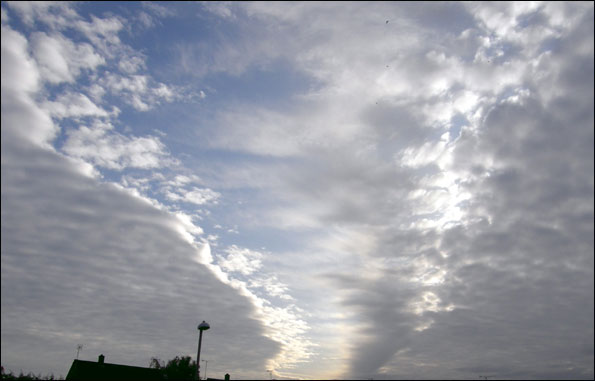
Altocumulus stratiformis above Gloucestershire (Photo: Bob Faraway)Well, they're not actually unusual per se. Bob has photographed the higher levels of cloud building-up well ahead of the frontal system that ultimately brought yesterday's rain.

The cloud itself is predominantly Altocumulus stratiformis, forming at mid-levels in the atmosphere and signalling the eventual arrival of the occluded front discussed in Tuesday's blog. But this feature was still a long way west of Eastington when Bob snapped the shot.

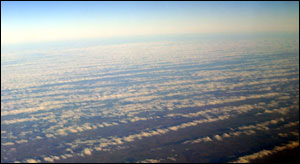
Lee waves can cause this sort of regular pattern of clear slots to form in cloud such as this Stratocumulus (Photo: Lucy Tegg)The elongate clear slot visible in his skyscape is likely to signify where drier air is descending; thereby disrupting the otherwise extensive cloud cover. All manner of changes to atmospheric pressure, temperature, humidity and winds aloft can create sudden gaps in large areas of cloud. Quite often, they're created by the wave-like disruption of airflow passing across hills, mountains and other terrain (a type of standing atmospheric wave known as lee waves).

With each increasing hour after Bob took his photo, the cloud cover above Eastington would have steadily increased, lowered and thickened.

Through Friday into Saturday, we will see a similar story emerging in the skies above the West Country, as another Atlantic depression sweeps eastwards towards the British Isles, heralding further wet and rather windy weather - especially on Saturday itself.

Umbrella-wrecking weather approaches...

Ian Fergusson|11:11 UK time, Monday, 19 October 2009

I was taking a look around the web a moment ago for windproof brollies - yes, they do exist - because I'm not eager to see my treasured BBC-branded one wrecked in the weather we're forecasting for tomorrow.

Tuesday's synoptic chart paints a distinctly wet and windy storyMy oft-cited desire to see wet and windy autumnal conditions will bear fruit on Tuesday. A potent depression will spin-in off the Atlantic, driven along by a very strong jetstream aloft, blowing at more than 230mph. And that's even faster than Jenson Button.

By morning rush-hour onwards, I'm expecting a distinctly inclement spell of weather to sweep across all of the West Country. After the recent prolonged period of largely benign weather, tomorrow will seem quite a shock to the system, I'd imagine.

Heavy rain at times through the late morning and early afternoon could become more than a mere nuisance across the streets of Bristol, Taunton, Swindon and other urban areas. You've doubtless noticed how many leaves are still on the trees and if brought-down rather quickly by the winds, they could block some drains, restricting run-off and leaving a lot of standing water.

And those leaves will certainly be sent tumbling tomorrow in some gusty conditions, as an occluded front moves steadily eastwards towards midday.

Talking of gusty conditions, many of the 30-or-so tornados confirmed each year across the British Isles occur during the autumn and winter months, often embedded within active, squally cold fronts. Their genesis relies on all manner of small-scale (and often short-lived) atmospheric variables being 'just right', making them extremely tricky to forecast with any true accuracy (let alone at a local level). I'm sure the storm-chasing community who discuss severe weather online at the likes of Met-Monkey and Netweather will be watching Tuesday's developments with interest. BThis BBC brolly is NOT for wrecking: A cherished possessionut looking at the set-up, I'm reckoning it's a very low likelihood for any tornado sightings tomorrow. I'd be interested to read the thoughts on this from the extreme weather aficionados, here on the blog... 
Now, much though I'd love to be chasing storms tomorrow in scruffy jeans and waterproofs, instead I have to get into work dressed in a suit and trying to avoid a drenching. And I'm not keen to see my favourite umbrella head straight for the rubbish bin, in a tangled mess of waterproof fabric and twisted metal, within seconds of deploying it.

These windproof brollies on the web look ideal. Such evocative names:Gustbuster, Windbreaker, Typhoon, Stormshield... I'm spoilt for choice.

Bet I'll still get totally soaked, however.

UPDATE Tuesday 20 October, 1200hrs:

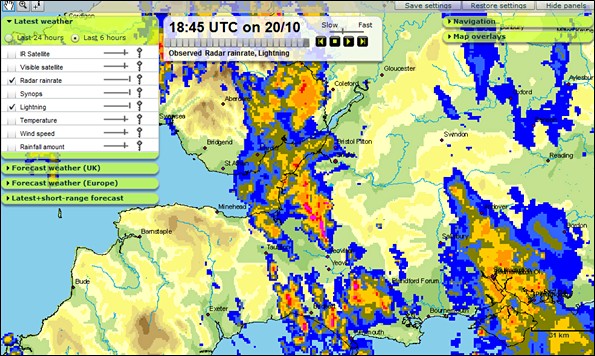
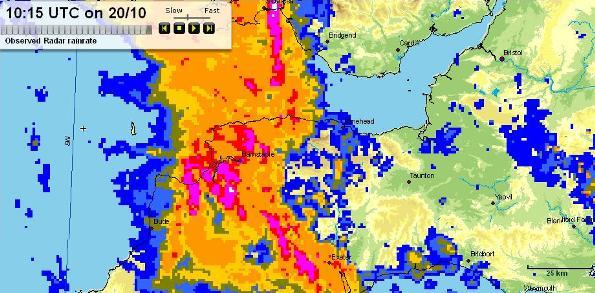
Well, the heavy rain from this occlusion continues to hold just west of much of our region - at least for now. But it's a different story in west Somerset, Devon and parts of Cornwall, as the recent rainfall radar image here clearly shows! This Met Office rainfall radar image shows the extent and rate of precipitation falling recently in a band across parts of Somerset, Devon and Cornwall (Photo: Via Met Office MBS System)It's been tipping-down in those districts in the last couple of hours, with flash weather warnings now in force from the Met Office as the heavy rain edges slowly eastwards. We're currently expecting the main band to weaken and fragment somewhat as it approaches the likes of Bristol, Bath & Gloucester, but further heavy rain is then likely to re-emerge into this afternoon from the south, as the front crosses Wiltshire and along the M4 towards London.

UPDATE Tuesday 20 October, 20.00hrs:

So, the picture is somewhat complex this evening - much as expected.

I spent some time discussing it all with my colleague Richard Angwin; considering how best we can handle the evening forecasts, including the 10.30pm Points West bulletin, in which I'll present our 30-second weather update. So much detail to squeeze (unscripted!) into so little time! The Met Office rainfall radar continues to show two distinct areas of wet weather this evening across the West Country (Photo: via Met Office MBS System)The difficulty is the current re-invigoration of rain (some heavy) affecting two distinct areas at the moment, as you can see in the recent Met Office radar image here: one stretching northwards out across Wiltshire and another further west, up through Dorset, Somerset and towards Bristol. It's hard to judge the longevity of either feature, albeit we expect the western one to gradually fade. The eastern one may linger there or thereabouts for some time overnight, but the heavier rain will steadily migrate northwards and eastwards. And as I noted above, eastern Scotland continues to look extremely wet tomorrow.

Autumn weather, good or bad? Share your views...

Ian Fergusson|09:09 UK time, Thursday, 15 October 2009

In an earlier blog, I mentioned how my preference for autumnal weather is the wet and windy variety - something we're expecting to re-appear by around Tuesday to Wednesday next week.

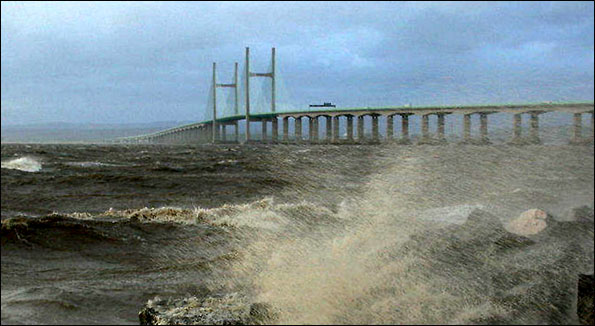
An autumn gale blowing through the Mouth of the Severn (Photo: Paul Bowerman)

My kind of Autumn weather: A howling gale, depicted here in a photo by Paul Bowerman of the Second Severn Crossing.

I'm always conscious on-air how describing the prevailing weather as "good", "pleasant", "bad" or such-like is likely to rile some viewers or listeners. After all, one person's "lovely" weather is another person's day of misery. Not everyone loves the autumnal sunshine (it's true, I assure you - and I have the emails to prove it!) and I know many people in the West Country who positively crave for thunderstorms, torrential downpours and howling gales.

Autumn is, of course, a season of change that often delivers spells of varied weather to everyone's tastes. The recent settled spell - with some glorious blue skies - has certainly satisfied many of our Points West audience with a photographic leaning. I've received some wonderful images lately, of early mist - beneath colourful dawn skies - shrouding fields across the Somerset Levels and the vales of Gloucestershire. Super stuff.

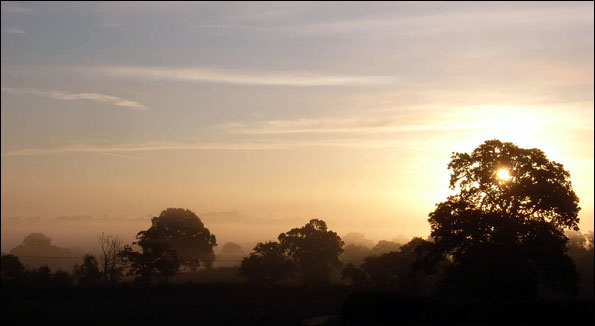
Morning mist across the West Country (Photo: William Saywell

Benign and beautiful: William Saywell's image of mist and radiation fog beneath the rising sun of an Autumn anticyclone captures the essence of this season for many people.

I dare say next week will yield a crop of photos depicting more inclement weather and as ever, I'll do my best to show some of these on my weather bulletins.

Meantime, I've been asking our Radio Bristol audience on Steve LeFevre's Breakfast Show for their seasonal likes and dislikes during Autumn.

Dave Fear in Hanham, for example, tells me that Autumn is not his favourite season. "That accolade goes to the birth and freshness brought with the onset of Spring," he says.

But the Autumn, in his evocative words, conjurs-up images of "...shorter days, dampness, cobwebs and garden mildew."

"On the brighter side," he adds, "it's also a wonderful array of colour."

"But then there's Bonfire Night - and all those bangs - and the dreaded Halloween 'Trick or Treat'."

"I'm being a bit of a grump, aren't I?", Dave asks rhetorically.

Nope. If you want to witness a true meteorological Scrooge, Dave, just wait for my delight when the howling wind and driving rain returns!

A C-130 Hercules in thick fog at RAF Lyneham, Wilts. (Photo: Tim Davis)

Grounded: Tim Davis captured this ghostly image of a C-130 Hercules shrouded in dense Autumn fog at RAF Lyneham, Wiltshire.

Share your own thoughts here on our Autumn weather: What's your favourite type? The dry, Indian Summer style; the crisp, cold, foggy and frosty variety; or the wild, wet and windy version?

Gin-clear Autumnal skies...

Ian Fergusson|14:41 UK time, Monday, 12 October 2009

Wow, what amazing visibility greeted us this morning! Not a cloud in the sky here above Bristol, as high pressure now becomes dominant for quite a number of days ahead.

An Airbus A320 streams a contrail of man-made Cirrocumulus cloud (Photo: Barnaby Perkins)After finishing our local radio & TV forecasting this morning, I stepped-out into glorious autumn sunshine streaming across the courtyard here at the BBC in Clifton. Far above, three airliners were completing their transatlantic journeys, presumably heading across to continental destinations. I was struck by how none of them left any contrails - the ribbon of cirrus cloud that you often see streaming out behind the exhausts of high-altitude jets.

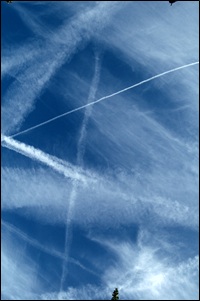
A sky of chaotic contrails - their longevity signalling the likely arrival of inclement weather (Photo:Laurence Coss)These contrails can be a useful visual clue to our broader weather conditions, because they give an indication of the amount of moisture and instability existing high in the atmosphere.

If they are seen to persist for a long time, or get wider and more conspicuous, it suggests unstable atmopsheric conditions prevail high aloft - and typically, it's a precursor to the weather deteriorating.

Conversely - much like today - if the contrails are entirely absent or seen to quickly fade, it's a reasonable bet that fair weather is on the cards - at least for a while.

And indeed high pressure will dominate our weather now for a number of days ahead, albeit I'm expecting rather cloudier conditions across the West Country by midweek onwards.

But for now, if my view of these airliners is so crystal-clear from down here, imagine what a spectacular vista they must be seeing today from up there at 35,000 ft. Quite probably a view across all of southern England, pretty much coast to coast, I'd imagine!

We never stop learning about the weather...

Ian Fergusson|08:21 UK time, Friday, 9 October 2009

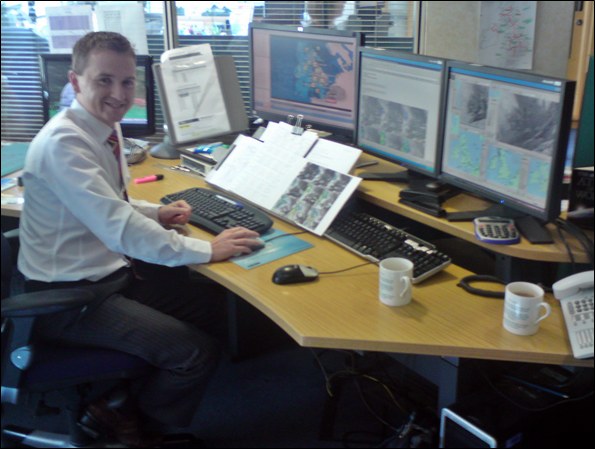
I spent yesterday at BBC Weather Centre in London, on a winter forecasting course. It's part of the continuing professional training we regularly undertake in partnership with the Met Office.

It's a 7am train departure from Bristol Parkway to Paddington. The early morning vista across the vales and fields of Wiltshire, Oxfordshire and Berkshire is beautiful: patches of radiation fog blanketing spots sheltered from the early sunshine.

Arriving at BBC Television Centre in Wood LaneMy ultimate destination in London is the iconic BBC Television Centre. For us visiting staff, it's inevitably a journey of discovery to try and find your way around this labyrinthine building: I feel like unravelling a ball of string, in the style of Theseus, to make sure I find my way back! Crucially however, I recall exactly where to collect an early cup of tea...

On the 2nd floor is the BBC Weather Centre, where I grab a seat as Duty Forecaster Laura Tobin briefs the team on weather conditions expected today across the British Isles - and indeed further afield. Weather Centre provides TV and online forecasts across the globe and so unsurprisingly, Typhoon Melor is a topic of considerable interest as it drenches Japan.

After Laura's briefing, there's just enough time to brew another quick cuppa and natter - as I often do to him from my desk in Bristol - with broadcast meteorologist John Hammond. We chat about his shifts on Radio 5 Live; he's forecasting for them all week. For me, presenting weather on the radio is one of the most enjoyable aspects of my job.

But no presenting for to do today: it's time to learn! Over the past two years, our Met Office tutor, Penny Tranter, has become like a familiar school teacher for me: indeed when I was appointed as a weather presenter, she was my original course instructor at the Met Office HQ in Exeter.

I'm here on today's course with a number of BBC weather presenters from across the country. February's snow features regularly in the classroom instruction and discussion, but also the noteworthy severe windstorms of recent decades, not least the Great Storm of October 1987 and the Burn's Day Storm of February 1990. We also look in detail at the Met Office's system of public weather warnings and the manner by which we broadcast these on the BBC. It's a critical element of our job and one we simply have to get right.

Matt Taylor at the Duty Forecaster's desk, BBC Weather Centre

Broadcast Meteorologist Matt Taylor working at the Duty Forecaster Desk. He's busy adding key detail to the weather graphics soon to be used on the BBC's network and regional lunchtime TV broadcasts.


During lunch break, I chat with Matt Taylor, who has taken-over the Duty Forecaster shift from Laura Tobin. Matt gives me some useful advice about the Met Office's Global Forecast Model, and accessing data from it. It's an important tool for me when providing weather forecasts for BBC's 606 Forum ahead of - and during - each Formula One Grand Prix.

By 5.15pm, it's farewell to colleagues in London and I'm on the oh-so-busy train back to Bristol.

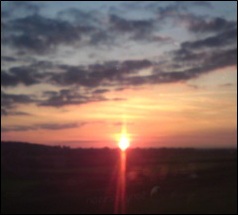
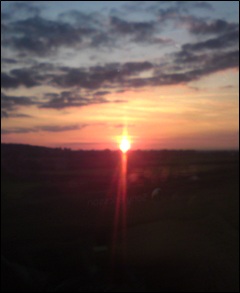
Sunset over WiltshirePassing through the fields of Wiltshire alongside the M4, I'm sky-watching. As a cloud aficionado, I'm pondering the difficulties some people have in discriminating between patchy formations of Altocumulus and Stratocumulus. I'm looking out the window here at some picturesque Stratocumulus perlucidus with a fairly high cloud base, virtually the only clouds visible here above the setting sun. Twenty minutes later and I'm arriving in Bristol to virtual darkness.

And it feels distinctly chilly, too. A reminder that winter continues to draw ever-nearer, so not long before some of the knowledge gained on today's course will be put into use!

A drenching down south today...

Ian Fergusson|15:30 UK time, Wednesday, 7 October 2009

Crikey. Certainly proving extremely wet this afternoon through more southern districts here in the West - especially towards the Somerset borders with Devon and Dorset, including the likes of Chard, Yeovil and Crewkerne.

There's some nasty driving conditions right now on the M5 south of Taunton, as I can see through the network of traffic cameras. This drenching is easing further eastwards during the rest of today.

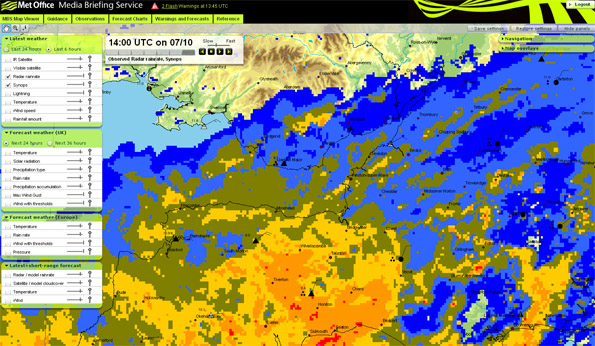
The Met Office's local rainfall radar indicates the extent of rainfall across Somerset, Deveon and Dorset through the afternoon of 7 October 2009Our bespoke local rainfall radar and weather observation system - developed and delivered by the Met Office - paints a distinctly wet picture of the evolving conditions across southern districts this afternoon. Orange and red colours depict the heavier rainfall rates.


It's at times like this when we are especially busy on the weatherdesk, watching the developing story unfolding on our rainfall radar system and keeping an eye on possible warnings being issued through the Met Office HQ in Exeter. My colleague Richard Angwin is doing the presenting honours this afternoon for our local radio bulletins. We'd expected this bout of wet weather today, but the attention now focuses on the predicted track and extent of the rainfall during the next few hours. Certainly a very soggy evening rush-hour for some...

Indeed, we've just had a 'flash' weather warning issued, valid right through the rest of today, which reads:

"Outbreaks of heavy rain will continue to affect Cornwall, Devon, Somerset and south Wiltshire this afternoon and evening, then easing later. Rainfall rates may exceed 15 mm in three hours, and a further 25 mm in the period in places. The public are advised to take extra care and refer to the Highways Agency for further advice on traffic disruption on motorways and trunk roads. Issued at: 1428 Wed 7 Oct"

Sometimes, we receive criticism for issuing warnings when bad weather never materialises; at other times, when atrocious conditions suddenly arrive unannounced. It's a very tricky balance between giving proper, timely public advice and avoiding the 'cry wolf' syndrome.

Certainly no 'crying wolf' this afternoon, however - I bet any of you reading this today down in Somerset, Dorset and south Wiltshire can attest to the worsening weather there. If you take any photos of the heavy rain, or any localised flooding problems, do send them in to us - instructions are on the blog entry from yesterday.

On the topic of weather photos...

Ian Fergusson|11:36 UK time, Tuesday, 6 October 2009

A thank-you is due to Nigel Punchard of Midsomer Norton, Somerset, who sent me a wonderful photo he took above his home of Cirrus clouds - not taken in today's inclement conditions, I hasten to add!

"I call them curtain clouds, but you might be able to give me a better explanation," Nigel writes.

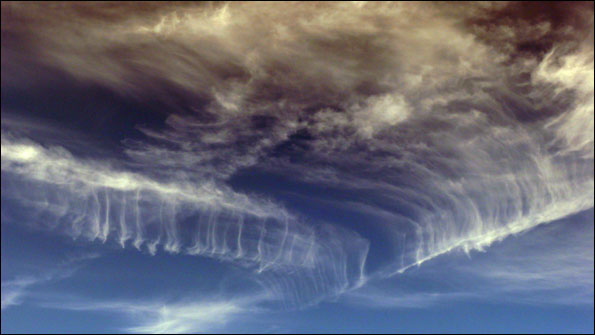
Virga falls from Cirrus clouds above Somerset (Photo: Nigel Punchard)Cirrus uncinus & Cirrocumulus with virga, above Somerset (Photo: Nigel Punchard)


His photo shows streamers - or 'curtains' as he describes them - dropping below the wispy high-altitude Cirrus (primarily Cirrus uncinus in this case, with some Cirrocumulus mixed-in).

These are actually falling ice crystals, never reaching the ground from such heights, but a genuine form of precipitation nonetheless. When rain, ice crystals or snow falls but evaporates before reaching the ground, it's a phenomenon called 'virga' or 'fallstreak'.

Sometimes, these falling ice crystals - if large enough - descend down into layers of cloud far below. In doing so, they provide the tiny particles, or nuclei, required to generate further precipitation falling in turn to ground level.

It's called the 'seeder-feeder' effect and often an important mechanism in the rainfall we experience across the British Isles.

Nigel's photo is a great example of virga - I'll surely use it in due course as a backdrop on BBC Points West weather bulletins. 

cloud-of-day.jpgI'll often use cloud photos on my Points West weather bulletins, so do send them in by e-mail!

And talking of which, if you ever wondered how to submit photos for us to use (and we get asked this a lot), here's the basics:

  • Take them in landscape format only (not portrait)
  • Try to keep the subject of interest centrally and don't zoom tightly. This is because we have to crop the top and bottom of the photo to make it widescreen format (16:9) for TV - so keep the shot wider!
  • Don't add false colours, gaudy effects etc., in photo manipulation software such as Photoshop. If a photo appears unduly tampered with or contrived, we simply won't use it.
  • Send us a high-resolution version please, because we will re-scale it at our end. Small, grainy and pixelated photos taken on a mobile 'phone are of no use!
  • E-mail your photo to us at [email protected] and include details of the photographer's full name, exactly when and where the shot was taken, and please give us written confirmation that the image is yours, with permission for the BBC to use it on TV and internet.

I look forward to posting some of your photos here on the blog!

Rain will Fall from Grace...

Ian Fergusson|14:43 UK time, Monday, 5 October 2009

I'd better use my day off to get out and mow the lawn, pronto.

I find trying to cut grass that's damp typically tedious, impossible, or both

. And it looks like some fairly heavy rain will fall here in the West Country at times on Tuesday and into Wednesday.

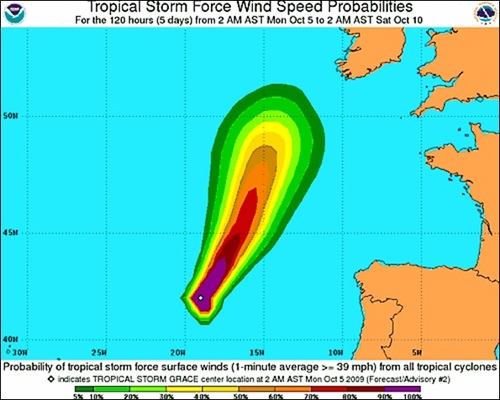
It's an interesting weather situation heading our way, because the inclement conditions will arrive courtesy of Tropical Storm Grace, currently spinning herself north-eastwards towards the British Isles

, far off the tip of northwest Spain. She's the seventh tropical storm of the (thus-far rather quiet) 2009 hurricane season to be given a name.

Tropical Storm Grace is expected to move northwards in the next 48hrs, as shown in this graphic from the Miami-based NOAA National Hurricane CenterTropical Storm Grace is expected to move steadily northeast, as shown in this forecast graphic from the Miami-based NOAA National Hurricane Center

Grace is expected to carry quite a punch and sustain winds up to 70mph for a while, until she moves up to around 50 degrees North and weakens. While the storm will remain way offshore over the ocean, it'll certainly present a potential hazard out there for mariners.

But before reaching us, she'll become an ex-Tropical Storm

, having steadily lost potency and wind strength by travelling across the cooler waters of the eastern North Atlantic. Nonetheless, Grace will still keep a core of warm, moisture-laden tropical air and may even deepen a tad, pressure-wise, as she rolls-up into the Southwest Approaches of the British Isles.

Ex-Tropical (or post-tropical) storms can't be underestimated - they can still bring some pretty nasty weather into higher latitudes, far from where they were born over the warm waters off West Africa.

For us, Grace brings a real chance of some fairly heavy rain but the forecast difficulty for us (and lucky me, just as I return to work) is trying to pin-down exactly which parts of our region will see the wettest conditions. OK, so nothing exceptional expected, but some heavy-ish rain for sure and I suspect this will struggle to soak quickly into the ground, after the prolonged, largely dry spell of late.

So one way or another, certainly enough wet weather on it's way to completely curtail my lawn-cutting efforts before I'm back at work, unless I stop writing, get outside and get a move on...

UPDATE, 20:30hrs, Monday 05 October:

I just read the very latest detailed Met Office briefing we've received on tomorrow's weather prospects. It's possible the West Country will escape prolonged heavy rain, but there's considerable uncertainty about the precise track and rainfall potency of Grace. South Wales looks likely to get a soaking, however.

Perhaps we will see only light, sporadic rain here in Bristol, but with heavier pulses passing-through at times in the morning. Either way - as I noted above - nothing exceptional. But Grace still remains a local forecasting headache... welcome to my world!

The lawn proved too damp to mow anyway.

Or at least, that's my excuse.

UPDATE 14.45hrs, Tuesday 06 October:

I've just been looking on our Met Office weather briefing system at the very latest spectacular satellite photos of ex-Tropical Storm Grace, currently located just south of Ireland. The image (below) shows Grace's impressive and distinctive spiral vortex, as she continues to retain some structural identity and delivers a noticeably mild, humid and wet day here across the West.

Ex-Tropical Storm Grace, south of Ireland, on Tuesday 6 October 2009 (Copyright [2009] EUMETSATEx-Tropical Storm Grace, easily spotted from her distinctive spiral vortex, photographed here by satellite during the afternoon of Tuesday 6 October 2009 (Photo: Reproduced via Met Office from EUMETSAT original)


UPDATE, 20:25hrs Tuesday 06 October:

We're expecting spells of heavy rain across some districts of the West tonight and again later tomorrow (Wed) afternoon and evening from this system. Could get pretty interesting for some districts of southern/central England and Wales, in terms of rainfall totals. If you are into severe / newsworthy / noteworthy weather, you might want to check-out Met-Monkey, where you'll find a forum (link on top navigation bar of their site) of like-minded and friendly folk, with some excellent meteorological brains behind it all. A great free site. 

Having my head in two places at once...

Ian Fergusson|11:04 UK time, Friday, 2 October 2009

There's been a fair amount of interest here through this morning - not least down the road at BBC Somerset - following the fortunes of Jenson Button, aka the 'Frome Flyer', as he tries to seal the Formula One World Championship this weekend in Suzuka, Japan.

Colleagues and I kept an eye on the rain-drenched practice sessions through the early morning and for me, it's a love affair that involves a little bit of extra work!

'Frome Flyer' Jenson Button, currently leading the 2009 Formula One season in his Brawn carThe 'Frome Flyer', Jenson Button, is currently leading the 2009 Formula One season in his Brawn GP car.


Alongside my 'day job' here for BBC West, I also provide detailed weather forecasts for BBC Sport's 606 Forum during each Grand Prix event.

So this morning, my work flip-flopped from telling our radio and TV audience about the regional weather prospects here in the West, to checking Japanese rainfall radar and sending weather update 'nowcast' emails to the BBC's online F1 journalist over in Suzuka, Sarah Holt.

I was switching my brain from forecasting a sunny morning in Stroud one minute, to a sodden afternoon in Suzuka the next.

Am I the BBC's first virtual globe-trotting weatherman?

Amazingly dry, this past month...

Ian Fergusson|17:48 UK time, Thursday, 1 October 2009

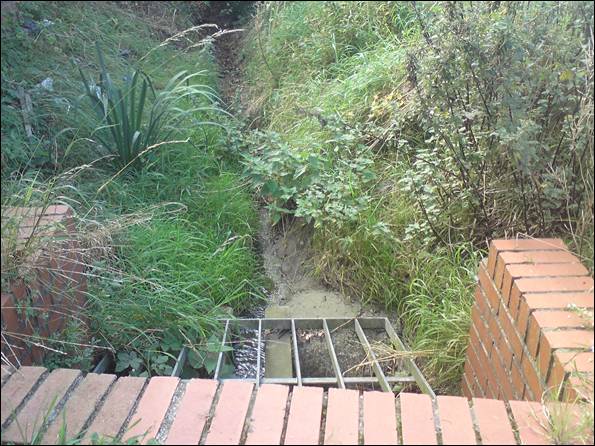
I walked past a local stream - the Patchway Brook - near my home in Bradley Stoke today and was struck by how dry it was. Have a look below at the photo I snapped on my mobile 'phone.

Barely a trickle of water running through it and almost entirely overgrown with long grasses and weeds.

The Patchway Brook, 1st October 2009: Almost totally dried-out (Photo: Ian Fergusson)No fun for frogs: The Patchway Brook, running through Bradley Stoke, is almost devoid of water.


It's hardly surprising, after such a prolonged spell of almost completely dry weather lately.

Weather-watcher Barry Horton in Totterdown has reported only 3.8mm of rainfall in his part of Bristol from 4 September until yesterday. Meanwhile Martyn Hicks, whose weather station in Horfield is closer to my district, has recorded even less precipitation - a mere 1.4mm between the same dates. Incredible.

No wonder the Patchway Brook is more akin to the Patchway Wadi at the moment.

We will see some rain on Saturday, especially during the morning, but I'm not expecting the sort of deluge likely to turn my local brook into the sort of spectacular, small-scale raging torrent if often becomes during periods of very heavy rainfall.

I wonder what impact this lengthy lack of rainfall has had on the aquatic wildlife in these small urban brooks?

BBC © 2014The BBC is not responsible for the content of external sites. Read more.

This page is best viewed in an up-to-date web browser with style sheets (CSS) enabled. While you will be able to view the content of this page in your current browser, you will not be able to get the full visual experience. Please consider upgrading your browser software or enabling style sheets (CSS) if you are able to do so.