
Steve Humphries is producer/director for the new series Wales in the Seventies.
What was the most influential book for teenagers in Wales growing up in the 1970s? For previous generations it might have been the Bible. But not any more.
There were two books that stood out in the minds of a lot of the people we spoke to in making our new series on how Wales was transformed in the seventies; ‘The Little Red Book’ – a radical new handbook for rebellious teenagers written by two Danish teachers, and Alex Comfort’s bestseller ‘The Joy of Sex’, published in 1972. Wendy Harrison from Lampeter was one of the brave girls who plucked up the courage to buy the book from her local bookshop to try to learn about the mysteries of sex. “I said, ‘Can I have ‘The Joy of Sex’, please?’ The lady looked me up and down and she gave it to me in this brown package. I walked out, red in the face, really embarrassed.”
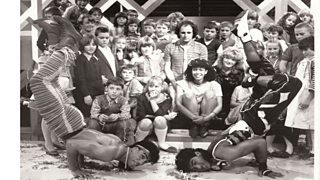
Children's TV series from the seventies
We uncovered many fascinating stories on all these themes. But for me, perhaps some of the most powerful of all were from women describing the damage that could be done by the old culture of secrets and lies. Sue Bevan from Mountain Ash recounted how she got pregnant as a fifteen year old and was dispatched by her parents to Plymouth in disgrace. Her baby daughter was taken away from her for adoption as soon as she was born and Sue has lived with the emotional consequences ever since.
Another girl from the valleys, June Watkins, also had a harrowing time. After a shotgun wedding aged 21, she became a battered wife. For June there was redemption. She took advantage of the new divorce laws to escape from the marriage and happily married a second time. Then in a story which echoed ‘Educating Rita’, she passed her first O-level in her twenties, and while still a young mother, went on to study for a BA and an MA in scriptwriting at the University of Glamorgan.
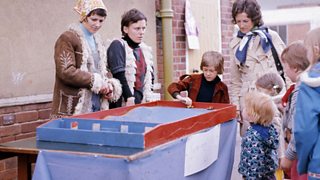
School fete in the seventies
No series on the seventies would be complete without stories of the upsurge of Welsh nationalism and the Welsh language. Mici Plwm vividly describes how he was arrested after risking his life climbing up a television mast to protest against the domination of English language programmes. Rhys Mwyn remains as passionate about subversive Welsh punk as he was thirty-five years ago when he was playing in the band Anhrefn. But it was probably the incredible success of the Welsh rugby team in the seventies that did more for national pride and Welsh identity than anything else. Llanelli legend Phil Bennett movingly describes the atmosphere at Cardiff Arms Park, “I think in that cathedral of song and rugby, there was something special that no country ever felt anything like it in the world before.”
Wales in the Seventies starts onMonday, 24 November, BBC One Wales, 10.35pm.
