Archives for June 2009

Responding to big stories at Radio 4

Blog comments are currently unavailable. Find out more.

Post categories: , , 

Mark DamazerMark Damazer20:07, Sunday, 28 June 2009

Duck House by Circulating

We've thrown things up in the air in recent days in a bid to respond to two big stories - MPs' expenses and the disputed Iranian election.

Last Thursday evening John Simpson did 'The Report' - our new Current Affairs strand. He spoke about what it was like reporting from Iran this month before he was evicted - but went much further by providing the depth of political analysis that you cannot get anywhere else on the BBC - and certainly not at this speed. The joy of radio. John has been reporting on Iran on and off for 30 years - so when he spoke about ex President Rafsanjani's role there was most of a lifetime's work involved in reaching his conclusion.

Three weeks ago Nick Robinson and I were talking after one of his interviews on Today about the expenses story. We were just chewing the fat. Nick was being self-conscious about what it felt like reporting it - how adrenalised, important and difficult it had been. So we cooked up a plan to do a 30 minute documentary about it - and to do it quickly. Nick and his producer Martin Rosenbaum set about it - in between Nick doing his daily job - and produced quite one of the best programmes - titled 'Moats, Mortgages and Mayhem' - we've broadcast since I got the job. I leave you to make your own judgements - but I thought it brought real insight into the difficulty of political reporting and analysis - and also included an interview with The Telegraph's editor - Will Lewis. That's the first time he's spoken in public since the paper hit the journalistic jackpot.

And this week - more Iran. In 2006 we ran a season of programmes on Iran - 'Uncovering Iran' which had as its centrepiece a 3 part series by Sir John Tusa (former Director of BBC World Service and a great Newsnight presenter) about the history of Iran with a lot on how and why so many Iranians despise Britain. John and his production team have updated the series and we will be repeating this new version on Monday, Tuesday and Wednesday this week at 1100. It's good.

These programmes exemplify what makes Radio 4 what it is. The best of BBC talent doing things they couldn't do elsewhere on big stories and doing it brilliantly and rapidly - backed up with talented producers. I felt perhaps a little unseemingly proprietorial - but very proud.

Breakfast with the Beeb - a New Yorker's view of Radio 4

Blog comments are currently unavailable. Find out more.

Post categories: , 

Steve BowbrickSteve Bowbrick15:07, Sunday, 28 June 2009

The_Morning_News.JPG

Editor's note: here's a lovely thing. A consideration of Radio 4 from a New Yorker. Rebecca Dalzell does that fascinating thing: she makes something familiar strange again - as if we were reading about it for the first time. Her piece appeared on a New York web site called The Morning News. I wrote to Rebecca and to editor Rosecrans Baldwin. Both were happy for me to re-publish the piece here. Rebecca Dalzell writes:

Britain never feels like an island so much as on BBC Radio 4 in the early morning. "Viking. Wind: East or southeast three or four increasing five or six. Sea State: Slight or moderate. Visibility: Moderate or good, occasionally very poor." Sea conditions for each of the British coast's nautical areas-Tyne, Dogger, Fisher - are broadcast for 12 minutes, four times daily, on "The Shipping Forecast." Read with measured, military enunciation, the reports conjure battered masts, Navy decks, and rugged men with the sense to rely on GPS rather than an 80-year-old broadcast. But it's not read for them. Instead, it's for suburban listeners sitting at home - in Loughborough, perhaps, or Todmorden - people who protested a few years ago when the BBC proprosed to shift the midnight broadcast by 12 minutes. For these ardent listeners, the language of the sea is an incantation, a lullaby link to another time.

When I moved to England a few years ago, a friend gave me a portable radio as a welcome gift. It was a retro-looking silver rectangle with a collapsible antenna, something I'd never owned in the U.S. My friend insisted I listen to the "Today" program; "Start the Week" was also good. A classmate laughed fondly when suggesting "I'm Sorry I Haven't A Clue," and I decided that my cultural education would come from radio rather than television. It was wilful self-delusion: Listen to Radio 4 and the country that emerges is witty and engaging, well-read if parochial, always up for a walk to the pub down the lane. Watch Channel 5 on TV and you see a nation obsessed with home repairs, footballers, and the Botoxed winners of Big Brother. Radio gave me the England I'd gotten to know reading Evelyn Waugh, and that I half-expected to find.

In my yellow South London kitchen the radio sat on the counter, and I would flick it on along with the crusted electric kettle and listen to the news over breakfast. The window above the sink faced sunken tracks running from the Southwest to Waterloo Station, and streaks of white, blue, and orange trains gusted by in rush hour. Beyond was the first of many rows of dismal brick terraced houses - beige and white, the colors of London. A cream-colored milk truck, peeling rust around the wheels, parked at the corner, its frame inches above the asphalt. The weather seemed forever the same: a heavy gray sky sagging above the power wires, the air smelling of wet dirt and leaves. "Today," the morning news show, plays through this memory of a London dawn and fills out the picture of my kitchen.

News in the U.K. was more entertaining than in the States, especially with "Today's" tough interviewers openly insulting their powerful guests. I remember John Humphrys grilling the embattled Deputy Prime Minister, John Prescott:

Isn't the problem this: that you are the Deputy Prime Minister - that job requires a certain amount of dignity in its holder. The view is that you have lost that dignity, and in the views of many people, that you have become a bit of a figure of fun. You know that as well as I do. Is it tenable that you should hold on under these circumstances?

The afternoon shows, on the other hand, vied for most obscure. "Poetry Please" - this week, focusing on wildlife poems. "The Afternoon Play" Frank's rhubarb business goes belly up and he's on the dole. And the delightfully arcane "Gardeners' Question Time," where the banter must only make sense to a handful of rural pensioners:

"You know, it's funny, on the program we're always being asked for something that will block a view, that will stop at six or seven feet, and [japonicus] is one of the few plants that will be there quickly and will stop at six or seven feet-"

"Yeah well so will Japanese Knotweed, but you wouldn't plant that, would you?"

[Laughter]

Comedy programs, though, were so unlike anything in America that I would sit in a chair and listen with my full attention, as if living in the '30s. Monday nights were for "Just a Minute," where "four exciting, talented panelists show their command of language, their verbal dexterity, and their wit as they try to speak on a subject for one minute without hesitation, repetition, or deviation." The program featured panelists like the deadpan Clement Freud, former member of Parliament and grandson of Sigmund, or the actor Stephen Fry. The chairman gives contestants a subject - "life begins at 40" or "druids" - and they buzz each other for slips. It's the sort of drollery I had come to expect of England, but never encountered in the pub. Instead people there talked about football or read sensational headlines from the Daily Mail. Radio 4 diddled above gloomy everyday life in a Britain as fantastic in some ways as Waugh's or Monty Python's, broadcasting to a country that was largely a generation-old memory.

Now back in the U.S., I stream Radio 4 through the internet, which connects me to my former home. Stirring oatmeal at the stove, I listen to "The World at One," and a distant Big Ben rings the hour. "The Conservative leader demanded a general election." Long, open vowels sound from a grey London afternoon. I turn the heat down under the pot, pour coffee, glance at the New York Times. "The Prince of Wales received £3 million from the taxpayer last year." The sun rises above the tall buildings of downtown Brooklyn to the east, misting through the window. "The Commons has a new Speaker to keep order in the House." The cool tenor of the host, his measured pauses and bright transitions, fills my morning kitchen with one o'clock purpose.

Radio, unlike television, is what you play while doing other things. It weaves into daily life, rather than suspending it, becoming the background noise to washing up or making tea. With the cadences of the "Today" program I picture where I was when I listened to it in England, looking out at the heavy sky and the shingled rooftops, the sound of an ambulance, a lopsided scream, drifting through the window. Then I hear the horn of the Staten Island Ferry, and for a second I am in both London and New York, each carrying me through breakfast.

Visualising Material World

Blog comments are currently unavailable. Find out more.

Post categories: , , 

Mark DamazerMark Damazer14:51, Wednesday, 24 June 2009

I-Spy.jpg

We're experimenting this week. Material World - our weekly science programme presented by Quentin Cooper - will be accompanied, live, by some pictures. It will not be television and I won't reveal exactly how it will work - but give it a try. The visuals will stay up for several days after the programme - so if you don't catch it live you will still be able to see it.

We have done a fair amount of Radio 4 visualisation but we're still feeling our way. Here are some samples - the most recent being from Today last week. I thought that one was rather intriguing. The most complex thing we tried - quite a while ago now - was around Drama - a project called The City Speaks, from March 2008, which had TV images transmitted while a series of short plays were being transmitted in the Afternoon Play 1415 slot (the original story was by Peter Ackroyd). It was not television. That would have defeated the purpose of the enterprise. It was a bit giddy to watch and listen - but the plays worked as pure radio plays and it was fascinating.

We all know that we are not trying to make television - but we feel there are a limited number of things we might do where some kind of visualisation can add to a programme's editorial clout - or entertainment. It's early days... and we'll keep going with it...

Reith 2009 in the Twitterverse

Blog comments are currently unavailable. Find out more.

Post categories: , , , 

Jennifer ClarkeJennifer Clarke21:54, Sunday, 21 June 2009

GRC_graphic.jpg

As I've explained in my previous blog posts, the 2009 Reith Lectures team was keen to extend the reach of the programmes beyond the traditional Radio 4 and World Service listeners.

A key part of our strategy was social networking site Twitter. We wanted to find people already talking about Professor Sandel and his work, or related ideas, and establish a community of listeners which could start engaging with the lectures' themes before the programmes were even broadcast.

Some people found being followed by a broadcasting legend rather unsettling. One user commended Twitter for its ability "to do pure Python at the drop of a hat"; another wondered if we were "lurking behind that bush".

But most people seemed pleasantly surprised to discover the programme's Twitter incarnation: "So delighted you are using Twitter", "Am excited to see such a resource" and "Oh! Oh! You can follow the Reith lectures on Twitter!".

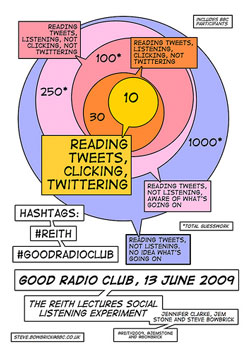
We also wanted to collaborate with our colleagues who run Good Radio Club, an exercise in "social listening" which invites people to tune in to particular radio programmes while logged into Twitter, and then share their comments. And we promised to let you know how it went.

I write this after the first transmission of the second Lecture, and although the experiment has not quite followed the path we intended, it has in fact completely exceeded our expectations.

We had issued invitations for a Good Radio Club event during the first Reith lecture repeat on Saturday 13 June. But the Twitterverse had other ideas. Ten minutes before the first transmission of the opening lecture on Tuesday 9 June, a few messages ("tweets") started to appear, urging people to listen.

That trickle became a torrent, as users spontaneously twittered about Professor Sandel's lecture on the moral limits of markets. Some were already following our feed, but most were not. As radio producers, it was electrifying to see the tweets come in - we were effectively watching people listening to the programme.

The comments were almost universally positive, praising Professor Sandel's arguments, timeliness and approach: "Highly recommended", "Very clear and lucid speaker", "not to be missed", "right on the zeitgeist", "really exceptional", "challenging yet inspiring".

Or as one particularly vivid tweet put it afterwards, "High brow shiznit for your brainbox".

Many people made explicit reference to the BBC's public service broadcasting remit:

"As Lord Reith said, the purpose of the BBC is to educate, inform, entertain...well done!"

"Demonstration of why BBC/PSB is essential - Murdoch wouldn't broadcast this."

There were some critics - one listener was "not that impressed by this year's Reith lectures - no new ideas, or new ways to approach the 'ethic with a busted gut', unhelpful". Another wondered whether "If I say the #Reith Lecture is smug piffle, will it get retweeted [republished]?". It was.

What was also fascinating was the number of unprompted references to listening to the podcast or via iPlayer. Lots of people who had not been following our message stream were so keen to recommend the programme that they published their own links to the podcast, website etc. Many heard the original transmission but wanted to listen again online.

We were able to build on the tremendous response generated by the first lecture - helped in part by Elisabeth Mahoney's warm review in the Guardian, which highlighted our "new-fangled" approach to promoting this year's lectures and the "overwhelmingly positive" response.

Our band of followers continued to grow - sometimes a tweet about Reith was a user's first, suggesting they may have signed up to Twitter just to participate. And the appreciative messages kept piling up.

In Twitter's world, popular topics are given a hashtag (ie "#Reith") which users include in their tweets, thus allowing all related messages to be easily aggregated. As the number of people using #Reith grew, so did our sense of an increasingly engaged community.

The culmination of the week of the first lecture's broadcast was to be the planned Good Radio Club event during the Saturday night repeat.

As a warm up, one user proved you can say much within the famously tight 140 character limit of Twitter, summarising the lecture in a few pithy messages: "markets replace moral judgements with costs" and "Market incentive corrupts/distorts/undermines intrinsic incentive - replaces moral/value judgements with costs".

As before there was a real sense of occasion as we watched the debate unfold in real time. There was a small but dedicated group of active participants joining in across the world - from the UK to New Zealand, Berlin and Tehran. But by tracking the number of people who followed the related content links we posted during the programme, we know that a much larger group was watching (and clicking) in silence.

And more clever technology meant that people who missed the debate could recreate it afterwards, prompted by recommendations from users - many of whom had not apparently taken part the night before: "essential overnight Tweet-reads; #IranElection and #reith discussion of 1st lecture".

The event went very well. In some ways it didn't quite match the excitement of the informal "Good Radio Club" which exploded into life so unexpectedly during the first lecture - and indeed during the second as well. But in terms of plans-not-going-to-plan, the result is pretty good.

As I write this, we have almost 850 followers. In turn they have hundreds - or in some cases thousands - of followers of their own, many of whom find themselves knitted together across the globe by a common interest in the unashamedly challenging thoughts - or "High brow shiznit" - of the Harvard Professor who wears this year's Reith laurel.

Music music music

Blog comments are currently unavailable. Find out more.

Post categories: , , , , 

Steve BowbrickSteve Bowbrick15:00, Friday, 19 June 2009

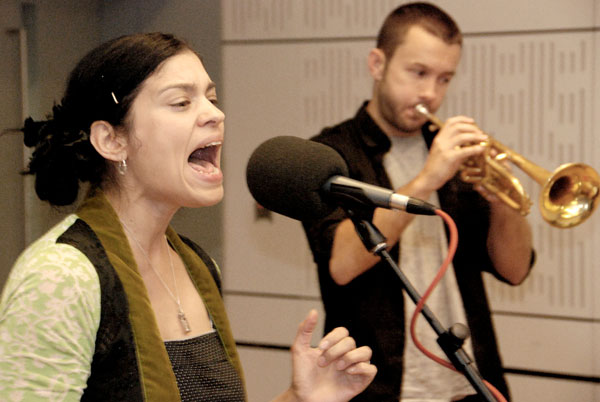
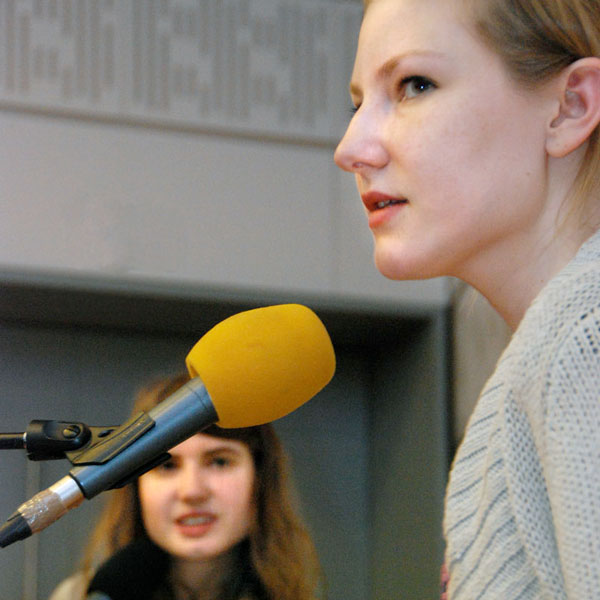
Stan Was, a producer in the Radio 4 presentations department (and practically the in-house photographer - you'll see lots of his work in the Radio 4 pool on Flickr.com) was present in the Loose Ends studio Saturday and took some lovely pics of the two bands on the show: The Mummers and Smoke Fairies. You can listen again to the programme for the next couple of days here. First, The Mummers:

Mummers.jpg

And Smoke Fairies:

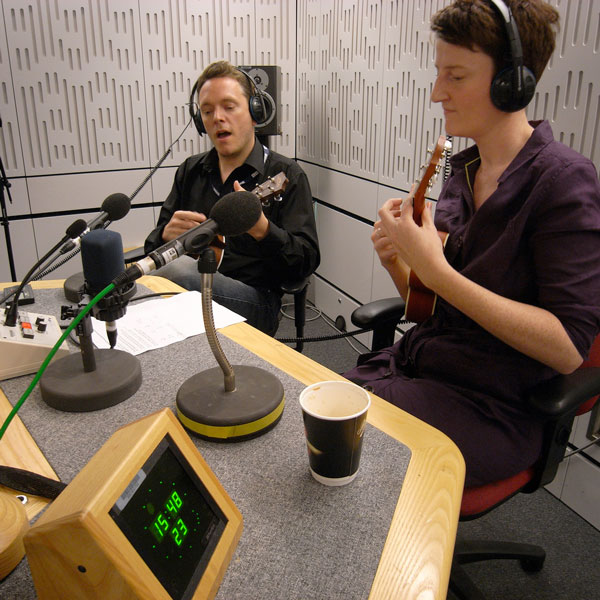
smoke_fairies.jpgYours truly was present for a magical collision of Radio 3 interactive head (and Proms producer) Roland Taylor and Radio 4 newsreader Kathy Clugston in Studio 70A this week. They had, naturally, brought their Ukuleles and they played Ode to Joy - the centrepiece of the big Ukulele Prom that Roland is producing - down the line for a Radio Ulster arts programme. Then I recorded Kathy and Roland's impromptu verse and chorus from Norwegian Wood. Here's the audio and here they are in action:Taylor_Clugston.jpg.

Very musical place, Radio 4.

ISIHAC on the Comedy blog

Post categories: , , 

Steve BowbrickSteve Bowbrick14:41, Thursday, 18 June 2009

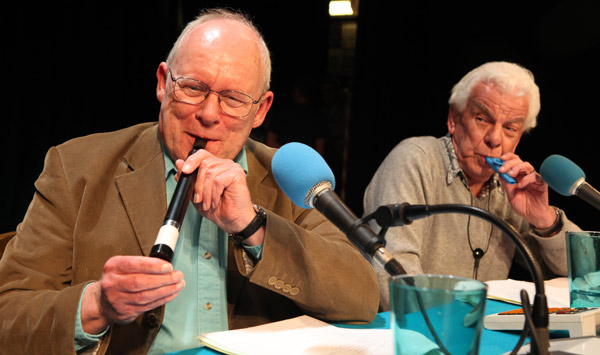
Garden and CryerDavid Thair, editor of the BBC Comedy blog, has a nice post about the first post-Humph recording of Radio 4 comedy treasure I'm Sorry I Haven't a Clue, with three lovely pics and a clip. Read the post and leave your comments here...

How moderation works on the PM blog

Post categories: , , , 

Steve BowbrickSteve Bowbrick13:30, Thursday, 18 June 2009

Paul Wakely is a member of the BBC's central moderation team. He manages BBC staff and outsourced suppliers who moderate 10,000 comments per day on the BBC messageboards and blogs.

From 1400-1600 today Paul will be on the PM blog - where it's a pretty hot topic - answering questions about moderation. He's written a blog post explaining it all here.

If you have questions, suggestions or grumbles about the way moderation works on the PM blog, now's your chance to take them up with an expert.

Honey cake help!

Blog comments are currently unavailable. Find out more.

Post categories: , , , 

Charlotte SmithCharlotte Smith18:33, Wednesday, 17 June 2009

Charlotte Smith's honey cake

Editor's note: I know I said that the Farming Today bees were off to their own blog a little while ago but we've now decided that they should stay here, on the Radio 4 blog, for the rest of the season. We've grown attached to them (and we like the honey). And, in a follow-up email, Charlotte appeals to you:

"I could really do with some pointers from people who have made this cake before! Is the oven too hot? in a fan oven does it matter which shelf it goes on? should I use a less runny honey? And in less than a month can I produce a cake I won't be ashamed to take to the Royal? Help?"

I am, though I say it myself, quite good at cakes. Both making and eating them. So when our producer Fran wafted back into the office from her latest foray to the Farming Today beehive, and informed us that the Royal Show has a honey cake competition, and we should enter, I volunteered without too much thought.

Mistake.

I have never made a honey cake. I assumed it was something like a sponge with less sugar and some honey. It isn't. It has lots of ingredients, and seems to require an attention to detail that doesn't come naturally to me.

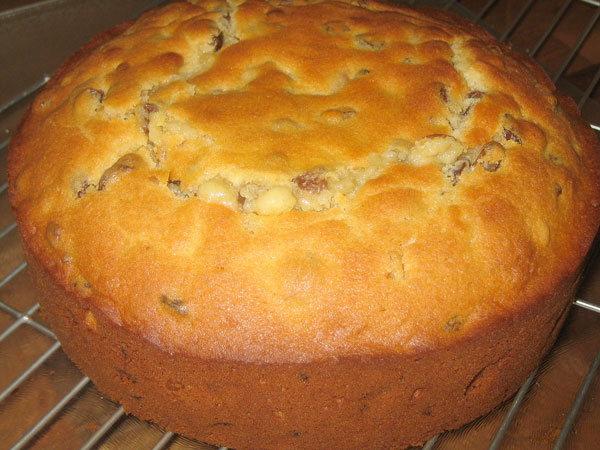
Still, practice makes perfect and all that, so I embarked with some confidence on Honey Cake 1. I haven't got any of the Farming Today honey yet (there is already a queue and when I tried to jump it by mentioning my cake duties I got short shrift) so I am using some runny Yorkshire honey I got the other week at the Duncombe Park show. I needed 225g. Have you ever tried weighing honey? Its messy and sticky and doesn't come off clothes all that easily. Anyway, creamed that with the butter OK... Well actually it was margarine... added eggs, sieved the flour... Feeling a bit smug by this stage... shoved in the currants, sultanas, mixed peel, nutmeg and salt. Looked convincing, so put it into a cake tin. At this point I realised I hadn't put the oven on. I read the recipie, it calls for a 'moderate oven'. Arrghhh. Whats a moderate oven? So I go upstairs, log onto computer, Google Delia Smith - of course she knows - so I charge back downstairs to set the oven to 170 degrees C... Wait for it to heat up... Put cake in. Sit back and wait to taste my triumph.

I am not sure what happened next. I can't blame the family, as the kids were in bed and my husband at work... But somehow I forgot all about the cake. I only remembered when a singed smell spread through the house.

The 'cake' was more a burnt biscuit. It hadn't risen much at all, and was almost on fire when I rescued it from the oven. There is no photo. I am too cross.

So Honey Cake 1 went in the bin. Tonight I am attempting honey cake 2, having invested in an apron, a smaller cake tin, some butter and worked out how to set the alarm on my mobile phone. What can possibly go wrong?

The George Orwell collection

Blog comments are currently unavailable. Find out more.

Post categories: , 

Steve Darling, Producer, BBC ArchivesSteve Darling, Producer, BBC Archives18:17, Wednesday, 17 June 2009

Orwell.jpg

Editor's note: The pace is really picking up over at BBC Archives. Since I asked Steve Darling to write this post about the George Orwell collection, two further collections have been published: Princess Elizabeth: the making of a Queen and Arena: Miller meets Mandela.

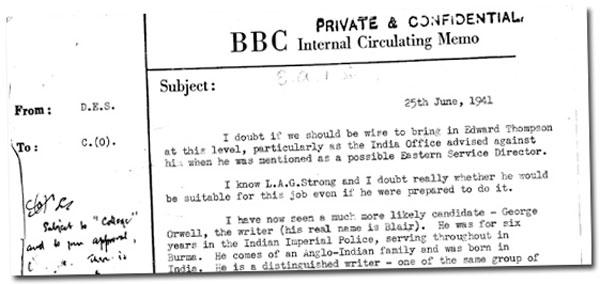
The BBC archive collection "George Orwell at the BBC" is a series of documents, memos and letters which chronicle not only the two years that Orwell or Eric Arthur Blair - his real name - spent as a talks producer for the BBC's Indian Service, but also sets the scene for the writing of his last and perhaps most famous novel 'Nineteen Eighty-Four' which he wrote on the Hebridean island of Jura.

My colleague James Codd at the BBC's Written Archives informs me that the 19 documents we actually chose to feature represent around 8% of the material in Orwell's staff file and Orwell's contributor file combined - that is a rather staggering 250 documents or so.

In addition, there also exist at the Written Archives, programme files, which contain scripts and materials related to programmes that Orwell worked on. And to further frustrate the tireless archive researcher, yet more correspondence from Orwell would exist in the files of those other programme makers with whom he would have had contact in his capacity as a BBC producer.

All of this begs the question as to what out of this vast array of material you actually choose to create a compelling collection of archive documents and why you can't just release the lot? The vast bulk of them simply wouldn't be that interesting - imagine trawling through two years worth of someone's inbox! So we try and choose no more than 25 items around which we can create a strong editorial theme.

The documents that really leap out at you are those which give you something of a direct line to the man himself, like the comments on his Annual Staff Report which describe him as someone who in a former age would have, "been either canonised - or burnt at the stake!" or the remarks made by the Controller of the Overseas Services which wonder if he shouldn't be taken off the airwaves altogether due the "basic unsuitability" of his broadcasting voice.

What also works is when you get a series of letters each replying to the other, such as those between Orwell and BBC producer Rayner Heppenstall where Orwell is trying to convince his friend to come and visit him on Jura, whilst at the same time painting an inadvertently austere picture of the island life - Orwell cheerily mentions the fact that you have to walk five miles at the end of the journey in order to reach him, and when you get there the only thing you've got to look forward to is oatcakes and porridge! No wonder Heppenstall didn't make it.

It will be interesting to learn, as the Archive site grows, how compelling our users find collections of documents like his. Or do they come to the site primarily for TV and radio? Here, though, we have no record of Orwell actually speaking, so only the written records allow us to reach down through the years to staff member 9889 in the Talks department.

Nick Clarke interview prize

Blog comments are currently unavailable. Find out more.

Post categories: , , , 

Mark DamazerMark Damazer10:02, Wednesday, 17 June 2009

Nick-Clarke.jpg

Update: details of how to enter an interview for the award and the competition rules are now here. The closing date for this year's award is 4 August.

Nick Clarke was a great Radio 4 broadcaster. He died far far too young in late 2006 and is remembered by many of us - and I am sure many of you - as a master of his art - on The World at One and Round Britain Quiz in particular. The man with the marvellous voice and intellect and unique interviewing style.

Radio 4 and BBC News launched an interview prize in his honour - for the best broadcast interview over a 12 month period. Last year - the inaugural year - the prize was won by the BBC's Carrie Gracie - though I am delighted to say that we had a pretty healthy number of entries from all over the industry. The prize was announced at the Cheltenham Literary Festival in early October and we are expecting to repeat the pattern for this year.

Entries have to be in by the end of July and we have a very able group of judges who listen in pairs before a final list is drawn up and listened to by a panel of three. Last year that final panel consisted of Gillian Reynolds (of The Daily Telegraph), Peter Hennessey (the renowned political historian from Queen Mary, University of London) and Nick's long time editor - Kevin Marsh (Editor of the BBC's College of Journalism).

  • Mark Damazer wrote an obituary for Nick Clarke for The Guardian in November 2006. Of Clarke's return to radio after his first illness, he says: "His first Any Questions outing was at a school in Tring, Hertfordshire. The audience in the hall knew it was his first programme since the cancer. When Nick came on to the platform there was a Radio 4 version of pandemonium. The walls vibrated to the sound of the clapping and stamping. Many people stood."
  • The Press Gazette on Carrie Gracie's 2008 win
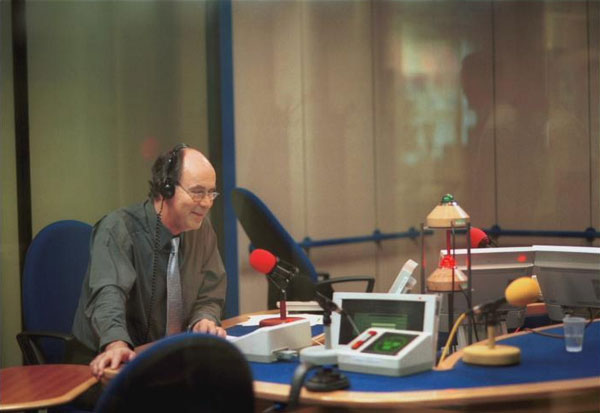
  • The picture shows Nick Clarke presenting The World at One in 2001. It's from the BBC's picture library.

Why Radio 4 is Wired

Blog comments are currently unavailable. Find out more.

Post categories:

Steve BowbrickSteve Bowbrick14:07, Tuesday, 16 June 2009

Radio 4 is Wired

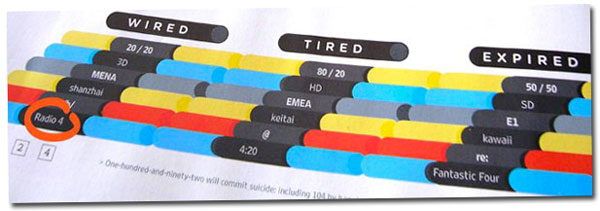
Here's an unusual thing: this month's issue of iconic tech mag Wired, house journal of the digital elite (recently revived in the UK by US parent Condé Nast after some years out of the market) classified Radio 4 as 'Wired', here meaning cool or contemporary or just useful. Here in The Castle we were quite surprised to be so honoured so I jumped on the telephone to Associate Editor and regular Radio 4 contributorBen Hammersleyand asked if he'd explain. Ben writes:

It's a small thing to cause such a fuss, and to end with my being asked to write here to justify myself. As associate editor of Wired magazine, one of my jobs is to write the monthly Wired/Tired/Expired column - where we, as infallible judges of all that is cutting edge, educate the public as to things that are, indeed, Wired, Tired, or Expired. As such it fell to us in our July issue to rate Radio 4 as Wired.

As a good reader of the Radio 4 Blog, you'll have no issue with our rating. It's practically too obvious to print. Nevertheless, protests have come. Not from our readers, but rather from within the BBC: "Us, Wired?" they say, "We don't tweet our mindblurts or e-friend our arduino wave posts. The nearest we get to a digg is when John Humphrys snarks an MP at 8.10am." Some people I know at Radio 4 worry that they they're anywhere near cool or digital enough.

Well, quite. As a long time listener, and occasional presenter, I do have a great love for Radio 4. But more to the point, it's the very old-school approach that the network takes to its content that makes us list it as "Wired". With every new medium, every new conduit for people to receive content, professional or amateur, lengthy or tweet-sized, the public becomes ever more discerning about what is good, and what isn't.

Radio 4 might move from the airwaves to the internet, it might go podcast-only, or from ear-based to direct neural interface - but no matter what the future brings people will still want to consume good content made for the medium. Radio 4 does this, we try to do this with our magazine, and we think it's the only way to go. That's why we think they're Wired, and that's why you're here too.

  • Wired UK's web site.
  • Ben has made several programmes for Radio 4. Listen to My DNA, an Analysis from December last year about 'predictive genetics' and his edition of The Report (the programme is available to listen again), about cybercrime, from April this year.
  • Ben's Wikipedia entry.

Good Radio Club

Blog comments are currently unavailable. Find out more.

Post categories: , 

Steve BowbrickSteve Bowbrick11:45, Friday, 12 June 2009

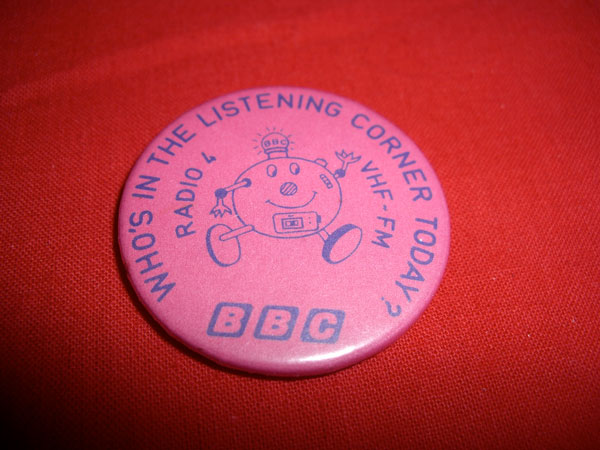
R4 Listening Corner Badge

This weekend sees the return of Good Radio Club, our experiment in 'social listening'. If you joined in last time you'll remember that it involves tuning in to a radio programme and discussing it with others while you listen. There's a blog post over on the Good Radio Club web site that explains how to participate so I won' t repeat it here.

But why social listening?

It's where radio's going. No one doubts that the singular and intimate experience of listening to the radio - voices and sounds from far away - will persist. But the collision of radio and the Internet is producing a kind of hybrid: personal and collective at the same time. Listeners will spend part of their time in the old radio bubble, alone with the voices they love, and part of it in this new social space, where they share those voices with others and contribute to a conversation about them.

We want to test ways of organising social listening. So far we've used the simplest of tools - most of which don't even belong to the BBC: Twitter and third party tools that allow you to search Twitter and find other listeners like Twitterfall, Tweetgrid and Twazzup (we're not endorsing these tools - there are others that do the same job). It must be the cheapest technology experiment in radio history!

We're looking for ways to bring the conversation about Radio 4 programmes back into the programmes themselves. Could we use questions and comments from Good Radio Club participants in the Q&A after a future Reith Lecture, for instance? Or could Twitterers influence the course of a drama?

Ukes on Today

Post categories: , , , 

Steve BowbrickSteve Bowbrick09:00, Thursday, 11 June 2009

If you're in a better mood than you usually are on a Thursday morning it might be because you heard the Ukulele Orchestra of Great Britain on Today at 0741. Together with Kathy Clugston, of this parish, they provided a lovely few minutes of strummed Beethoven and details of how to join in with August's Ukulele Prom. Roland Taylor, who is in charge of things interactive at Radio 3 and is also producing the Prom, wrote about it on the Radio 3 blog. Here's an excerpt:

In order to see this content you need to have both Javascript enabled and Flash installed. Visit BBC Webwise for full instructions

I've produced a few Proms in my time at the BBC but, for me, this year's line up is a bit different: Stan Tracey, the Michael Nyman Band and, because I begged to be allowed to produce it, Prom 45 with the Ukulele Orchestra of Great Britain. I can't wait. When I was told I'd been given Prom 45 I smiled for about 2 days. Then, on the way home, it occurred to me that it might be a great opportunity, as Interactive Editor for the Proms, to get the audience involved. I emailed Ellara Wakely (Learning Manager, BBC Proms) and Roger Wright asking both if we could have a 'bring your ukulele to the Prom and play along' moment. They said yes. The Ukulele Orchestra of Great Britain said yes. My team said yes. I said yes!

Read the rest of this post and leave comments on the Radio 3 blog...

Steve Bowbrick is editor of the Radio 4 blog

The Reith lectures are underway on-air

Blog comments are currently unavailable. Find out more.

Post categories: , 

Mark DamazerMark Damazer09:10, Wednesday, 10 June 2009

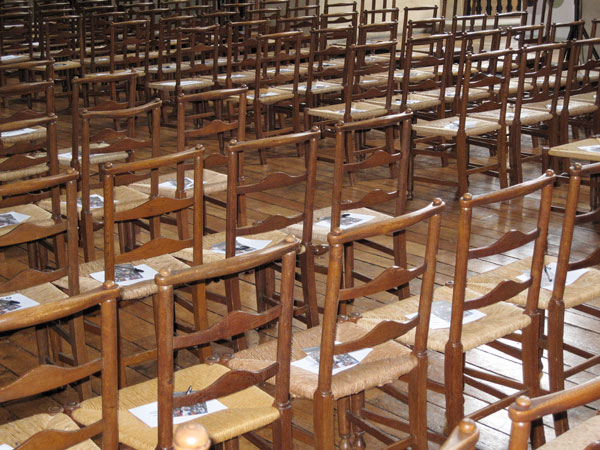
Reith Chairs

We have played with the format just a bit - by beginning each lecture with a quick chat between Sue Lawley (presenter) and lecturer (Professor Michael Sandel). We also had more members of the public and students than in previous years (where the audience has been largely invited). And in recent years the public response comes in more forms. This year Twitter has arrived to add to the ferment. And fascinating too. Professor Sandel seems to have struck a chord with the twitterers .

The recording sessions are one of the highlights of a Radio 4 year. The last one was recorded in Washington last week (for transmission on 30 June with a repeat on 4 July) at George Washington University - and again a terrific turnout of academics, senior American journalists (Tom Friedman of the New York Times and EJ Dionne of the Washington Post) and expats. Let me know what you think...

Mark Damazer is Controller of Radio 4

Keeping the Farming Today bees occupied

Blog comments are currently unavailable. Find out more.

Post categories: , , 

Fran BarnesFran Barnes17:54, Tuesday, 9 June 2009

"The bees will beat us you know", our bee mentor, Clive Joyce, sagely told me yesterday while we tried, yet again, to stop the Farming Today beehive swarming. Clive is usually the voice of optimism, but even he - when faced with more Queen Cells than he's ever seen - is preparing to face up to the prospect that a significant number of our bees will up sticks and fly off. The problem is the good weather! Which is quite ironic, as last year the problem was the bad weather.

There's so much pollen and nectar flowing that the bees have more honey and more wax than they know what to do with and they're running out of room. We've put on another 'super' to collect more honey and we're hoping that will keep them occupied. But in the meantime, the bees are trying to produce another Queen to replace the one which is about to fly off. If we keep destroying the new Queen cells we have a chance of keeping "Auntie" safely ensconced in the Farming Today hive.

Swarms are a real problem this year. Last year in the area around our hive (Warwick and Leamington) there were 7 swarms in the entire year. This year there are reports of 13 a day - and that's just near our hive. Good news for new beekeepers hoping to populate an empty hive with a swarm... but bad news for beekeepers who open up their hive to wonder where all their bees have gone.

Beekeepers need to check their hive at least every 9 days... but ideally more regularly than that to prevent new Queens being produced. I was at my allotment the other weekend only to see a swarm of bees in a tree nearby. I called Clive and we climbed up the apple tree to collect the swarm - what an experience, I think the last time I climbed a tree was when I was 7 years old! On the upside, we've got about 20lbs of honey in the hive which we're hoping to extract this week. This vast amount of honey has been produced in just 2 weeks. Bees are amazing aren't they?

Fran Barnes is Senior Producer at Farming Today

Professor Michael Sandel on the 2009 Reith Lectures

Blog comments are currently unavailable. Find out more.

Post categories: , , 

Jennifer ClarkeJennifer Clarke09:04, Tuesday, 9 June 2009

News image

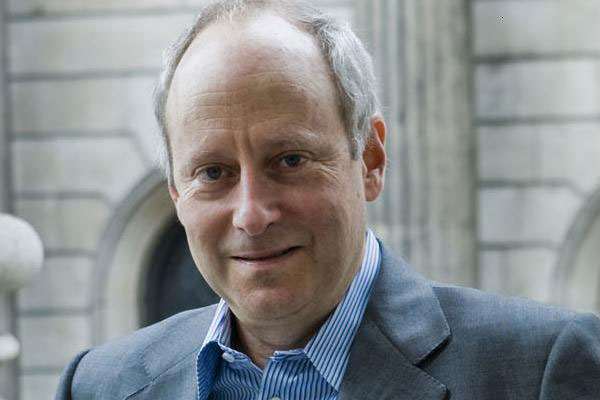
Like so many of his predecessors, the 2009 Reith Lecturer Michael Sandel says he was "honoured and excited" when he was first asked to accept this year's Reith wreath.

Professor Sandel spent four years at Balliol College, Oxford, as a graduate student, and says he was therefore aware of what he calls the lectures' "storied tradition" from an early age.

But there is also a more profound connection between this year's laureate and the Reith Lectures' stated goal of stimulating public understanding and debate about significant issues of contemporary interest.

A highly respected political philosopher, much of Professor Sandel's work has explored themes of democracy, public philosophy and the erosion of community and moral values, areas he felt were "a good fit with the Reith tradition".

Since that earliest graduate research begun at Oxford, Professor Sandel has been adamant that his work would not remain isolated in the metaphorical academic ivory tower, but would keep one foot resolutely in the real world:

"What I have tried to retain is a connection between the abstract ideas with which political philosophers deal, and the implications of those ideas for the actual workings of politics and the lives of citizens."

He wants his work to have a direct impact on policymakers and politicians - indeed he considered standing for political office early in his career, but says ruefully that political philosophy got him "hooked" and has never since released its grip.

So the theme of this year's lectures - "A New Citzenship" - draws on a lifetime's thinking about justice, democracy and notions about what might and should constitute an idea of the "common good". We need to decide, he believes, what kind of government we want, and actively fight for it.

And he believes the current geopolitical fragility (not to mention the UK MPs' expenses scandal) makes this the perfect time for such a debate.

Indeed, he argues that the fate of democracy itself is at stake: "Unless we find a way to rejuvenate, to reinvigorate, public discourse, so that it addresses things that matter, including large moral questions, I think the frustration with politics will continue and deepen."

"Democracy should ideally be an opportunity for citizens to deliberate about the common good," he adds, "rather than to be distracted entirely by the misbehaviour of politicians."

An accomplished and celebrated lecturer, Professor Sandel relished the opportunity to explore these themes with the live audiences at each of his four lectures. But he is also looking forward to engaging with the wider audience beyond:

"Radio programmes directed not only of course to those sitting in the hall at the time but also to the general public in Britain - and through the World Service to those around the world - seem to me a really wonderful and unique opportunity to provoke discussion."

Professor Sandel is clear he does not have definitive answers to the questions his lectures will pose; but in many ways simply having the debate is the most profound response he could hope for.

Four really good Radio 4 blogs

Blog comments are currently unavailable. Find out more.

Post categories: , 

Steve BowbrickSteve Bowbrick10:26, Friday, 5 June 2009

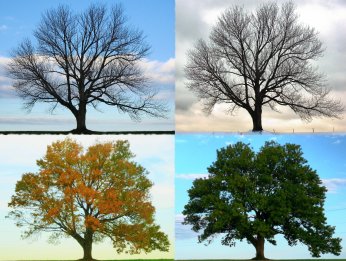
Four Seasons

The Radio 4 blog isn't the only Radio 4 blog. Here are four more from around the network that I think are all exceptional examples of the blogger's art.

Eddie MairPM (RSS). If there's a natural blogger at the BBC it's Eddie Mair. He's comfortable with the informal tone and uneven pace of a blog. When journalists start blogging they'll often try to impose the kind of structure you get on a newspaper page or in a radio programme - with a predictable rhythm, thematic consistency and all that. Not on the PM blog. Here you'll find tiny, two-line updates, long photo-essays (like this one from Hugh Sykes), prompts for listener involvement and pithy two-paragraph entries spun-off from items on the programme. It's bright and often funny and has the feel of a newsroom (and there are kittens).

Robin Lustig, World TonightRobin Lustig/World Tonight (RSS). This is a hidden gem, not part of the BBC news mainstream but really good, regularly updated analysis from international veteran and World Tonight presenter Robin Lustig. Bookmark the blog or subscribe for several posts per week on topics like India's elections, Italy's lessons for British legislators and the Czech ratification of the Lisbon Treaty. I don't think there can be a more varied mix of clever international insight anywhere. This is my favourite Radio 4 blog.

Justin WebbJustin Webb's America (RSS). I'm stretching it a bit here. Credit where it's due: Webb's blog is from BBC News but I'm cheekily claiming its author for Radio 4 because of his regular appearances on the network and because he's joining Today in September. So sue me. What I like best about it is Webb's tone of voice - it's sufficiently different from his on-air manner to make this a really useful addendum to his other US coverage. Conversational and dry - mini-insights, not heavyweight analysis. Proper blogging from a news pro.

Rory Cellan-Jonesdot.life (RSS). I couldn't miss this one out. Rory Cellan-Jones isn't the only contributor to the technology blog from BBC News (Darren Waters is also a regular) but he is 'one of ours'. He makes regular appearances on Today and PM and he must be the most prolific blogger the network has (15 posts in May). Rory has moved from covering business to technology and by making clever use of the social media tech he covers (he's a big twitterer) he's become the BBC's 'go to' guy for digital and online. So the blog feels really up-to-date and responsive to change.

Honourable mentions: Tom Feilden's science blog (RSS) (one of the three Today blogs) complements his on-air stories usefully. PM sister programme iPM has a blog (RSS). It's a friendly place, animated by its users as much as its authors. Mark Urban, another voice familiar to Radio 4 listeners, has an excellent Newsnight blog (RSS) about world conflict.

Steve Bowbrick is editor of the Radio 4 blog

Today 'TV'

Post categories: , , , 

Jon ZilkhaJon Zilkha15:53, Thursday, 4 June 2009

Can radio make good "TV"? For the past couple of weeks on Today, we've been conducting an experiment: filming the goings-on in our studio so that it's now possible not only to listen to the programme, but also to watch some of it

Many radio interviews, of course, aren't done face-to-face, but "down the line" with the interviewee in a different studio. It's fair to say that when presenter and guest are together, it usually makes their encounter a much better listen.

In order to see this content you need to have both Javascript enabled and Flash installed. Visit BBC Webwise for full instructions. If you're reading via RSS, you'll need to visit the blog to access this content.


As my colleague Brett Spencer has written regarding similar experiments at 5 Live, the results are making for interesting viewing. Our experiences can be seen on the Today site, among them Sarah Montague's grilling of BBC Trust Chairman Sir Michael Lyons, Labour MP Stephen Pound describing the expenses scandal as "like a slasher-movie", and Michael Horowitz insisting that there is still honour among poets...

Jon Zilkha is Deputy Editor of Today. Continue reading his post and leave comments on The Editors blog...

Radio 4 as an antidote to Twitter panel games

Blog comments are currently unavailable. Find out more.

Jem StoneJem Stone07:03, Wednesday, 3 June 2009

For the last few months there have been a rash of quite ancient comedy parlour games being adapted to Twitter where groups of friends devise, in 140 characters of course, punnery and wordplay around film and tv titles. Just in the last month credit crunch movies (eg: The Italian Jobless), medieval movies (eg: You've Got Chain Mail) have had their moment in the sun. In response a small group of Radio 4 fans including a lot of the Twitter regulars working here have had minutes of fun of an evening adapting these memes to our favourite national speech network; CreditCrunchRadio4 spawned for example the rather bleak The Pip. My best attempt at medievalradio4 was You and Your Serf (sorry). However none so far had generated more than a brief flurry of interest.

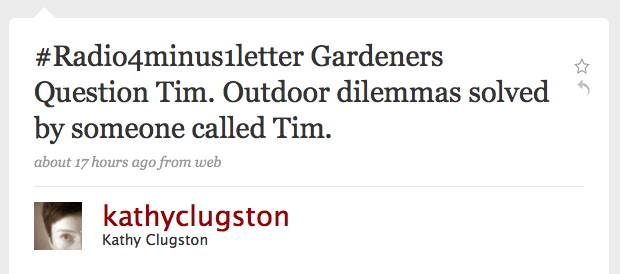
But then Radio 4 announcer; Kathy Clugston found herself on a train journey home yesterday evening was bored and tweeted this:


kathytwitterminus.jpgAt first there was just a handful of top quality responses from someregularcontributors , and a couple of lame attempts from yours truly and it looked it was time for bed and the shipping forecast as usual. However I work up this morning and there were incredibly nearly a thousand tweets of programme titles mostly containing boos, wees and lots more Tims. About midnight Radio 4's very own King of Twitter; Mitch Benn had joined in and gradually by the time all his legions of followers had picked up on it; Radio 4 - minus 1 letter, was in Twitter parlance, trending. So to avoid you doing the rather hard work of sifting through the tweet archive.


Our favourite 20 #radio4minus1letter tweets


News imagehiggis: A look at Judeo-Roman history through one woman's obsession with a charioteer: Woman's Hur #radio4minus1letter · View

News imagerichardberryuk: #radio4minus1letter - "lose ends" an invited panel have to find the end of the sellotape roll · View

News imageMitchBenn: #radio4minus1letter Fedback- Roger Bolton tries to answer listeners' letters and emails but finds someone's done it already. · View

News imageMitchBenn: #radio4minus1letter Loose Eds - Stourton, Mair and Reardon on a bender · View

News imageSirTerence: I nominate this as winner @jamescridland Snooker-based comedy panel show: I'm Sorry I Haven't A Cue #radio4minus1letter · View

News imagebopeepsheep: #radio4minus1letter Jus A Minute. Contestants have 60 seconds to produce a tasty gravy without repetition, deviation, hesitation, or Bisto. · View

News imagedogzero: #radio4minus1letter "Road Casting House" - join American doctor, Hugh Laurie as he makes various highways using molds and plaster of paris · View

News imagelesleypeal: #radio4minus1letter 'taking a stan' in which fergal keane talks to rap star m&m · View

News imagejonnydollarUK: #radio4minus1letter Omens hour. A black cat and a man who once broke a mirror discuss the ides of March. · View

News imageJefy: "The NES quiz" Sandi Toksvig grills punt and dennis on game consoles that never quite caught on #radio4minus1letter · · View

News imagejimh: The Shipping Forecat - a daily nautical report from a feline stowaway #radio4minus1letter · · View

News imagemmechevrolet: #radio4minus1letter Just an inute - eskimos campaign for the correct spelling of their name · View

News imageLordPlumpton: @Xanneroo #radio4minus1letter Tet Match Special, in which Henry Blofeld remembers the Vietnam war · · View

News imageloveandgarbage: RT @Barc_alpha: #radio4minus1letter Geoffrey Boycott and Blowers travel supersonic in the world's fastest planes - Test Mach Special · · View

News imagejimeasterbrook: @kathyclugston Arming Today. Making sure Humphries, Evans, et al are properly equipped for dealing with politicians. #radio4minus1letter · · View

News imageJGONeill: @kathyclugston #Radio4minus1letter "Eek in Westminster", MPs open Daily Telegraph live on-air @thoroughlygood · · View

News imageDanRebellato: @kathyclugston Mr Gemmell's footballing reminiscences. The Archie Hour. #radio4minus1letter · View

News imagejasperparsnip: #radio4minus1letter Dow the line. Musings on American industrial averages. · View

News imagerpudd: #radio4minus1letter Bok at Bedtime. Members of the South African rugby team read from their memoirs. · View

Now obviously this sort of japery wasn't invented yesterday. In fact this blog post is really a long way round of reminding you all that the true masters of this activity for over nearly 40 years no less. Are back! (Monday June 15th: 6.30pm) And not on Twitter. Well apart from him.


(Oh. A handful of the tweets online have a high innuendo factor. If the thought of what Samantha has got up to over the years offends then steer clear.)



Ok. If you're bored on the commute home tonight. mmm. #radio4plus1letter. That could be fun.


Jem Stone is Portfolio Executive for Social Media at BBC Audio & Music


Bringing old favourites to life: illustrating Radio 4 drama

Blog comments are currently unavailable. Find out more.

Post categories: , , 

Ashley Stewart-NobleAshley Stewart-Noble10:33, Tuesday, 2 June 2009

A while back I posted about why we use illustrations on iPlayer for key radio programming (on the BBC Internet blog). In short we want to avoid galleries of largely unknown faces which don't really hook the listener as much as a well-executed illustration.

When we come to illustrate dramas which feature popular and loved characters we are posed with a dilemma - we want to give depth and feeling to the drama without personifying the character too much. The mind's eye is a wonderful thing which conjures up its own distinct image of how Arthur Dent in the Hitchhiker's Guide to the Galaxy or Ruth Archer from The Archers look - it's not the job of the illustration to give a face to the characters, its job is to nod to their characteristics.

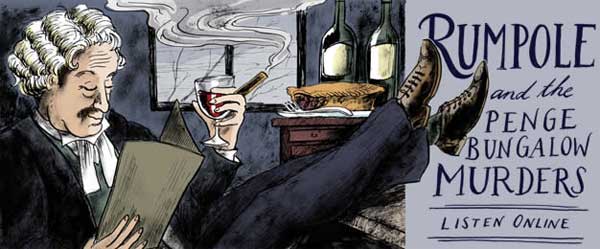
You'll have seen two illustrations recently for Rumpole and the Penge Bungalow Murders and The Complete Smiley, both on Radio 4. I'll hand over to my picture editors Javier Hirschfeld and Dominik Klimowski who commissioned these illustrations:

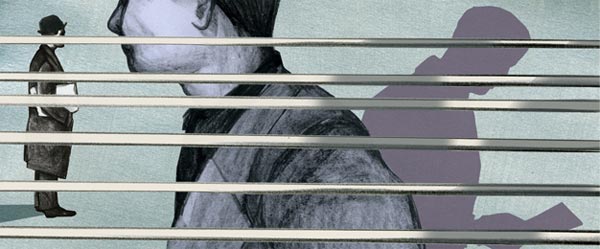
The Complete Smiley (Commissioned by Javier Hirschfeld):

le Carre Smiley illustration

"I thought of the illustrator Swava Harasymowicz since there is something of the classic spy/gangster Hollywood movies in many of her works. I focused on the role of Smiley rather than John le Carré himself. Smiley's a spy who should not be easily recognised by the people that see him so we decided to go with the film noir look and feel to create that classic spy scenario. Below are Swava's drafts and the explanations of them." The illustrator writes:

"The main rough would use 'slices' suggesting blinds with the figure - half-seen, half-not-seen - within them, sort of layered. There may be very faint outlines of cities too, or a close up of a spy-like man with a lighter instead of a gun (apparently he had a favourite lighter). In both cases there would be colour - not monochrome.

le Carre Smiley sketch

"We opted for the blinds option because this would add mystery and this way the character's face will not be as prominent, therefore not identifiable with Sir Alec Guinness or with Simon Russell-Beale. Smiley will be defined by the spy look, the papers and the silhouette, since he is always in the shadows and must never be seen."

Rumpole Penge Bungalow Murders

Rumpole and the Penge Bungalow Murders (Commissioned by Dominik Klimowski):

Steph von Reiswitz was the natural choice when commissioning an illustration for the 'Rumpole' series on Radio 4. She has illustrated numerous radio programmes for us including 'The Hunchback of Notre Dame' and the 'The Complete Ripley'. Her idiosyncratic style fits perfectly with these 'period' dramas and it is further backed up by a knowledge of the material. If there is one thing more reassuring than an illustrator who is keen to research the content we are promoting, it is one who is familiar with it already.

Rumpole Penge Bungalow sketch

The illustration was made specifically to be generic so that it can promote any of the Rumpole stories. His features, the décor and the props are all carefully considered and I think this is where illustration will always win out. The image has been created from thin air. It does not rely on an actor, or a specific setting or action, all of which would make it too specific and interfere with our imaginations. Instead it is an image as original as the one each of us carries in our mind's eye when we turn on the radio and listen to 'Rumpole and the Penge Bungalow Murders'.

Ashley Stewart-Noble is a Senior Content Producer at BBC Future Media & Technology

More from this blog...

Categories

These are some of the popular topics this blog covers.