Barn owls - the nation's most loved owl?
Special guest post by Mike Toms, owl enthusiast, volunteer and BTO staff member.
Barn Owls
Unravelling the secrets of the owls
Back in the mid-90s I was running Project Barn Owl, a joint initiative between BTO and the Hawk & Owl Trust. This ambitious project set out to establish just how many pairs of breeding Barn Owls were left in the UK, after a long period of decline. The project, which used a stratified sampling design to deliver a robust population estimate of 4,000 breeding pairs, suggested that the population had stabilised, thanks largely to the conservation efforts being targeted at what is unquestionably the UK’s favourite owl. As part of Project Barn Owl we developed new approaches for monitoring the success of breeding pairs, most of whom were using nest boxes rather than natural cavity sites. Encouraging volunteers to put up nest boxes, working with farmers and monitoring breeding attempts has proved incredibly successful, with the population now estimated to be at least 9,000 breeding pairs. Earlier this month I attended a Barn Owl conference in Cheshire, where volunteers from at least nine different local Barn Owl groups had come together to share ideas and to see how the information they have been collecting is being used to secure an optimistic future for the Barn Owl.
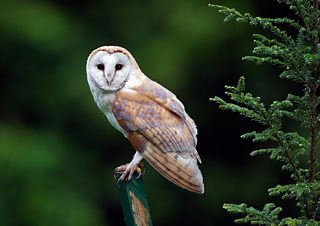
An enigmatic UK species: the Barn Owl. Image credit: Markoh2011
Many of the individuals working in these local groups also monitor other owl species, most commonly Tawny Owl and Little Owl. We know far less about these two species than we do about Barn Owls, which is worrying given that both appear to be in decline. BTO has identified an urgent need to secure better information on our other owl species, including both Tawny and Little Owl, recognising that there are lessons that we can learn from the successes of Project Barn Owl. Over the next five years, BTO will be running a national Tawny Owl survey and collecting new information on Tawny Owl calling behaviour, the latter enabling BTO ecologists to look more closely at where Tawny Owls occur and which habitats they favour.
The programme of work will also see increased support for local groups and individuals working on owls, so that the information being collected is used effectively to plug gaps in our understanding. It is hoped that more people will get involved in owl nest box schemes and support other efforts to secure a future for these wonderful birds. The planned work will also extend to tracking Short-eared Owls, in order to identify the management practices required to deliver the habitats that they favour, and to developing methods for surveying our most secretive species, the Long-eared Owl.
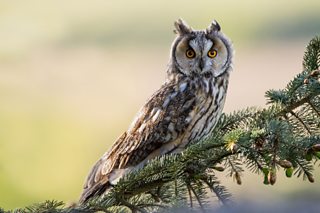
New BTO work will focus on several UK owl species, including the Long-Eared Owl. Image by Phil D 245.
This work has particular resonance for me. Not only does it build on the work done as part of my first post at the BTO, but it also supports the type of local approach that I am now delivering as a volunteer, working on the Thetford Forest Tawny Owl Project. Owls are great and being able to work with them is a real privilege, something that I have been able to share with the Friends of Thetford Forest volunteers who make nest boxes for me and with others whose interest in owls is just beginning.
