
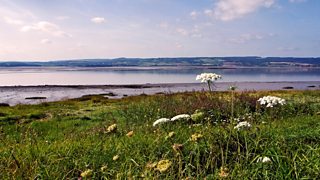
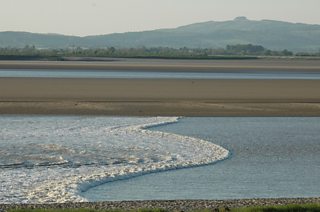
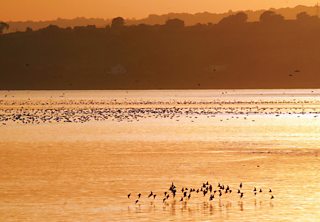
When we look at our estuaries, we see them teeming with life: waders feeding and gulls swooping. They’re dynamic places, ever changing. But it’s at low tide that the true magic of the estuary is revealed, mud flats stretching from water to land in dips and swirls make it easy for us to see the importance of this habitat that connects sea, river and land.
Essential estuaries
The Severn Estuary is one of the most important in Britain. It has the largest tidal range in Europe, a vast array of wildlife, a rich cultural heritage and a wild and beautiful landscape. It’s a globally important site for nature, which is why our founder Sir Peter Scott set up WWT on its banks in 1946.
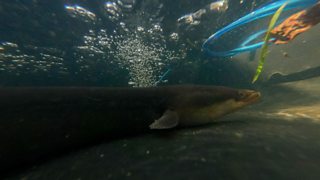
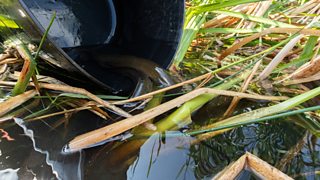
For migratory fish it performs an essential role, acting as a superhighway, linking breeding and spawning grounds. Shad, sea trout, lamprey and salmon swim up it to spawn, while for the critically endangered European eel it’s a lifeline, offering a safe haven after their extraordinary journey to our shores. It might seem an impossible feat, but each year thousands of tiny glass eels swim up the Severn Estuary at the end of a mammoth 4,000-mile migration across the Atlantic from the Sargasso Sea. Once here they can spend up to twenty-five years feeding and growing in wetlands like those around WWT Slimbridge, before returning to their breeding grounds as mature eels.
A breakdown on the superhighway
But there’s been a dramatic drop in the numbers of migratory fish able to access the Severnside Waterscapes. Historically estuaries like the Severn Estuary were fed by meandering and well-connected waterways acting as aquatic thoroughfares for these traveling fish. But industrialisation has modified them greatly - created barriers, increased pollution and altered water levels. These beautiful and iconic wetland landscapes are no longer ‘healthy’.
A wilder wetland landscape
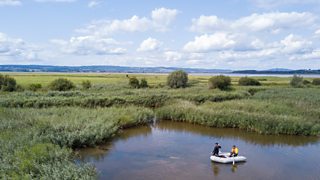
But this is changing. ‘Bigger, better, more joined up’ has become a mantra for many in the conservation world as we realise that supporting nature isn’t just about protecting isolated ‘pockets of wildlife’. For animals to thrive they need access to whole ‘landscapes’ and ‘waterscapes’.
A springtime explosion
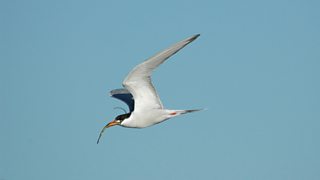
Wetlands like the River Severn Estuary give beyond their margins. As well as acting as superhighways for migratory fish, their mudflats and saltmarshes act as extraordinary “larders for wildlife’. These amazingly productive feeding grounds support an extraordinary abundance of aquatic invertebrates. It has been estimated that the shellfish and worms found in a single cubic metre of estuary mud contain as many calories as 16 chocolate bars. These rich feeding grounds boost wildlife in the surrounding landscape, feeding a vast array of animals from fish to frogs, bats to birds. Breeding birds like common tern come to raise chicks in the insect-rich floodplains surrounding the estuary.
This mighty estuary with its saltmarshes, mudflats and floodplains, along with its rivers, meandering streams and farmland ponds, provides an extraordinary mosaic of habitats. Keeping it healthy and connected is vital if we’re to protect our wildlife and its natural seasonal movements.
Freedom for fish
Our aim is to reconnect these wetlands and breathe new life into the waterscape. As well as habitat improvements, we’ve improved access to and from Slimbridge for eels and have restored a dried-up riverbed to provide a new route for migratory fish trying to reach their spawning grounds.. For decades it’s been impossible for them to access important freshwater habitats along this river due to man-made barriers like weirs. This is one of four fish passes planned to open up the river Frome and break down barriers for wildlife.
