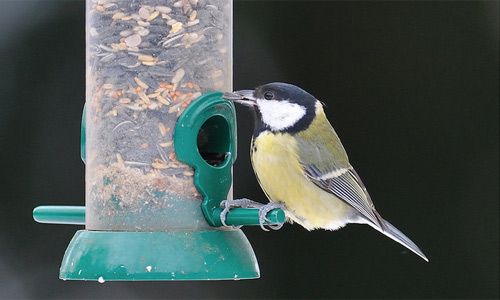
I had a great chat on Twitter just last week about greenfinches. Some correspondents were seeing far fewer, some much more and some hadn't noticed any difference whatsoever. (Straw poll in the Springwatch office was that in the Bristol area numbers were dropping.)
But until we have a proper scientific study that's all it is... just chat.
Read the rest of this entry
The weather outside is what could only charitably be described as bleak. The inevitable February snow is still ahead of us, yet we can all still rest assured that spring - lovely spring - is on its way.
But careful what you wish for. If its arrival is measured by natural events (and what more honest way is there?) then spring is coming earlier: on average 11 days than in the middle of the 1970s. This is according to a recent study of more than 700 species of British animals and plants has shown (as reported in the Guardian).
Read the rest of this entry
How far do you think you'd need to travel to spot the world's second largest whale? Halfway across the Atlantic? To the Arctic? The South Pacific? The answer's a bit closer to home: the Irish Sea.
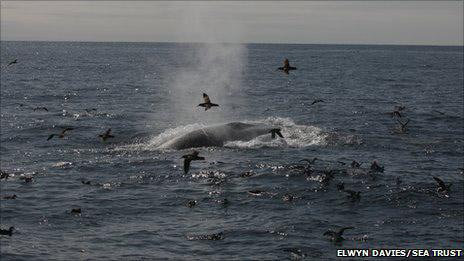
Round the corner: the world's second largest whale (copyright Elwyn Davies/Sea Trust)
Read the rest of this entry
It only seems like yesterday that I was compiling the pre-Christmas favourites. But here we are with Christmas well and truly behind us. The Winterwatch photo group, however, has been as busy as ever (nearly 12,000 pics and counting) and the quality... well, have a look for yourself...
Read the rest of this entry
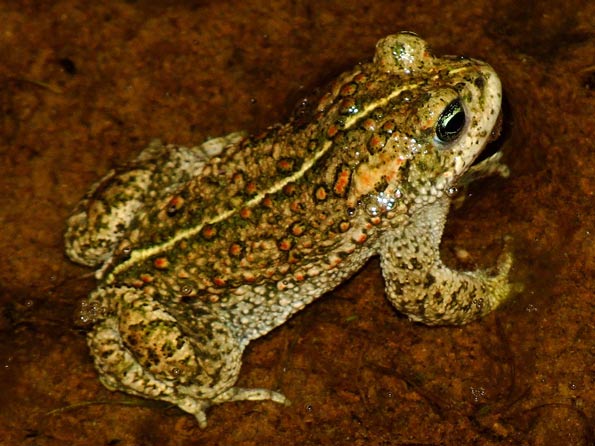
After last week’s conservation paradox about how feeding birds in the mating season could actually be detrimental to them, here comes another seemingly perverse wildlife story. The natterjack toad, one of the most endangered of our amphibian species, could be a climate change winner.
Read the rest of this entry
This photo paints a bleak and vivid picture about the state of our amphibians after December's big freeze.
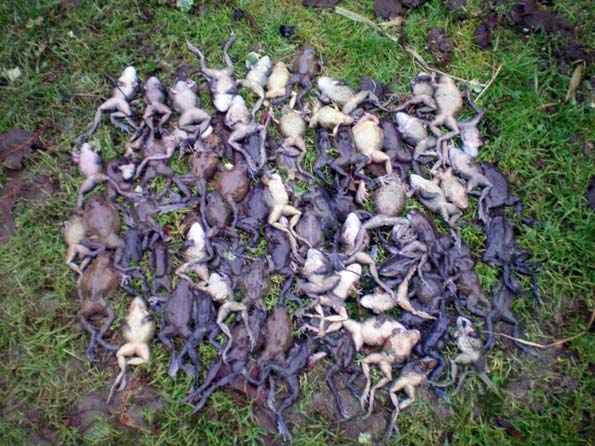
Another bad winter for amphibians? Photo: Mike Apps
Read the rest of this entry
Here's a story of animal derring-do to warm your cockles. The National Trust has reported that three grey seal pups from the Farne Islands have survived an incredible 350-mile journey across the North Sea. One of the pups was less than three weeks old.
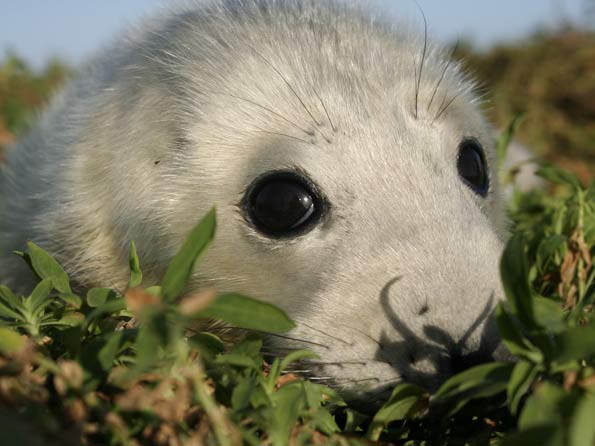
Grey seal pup on the Farne Islands © National Trust Farne Island wardens
Read the rest of this entry
It appears from this news story published yesterday that feeding birds might not be as good for them as we thought. Could this be another example of how everything we do – however well intentioned – has an effect on wildlife and that effect might well be a negative one?
Anyone who’s been watching Hugh Fearnley-Whittingstall’s Fish Fight on Channel 4 will have seen how efforts at conservation can have paradoxical outcomes. As he angrily points out, about half of the fish caught by fishermen in the North Sea are thrown back into the ocean.
While nowhere near as perverse as that, the news that a study has found that feeding garden birds might delay the dawn chorus is potentially another example of the negative outcomes of human intervention. (You can read more details about the paper here.)
Read the rest of this entry
Happy new year to you all. At the end of last year, I set a Curious Owl challenge: to tell us about your photos of birds in unusual places. As always, the response was great.
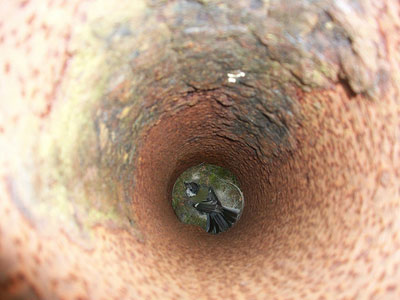
Strange nesting places are always a good place to start (remember this from Springwatch in 2009?). Pipes seem to be popular places...
Read the rest of this entry
 |11:21 UK time, Friday, 28 January 2011