Tell us about the arrival of spring where you are
Post categories: The Curious Owl
 |14:24 UK time, Thursday, 27 January 2011
The weather outside is what could only charitably be described as bleak. The inevitable February snow is still ahead of us, yet we can all still rest assured that spring - lovely spring - is on its way.
But careful what you wish for. If its arrival is measured by natural events (and what more honest way is there?) then spring is coming earlier: on average 11 days than in the middle of the 1970s. This is according to a recent study of more than 700 species of British animals and plants has shown (as reported in the Guardian).
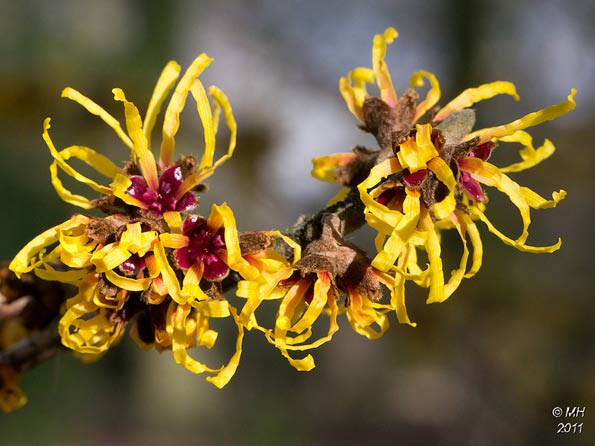
In light of this - and the fact that the snowdrop season started yesterday and that the Nature's Calendar spring survey and its Irish equivalent are now properly underway - it seems topical to ask how you've been watching the early signs of spring. What heralds the arrival of spring for you? Is it different this year - are you seeing more or less of any usual signs? Any surprises, disappointments?
Post a comment right here or if you're on Twitter, tweet with the hashtag #ukspring (we had quite a bit of fun with that one last year). There's already a fascinating discussion over on our Winterwatch photo group on this very subject. If you have photos, post them there.
Reports are coming in of blue tits investigating nest boxes (future stars of Springwatch?), song thrushes singing, woodpeckers drumming, hazel catkins appearing and even an active slow worm.
To get you in the mood, here's what Nature's Calendar identifies as some key, easily identifiable signs of spring. There are pdfs of each one of these to help you identify them over on its website:
- Blackbird - nest-building from Feb
- Rook - nest-building starts in Feb/Mar
- Song thrush - sings from Feb onwards
- Brimstone butterfly - reappears in late Mar/early Apr
- Red-tailed bumblebee - from Feb
- Blackthorn - flowers Mar-Apr
- Hazel - yellow catkins appear Jan-March
- Bluebell - usually flowers in Apr/May (the National Trust's Bluebell Watch has info on when and where bluebells are at their best)
- Colt's foot - flowers from Feb-Apr
- Lesser celandine - flowers in Mar-May
- Snowdrop - first flowers Jan-Mar
- Wood anemone - flowers in Mar-May
- Frog tadpoles - from the end of Mar in sheltered spots
- Frogspawn - usually Feb/Mar
- First swallows - late Apr (my favourite)
I'll be posting regular updates here and on Twitter with all your tweets, photos, comments and stories. It's all thoroughly unscientific of course. So if you do want to help science make sure you take part in Nature's Calendar too. It's all very straightfoward and a good excuse to drag yourself outdoors.

Comment number 1.
At 17:48 27th Jan 2011, PhotographyGal wrote:Snowdrops are starting to appear around my area.
https://www.flickr.com/photos/photographygal123/
Complain about this comment (Comment number 1)
Comment number 2.
At 17:52 27th Jan 2011, Tiger1 wrote:The snowdrops have been out for the past two weeks in south Devon at Dartmoor Zoo. Wonderful sight marking the first signs of spring. The Daffodil bulbs are shooting up too.
Complain about this comment (Comment number 2)
Comment number 3.
At 07:47 28th Jan 2011, LA SAYUELA wrote:This comment was removed because the moderators found it broke the house rules. Explain.
Complain about this comment (Comment number 3)
Comment number 4.
At 10:50 28th Jan 2011, Child of Herne wrote:Traditionally the 2nd February is the first stirring of spring, Imbolc , or Candlemas when the godess throws of the dark cloak of the winter crone and the maiden returns. Snowdrops are often seen as a symbol of the maiden Brighid and pagans will place them on the altar at an Imbolc celebration. In Bedfordhire have seen Snowdrops in bud and also Winter Aconite in flower as well as resident birds singing. Have seen and heard Blackbird, Song Thrush, Mistle Thrush and Great Tit singing. Ravens and Tawny Owls will already be preparing to nest and I will be looking for displaying Ravens this weekend.
Complain about this comment (Comment number 4)
Comment number 5.
At 13:33 29th Jan 2011, taurus2 wrote:saw 2 bees in garden on 15th jan
Complain about this comment (Comment number 5)
Comment number 6.
At 13:35 29th Jan 2011, taurus2 wrote:on 15th jan saw 2 bees in garden
Complain about this comment (Comment number 6)
Comment number 7.
At 13:38 31st Jan 2011, brownwolf wrote:I live in Meanwood in Leeds and last week whilst waiting at the bus stop I saw two red kites, they looked very beautiful gliding over and under each other as if they were dancing, it was the highlight of my day. Proof indeed that the breeding programme at Harewood has been a resounding success.
Complain about this comment (Comment number 7)
Comment number 8.
At 11:48 1st Feb 2011, ScouseDave67 wrote:Have a pure white squirrel visiting my garden regularly.Is this a common occurance in the grey squirrel family? As i have never seen one before.
Complain about this comment (Comment number 8)
Comment number 9.
At 13:24 1st Feb 2011, freddie46 wrote:Saw my first ever goldcrest yesterday,I was walking down the main road near to where i live and spotted it on a bush in a garden,stood for a good few minutes watching it, really wish i had my camera with me.What a beautifull little bird, really made my day!
Complain about this comment (Comment number 9)
Comment number 10.
At 15:09 2nd Feb 2011, LynW wrote:I was pleased to see snowdrops bursting forth in Dorset, but even better was seeing two shy primroses on a sunny bank beside the snowdrops
Complain about this comment (Comment number 10)
Comment number 11.
At 10:34 3rd Feb 2011, grebelet wrote:Snowdrops popped up a few weeks ago and crocuses came out on the 23rd Jan near me (SW London).
I saw a blue tit investigating a nest box last sunday and today i saw a pair of long-tailed tits, not the usual chatter of them (is that the collective noun?).
there has been a Gt Spotted Woody drumming in the small park near work this week.
Complain about this comment (Comment number 11)
Comment number 12.
At 11:45 3rd Feb 2011, jeztorrance wrote:Nice tweet today from the Sussex Wildlife Trust: hazel catkins & snowdrops are out - has anyone seen any primroses yet?
https://twitter.com/SussexWildlife/status/33116243166760960
Complain about this comment (Comment number 12)
Comment number 13.
At 21:51 5th Feb 2011, chickenzown wrote:<RICHPOST> Frogs calling in my garden pond on 4th and 5th Feb, probably spawn in the next few days... <BR /><p><BR /><a href="https://www.flickr.com/photos/chickenzown/5419627122/" title="Spring arrives in Anglesey! 4 Feb 11 by chickenzown, on Flickr"></a><BR /><BR /></RICHPOST>
Complain about this comment (Comment number 13)
Comment number 14.
At 20:06 6th Feb 2011, Susan Wise wrote:Hello. We set about doing some early spring cleaning in our garden pond. Over recent years it's become less a of pond, and more of a wetland bog, but we like it that way because for several years now it has flourished as a nursery for frogs, and we were looking forward to their springtime return. But sadly, as we were thinning out the pond plants we discovered many adult frogs [14 in fact] were dead in the pond. We think that the recent prolonged and hard winter weather has frozen the pond surface and prevented them from getting to the surface to breathe. Would that be correct?
Has anyone had a similar experience to us? Does anyone think that some of our frogs might still be alive and well in and araound the garden. Here's hoping that there are!
Complain about this comment (Comment number 14)
Comment number 15.
At 20:10 6th Feb 2011, chickenzown wrote:Toads have joined the fanfare this evening... singing in the rain!
Complain about this comment (Comment number 15)
Comment number 16.
At 00:22 7th Feb 2011, jeztorrance wrote:@Susan Wise, sadly it looks like it's going to be a bad year for frogs: https://www.bbc.co.uk/blogs/natureuk/2011/01/another-bad-winter-for-amphibi.shtml
There's a link on that page to Pond Conservation, which has some excellent advice on how to look after your pond in freezing weather.
Complain about this comment (Comment number 16)
Comment number 17.
At 01:44 7th Feb 2011, wendyjo wrote:Having had trouble sleeping, I decided to sit outside at 12.45am on 6th January 2011...and I heard the most amazing shrill bird song. Tonight was the second time I heard it, (and still it continues at 1.45am) Having checked out the internet, I believe we have a Nightingale about 150 - 200 yards away, in a very lightly wooded area between a housing estate and open farmland. It seems very early in the year to hear such a bird. And as I have never heard such, find it unusual for this area (post code [Personal details removed by Moderator]).
Complain about this comment (Comment number 17)
Comment number 18.
At 01:49 7th Feb 2011, wendyjo wrote:Talking frogs, I heard our first croak on 9th January from our garden pond!
Complain about this comment (Comment number 18)
Comment number 19.
At 01:59 7th Feb 2011, wendyjo wrote:Great tits, Blue Tits, Wood pigeons, Collared Doves, Chaffinches and Robins are actively seeking mates in the oak tree at the end of our garden. Two days ago I heard the local woodpecker return with his drumming of the nearby trees and toads are around in the garden leaf debris. We have even seen a Grey Heron collecting nesting twigs from the end of the garden twice this week. Spring seems to be arriving early in our area.
Complain about this comment (Comment number 19)
Comment number 20.
At 13:29 7th Feb 2011, Child of Herne wrote:Wendyjo. The bird you can hear singinbg at night is almost certainly a Robin. They are superb singers, sing virtually all year round and ofter sing at night, particularly if the area is illuminated by artificial light. Blackbirds and Thrushes also sometimes sing at night. The Nightingale is very much a sub-saharan migrant that does not arrive in Britain until the end of April and is found mainly in woodland with a dense impenetrable understorey. They are mainly birds of the South and East of Britain and are sadly less common than previously. In Southern Europe they are still common and occur in villages, In Hungary they were singing from every clump of scrub. The best place I know of to see Nightingale is Little Paxton Nature Reserve near St Neots in early May.
Complain about this comment (Comment number 20)
Comment number 21.
At 10:29 8th Feb 2011, TeddGourmet wrote:I heard a blackbird singing whilst I cycled on the way to work this morning, the first I've heard this year. The great tits in our area have been singing for weeks, and a pair of collared doves are building a nest in the bush at the end of our garden.
Complain about this comment (Comment number 21)
Comment number 22.
At 17:07 8th Feb 2011, wendyjo wrote:Child of Herne - thank you for that information. It does seem unlikely to be a Nightingale. I was trying to compare the sound to recordings online. Whatever it is, the song is very loud indeed and goes on from 1am until 2am! I will try to get a recording & get my son to analyse it on his computer!!!
Complain about this comment (Comment number 22)
Comment number 23.
At 09:19 9th Feb 2011, Child of Herne wrote:If the song is very loud it is probably a Blackbird or possibly a Song or Mistle Thrush singing because it is disturbed by artificial lighting.
Complain about this comment (Comment number 23)
Comment number 24.
At 16:17 9th Feb 2011, THE_GUVNOR212 wrote:JUST SPOTED HONEY BEES COMING AND GOING FROM MY POND IN LONDON HACKNEY.
Complain about this comment (Comment number 24)
Comment number 25.
At 19:42 11th Feb 2011, chickenzown wrote:Frogspawn in the garden pond this morning, this evening the pond is alive with mating frogs and toads!
https://www.flickr.com/photos/chickenzown/5436397337/
Complain about this comment (Comment number 25)
Comment number 26.
At 21:31 11th Feb 2011, yenjig wrote:About thirty frogs appeared from nowhere this morning (11th Feb) in our garden pond. Darker coloured ones appeared first, and started croaking loudly, then came lighter coloured ones that might have been females? My question for Springwatch is this: How on earth do they know to all come on the same day? They don't have a calendar, so how do they arrange it? Thanks for explaining the mystery....
Complain about this comment (Comment number 26)
Comment number 27.
At 00:19 15th Feb 2011, wendyjo wrote:I have just been outside for 10 - 15 minutes and can hear clear sounds of distress from something about 200-300 yards away, in a dark wooded area adjacent to farmland. Sounds a bit like a young fox, but also has the sound of a large bird (owl?). Very confusing. Whatever it is, it is obviously being attacked/protecting it's home. Any ideas?
Complain about this comment (Comment number 27)
Comment number 28.
At 14:04 16th Feb 2011, LynW wrote:Just been for a ride through the Dorset Countryside. The snowdrops are at their best, catkins everywhere, and the primroses are appearing on the sunny banks. My pony knows it is warming,as she has a spring in her step, and has started to loose her winter coat.
Complain about this comment (Comment number 28)
Comment number 29.
At 17:52 16th Feb 2011, KatieDriver wrote:I was most suprised to see a Wren chick in our garden this afternoon. If it was an adult it was the smallest Wren I have ever seen. Including the stubby tail, about the size of a medium sized walnut. If I see it again I will attempt to get some video of it.
Complain about this comment (Comment number 29)
Comment number 30.
At 15:49 21st Feb 2011, Maggiemay wrote:I've had snowdrops in the garden (Tyne & Wear) for about 10 days now. My question is this as I've sat looking at the birds in the garden as usual but suddenly yesterday this tiny (same size as a blue tit) black and white down the back and absolutely cherry red breast appeared. Robins are brown with a red breast I believe?? so what's this one? I apologise if I offend serious birdwatchers with my ignorance but I've never seen this one before.
Complain about this comment (Comment number 30)
Comment number 31.
At 17:11 22nd Feb 2011, Child of Herne wrote:Dear Maggiemay your odd bird sounds like one of the small african finches related to Waxbills or Weavers. Many of this group are commonly kept as cage or aviary birds and often escape. Too cold for them in Britain but in Spain on Coto Donana both Common Waxbill and Golden Crowned Bishop have established breeding Colonies. Actually African species.
Complain about this comment (Comment number 31)
Comment number 32.
At 16:19 25th Feb 2011, Helen Brown wrote:The frogs in my pond arrived at the begenning of the week 21st Feb it is now full and their is loads of spawn, is it seem to be early this year?
Complain about this comment (Comment number 32)
Comment number 33.
At 17:33 25th Feb 2011, jeztorrance wrote:@Helen Brown, difficult to say without knowing roughly where you live. There's plenty been reported to Nature's Calendar before then but mainly from the South West and south and west wales.
Complain about this comment (Comment number 33)